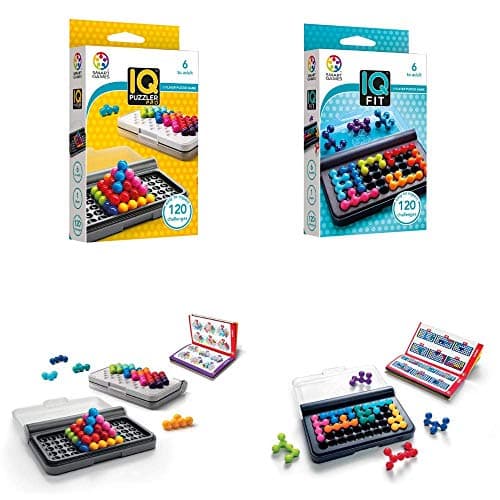
Best logic puzzle game
Logic Puzzle Games for Kids
Five single-player logic games ranked on published challenge count and what happens after the cards run out.
Top pick
SmartGames IQ Puzzler Pro
Category
The quietest shelf in the toy shop, and the one where the published challenge count tells you exactly how long it lasts.
The short answer
Logic puzzles publish a challenge count, and that number is close to an expiry date: a game with 40 challenges is a school holiday, and one with 60 is a long one. That is not a reason to avoid them — a good logic game is the most concentrated thinking per dollar in the category — but it is the reason not to buy one as the only present.
Block & Beaker earns a commission when you buy through our links, at no cost to you. It never changes a ranking, and we say so plainly when the right answer is the cheaper set, or nothing at all. Full disclosure · How we pick.

Start here
In this section
Each one carries its top pick’s live price and a buy link, so you never have to click twice to find out what something costs.
Best logic puzzle game
Five single-player logic games ranked on published challenge count and what happens after the cards run out.
Top pick
SmartGames IQ Puzzler Pro
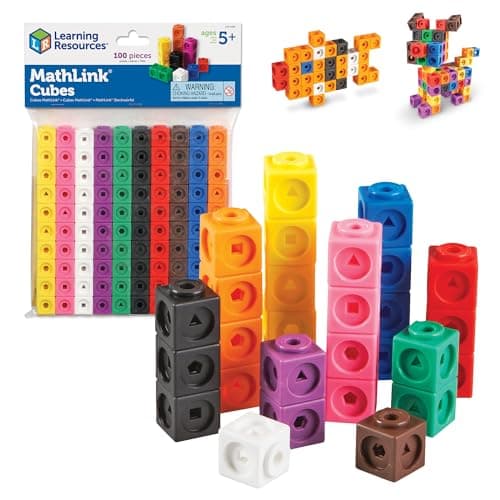
Best math game
Manipulatives and games where the mathematics is in the mechanic rather than in the questions.
Top pick
MathLink Cubes, Set of 100
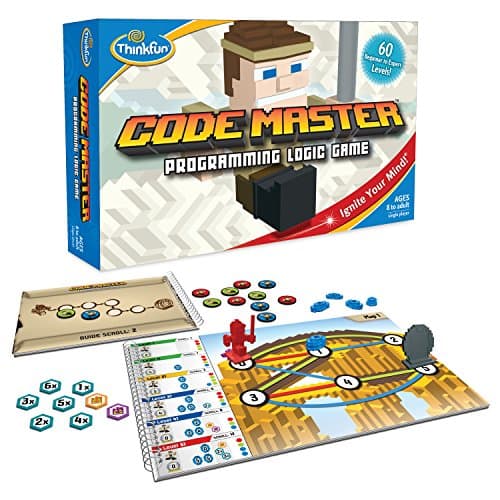
Best coding board game
Board and card games that teach sequencing, branching and repetition, with the adult-required flag stated up front.
Top pick
ThinkFun Code Master
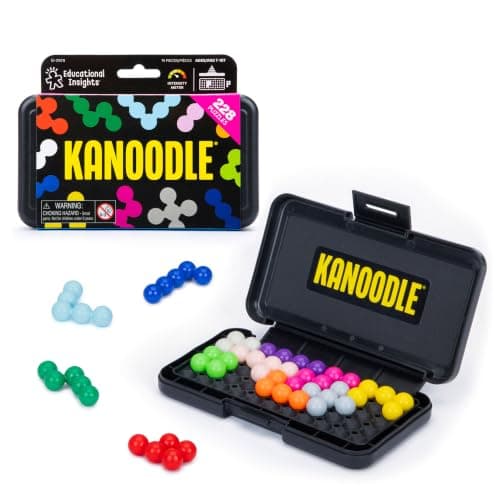
Best spatial reasoning toy
Packing puzzles and 3D challenges that train rotation and visualisation rather than arithmetic.
Top pick
Kanoodle
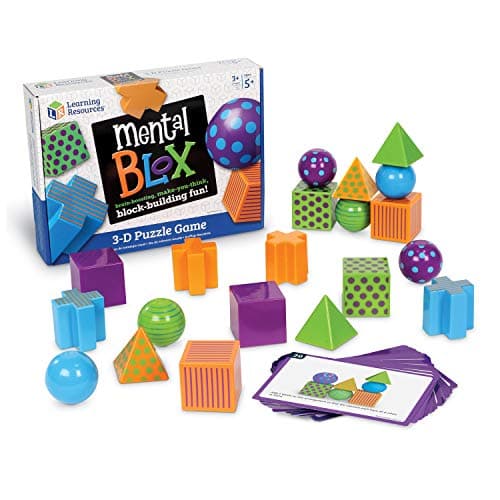
Best pattern and sequencing toy
The preschool end of mathematical thinking: sorting, patterning and putting things in order.
Top pick
Mental Blox Critical Thinking Game
Best solo game
Self-checking puzzles a child can do without an adult, ranked on published challenge counts.
Top pick
Kanoodle
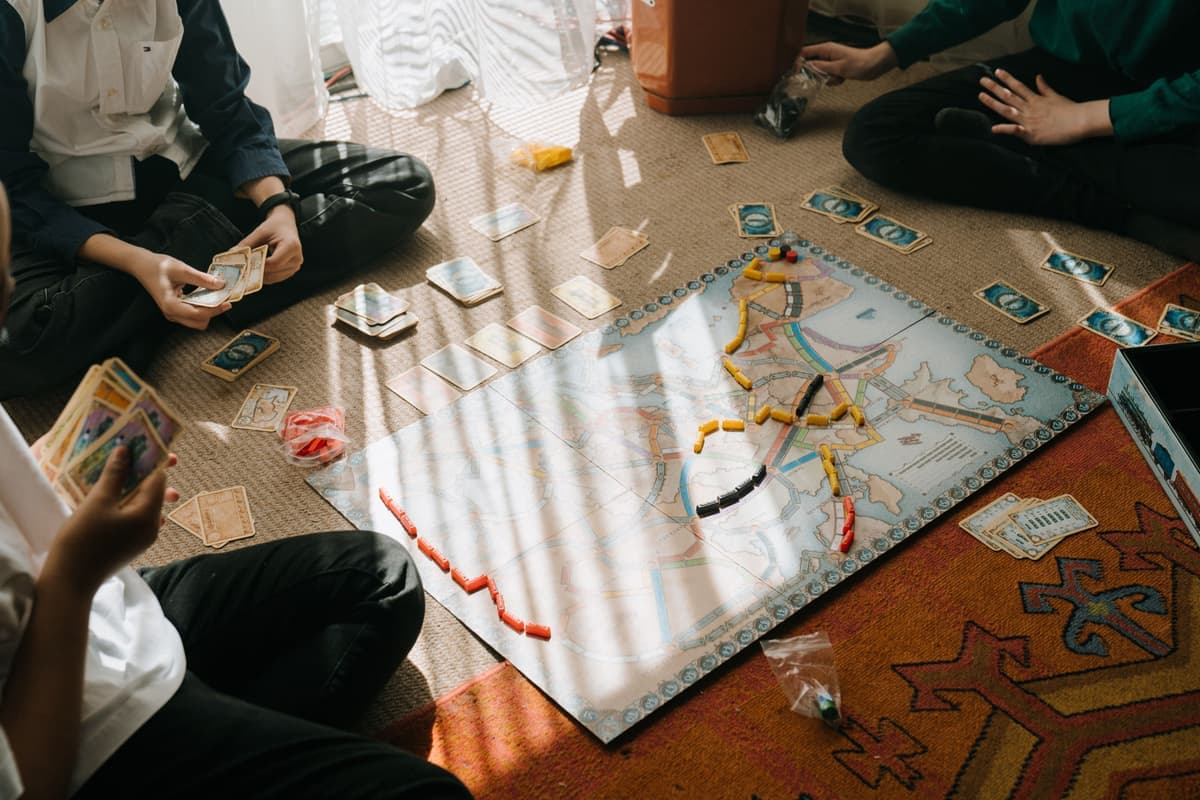
Best multiplayer STEM game
The multiplayer end of the logic category, on published player counts and what each game asks of an adult.
Top pick
ThinkFun Robot Turtles
Guide
Five skills, and the published toy specification that addresses each one directly.
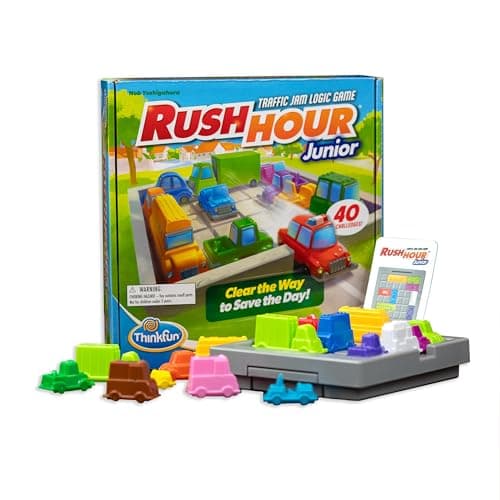
Best first logic game
Which logic game to start with at five, six, seven and eight, on published ratings and ladder length.
Top pick
ThinkFun Rush Hour Junior
Kanoodle vs IQ Puzzler
Two leading travel logic puzzles, compared on challenge count, age range and case design.
Top pick
Kanoodle
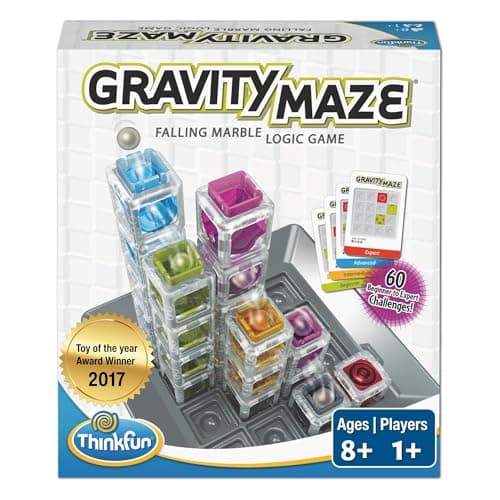
Gravity vs Circuit Maze
ThinkFun's two self-checking logic games, compared on the two specifications that actually differ.
Top pick
ThinkFun Gravity Maze
Robot Turtles vs Code Master
The two screen-free coding board games, compared on age, players and whether an adult is part of the game.
Top pick
ThinkFun Robot Turtles
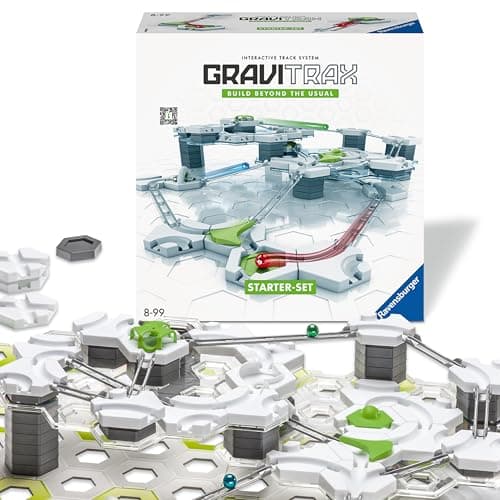
Gravity Maze vs GraviTrax
Two 8+ marble toys, compared on whether the child wants to solve or to build.
Top pick
GraviTrax Starter Set
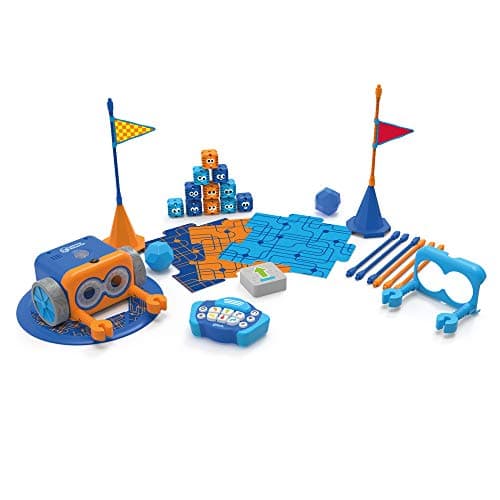
Robot Turtles vs Botley
A coding board game and a coding robot for young children, compared on who has to be in the room.
Top pick
Botley 2.0 The Coding Robot Activity Set
Logic games for 5 year olds
The short list of logic games a five-year-old is actually rated for, sorted by whether an adult is needed.
Top pick
ThinkFun Rush Hour Junior
Logic games for 7 and 8 year olds
The age the long games unlock, ranked on published challenge count, and the one edition to stop buying.
Top pick
Kanoodle
Guide
The math shelf sorted by the age its maker publishes, with what each age can genuinely do.
Top pick
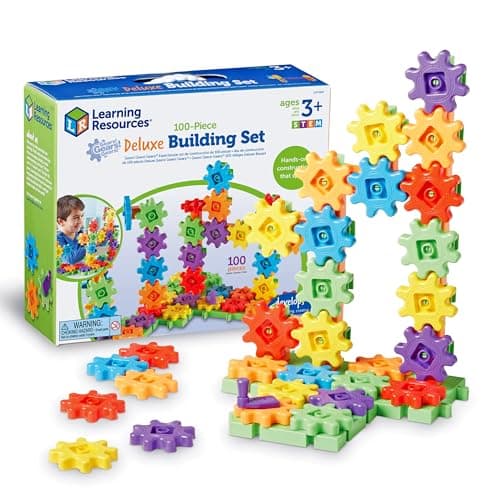
Gears! Gears! Gears! 100-Piece Deluxe Building Set
Logic games for 9 and 10 year olds
The games with enough published challenges to last a year at nine, and the edition that is four years behind.
Top pick
Kanoodle
Almost every single-player logic game publishes how many challenges are in the box. ThinkFun publishes 60 for Gravity Maze, 40 for Rush Hour Junior, and 60 for Circuit Maze. Those are honest numbers and they are the most useful specification in this whole category, because a determined nine-year-old will work through 60 challenges in a couple of weeks and then the box has nothing left to say.
Compare that to a magnetic tile set with no challenge count at all, which is the point: the tile set never finishes because it never started anything. Both are legitimate purchases. But a gift-buyer comparing a marble-run puzzle game against a marble-run construction set is comparing a book against a musical instrument, and the price being similar does not make them similar.
The one thing that extends a logic game past its card count is whether the components are usable freely afterward. Gravity Maze’s towers can be arranged into any run a child invents once the cards are done — but nothing in the box suggests it, so mostly nobody does. It is worth suggesting out loud.
Three things, and they are things the rest of this site’s categories are bad at.
They fail cleanly. In a logic puzzle you either got the marble to the target or you did not, and there is no adult judgment in the loop. That makes them unusually good for children who find open-ended play stressful, because success is defined and reachable rather than social.
They are genuinely solo. Most of what we recommend is better with company. Single-player logic games are designed for a child alone at a table, which is a real gap in a toy box otherwise full of things that need a playmate or a parent.
They are small. Rush Hour Junior ships with a travel bag. This is the category that survives a car journey, a waiting room and a grandparent’s kitchen table, and that matters more than it sounds — a toy that leaves the house gets used far more than one that cannot.
Be skeptical of anything sold as a math game. Most of them are arithmetic drill with a board glued on, and children detect that immediately. The ones that work put the mathematics in the mechanic rather than in the questions: spatial reasoning in a sliding puzzle, combinatorics in a route-finding game, series and parallel logic in a circuit puzzle.
ThinkFun’s Circuit Maze is the neatest example on this site. It is a logic puzzle with real LEDs, and the thing being learned — that current needs a complete path, and that a branch changes what happens — is exactly what an electronics kit teaches with real components two or three years later. Using it as a bridge into Snap Circuits is our routing suggestion rather than a manufacturer claim, but the overlap in what the two teach is real.
Math and logic is reserved in this site’s structure and currently ships shallow: three pages rather than the six or seven that the building and science sections carry. That is deliberate. We would rather publish three pages that resolve a decision than eight that restate a product listing, and this category has fewer genuinely distinct decisions in it than the others.
It grows as we have something worth adding — logic games by age, the sliding-puzzle families, and cooperative strategy games are the obvious next three. Until then, the fastest route to a good present in this area is usually the age pages, where a logic game appears as one option among several rather than as the whole answer.
Questions people actually ask
Read the published challenge count. ThinkFun publishes 60 challenges for Gravity Maze and 40 for Rush Hour Junior. A determined child works through those in weeks, so treat a logic game as a very good second present rather than the main one.
Often yes. Success is defined and checkable — the marble either reaches the target or it does not — with no adult judgment in the loop, which some children find far less stressful than a box of parts and an instruction to be creative.
The good ones put the mathematics in the mechanic rather than in the questions. Drill dressed as a board game is detected instantly by children. Spatial and route-finding puzzles teach real reasoning without ever looking like homework. Math games that are actually games.
Because there are fewer genuinely distinct decisions in it. We would rather ship three pages that resolve a choice than eight that restate a catalog. It grows as we have something worth adding.
Sources
Every specification on this page traces to one of these. If a manufacturer publishes nothing on a point, the page says so rather than filling the gap.
Not sure where to start? Try shopping by age instead, or read how we pick.