The picks
Weather Science Kits for Kids
Most science kits publish a number of experiments. A weather station publishes four instruments and then runs forever.
By Sawyer V. · Published
The short answer
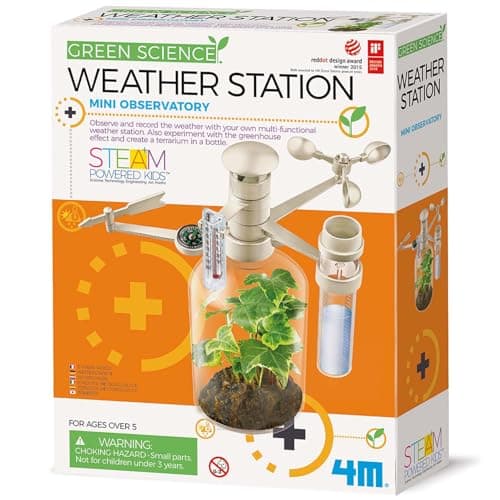
A weather station is one of very few science kits with no published ending. 4M publishes four working instruments — wind vane, anemometer, thermometer and rain gauge — and once built, nothing is consumed. The weather supplies new data every day at no cost.
Block & Beaker earns a commission when you buy through our links, at no cost to you. It never changes a ranking, and we say so plainly when the right answer is the cheaper set, or nothing at all. Full disclosure · How we pick.
At a glance
The picks, ranked
Tap any row to jump to the full reasoning. Prices come live from Amazon where we have them and read “check price” where we don’t — never a number we cannot stand behind today.
| # | Product | Best for | Price |
|---|---|---|---|
| 1 | Best weather science kit 4M Weather Station Kit Four real working instruments, no consumables, and a fresh result every morning. | Eight and up, for a child who will take a daily reading | |
| 2 | 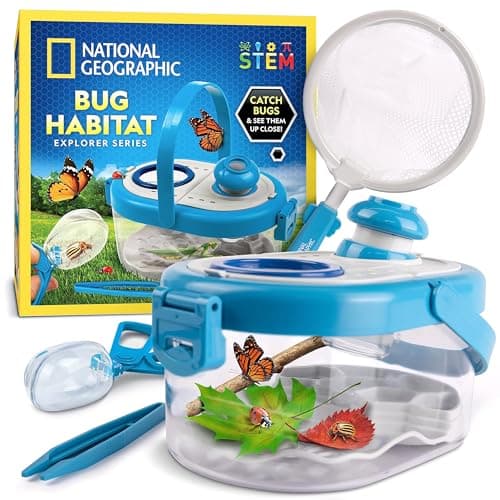 Best outdoor kit for younger children NATIONAL GEOGRAPHIC Bug Catcher Kit The same go-outside-and-observe habit with no reading, no build and no consumables. | Four and up, where a weather station is years away | |
| 3 | 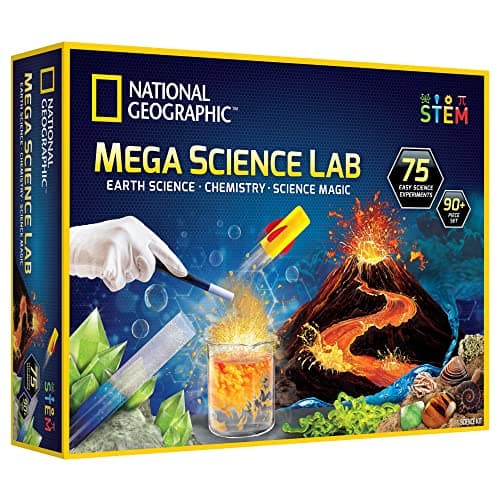 Best breadth around earth science NATIONAL GEOGRAPHIC Mega Science Lab 45 in-kit experiments across chemistry and earth science, plus 85+ using household items. | Eight and up, when weather is one interest among several | |
| 4 | Best other no-ending instrument My First Lab Duo-Scope Microscope Real optical glass, dual LED lighting and five blank slides — a tool rather than a kit. | Nine and up, indoors, in any weather | Sold direct by My First Lab → Not stocked on Amazon. This link goes to the maker and we earn nothing on it. |
| — | 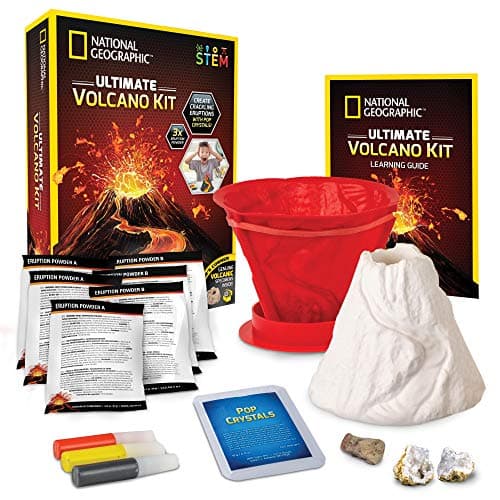 Not an earth-science instrument NATIONAL GEOGRAPHIC Volcano Science Kit Shelved alongside weather kits as earth science, and it is a model rather than a measurement. | Eight and up, for one dramatic afternoon |
5 picks, including 1 we tell you to skip. Ages shown are the manufacturer’s own rating, not ours.
Why weather is the exception in this category
Almost every science kit on this site publishes a finite number somewhere — ten geodes, 28 experiments, eight crystal powders. Weather does not, because the thing being measured regenerates on its own.
The arithmetic
What runs out, across earth science
| 4M Weather Station | Nothing — four permanent instruments |
|---|---|
| Bug Catcher Kit | Nothing — specimens are outside and free |
| Rock tumbler | Four grits, then free rocks |
| Volcano kit | Eruption powder, then kitchen ingredients |
| Break Open Geodes | Ten geodes, definitively |
| Mega Crystal kit | Eight growing powders |
What four instruments actually give a child
A wind vane gives direction. On its own it is trivial. Paired with a few days of records it produces the first real pattern a child finds themselves — that weather tends to arrive from one side.
An anemometer gives speed. This is the instrument children actually enjoy building, because the cups spin and the mechanism is visible.
A rain gauge gives a number that is usually zero. Worth preparing for. The days it is not zero are the days the whole thing pays off.
A thermometer gives the baseline everything else is compared against.
The value is not in any single reading. It is that four numbers taken daily become a record, and a record is the first time most children encounter data as something they made rather than something they were given.
The build is the hard part
4M publishes a long parts list — support column halves, arms for each instrument, anemometer cups and hub, short and long spindles, cap screws. That is a genuine assembly project, and it is where the 8+ rating comes from.
Expect to help. An adult who sits down for the build and then hands the finished station over gets a child taking readings alone for months; an adult who hands over the box gets a bag of plastic arms.
Worth knowing before you buy
A weather station has to live outdoors to work, which means somewhere it will not blow away and a child does not have to climb to reach. A low wall, a fence post or a balcony rail is ideal.
The assembled unit is small — about 8.5 by 4.75 inches — so it needs securing rather than simply placing.
The honest limitation
A kit weather station is a teaching instrument, not a precision one. The thermometer is adequate, the rain gauge is approximate, and the anemometer gives a relative reading rather than a calibrated wind speed.
That does not matter for what it is for. A child comparing today against yesterday needs consistency, not accuracy, and a kit delivers consistency perfectly well. It is worth setting the expectation before somebody compares a reading against a forecast and concludes the kit is broken.
Say the unwelcome thing
Do not buy a weather kit for a household that will not go outside
Every reading requires somebody stepping out of the door, most often in bad weather, because bad weather is when the numbers are interesting.
If that is unlikely, buy the instrument that works indoors on any afternoon — see microscopes for kids.
Where to go next
Outdoor and nature kits covers the wider outdoor category. Lab tools that never run out makes the tools-over-kits argument in full, and science kits a child can use alone covers the supervision question.
In full
Every pick, and what is wrong with it
Published specifications only, each linked back to the page it came from. Where a manufacturer publishes nothing, the row says so — we do not fill blanks in.
1. Best weather science kit
4M Weather Station Kit
4M · 4573 · maker rates it 8+
Four real working instruments, no consumables, and a fresh result every morning.
- Instruments built
- 4 — wind vane, anemometer, thermometer and rain gauge
- Contents
- Thermometer and support arm, two support-column halves, rain gauge arm, funnel, plastic tube, wind vane and arm, compass, anemometer arm, cups, hub, spindles, cap screws, instructions
- Assembled size
- About 8.5 in x 4.75 in
- Extra experiment
- A greenhouse-effect terrarium using a recycled bottle
4M publishes a kit building four instruments — a functional wind vane, an anemometer, a thermometer and a rain gauge — with a full parts list including the support column halves, funnel, plastic tube, compass, anemometer cups and hub, spindles and cap screws. Assembled it measures about 8.5 by 4.75 inches, rated 8 and up, with a Green Science version rated 5+.
Four instruments is what makes this a station rather than a gadget. A thermometer alone tells a child the temperature; four instruments together let them describe a day, and then compare it against yesterday.
The kit also publishes a greenhouse-effect terrarium experiment using a recycled bottle, which costs nothing and is the one part that teaches a mechanism rather than a measurement.
Replay signal
- Open-ended or one-shot
- Genuinely open-ended: the weather supplies new data every single day
- Does anything run out
- Nothing runs out
- Room to grow
- Readings become a record; the interest scales into charting and comparison
- Adult required
- For the build, which is fiddly; not for the daily readings
Why we say so: 4M publishes four working instruments and a full parts list. Once built, nothing is consumed and the sky restocks the experiment daily — which makes this one of the few science kits with no published ending.
What’s wrong with it
The build is fiddly and genuinely needs an adult; the assembled station is small.
| Instruments built | 4 — wind vane, anemometer, thermometer and rain gauge |
|---|---|
| Contents | Thermometer and support arm, two support-column halves, rain gauge arm, funnel, plastic tube, wind vane and arm, compass, anemometer arm, cups, hub, spindles, cap screws, instructions |
| Assembled size | About 8.5 in x 4.75 in |
| Extra experiment | A greenhouse-effect terrarium using a recycled bottle |
| Stated age | 8 and up (a Green Science version is rated 5+) |
| Consumables | None — the instruments are permanent |
Every figure above is from 4M, Weather Station Kit (4573). Blanks are shown as “not published” rather than filled in.
2. Best outdoor kit for younger children
NATIONAL GEOGRAPHIC Bug Catcher Kit
National Geographic · Bug Catcher Kit · maker rates it 4+
The same go-outside-and-observe habit with no reading, no build and no consumables.
- Habitat
- Clear bug habitat with a removable base
- Viewers
- Latching lid with two magnified viewers — one fixed, one movable
- Tools
- Scissor-style bug catcher, net, tweezers
- Includes
- Learning guide
National Geographic publishes a clear habitat with a removable base, a latching lid with two magnified viewers, a scissor-style catcher, a net, tweezers and a learning guide, rated 4+, with no consumables.
Weather kits are rated 8+ because assembling an anemometer takes real dexterity. For a younger child who wants to be outdoors doing science, this works immediately and never runs out either.
Replay signal
- Open-ended or one-shot
- Completely open-ended for the age — the garden restocks it
- Does anything run out
- Nothing runs out
- Room to grow
- Pairs naturally with a low-power microscope when the child wants a closer look
- Adult required
- For the catch-and-release rule; not for the looking
Why we say so: National Geographic publishes a habitat with two magnified viewers, a scissor catcher, a net and tweezers, rated 4+. The scissor catcher is the specification worth noticing: it lets a four-year-old pick up an insect without crushing it, which is the difference between a nature kit and a lesson about being gentle.
What’s wrong with it
Not weather, and it is weather-dependent in the other sense.
| Habitat | Clear bug habitat with a removable base |
|---|---|
| Viewers | Latching lid with two magnified viewers — one fixed, one movable |
| Tools | Scissor-style bug catcher, net, tweezers |
| Includes | Learning guide |
| Stated age | 4+ |
| Consumables | None — the specimens are outside and free |
Every figure above is from National Geographic toys, Bug Catcher Kit. Blanks are shown as “not published” rather than filled in.
3. Best breadth around earth science
NATIONAL GEOGRAPHIC Mega Science Lab
National Geographic · Mega Science Lab · maker rates it 8+
45 in-kit experiments across chemistry and earth science, plus 85+ using household items.
- Experiments in the kit
- 45, across chemistry, earth science and science magic
- Bonus guide
- 85+ further experiments using household items, for 130+ in total
- Includes
- Volcano build, glow-in-the-dark crystal growth, and the tools for both
- Stated age
- 8+
National Geographic publishes 45 in-kit experiments spanning chemistry, earth science and science magic, plus a bonus guide of 85+ further experiments using household items, for 130+ in total, rated 8+.
If the child likes earth science generally rather than weather specifically, breadth beats a single instrument set — and the 85+ household experiments share the weather station’s best property of never running out.
Replay signal
- Open-ended or one-shot
- Guided, and the 45 in-kit experiments end. The 85 household ones do not
- Does anything run out
- The supplied materials run out; the household half of the book never does
- Room to grow
- The bonus guide is the genuinely durable part, and it costs the manufacturer almost nothing to include
- Adult required
- Supervision for the chemistry third; the earth science and household experiments are largely self-run
Why we say so: National Geographic publishes 45 in-kit experiments plus a bonus guide of 85+ using household items. That second number is why this kit outlasts most of its price band: roughly two-thirds of the published content needs nothing but a kitchen.
What’s wrong with it
The supplied chemicals are consumed; only the household half is durable.
| Experiments in the kit | 45, across chemistry, earth science and science magic |
|---|---|
| Bonus guide | 85+ further experiments using household items, for 130+ in total |
| Includes | Volcano build, glow-in-the-dark crystal growth, and the tools for both |
| Stated age | 8+ |
| Consumables | Yes — the supplied chemicals and crystal compounds are used up |
Every figure above is from National Geographic toys, Mega Science Lab. Blanks are shown as “not published” rather than filled in.
4. Best other no-ending instrument
My First Lab Duo-Scope Microscope
My First Lab · MFL-06 · maker rates it 9+
Real optical glass, dual LED lighting and five blank slides — a tool rather than a kit.
- Magnifications
- 40x, 100x and 400x, from a 10x eyepiece with 4x, 10x and 40x objectives
- Optics
- Real optical glass lenses
- Lighting
- Dual LED, above and below the stage
- Slides included
- 5 blank, 1 concavity (well), 4 prepared
My First Lab publishes 40x, 100x and 400x from a 10x eyepiece with 4x, 10x and 40x objectives, real optical glass, dual LED lighting above and below the stage, and 5 blank slides, rated 9 and older.
We include it because the argument on this page is really about tools versus kits. A weather station and a microscope are the two purchases here with no published ending, and a rainy week suits one of them considerably better.
Replay signal
- Open-ended or one-shot
- Genuinely open-ended, unusually so for a science purchase — the world is the consumable
- Does anything run out
- The four prepared slides run out; the five blanks and everything in the garden do not
- Room to grow
- Light from above as well as below means it works on rocks, leaves and insects, not only on slides
Why we say so: The manufacturer publishes the dual-LED lighting, the blank-slide count and the real-glass optics. Blank slides plus top lighting is what turns a microscope from four pictures into a thing you point at whatever you found outside.
What’s wrong with it
Rated 9+ and needs three AA batteries.
| Magnifications | 40x, 100x and 400x, from a 10x eyepiece with 4x, 10x and 40x objectives |
|---|---|
| Optics | Real optical glass lenses |
| Lighting | Dual LED, above and below the stage |
| Slides included | 5 blank, 1 concavity (well), 4 prepared |
| Stated age | Ages 9 and older |
| Batteries | 3 x AA (not included) |
| Weight | 1.95 lb |
Every figure above is from My First Lab, Duo-Scope MFL-06. Blanks are shown as “not published” rather than filled in.
Not stocked on Amazon. This link goes to the maker and we earn nothing on it.
Skip this one
NATIONAL GEOGRAPHIC Volcano Science Kit
National Geographic · Volcano Science Kit · maker rates it 8+
Shelved alongside weather kits as earth science, and it is a model rather than a measurement.
- Includes
- Plaster, volcano mold, paints and paintbrush, eruption powder, learning guide
- Rock specimens
- 2 — a geode and a pumice sample
- Mold
- Published as reusable, so the volcano survives repeat eruptions
- Eruptions
- Eruption powder for multiple eruptions; the powder is the consumable
National Geographic publishes plaster, a volcano mold, paints, eruption powder, two rock specimens and a learning guide, rated 8 years and up with adult supervision.
It is a good kit and it answers a different wish. A volcano is a demonstration you watch; a weather station is an instrument you read. A child who wants data collection will find the volcano over in ten seconds.
Replay signal
- Open-ended or one-shot
- Semi-open: the built volcano is permanent, the eruptions are not
- Does anything run out
- The eruption powder runs out; household bicarbonate and vinegar do not
- Room to grow
- Once the supplied powder is gone the same volcano erupts on kitchen ingredients
- Adult required
- Published as requiring adult supervision; the build stage involves wet plaster
Why we say so: National Geographic publishes a reusable mold and eruption powder for multiple eruptions. A reusable volcano is the difference between a single afternoon and a prop that keeps working on kitchen-cupboard chemistry.
What’s wrong with it
Plaster build plus consumable eruption powder.
| Includes | Plaster, volcano mold, paints and paintbrush, eruption powder, learning guide |
|---|---|
| Rock specimens | 2 — a geode and a pumice sample |
| Mold | Published as reusable, so the volcano survives repeat eruptions |
| Eruptions | Eruption powder for multiple eruptions; the powder is the consumable |
| Stated age | 8 years and up, adult supervision published |
| Consumables | Yes — plaster and eruption powder |
Every figure above is from National Geographic toys, Volcano Science Kit. Blanks are shown as “not published” rather than filled in.
We are not putting a buy button on this one. It is easy enough to find if you want it anyway — but we would rather send you to something that gets played with twice.
Questions people actually ask
Frequently asked
What is in a weather station kit for kids?
4M publishes four working instruments — a wind vane, an anemometer, a thermometer and a rain gauge — along with the support column, arms, funnel, tube, compass, anemometer cups and hub, spindles and screws. Assembled it measures about 8.5 by 4.75 inches.
What age is a weather science kit for?
4M publishes 8 and up for the standard Weather Station Kit, with a Green Science version rated 5+. The rating reflects the assembly rather than the readings — building an anemometer from cups, a hub and spindles takes real dexterity, and most children need help with it.
Do weather science kits run out?
No, and that is the main reason to buy one. Once built there are no consumables at all — the weather supplies fresh data every day at no cost. That makes it one of only two purchases in our science category with no published ending, alongside a microscope. Lab tools that never run out.
Are kids' weather stations accurate?
They are consistent rather than precise. The thermometer is adequate, the rain gauge approximate, and the anemometer gives a relative reading rather than a calibrated wind speed. For comparing today against yesterday that is entirely sufficient — but it is worth saying before somebody checks it against a forecast and assumes it is broken.
Sources
Where these figures came from
Every specification on this page traces to one of these. If a manufacturer publishes nothing on a point, the page says so rather than filling the gap.
Read next
Where to go from here
Back to Science Kits, or read how we pick.