The picks
STEM Gifts Under $20
Twenty dollars buys a real circuit kit or a real logic game. It also buys a lot of single afternoons, and the difference is published.
By Sawyer V. · Published
The short answer
The best thing under twenty dollars is a kit that publishes a reusable project count rather than a single activity. Snap Circuits Beginner publishes 21 projects from 14 parts with nothing consumable; Gravity Maze publishes 60 graded challenges; and Brain Flakes publishes 500 discs. Prices move — each buy button below shows the live price with the date it was checked.
Block & Beaker earns a commission when you buy through our links, at no cost to you. It never changes a ranking, and we say so plainly when the right answer is the cheaper set, or nothing at all. Full disclosure · How we pick.
At a glance
The picks, ranked
Tap any row to jump to the full reasoning. Prices come live from Amazon where we have them and read “check price” where we don’t — never a number we cannot stand behind today.
| # | Product | Best for | Price |
|---|---|---|---|
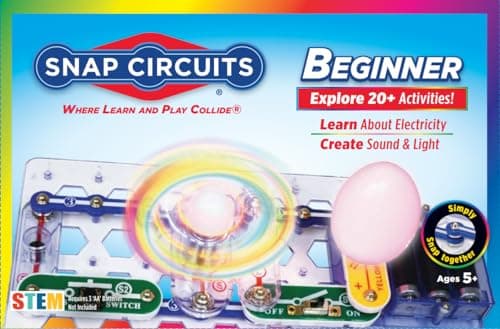
| 1 | Most real science per dollar Snap Circuits Beginner 21 projects from 14 snap-together parts, with no tools and nothing consumable. | Five to eight, as a first electronics kit | |
| 2 | 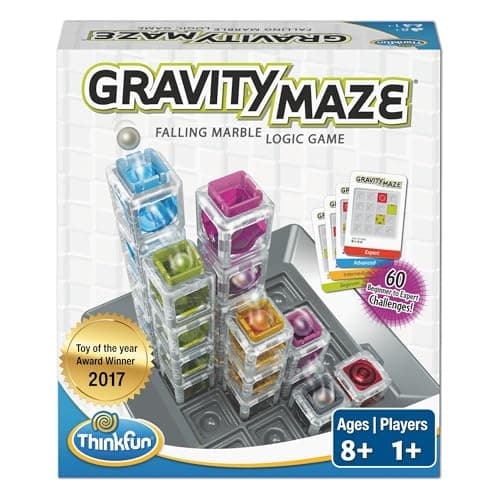 Longest-lasting under $20 ThinkFun Gravity Maze 60 graded challenges, 9 towers and 3 marbles — and it marks its own work. | Eight and up, playing alone | |
| 3 | 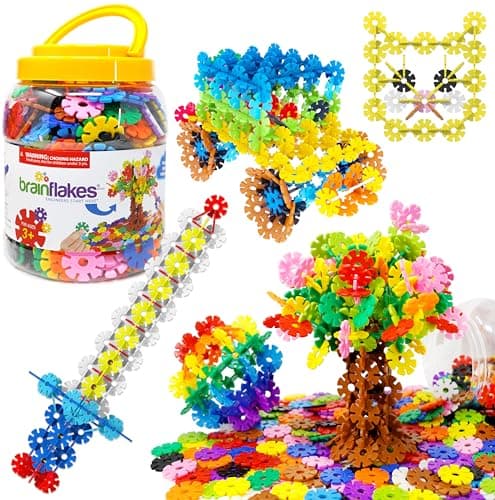 Most pieces under $20 Brain Flakes 500 Piece Interlocking Disc Set 500 interlocking discs in a storage jar, ASTM and CPSIA compliant. | Five to nine, for open-ended building | |
| 4 | 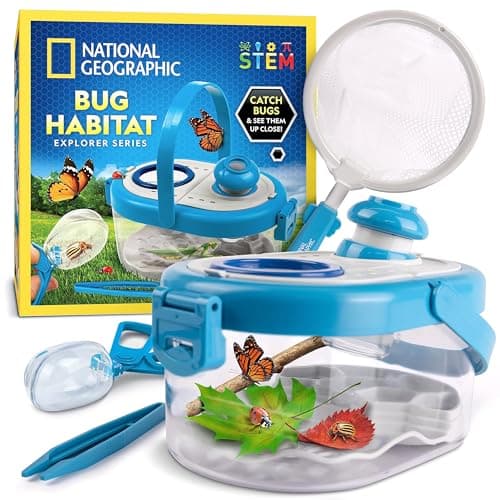 Best for a child who is already outside NATIONAL GEOGRAPHIC Bug Catcher Kit A habitat with two magnified viewers and real tools — and free, unlimited specimens. | Four to seven, with a garden or a park nearby | |
| 5 | 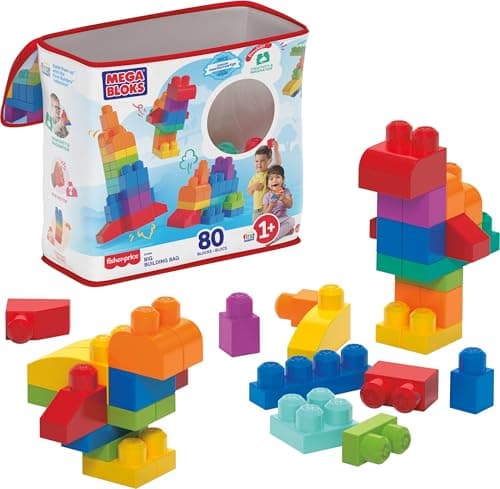 Best under $20 for a toddler MEGA BLOKS First Builders Big Building Bag, 80 Pieces 80 oversized pieces in 10 shapes, published at 1 and up, in a bag that tidies itself. | One to three | |
| — | 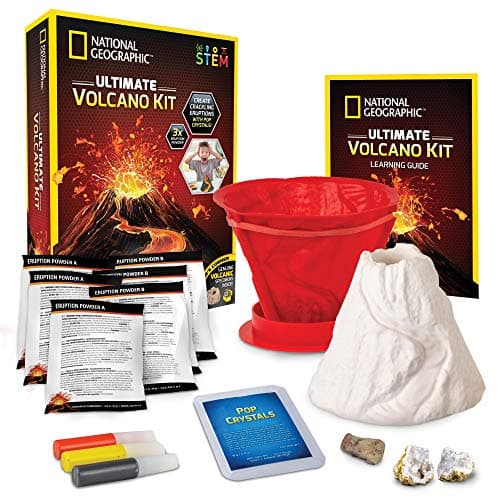 The cheap one to skip NATIONAL GEOGRAPHIC Volcano Science Kit Plaster, a reusable mold and eruption powder — the powder is the product. | Eight and up, for one memorable afternoon |
6 picks, including 1 we tell you to skip. Ages shown are the manufacturer’s own rating, not ours.
What twenty dollars buys, in published numbers
The arithmetic
Sub-$20 picks: published content and what runs out
| Snap Circuits Beginner | Ages 5-8 — 21 projects, 14 parts, no consumables |
|---|---|
| Gravity Maze | Ages 8+ — 60 graded challenges, no batteries, no consumables |
| Brain Flakes 500 | Ages 5 and up — 500 discs, one shape, ASTM and CPSIA named |
| Bug Catcher Kit | 4+ — habitat, 2 magnified viewers, net and tweezers; no consumables |
| MEGA BLOKS First Builders | 1 and up — 80 oversized pieces in 10 shapes |
| Volcano Science Kit | 8 and up — plaster consumed once, eruption powder finite |
The test that works at this price
Under twenty dollars the category splits cleanly into two kinds of product, and the packaging does not tell you which is which. One kind publishes a project count, a challenge count or a piece count. The other publishes an outcome — an eruption, a crystal, a slime — and the materials for it are used up.
Both are legitimate purchases. The mistake is paying the same money for a single afternoon believing it is the same thing as sixty graded challenges. Checking the consumables line takes a few seconds and separates them every time. See how to read a toy box.
A note on prices
Nothing on this page has a price printed in the text, and that is deliberate. Prices in this category move week to week, and a page with twenty-dollar figures baked into the copy is wrong within a month. Every buy button above pulls the live price and prints the date it was checked underneath it.
Two consequences worth knowing. First, a pick may drift above twenty dollars — the button will say so. Second, the opposite happens too, and the under-$50 page regularly contains items that fall into this band. If the budget is firm, read the buttons rather than the heading.
What to buy at each age for this money
One to three: oversized bricks. MEGA BLOKS publishes 1 and up, and there is nothing else at this price with that rating.
Four to seven: a field kit or a construction set. The Bug Catcher publishes 4+ with no consumables, and Brain Flakes publishes 500 discs from 5.
Five to eight: electronics. Snap Circuits Beginner publishes 21 projects at ages 5-8, which is the only real circuit kit in this band.
Eight and up: a graded logic game. Gravity Maze publishes 60 challenges and marks its own work, which is the most content-per-dollar on the page.
Worth knowing before you buy
So which one
One gift, make it count, they are eight: Gravity Maze.
They have never had electronics: Snap Circuits Beginner.
They build constantly and run out of pieces: Brain Flakes 500.
They are outdoors whenever they are allowed: the Bug Catcher Kit.
They are under three: MEGA BLOKS First Builders.
Say the unwelcome thing
Do not buy three cheap consumable kits instead of one real thing
Sixty dollars of eruption, slime and crystal kits is three afternoons and a bin bag. The same money is a Snap Circuits set with hundreds of published projects, or a microscope with light above and below the stage. If the budget is genuinely twenty dollars, buy one thing from the list above; if it is sixty, do not spend it three times.
Where to go next
STEM gifts under $50 is the band above and marks where the value cliffs are, small STEM gifts that travel covers the pocket-sized end, and gifts for a child you do not know well covers buying without knowing what they already own.
In full
Every pick, and what is wrong with it
Published specifications only, each linked back to the page it came from. Where a manufacturer publishes nothing, the row says so — we do not fill blanks in.
1. Most real science per dollar
Snap Circuits Beginner
Elenco · SCB-20 · maker rates it 5-8
21 projects from 14 snap-together parts, with no tools and nothing consumable.
- Projects
- 21
- Parts
- 14
- Projects per part
- 1.5
- Stated age
- Ages 5-8
Elenco publishes 21 projects from 14 parts, a projects-per-part figure of 1.5, no tools needed because the parts snap together, and no consumables, rated ages 5-8.
A genuine electronics kit under twenty dollars is the most surprising thing on this page. The parts are the same system as the larger Snap Circuits sets, so a child who gets on with it can be given the next rung up rather than a different product.
Read the ratio honestly: 1.5 projects per part is low, and the larger sets reach 9.4. That is the price of entry rather than a flaw — fourteen parts can only do so much. See the review and the whole line compared.
Replay signal
- Open-ended or one-shot
- Limited. 14 parts is a small vocabulary, and once the 21 projects are built the set goes quiet
- Does anything run out
- Nothing runs out
- Room to grow
- Parts work with the bigger sets, so it is not a dead end — but it is a short road
Why we say so: Elenco publishes 21 projects from 14 parts. That ratio is the whole story: this is the entry rung, and the number to hold it against is the 305 projects the Classic set publishes from 60+ parts.
What’s wrong with it
1.5 projects per part — the thinnest ratio in the Snap Circuits line.
| Projects | 21 |
|---|---|
| Parts | 14 |
| Projects per part | 1.5 |
| Stated age | Ages 5-8 |
| Tools needed | None — parts snap together |
| Consumables | None |
Every figure above is from Elenco, Snap Circuits Beginner. Blanks are shown as “not published” rather than filled in.
2. Longest-lasting under $20
ThinkFun Gravity Maze
ThinkFun · 44001006 · maker rates it 8+
60 graded challenges, 9 towers and 3 marbles — and it marks its own work.
- Challenges
- 60, beginner to expert
- Contents
- Game grid, 9 towers, 1 target piece, 3 marbles, 60 challenge cards
- Players
- 1
- Batteries
- None
ThinkFun publishes 60 challenges from beginner to expert, a game grid, 9 towers, 1 target piece, 3 marbles and 60 challenge cards, for a single player, with no batteries, rated ages 8+.
Sixty graded challenges at this price is the best content-per-dollar on the page, and the fact that it is self-proving is why it gets replayed: the marble reaches the target or it does not, so nobody has to be free to check an answer.
It is also a 3D building puzzle rather than a flat one, which is a genuinely different skill from the usual pocket puzzle. See the Gravity Maze review.
Replay signal
- Open-ended or one-shot
- Finite by design — 60 challenges, and a determined child will finish them
- Does anything run out
- Nothing physically runs out, but the challenge cards do end
- Room to grow
- The towers can be used freely once the cards are done, though nothing in the box prompts that
Why we say so: ThinkFun publishes 60 challenges and a fixed component list. Sixty is a real number with a real end, and single-player puzzle games are the category where that matters most — better to know before you buy it as the main present.
What’s wrong with it
Three marbles and a published 8+ rating. A table game, not a floor game.
| Challenges | 60, beginner to expert |
|---|---|
| Contents | Game grid, 9 towers, 1 target piece, 3 marbles, 60 challenge cards |
| Players | 1 |
| Batteries | None |
| Stated age | Ages 8+ |
| Consumables | None |
Every figure above is from ThinkFun, Gravity Maze. Blanks are shown as “not published” rather than filled in.
3. Most pieces under $20
Brain Flakes 500 Piece Interlocking Disc Set
VIAHART · Brain Flakes 500 · maker rates it 5+
500 interlocking discs in a storage jar, ASTM and CPSIA compliant.
- Pieces
- 500 interlocking discs
- Disc size
- 1.3 inches across, 1/10 inch thick
- Includes
- Storage jar and idea booklet
- Materials
- BPA-free; free from lead, heavy metals and phthalates
VIAHART publishes 500 interlocking discs at 1.3 inches across and 1/10 inch thick, BPA-free and free from lead, heavy metals and phthalates, compliant with ASTM and US CPSIA, with a storage jar and idea booklet, rated 5 and up.
Five hundred pieces under twenty dollars is the cheapest answer on this site to the complaint that ends construction play, which is running out of material halfway through an idea.
The discs join at many angles, so curves and spheres are possible where square bricks force right angles. It also names its compliance, which is unusual at this price. See the Brain Flakes review.
Replay signal
- Open-ended or one-shot
- Open-ended, and the discs curve — which means spheres and domes, not just walls
- Does anything run out
- Nothing runs out
- Room to grow
- 500 identical pieces is enough for structures a child cannot exhaust
Why we say so: VIAHART publishes the 500-piece count, the disc dimensions and compliance with ASTM and CPSIA. Naming the actual standards is unusual at this price and is a genuine reason to prefer it over unbranded equivalents.
What’s wrong with it
One shape only. The variety is entirely in what gets built.
| Pieces | 500 interlocking discs |
|---|---|
| Disc size | 1.3 inches across, 1/10 inch thick |
| Includes | Storage jar and idea booklet |
| Materials | BPA-free; free from lead, heavy metals and phthalates |
| Standards named | ASTM and US CPSIA compliant |
| Stated age | 5 and up |
Every figure above is from VIAHART, Brain Flakes 500 Piece Interlocking Disc Set. Blanks are shown as “not published” rather than filled in.
4. Best for a child who is already outside
NATIONAL GEOGRAPHIC Bug Catcher Kit
National Geographic · Bug Catcher Kit · maker rates it 4+
A habitat with two magnified viewers and real tools — and free, unlimited specimens.
- Habitat
- Clear bug habitat with a removable base
- Viewers
- Latching lid with two magnified viewers — one fixed, one movable
- Tools
- Scissor-style bug catcher, net, tweezers
- Includes
- Learning guide
National Geographic publishes a clear bug habitat with a removable base, a latching lid with two magnified viewers — one fixed, one movable — a scissor-style bug catcher, a net, tweezers and a learning guide, rated 4+, with no consumables because the specimens are outside and free.
Zero consumables at this price is rare, and it is the whole argument. Most cheap science gifts are one activity in a box; this is equipment whose supply of things to look at never runs out.
It is also the lowest published age that still counts as real science equipment. See the Bug Catcher review and outdoor nature kits.
Replay signal
- Open-ended or one-shot
- Completely open-ended for the age — the garden restocks it
- Does anything run out
- Nothing runs out
- Room to grow
- Pairs naturally with a low-power microscope when the child wants a closer look
- Adult required
- For the catch-and-release rule; not for the looking
Why we say so: National Geographic publishes a habitat with two magnified viewers, a scissor catcher, a net and tweezers, rated 4+. The scissor catcher is the specification worth noticing: it lets a four-year-old pick up an insect without crushing it, which is the difference between a nature kit and a lesson about being gentle.
What’s wrong with it
Useless indoors. This is a gift for a household that goes out.
| Habitat | Clear bug habitat with a removable base |
|---|---|
| Viewers | Latching lid with two magnified viewers — one fixed, one movable |
| Tools | Scissor-style bug catcher, net, tweezers |
| Includes | Learning guide |
| Stated age | 4+ |
| Consumables | None — the specimens are outside and free |
Every figure above is from National Geographic toys, Bug Catcher Kit. Blanks are shown as “not published” rather than filled in.
5. Best under $20 for a toddler
MEGA BLOKS First Builders Big Building Bag, 80 Pieces
MEGA · DCH62 · maker rates it 1+
80 oversized pieces in 10 shapes, published at 1 and up, in a bag that tidies itself.
- Pieces
- 80, in 10 shapes and 9 colors
- Includes
- Reusable storage bag; an attachable wheelbase
- Stated age
- 1 and up
- Block size
- Oversized — designed for toddler hands
MEGA publishes 80 pieces in 10 shapes and 9 colors, oversized and designed for toddler hands, with a reusable storage bag and an attachable wheelbase, rated 1 and up, with no consumables.
The lowest published age of any construction set on this site, and the only pick here that works for a one-year-old. Ten shapes rather than three is what separates this from the cheapest own-brand blocks: a set with two shapes builds towers and nothing else.
It is a two-to-three-year toy, which is fine at this price. See the review and STEM toys for 1 year olds.
Replay signal
- Open-ended or one-shot
- Open-ended, and at this age that is the entire point
- Does anything run out
- Nothing runs out
- Room to grow
- Outgrown at four or five, when the child's hands are ready for smaller bricks
Why we say so: MEGA publishes the 80-piece count across 10 shapes and 9 colors with a 1+ rating. A 1+ rating on a construction toy means the pieces have passed small-parts testing for children who still mouth things, which is the specification that matters most at this age and the reason most brick sets start at three.
What’s wrong with it
Outgrown by four or five. The published block size is the ceiling.
| Pieces | 80, in 10 shapes and 9 colors |
|---|---|
| Includes | Reusable storage bag; an attachable wheelbase |
| Stated age | 1 and up |
| Block size | Oversized — designed for toddler hands |
| Consumables | None |
Every figure above is from MEGA, First Builders Big Building Bag. Blanks are shown as “not published” rather than filled in.
Skip this one
NATIONAL GEOGRAPHIC Volcano Science Kit
National Geographic · Volcano Science Kit · maker rates it 8+
Plaster, a reusable mold and eruption powder — the powder is the product.
- Includes
- Plaster, volcano mold, paints and paintbrush, eruption powder, learning guide
- Rock specimens
- 2 — a geode and a pumice sample
- Mold
- Published as reusable, so the volcano survives repeat eruptions
- Eruptions
- Eruption powder for multiple eruptions; the powder is the consumable
National Geographic publishes plaster, a volcano mold, paints and a paintbrush, eruption powder, a learning guide and two rock specimens — a geode and a pumice sample — with a mold published as reusable and eruption powder for multiple eruptions, rated 8 years and up with adult supervision published.
It is not a bad kit and it is genuinely fun once. It is on this page because it is the shape of cheap science gift to recognize: the headline is an eruption, the plaster is consumed building the cone, and the powder is finite. Priced per afternoon it is the most expensive thing here.
Buy it as a second small present rather than the gift. See the review and volcano science kits.
Replay signal
- Open-ended or one-shot
- Semi-open: the built volcano is permanent, the eruptions are not
- Does anything run out
- The eruption powder runs out; household bicarbonate and vinegar do not
- Room to grow
- Once the supplied powder is gone the same volcano erupts on kitchen ingredients
- Adult required
- Published as requiring adult supervision; the build stage involves wet plaster
Why we say so: National Geographic publishes a reusable mold and eruption powder for multiple eruptions. A reusable volcano is the difference between a single afternoon and a prop that keeps working on kitchen-cupboard chemistry.
What’s wrong with it
Published 8 and up with adult supervision, and the plaster is used once.
| Includes | Plaster, volcano mold, paints and paintbrush, eruption powder, learning guide |
|---|---|
| Rock specimens | 2 — a geode and a pumice sample |
| Mold | Published as reusable, so the volcano survives repeat eruptions |
| Eruptions | Eruption powder for multiple eruptions; the powder is the consumable |
| Stated age | 8 years and up, adult supervision published |
| Consumables | Yes — plaster and eruption powder |
Every figure above is from National Geographic toys, Volcano Science Kit. Blanks are shown as “not published” rather than filled in.
We are not putting a buy button on this one. It is easy enough to find if you want it anyway — but we would rather send you to something that gets played with twice.
Questions people actually ask
Frequently asked
What is the best STEM gift under $20?
On published content, Gravity Maze - ThinkFun publishes 60 graded challenges, 9 towers and 3 marbles at ages 8+, with no batteries and nothing consumable. For a younger child, Snap Circuits Beginner publishes 21 projects from 14 parts at ages 5-8.
Can you buy a real electronics kit for under $20?
Yes. Elenco publishes Snap Circuits Beginner with 21 projects from 14 parts, no tools needed and no consumables, rated ages 5-8. The parts are the same system as the larger sets, so the next rung up is an upgrade rather than a replacement. Snap Circuits compared.
How do I tell a cheap gift from a cheap afternoon?
Read the consumables line. A kit that publishes a project, challenge or piece count keeps working; a kit whose headline is an outcome - an eruption, a crystal, a slime - uses its materials up. Five of the six picks on this page publish nothing consumable. How to read a toy box.
Why are no prices written on this page?
Because they move. Every buy button pulls the live price from Amazon and prints the date it was checked underneath, so a figure typed into the copy would be wrong within weeks. If the budget is firm, read the buttons rather than the heading.
What STEM gift under $20 works for a 2 year old?
MEGA BLOKS First Builders Big Building Bag - 80 oversized pieces in 10 shapes and 9 colors with an attachable wheelbase, published at 1 and up. It is the lowest published age of any construction set here. STEM toys for 2 year olds.
Is a volcano kit a good cheap gift?
As a second present, yes. National Geographic publishes it at 8 and up with adult supervision, a reusable mold and finite eruption powder - but the plaster is consumed building the cone, so priced per afternoon it is the most expensive thing in this band. Volcano science kits.
Is it better to buy one $20 gift or three $7 ones?
One. Three cheap consumable kits is three afternoons; one set with a published project or challenge count is months. If the budget is larger than twenty dollars, spend it once rather than three times. STEM gifts under $50.
Sources
Where these figures came from
Every specification on this page traces to one of these. If a manufacturer publishes nothing on a point, the page says so rather than filling the gap.
Read next
Where to go from here
Back to Gift Guides, or read how we pick.