The picks
Coding Robots for Kids
Ask how long a program can be. It is published, it is comparable, and it predicts longevity better than anything else on the box.
By Sawyer V. · Published
The short answer
Botley 2.0 publishes sequences of up to 150 steps with no tablet or app required — a ceiling no five-year-old reaches for years. That combination, a long published step limit and genuine screen independence, is what separates a robot that lasts from one that is finished in a fortnight.
Block & Beaker earns a commission when you buy through our links, at no cost to you. It never changes a ranking, and we say so plainly when the right answer is the cheaper set, or nothing at all. Full disclosure · How we pick.
At a glance
The picks, ranked
Tap any row to jump to the full reasoning. Prices come live from Amazon where we have them and read “check price” where we don’t — never a number we cannot stand behind today.
| # | Product | Best for | Price |
|---|---|---|---|
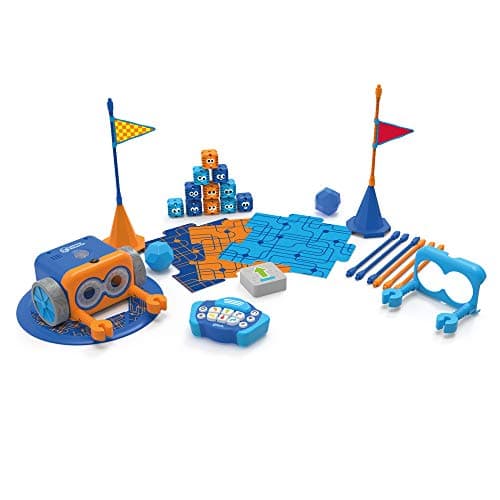
| 1 | Best overall Botley 2.0 The Coding Robot Activity Set A 150-step program ceiling, 78 pieces of maze, and no tablet anywhere in the published requirements. | Five and up, and any household that does not want another screen negotiation | |
| 2 | 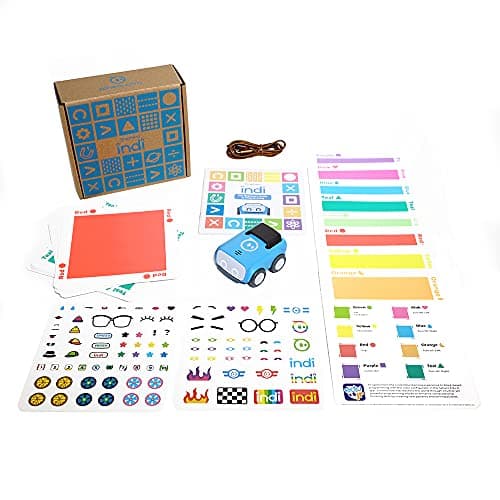 Best upgrade path Sphero indi At-Home Learning Kit Color cards with no screen first, then block coding in a free app on the same robot when they are ready. | Four and up, where you want one robot to cover several years | |
| 3 | 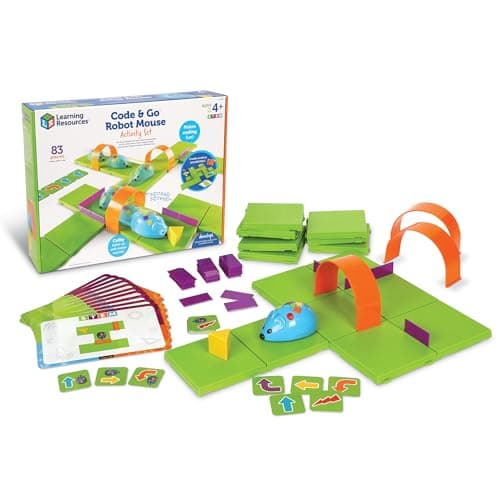 Best value Code & Go Robot Mouse Activity Set Eighty-three pieces including sixteen rearrangeable maze grids, with picture-based cards and no reading required. | Four and five, and a child who cannot read yet | |
| 4 | 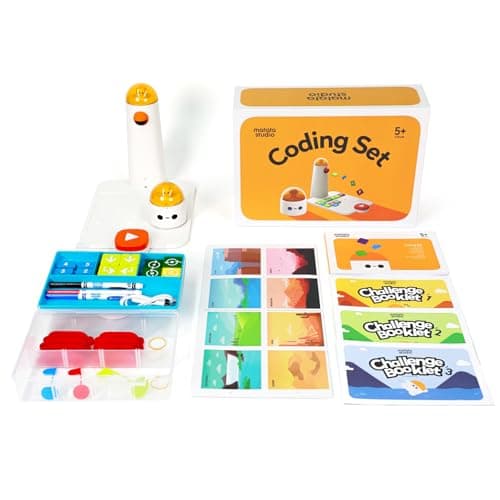 Best screen-free system MatataStudio (Matatalab) Coding Set Thirty-seven coding blocks read by a camera tower, rechargeable, with no literacy required. | Four to nine, where you want physical coding blocks rather than cards | |
| — | 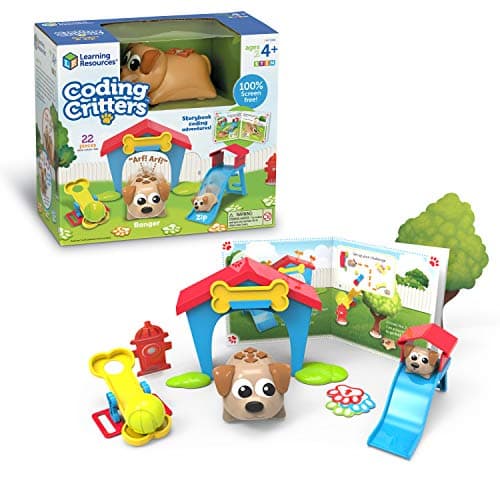 The one to skip as a coding toy Coding Critters Ranger & Zip A charming interactive toy with a storybook, and a coding ceiling low enough that it is not really the category. | A four-year-old who wants a pet, not a four-year-old who wants to code |
5 picks, including 1 we tell you to skip. Ages shown are the manufacturer’s own rating, not ours.
The step ceiling is the specification that matters
Coding robots are sold on personality and bought on hope, and almost every review in this category grades them on charm. There is a published, comparable number that predicts longevity far better: how many steps the robot can hold in one program.
The arithmetic
Published program ceilings
| Botley 2.0 — maximum sequence length | 150 steps |
|---|---|
| Botley 2.0 — coded interactions | 16 |
| Botley 2.0 — directions of movement | 6 |
| Code & Go Robot Mouse — rearrangeable maze grids | 16 |
| Matatalab — coding blocks supplied | 37 |
| Sphero indi — color cards supplied | 30 |
| Coding Critters — published step ceiling | None published |
A child who has understood the idea will reach for longer sequences almost immediately, and a robot that stops at eight or ten steps stops being interesting at the exact moment the child gets good at it.
Screen-free is a specification, not a slogan
Learning Resources publishes Botley as “100% screen-free play” with no tablet or app required. MatataStudio publishes its set as screen-free, app-free and internet-free. Those are checkable product claims.
Why it matters is practical rather than ideological. A robot that needs an iPad competes with everything else on that iPad, and in most households the iPad is already negotiated. The screen-free robot gets used on a wet Tuesday because using it requires no permission.
The counter-argument is real: screen-based coding gives richer feedback, and the free-app upgrade on a robot like indi is genuinely useful at eight or nine. The best answer is a robot that does both, in that order — which is exactly what indi publishes.
What a coding robot actually teaches
Three things, honestly:
Sequencing. That order matters, and that the same instructions in a different order produce a different result.
Debugging. That when it goes wrong, the fault is in the instructions rather than in the machine — and that you can find it by stepping through.
Precision. That the robot does exactly what it was told rather than what was meant. This is the one that transfers furthest and the one children find hardest.
What it does not teach is syntax, abstraction or data structures, and no manufacturer above claims otherwise in its own copy. The realistic claim is that a child who has debugged a six-step route to a plastic cheese wedge will not be frightened by a loop at eleven. That is worth having, and it is worth being accurate about.
Worth knowing before you buy
The published battery requirements are the thing that ruins first mornings. Botley 2.0 requires five AAA cells, not included. The Code & Go Robot Mouse requires three AAA, not included. Buy them at the same time.
Rechargeable alternatives avoid the problem entirely — MatataStudio publishes built-in cells with USB-C charging, and Sphero publishes 2+ hours of play per charge on indi. Across two years that is usually cheaper as well as less annoying.
Say the unwelcome thing
Do not buy the expensive robot for a five-year-old
The gap between what a card-driven robot teaches a five-year-old and what a two-hundred-dollar robot teaches the same five-year-old is much smaller than the price gap. Sequencing and debugging are sequencing and debugging.
Expensive robots earn their money at nine or ten, when a child wants to write real code and the simple robot has nowhere left to go. Buy the cheap one now and the buildable one in four years, and you will have spent less and had more.
What to buy
- Four to five, pre-reading: Code & Go Robot Mouse. Picture cards, no reading, rearrangeable maze.
- Five to eight, one robot for several years: Botley 2.0, for the 150-step ceiling.
- Four and up, wanting a screen path later: Sphero indi.
- A child who wants to hold the program: Matatalab, for the physical blocks.
For the youngest end of this category see screen-free coding toys. For children who want to build the robot rather than drive it, robot kits. And for the screen question in full, coding toys versus coding apps.
In full
Every pick, and what is wrong with it
Published specifications only, each linked back to the page it came from. Where a manufacturer publishes nothing, the row says so — we do not fill blanks in.
1. Best overall
Botley 2.0 The Coding Robot Activity Set
Learning Resources · LER2938 · maker rates it 5+
A 150-step program ceiling, 78 pieces of maze, and no tablet anywhere in the published requirements.
- Set size
- 78 pieces
- Contents
- Botley 2.0, remote programmer, 2 face plates, 40 coding cards, 6 double-sided boards, 27 obstacle pieces, starter guide
- Maximum program length
- “coding sequences of up to 150 steps”
- Movement
- Six directions, plus 16 coded interactions
Learning Resources publishes the numbers that matter: coding sequences of up to 150 steps, six directions of movement, 16 coded interactions, and 100% screen-free play with no tablet or app required.
One hundred and fifty steps is the specification that makes this last. A five-year-old will build sequences of five or six steps and work upward for years without meeting the ceiling. Compare that to toys that store eight or ten steps, where a capable child exhausts the hardware in the first fortnight.
The 78-piece set is the other half. Forty coding cards, six double-sided boards and 27 obstacle pieces mean the child builds the problem as well as the solution — and a rearrangeable maze does not become solved.
Replay signal
- Open-ended or one-shot
- Open-ended once the cards are understood — the child builds the maze, not just the program
- Does anything run out
- Nothing runs out except batteries
- Room to grow
- A 150-step ceiling means the challenge scales for years past the first week
- Adult required
- Needed for the first session, then not — there is no app account and nothing to log into
Why we say so: Learning Resources publishes the 78-piece contents, the 150-step maximum sequence, the six directions and 16 interactions, and states the set is 100% screen-free with no tablet or app required.
What’s wrong with it
Five AAA batteries, not included. Buy them with it or the first morning is a disappointment.
| Set size | 78 pieces |
|---|---|
| Contents | Botley 2.0, remote programmer, 2 face plates, 40 coding cards, 6 double-sided boards, 27 obstacle pieces, starter guide |
| Maximum program length | “coding sequences of up to 150 steps” |
| Movement | Six directions, plus 16 coded interactions |
| Screen required | None — “100% screen-free play” |
| Batteries | “Requires 5 AAA batteries (not included)” |
| Stated age | 5+ (K-2nd grade) |
Every figure above is from Learning Resources, Botley 2.0 Activity Set. Blanks are shown as “not published” rather than filled in.
2. Best upgrade path
Sphero indi At-Home Learning Kit
Sphero · indi · maker rates it 4+
Color cards with no screen first, then block coding in a free app on the same robot when they are ready.
- Contents
- 1 indi robot, 30 color cards, charging cable, 2 sticker sheets, activity booklet, tape to fix the cards down
- Card mix
- 5 green, 4 yellow, 3 red, 2 purple, 3 teal, 3 orange, 5 blue, 5 pink
- How it is coded
- An on-board color sensor reads the cards; no screen needed
- Play time
- “2+ hours of play on a full charge”, USB charging
Sphero publishes an on-board color sensor as the programming mechanism: the robot reads colored cards laid on the floor, so the program is the route rather than a stored sequence. The kit includes 30 color cards with a published breakdown by color, plus a charging cable, sticker sheets, an activity booklet and tape to fix the cards down. Play time is published at 2+ hours per charge.
The upgrade path is the reason this scores so well on replay. The same hardware accepts drag-and-drop block coding in the free Sphero Edu Jr app once the child outgrows cards. That is one purchase covering two quite different stages, published by the manufacturer rather than inferred by us.
Rechargeable, too, which after two years of AAA cells is a real saving as well as a smaller annoyance.
Replay signal
- Open-ended or one-shot
- Very open-ended for the age: the child lays the track out across the whole floor
- Does anything run out
- Nothing runs out; recharges by USB
- Room to grow
- Screen-free cards first, then the same robot accepts block coding in the free app when the child is ready
- Adult required
- Not after setup — the program is the floor, and the child builds it
Why we say so: Sphero publishes the 30-card color breakdown, the on-board color sensor as the programming method, the 2+ hours per charge, and the optional step up to drag-and-drop blocks in Sphero Edu Jr.
What’s wrong with it
The program is physically taped to the floor, which is charming at four and impractical in a room that has to be tidied.
| Contents | 1 indi robot, 30 color cards, charging cable, 2 sticker sheets, activity booklet, tape to fix the cards down |
|---|---|
| Card mix | 5 green, 4 yellow, 3 red, 2 purple, 3 teal, 3 orange, 5 blue, 5 pink |
| How it is coded | An on-board color sensor reads the cards; no screen needed |
| Play time | “2+ hours of play on a full charge”, USB charging |
| Optional app | Sphero Edu Jr drag-and-drop blocks |
| Stated age | Ages 4 and up |
Every figure above is from Sphero, indi At-Home Learning Kit. Blanks are shown as “not published” rather than filled in.
3. Best value
Code & Go Robot Mouse Activity Set
Learning Resources · LER2831 · maker rates it 4+
Eighty-three pieces including sixteen rearrangeable maze grids, with picture-based cards and no reading required.
- Set size
- 83 pieces
- Contents
- Colby the robot mouse, 16 maze grids, 22 maze walls, 3 tunnels, 30 double-sided coding cards, 10 activity cards, cheese wedge, activity guide
- Maze size
- The 16 grids build a 20″ x 20″ board
- Screen required
- None
Learning Resources publishes 83 pieces: Colby the robot mouse, 16 maze grids that build a 20-inch square board, 22 maze walls, 3 tunnels, 30 double-sided coding cards, 10 activity cards, a cheese wedge and an activity guide.
The coding cards use directional symbols rather than words, which is the specification that makes this work at four. A four-year-old who cannot read a single instruction can still sequence six cards and watch the mouse follow them, and that is the whole of what early coding teaching is.
Sixteen rearrangeable grids is the other important number. The mouse is fixed in capability, so the difficulty has to come from the maze — and a maze with sixteen tiles and 22 walls is a new problem every time.
Replay signal
- Open-ended or one-shot
- The mouse is fixed, but the maze is not — 16 grids and 22 walls is a new problem every time
- Does anything run out
- Nothing runs out
- Room to grow
- The 10 activity cards are a starting ladder; after that the child sets the puzzles
- Adult required
- Reading is not required — the coding cards use directional symbols, so a four-year-old can work alone
Why we say so: Learning Resources publishes the 83-piece contents including 16 rearrangeable grids and 22 walls, and states the cards are picture-based. A rearrangeable maze is why this does not become a solved puzzle after one weekend.
What’s wrong with it
The mouse itself is simple — there is no meaningful step ceiling to grow into, so the longevity comes entirely from rebuilding the maze.
| Set size | 83 pieces |
|---|---|
| Contents | Colby the robot mouse, 16 maze grids, 22 maze walls, 3 tunnels, 30 double-sided coding cards, 10 activity cards, cheese wedge, activity guide |
| Maze size | The 16 grids build a 20″ x 20″ board |
| Screen required | None |
| Batteries | 3 x AAA (not included) |
| Stated age | Ages 4+ |
Every figure above is from Learning Resources, Code & Go Robot Mouse Activity Set. Blanks are shown as “not published” rather than filled in.
4. Best screen-free system
MatataStudio (Matatalab) Coding Set
MatataStudio · Coding Set · maker rates it 4+
Thirty-seven coding blocks read by a camera tower, rechargeable, with no literacy required.
- Contents
- Robot car, command tower, control board, 37 coding blocks, 8 obstacles, 3 flags, 3 challenge booklets, nature map
- Screen required
- None — “screen-free, app-free and internet-free”
- Literacy required
- None — blocks use “intuitive graphic symbols” and directional language
- Power
- Rechargeable — 500 mAh cell in the robot, 2000 mAh in the command tower, USB-C
MatataStudio publishes the full contents: robot car, command tower, control board, 37 coding blocks, 8 obstacles, 3 flags, 3 challenge booklets and a nature map, for ages 4 to 9. The set is published as screen-free, app-free and internet-free.
Physical blocks in a tray are a meaningfully different experience from cards on the floor. The child builds the program in one place and then presses go, which is closer to how programming actually feels and makes it much easier to see and edit a sequence before running it.
The blocks use graphic symbols so no literacy is required, and both units recharge over USB-C — published as a 500 mAh cell in the robot and 2000 mAh in the tower.
Replay signal
- Open-ended or one-shot
- Semi-open: three challenge booklets first, then free building on the map
- Does anything run out
- Nothing runs out, and it recharges rather than eating AAAs
- Room to grow
- Add-on sets extend the same command tower into music and drawing
- Adult required
- No reading needed, so a four-year-old can set up a run unaided
Why we say so: MatataStudio publishes the full contents list, the rechargeable cell capacities, and states the blocks use graphic symbols so no literacy is required.
What’s wrong with it
Two devices to charge rather than one, and the command tower has to be positioned correctly each time — more setup friction than a card-based robot.
| Contents | Robot car, command tower, control board, 37 coding blocks, 8 obstacles, 3 flags, 3 challenge booklets, nature map |
|---|---|
| Screen required | None — “screen-free, app-free and internet-free” |
| Literacy required | None — blocks use “intuitive graphic symbols” and directional language |
| Power | Rechargeable — 500 mAh cell in the robot, 2000 mAh in the command tower, USB-C |
| Stated age | Ages 4 to 9 |
Every figure above is from MatataStudio, Coding Set. Blanks are shown as “not published” rather than filled in.
Skip this one
Coding Critters Ranger & Zip
Learning Resources · LER3081 · maker rates it 4+
A charming interactive toy with a storybook, and a coding ceiling low enough that it is not really the category.
- Set size
- 22 pieces
- Screen required
- None — “100% screen-free coding”
- Format
- Interactive pet plus playset and a storybook of coding activities
- Stated age
- Ages 4+
Learning Resources publishes a 22-piece set, 100% screen-free, built around an interactive pet, a playset and a storybook of coding activities, rated 4+.
The absence in that specification is the telling part. Botley publishes a 150-step maximum sequence; Coding Critters publishes a storybook. That is not an oversight — it is an accurate description of a product whose coding is a narrative device rather than a programmable system.
As a toy for a four-year-old it is genuinely lovely, and the pretend play outlasts the coding by a wide margin. We are marking it as the skip because it is bought as a coding robot and priced like one, and at similar money the Robot Mouse gives a child something they can actually program.
Replay signal
- Open-ended or one-shot
- Half toy, half coding set — the pretend play carries on long after the programming stops
- Does anything run out
- Nothing runs out
- Room to grow
- Little: the coding ceiling here is low by design
- Adult required
- The storybook is read-aloud at four; the pet is not
Why we say so: Learning Resources publishes the 22-piece count, the screen-free format and the storybook-led activity structure. We call the coding ceiling low because the published format is a storybook sequence rather than a programmable step count — compare Botley's published 150-step maximum.
What’s wrong with it
No published step ceiling, because the format is a storybook sequence rather than a programmable one. As a coding purchase it is finished quickly.
| Set size | 22 pieces |
|---|---|
| Screen required | None — “100% screen-free coding” |
| Format | Interactive pet plus playset and a storybook of coding activities |
| Stated age | Ages 4+ |
| Consumables | None |
Every figure above is from Learning Resources, Coding Critters. Blanks are shown as “not published” rather than filled in.
We are not putting a buy button on this one. It is easy enough to find if you want it anyway — but we would rather send you to something that gets played with twice.
Questions people actually ask
Frequently asked
What is the best coding robot for a 5-year-old?
Botley 2.0. Learning Resources publishes a 150-step maximum sequence, six directions and 16 interactions, with 100% screen-free play and no app required — a ceiling a five-year-old will not reach for years.
Do coding robots need a tablet?
Some do and some explicitly do not. Botley 2.0 and the Matatalab Coding Set are both published as needing no screen or app at all. Osmo's coding kits publish an iPad as a requirement. Check the manufacturer's own statement, because retailer listings are inconsistent.
How many steps should a coding robot remember?
More than the child can plan. Botley publishes 150 steps, which no five-year-old exhausts. A robot that stores eight or ten steps stops being interesting at exactly the moment the child gets good at it.
Are Coding Critters good coding toys?
They are lovely interactive toys with a low coding ceiling. Learning Resources publishes a storybook-led activity format rather than a step count, which is an accurate description — the coding is a narrative device. At similar money the Robot Mouse gives a child something they can genuinely program.
Do coding robots need batteries?
Botley 2.0 publishes five AAA cells, not included, and the Code & Go Robot Mouse publishes three AAA, not included. Matatalab and Sphero indi are rechargeable, which over two years is usually cheaper as well as less annoying.
Sources
Where these figures came from
Every specification on this page traces to one of these. If a manufacturer publishes nothing on a point, the page says so rather than filling the gap.
Read next
Where to go from here
Back to Coding & Robotics, or read how we pick.