The picks
Lab Tools for Kids That Never Run Out
Most science kits are experiences with an end. Tools are the exception, and they are the better purchase for a child who is actually interested.
By Sawyer V. · Published
The short answer
A science kit is priced against an afternoon; a tool is priced against years. The best published options are a dual-LED microscope, which works on specimens that cost nothing, and a bug catcher, whose specimen supply is the garden. Neither has a consumable and neither has an experiment count to exhaust.
Block & Beaker earns a commission when you buy through our links, at no cost to you. It never changes a ranking, and we say so plainly when the right answer is the cheaper set, or nothing at all. Full disclosure · How we pick.

At a glance
The picks, ranked
Tap any row to jump to the full reasoning. Prices come live from Amazon where we have them and read “check price” where we don’t — never a number we cannot stand behind today.
| # | Product | Best for | Price |
|---|---|---|---|
| 1 | Best microscope for a child My First Lab Duo-Scope Microscope Real optical glass and dual LED lighting, which together decide whether a microscope gets used twice. | Nine and up, as the tool that outlasts every kit | Sold direct by My First Lab → Not stocked on Amazon. This link goes to the maker and we earn nothing on it. |
| 2 | 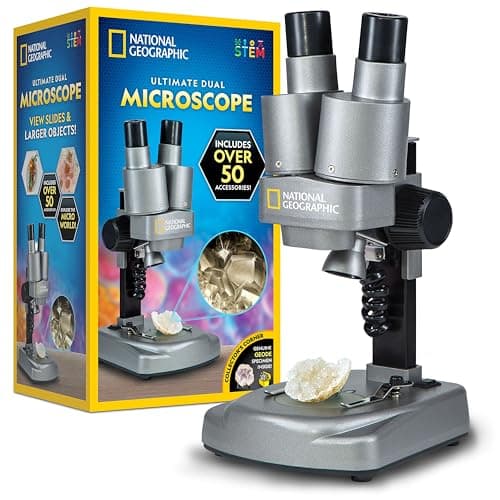 Best for a younger child NATIONAL GEOGRAPHIC Dual LED Student Microscope 20x and 50x from real optical glass, with upper and lower LEDs, at a lighter 2.6 lb. | Eight and up, with lower magnification and less frustration | |
| 3 | 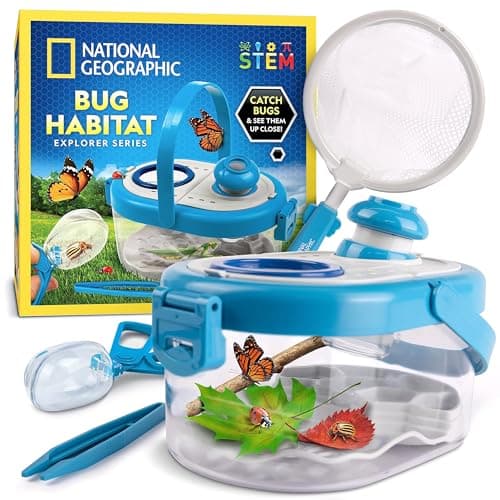 Best first tool NATIONAL GEOGRAPHIC Bug Catcher Kit A habitat, a scissor-style catcher, a net and tweezers — and a specimen supply that is the whole garden. | Four and up, where the specimens are free and outside | |
| 4 | 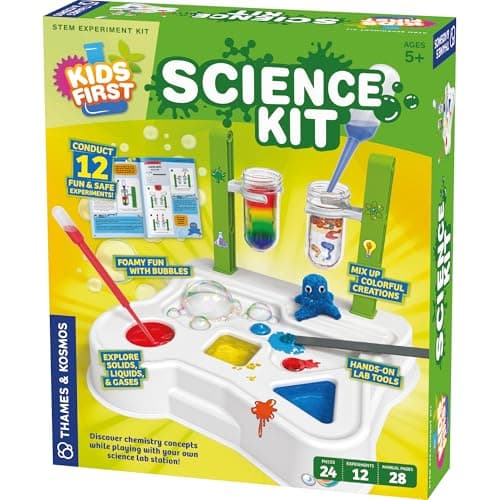 Best tool set for under-sevens Kids First Science Laboratory Twenty-four durable plastic tools and ten experiment cards, with no chemicals at all. | Three to six, before a microscope makes sense | |
| — | 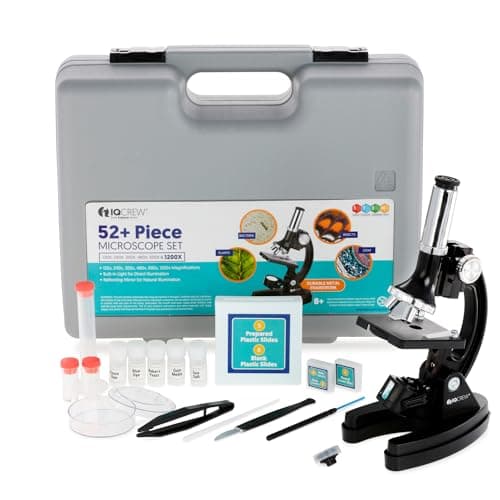 Not the child's microscope AmScope 120X-1200X Beginner Microscope Kit A metal-framed instrument with a 52-piece accessory kit, and no published age rating at all. | A teenager or an adult beginner |
5 picks, including 1 we tell you to skip. Ages shown are the manufacturer’s own rating, not ours.
Why tools outlast kits
Most of the science category is consumable. National Geographic publishes ten geodes in its Break Open kit; Thames & Kosmos publishes five chemicals across 28 experiments in the C500; 4M publishes three bags of compound across seven crystal experiments. Those are experiences with a defined length, and there is nothing wrong with buying one — as long as you know that is what you are buying.
A tool has no such number. There is no experiment count to finish and nothing to use up, so the thing that decides its lifespan is the child’s interest rather than the contents of the box.
The arithmetic
Consumable or permanent, as published
| Break Open Geodes | 10 geodes — then it is finished |
|---|---|
| Chemistry C500 | 5 chemicals across 28 experiments |
| 4M Crystal Growing | 7 experiments, compound is the product |
| Duo-Scope microscope | No consumables; 5 blank slides invite more |
| Bug Catcher Kit | No consumables — specimens are outside |
| Kids First Science Lab | No chemicals; household materials |
The one specification that decides a microscope
Buy on lighting, not magnification. A scope that lights the specimen from above can look at anything opaque — a leaf, a beetle, a coin, a grain of sand, the corner of a jumper. A scope that only lights from below needs specimens thin enough for light to pass through, which in practice means the prepared slides that came in the box.
That is the difference between a supply of things to look at that runs out in an afternoon and one that never does. Both microscopes above publish dual LED lighting for exactly this reason.
Worth knowing before you buy
A bug catcher is a tool for looking, not keeping. The published kit includes a habitat with a removable base so specimens can be returned to where they were found, which is the part worth saying out loud to a four-year-old before you start.
Who each tool suits
Four to seven: the bug catcher, then the Kids First tool set. Both work outdoors or at a kitchen table and neither needs reading.
Eight: the National Geographic dual-LED scope at 20x and 50x. Honest magnification, light enough to carry, and forgiving of a child who has not used one before.
Nine and up: the Duo-Scope, with its blank slides and dual lighting. This is the one that stays useful into secondary school.
Say the unwelcome thing
Do not buy on the magnification number
A large number on the box is the easiest thing to print and the least useful thing to own. Past the resolving power of the objective lens, more magnification produces a bigger, dimmer blur.
Buy the scope that lights specimens from above and comes with blank slides. That combination is what keeps it in use after the prepared slides are done.
Where to go next
For microscopes in detail, see microscopes for kids. For the other half of the optics question, microscope or telescope first. For outdoor gear, outdoor and nature kits.
In full
Every pick, and what is wrong with it
Published specifications only, each linked back to the page it came from. Where a manufacturer publishes nothing, the row says so — we do not fill blanks in.
1. Best microscope for a child
My First Lab Duo-Scope Microscope
My First Lab · MFL-06 · maker rates it 9+
Real optical glass and dual LED lighting, which together decide whether a microscope gets used twice.
- Magnifications
- 40x, 100x and 400x, from a 10x eyepiece with 4x, 10x and 40x objectives
- Optics
- Real optical glass lenses
- Lighting
- Dual LED, above and below the stage
- Slides included
- 5 blank, 1 concavity (well), 4 prepared
My First Lab publishes real optical glass lenses, dual LED lighting above and below the stage, five blank slides, one concavity slide and four prepared slides, rated 9 and older, weighing 1.95 lb.
Lighting from above is the specification that matters and almost nobody explains why. Light from below works only on things thin enough to see through, which means prepared slides — a finite supply. Light from above works on leaves, insects, coins, salt, fabric and sand, which is an infinite one.
The five blank slides are the other half of that. A microscope with blank slides invites a child to find their own specimen, which is when it stops being a toy and becomes an instrument.
Replay signal
- Open-ended or one-shot
- Genuinely open-ended, unusually so for a science purchase — the world is the consumable
- Does anything run out
- The four prepared slides run out; the five blanks and everything in the garden do not
- Room to grow
- Light from above as well as below means it works on rocks, leaves and insects, not only on slides
Why we say so: The manufacturer publishes the dual-LED lighting, the blank-slide count and the real-glass optics. Blank slides plus top lighting is what turns a microscope from four pictures into a thing you point at whatever you found outside.
What’s wrong with it
Rated 9+, and needs three AA batteries that are not included.
| Magnifications | 40x, 100x and 400x, from a 10x eyepiece with 4x, 10x and 40x objectives |
|---|---|
| Optics | Real optical glass lenses |
| Lighting | Dual LED, above and below the stage |
| Slides included | 5 blank, 1 concavity (well), 4 prepared |
| Stated age | Ages 9 and older |
| Batteries | 3 x AA (not included) |
| Weight | 1.95 lb |
Every figure above is from My First Lab, Duo-Scope MFL-06. Blanks are shown as “not published” rather than filled in.
Not stocked on Amazon. This link goes to the maker and we earn nothing on it.
2. Best for a younger child
NATIONAL GEOGRAPHIC Dual LED Student Microscope
National Geographic · Dual LED Student Microscope · maker rates it 8+
20x and 50x from real optical glass, with upper and lower LEDs, at a lighter 2.6 lb.
- Magnifications
- 20x and 50x, from two sets of optical glass lenses
- Lighting
- Upper and lower LED
- Accessories
- 50+ pieces, including 10 prepared slides, blank slides and covers, tweezers, eye-dropper and a mini geode
- Weight
- 2.6 lb
National Geographic publishes 20x and 50x magnification from two sets of optical glass lenses, upper and lower LED lighting, rated 8+.
Twenty and fifty are honest numbers. Magnification beyond an objective’s resolving power produces a bigger blur rather than more detail, and it dims the image at the same time. A scope claiming 1200x on a plastic lens is selling a number, not a view.
Replay signal
- Open-ended or one-shot
- Open-ended, and the low magnification is the reason — 20x is where insects and leaves look extraordinary
- Does anything run out
- The 10 prepared slides run out; blank slides and the garden do not
- Room to grow
- Limited on magnification, generous on subject matter
Why we say so: National Geographic publishes 20x and 50x with upper and lower LED lighting. Low magnification plus top lighting is a deliberate design for looking at whole objects rather than slides, which for a child under about ten is a far better first microscope than a 1000x compound scope they cannot focus.
What’s wrong with it
Low magnification compared with the numbers printed on cheaper scopes — deliberately.
| Magnifications | 20x and 50x, from two sets of optical glass lenses |
|---|---|
| Lighting | Upper and lower LED |
| Accessories | 50+ pieces, including 10 prepared slides, blank slides and covers, tweezers, eye-dropper and a mini geode |
| Weight | 2.6 lb |
| Stated age | 8+ |
Every figure above is from National Geographic toys, Dual LED Student Microscope. Blanks are shown as “not published” rather than filled in.
3. Best first tool
NATIONAL GEOGRAPHIC Bug Catcher Kit
National Geographic · Bug Catcher Kit · maker rates it 4+
A habitat, a scissor-style catcher, a net and tweezers — and a specimen supply that is the whole garden.
- Habitat
- Clear bug habitat with a removable base
- Viewers
- Latching lid with two magnified viewers — one fixed, one movable
- Tools
- Scissor-style bug catcher, net, tweezers
- Includes
- Learning guide
National Geographic publishes a clear bug habitat with a removable base, a scissor-style bug catcher, a net, tweezers and a learning guide, rated 4+, with no consumables — the specimens are outside and free.
This is the cheapest entry to the permanent half of the category and frequently the most used. The published consumables line says it exactly: nothing in the box is spent, and the supply of things to look at is the outdoors.
Replay signal
- Open-ended or one-shot
- Completely open-ended for the age — the garden restocks it
- Does anything run out
- Nothing runs out
- Room to grow
- Pairs naturally with a low-power microscope when the child wants a closer look
- Adult required
- For the catch-and-release rule; not for the looking
Why we say so: National Geographic publishes a habitat with two magnified viewers, a scissor catcher, a net and tweezers, rated 4+. The scissor catcher is the specification worth noticing: it lets a four-year-old pick up an insect without crushing it, which is the difference between a nature kit and a lesson about being gentle.
What’s wrong with it
Weather-dependent, and it needs somewhere outdoors to go.
| Habitat | Clear bug habitat with a removable base |
|---|---|
| Viewers | Latching lid with two magnified viewers — one fixed, one movable |
| Tools | Scissor-style bug catcher, net, tweezers |
| Includes | Learning guide |
| Stated age | 4+ |
| Consumables | None — the specimens are outside and free |
Every figure above is from National Geographic toys, Bug Catcher Kit. Blanks are shown as “not published” rather than filled in.
4. Best tool set for under-sevens
Kids First Science Laboratory
Thames & Kosmos · Kids First Science Laboratory · maker rates it 3-6+
Twenty-four durable plastic tools and ten experiment cards, with no chemicals at all.
- Contents
- 24 large plastic scientific tools, described as durable, reusable and easy to handle
- Experiment cards
- 10, double-sided
- Stated age
- 3 to 6+
- Chemicals included
- None — experiments use household materials
Thames & Kosmos publishes 24 large plastic scientific tools described as durable, reusable and easy to handle, with 10 double-sided experiment cards, no chemicals included, rated 3 to 6+.
“No chemicals included” reads like a limitation and is the reason this set has no ending. The tools are permanent and the materials come from the kitchen.
Replay signal
- Open-ended or one-shot
- The 20 card sides are a starting ladder; the tools then work on anything in the kitchen
- Does anything run out
- Nothing in the box runs out, because nothing in the box is consumed
- Room to grow
- The same tools carry into any household-materials experiment for years
- Adult required
- Yes at three, less so at five. The cards are picture-led but the setup is not
Why we say so: Thames & Kosmos publishes 24 reusable tools and no chemicals. A preschool science kit with no consumables in it is unusual, and it is the reason this one survives past its first fortnight when kit-of-the-week alternatives do not.
What’s wrong with it
Experiments use household materials, so an adult has to have read the card first.
| Contents | 24 large plastic scientific tools, described as durable, reusable and easy to handle |
|---|---|
| Experiment cards | 10, double-sided |
| Stated age | 3 to 6+ |
| Chemicals included | None — experiments use household materials |
| Consumables | None in the box |
Every figure above is from Thames & Kosmos, Kids First range. Blanks are shown as “not published” rather than filled in.
Skip this one
AmScope 120X-1200X Beginner Microscope Kit
AmScope · M30-ABS-KT2 · maker rates it 8+
A metal-framed instrument with a 52-piece accessory kit, and no published age rating at all.
- Magnifications
- Six levels — 120x, 240x, 300x, 480x, 600x and 1200x
- Frame
- Metal arm, with stage clips
- Lighting
- Built-in LED plus a reflecting mirror
- Extras
- Rotating color filter wheel; 52-piece accessory kit
AmScope publishes a metal arm with stage clips, built-in LED plus a reflecting mirror, a rotating color filter wheel, a 52-piece accessory kit, a 70 × 65 mm stage — and a published “For ages 8+”.
Read that 8+ as a floor, not a fit. It is a real instrument and it is heavier, more fiddly and less forgiving than the scopes above.
The headline 120X-1200X range is also worth reading carefully. High magnification past the optics’ resolving power gives a larger, dimmer blur — which is why the 20x and 50x scope above is the better first purchase for a child.
Replay signal
- Open-ended or one-shot
- Open-ended — specimens are free and infinite
- Does anything run out
- The prepared slides in the accessory kit run out; blank slides do not
- Room to grow
- 1200x is well past what a child needs and past what the optics comfortably resolve, but the metal frame will outlast the interest
Why we say so: AmScope publishes six magnification levels, a metal arm and a 70 x 65 mm stage. Treat the top magnification with skepticism — at 1200x an entry-level objective delivers a large, dim, blurry image — and buy this for the metal frame and the usable lower range instead.
What’s wrong with it
The manufacturer publishes no stated age, and 1200x on a beginner scope is a number rather than a view.
| Magnifications | Six levels — 120x, 240x, 300x, 480x, 600x and 1200x |
|---|---|
| Frame | Metal arm, with stage clips |
| Lighting | Built-in LED plus a reflecting mirror |
| Extras | Rotating color filter wheel; 52-piece accessory kit |
| Stage | 70 x 65 mm |
| Shipping weight | 6 lb — AmScope publishes no product weight |
| Stated age | “For ages 8+” |
Every figure above is from AmScope, M30-ABS-KT2 microscope. Blanks are shown as “not published” rather than filled in.
We are not putting a buy button on this one. It is easy enough to find if you want it anyway — but we would rather send you to something that gets played with twice.
Questions people actually ask
Frequently asked
What is the best microscope for a child?
One with lighting above as well as below the stage. My First Lab publishes dual LED lighting and five blank slides on the Duo-Scope, rated 9+; National Geographic publishes 20x and 50x with upper and lower LEDs, rated 8+. Top lighting is what lets a child look at leaves, insects and sand rather than only the prepared slides. Microscopes, compared.
Is a high magnification microscope better for kids?
No. Magnification beyond the resolving power of the objective lens produces a larger, dimmer blur rather than more detail. A scope published at 20x and 50x with good lighting shows a child more than one advertising 1200x on a plastic lens.
Which science purchases do not run out?
Tools rather than kits. Microscopes, bug catchers and tool sets have no published consumables, so their lifespan is set by the child's interest. Geode kits, chemistry sets and crystal-growing kits all publish a finite quantity of the thing that makes them work.
What is the best first science tool for a four-year-old?
A bug catcher. National Geographic publishes a habitat with a removable base, a scissor-style catcher, a net and tweezers, rated 4+, with no consumables — the specimen supply is the garden, so it costs nothing to keep using.
Sources
Where these figures came from
Every specification on this page traces to one of these. If a manufacturer publishes nothing on a point, the page says so rather than filling the gap.
Read next
Where to go from here
Back to Science Kits, or read how we pick.