The picks
STEM Toys for 5 Year Olds
Five is the widest year in the whole category. Almost everything is available, and almost everything is a plausible mistake.
By Sawyer V. · Published
The short answer
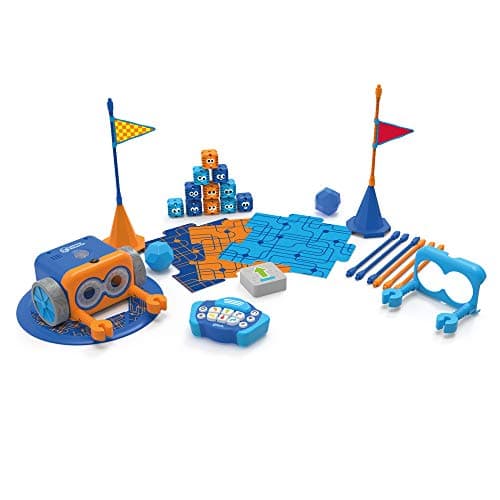
At five, buy the thing with the highest ceiling. Botley 2.0 publishes sequences of up to 150 steps and needs no tablet — a five-year-old will build six-step programs now and be nowhere near the limit at eight. That published ceiling is what separates a toy that lasts from one that is finished in a fortnight.
Block & Beaker earns a commission when you buy through our links, at no cost to you. It never changes a ranking, and we say so plainly when the right answer is the cheaper set, or nothing at all. Full disclosure · How we pick.
At a glance
The picks, ranked
Tap any row to jump to the full reasoning. Prices come live from Amazon where we have them and read “check price” where we don’t — never a number we cannot stand behind today.
| # | Product | Best for | Price |
|---|---|---|---|
| 1 | Best overall Botley 2.0 The Coding Robot Activity Set A 150-step published ceiling, 78 pieces of rearrangeable maze, and no screen anywhere. | Five, and the coding toy that is still interesting at eight | |
| 2 | 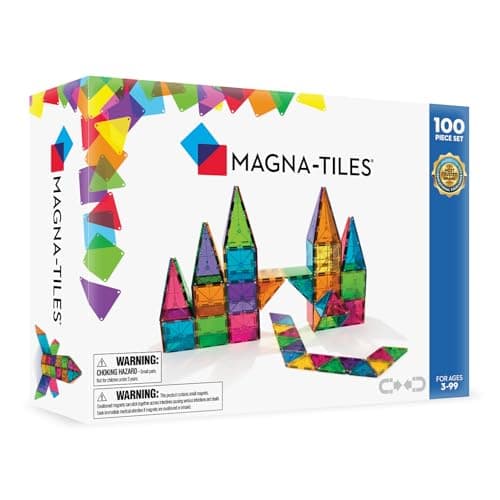 Best construction MAGNA-TILES Classic 100-Piece Set Still the highest-replay toy on this site at five, and now the child can build something ambitious with it. | A household that does not own tiles yet | |
| 3 | 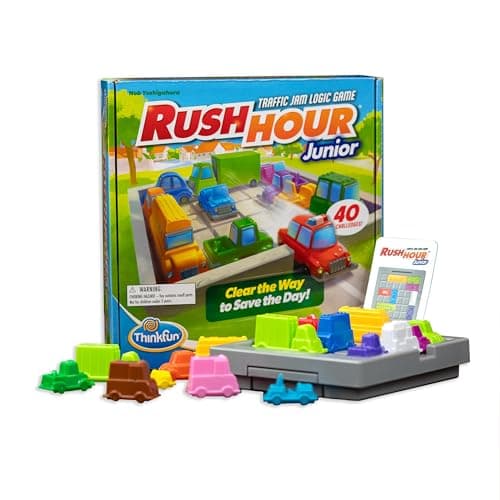 Best first logic game ThinkFun Rush Hour Junior Forty published challenges with rules a five-year-old grasps in half a minute, and a travel bag. | Five, and a child who will sit at a table alone | |
| 4 | 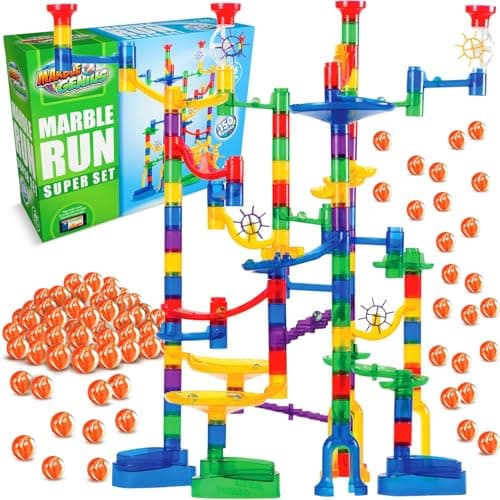 Best marble run Marble Genius Marble Run Super Set Eighty-five track pieces in nineteen styles over eight bases, three of them large. | Five, as a first plastic marble run | |
| — | 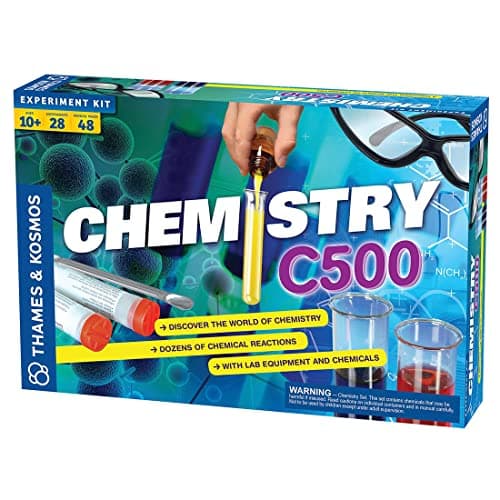 The one to skip Thames & Kosmos Chemistry C500 A genuinely good chemistry set, rated 10+, and not a rating to stretch by five years. | Ten and up, five years from now |
5 picks, including 1 we tell you to skip. Ages shown are the manufacturer’s own rating, not ours.
Why five is the hardest year to buy for
At three, almost nothing is available. At eight, almost everything is and the child can say what they want. Five sits between: the shelf has opened up, the child has strong opinions, and very little of the packaging tells you whether a toy will survive contact with them.
What actually distinguishes a good five-year-old purchase is the ceiling — how much harder the toy can get without needing to be replaced. A five-year-old improves fast, and a toy with a low ceiling gets outgrown inside a year while the child is still notionally the right age for it.
The ceiling test, applied
The arithmetic
How much room is above a five-year-old
| Botley 2.0 — maximum program length | 150 steps |
|---|---|
| Magna-Tiles Classic — stated age range | 3-99 years |
| Marble Genius — track pieces / styles | 85 / 19 |
| Rush Hour Junior — published challenges | 40 |
| Snap Circuits Beginner — projects | 21 |
What changes at five
Three things matter for buying.
Multi-step planning. A five-year-old can plan four or five steps ahead and hold it. That is what makes Botley’s longer sequences usable and what makes a logic puzzle solvable rather than random.
Early reading, unevenly. Some five-year-olds read confidently and some do not read at all. Assume they do not — a toy that works without reading works for both, and picture-based instructions cost a fluent reader nothing.
Real persistence, in short bursts. A five-year-old will stick with a failing attempt for several minutes now rather than abandoning it immediately. That is what makes marble runs and logic games work at this age and not at four.
Say the unwelcome thing
Do not buy the entry-level version of a system
At five the temptation is the small box: the 21-project circuit set, the 60-piece tile set, the two-challenge puzzle. They look age-appropriate and they are almost always the wrong call.
Elenco publishes 21 projects from 14 parts for the Beginner Snap Circuits set and 305 projects from over 60 parts for the Classic. That is roughly three times the price for roughly fifteen times the content, and a five-year-old with an adult alongside can use the bigger one.
Buy fewer, bigger things. It is cheaper across two years and it removes the moment where a child outgrows a present they still like.
Worth knowing before you buy
Batteries first: Botley 2.0 publishes five AAA cells, not included. Buy them with the toy.
Age ratings second, and specifically the difference between two kinds. A 3+ rating on tiles is a small-parts floor. A 10+ rating on a chemistry set is about the contents of the bottles. The first can sometimes be judged around by a parent who knows their child; the second cannot.
What to buy
- One present: Botley 2.0, for the 150-step ceiling.
- No tiles in the house: 100 magnetic tiles, still the highest-replay purchase here.
- Second, smaller present: Rush Hour Junior. Travels, self-checking, forty challenges.
- They liked the wooden marble run: Marble Genius, for the base count.
Next year brings Snap Circuits and subscription boxes — the six-year-old page. For the coding category in full, coding robots.
In full
Every pick, and what is wrong with it
Published specifications only, each linked back to the page it came from. Where a manufacturer publishes nothing, the row says so — we do not fill blanks in.
1. Best overall
Botley 2.0 The Coding Robot Activity Set
Learning Resources · LER2938 · maker rates it 5+
A 150-step published ceiling, 78 pieces of rearrangeable maze, and no screen anywhere.
- Set size
- 78 pieces
- Contents
- Botley 2.0, remote programmer, 2 face plates, 40 coding cards, 6 double-sided boards, 27 obstacle pieces, starter guide
- Maximum program length
- “coding sequences of up to 150 steps”
- Movement
- Six directions, plus 16 coded interactions
Learning Resources publishes a 78-piece set — Botley, a remote programmer, two face plates, 40 coding cards, six double-sided boards, 27 obstacle pieces and a starter guide — with coding sequences of up to 150 steps, six directions, 16 interactions and 100% screen-free play, rated 5+ or grades K-2.
One hundred and fifty steps is the number that makes this a three-year purchase rather than a one-year one. A five-year-old will build sequences of five or six steps and work upward for years without meeting the ceiling.
The 27 obstacle pieces matter as much. The child builds the maze as well as the program, which means the difficulty scales with them rather than with a fixed challenge deck.
Replay signal
- Open-ended or one-shot
- Open-ended once the cards are understood — the child builds the maze, not just the program
- Does anything run out
- Nothing runs out except batteries
- Room to grow
- A 150-step ceiling means the challenge scales for years past the first week
- Adult required
- Needed for the first session, then not — there is no app account and nothing to log into
Why we say so: Learning Resources publishes the 78-piece contents, the 150-step maximum sequence, the six directions and 16 interactions, and states the set is 100% screen-free with no tablet or app required.
What’s wrong with it
Five AAA batteries, not included. Buy them at the same time or the first morning goes badly.
| Set size | 78 pieces |
|---|---|
| Contents | Botley 2.0, remote programmer, 2 face plates, 40 coding cards, 6 double-sided boards, 27 obstacle pieces, starter guide |
| Maximum program length | “coding sequences of up to 150 steps” |
| Movement | Six directions, plus 16 coded interactions |
| Screen required | None — “100% screen-free play” |
| Batteries | “Requires 5 AAA batteries (not included)” |
| Stated age | 5+ (K-2nd grade) |
Every figure above is from Learning Resources, Botley 2.0 Activity Set. Blanks are shown as “not published” rather than filled in.
2. Best construction
MAGNA-TILES Classic 100-Piece Set
Magna-Tiles · 4300 · maker rates it 3-99 years
Still the highest-replay toy on this site at five, and now the child can build something ambitious with it.
- Pieces
- 100
- Shape mix
- 50 squares, 4 large squares, 20 equilateral triangles, 11 right triangles, 15 isosceles triangles
- Stated age
- “3-99 Years”
- Material
- “Food-grade, non-toxic MABS plastic that are free from BPAs, phthalates, and latex”
Magna-Tiles publishes the full 100-piece shape mix, rated 3 to 99 years, with all pieces compatible across every Magna-Tiles set.
At three, magnetic tiles work because the magnets do the precision. At five they work for a different reason: the child now has a plan before they start, and a hundred tiles is enough to execute a plan rather than to discover one.
If tiles are already in the house, buy a marble run pack or a set with pentagons instead — novelty is the constraint at this point, not volume.
Replay signal
- Open-ended or one-shot
- Open-ended — there is no finished state to reach
- Does anything run out
- Nothing runs out
- Room to grow
- Every set combines with every other Magna-Tiles set
Why we say so: Magna-Tiles publishes the full 100-piece shape breakdown, lists no consumable parts, and states that “all pieces are compatible with and complementary to all other MAGNA-TILES sets.”
What’s wrong with it
If the household already has a hundred tiles, more of the same is the least effective thing you can add.
| Pieces | 100 |
|---|---|
| Shape mix | 50 squares, 4 large squares, 20 equilateral triangles, 11 right triangles, 15 isosceles triangles |
| Stated age | “3-99 Years” |
| Material | “Food-grade, non-toxic MABS plastic that are free from BPAs, phthalates, and latex” |
| Magnet retention | Signature lattice plus “fastening rivets keep magnets safe and secure” |
| Consumables | None |
Every figure above is from Magna-Tiles, Classic 100-Piece Set. Blanks are shown as “not published” rather than filled in.
3. Best first logic game
ThinkFun Rush Hour Junior
ThinkFun · 76583 · maker rates it 5+
Forty published challenges with rules a five-year-old grasps in half a minute, and a travel bag.
- Challenges
- 40, easy to expert
- Contents
- Ice cream truck, 15 blocking vehicles, 40 challenge cards, travel bag
- Players
- 1
- Batteries
- None
ThinkFun publishes 40 challenges from easy to expert with an ice cream truck, 15 blocking vehicles, 40 challenge cards and a travel bag, single-player, no batteries, rated 5+.
The rules are the shortest of anything on this page — get the truck out, cars only move forward and backward — which means the difficulty comes entirely from the puzzle rather than from remembering how to play.
The self-checking property matters at five: the truck either escapes or it does not, so no adult has to adjudicate and there is nothing to argue about.
Replay signal
- Open-ended or one-shot
- Finite — 40 challenges
- Does anything run out
- The cards end; the grid does not, and children invent their own jams
- Room to grow
- Steps up to the full Rush Hour at 8+, same idea with harder cards
Why we say so: ThinkFun publishes 40 challenges across four difficulty tiers and a travel bag. Forty single-player puzzles is a school holiday, not a year — which is the honest framing for a gift-buyer.
What’s wrong with it
Forty challenges is a school holiday. Buy it alongside something open-ended, not as the main present.
| Challenges | 40, easy to expert |
|---|---|
| Contents | Ice cream truck, 15 blocking vehicles, 40 challenge cards, travel bag |
| Players | 1 |
| Batteries | None |
| Stated age | Ages 5+ |
Every figure above is from ThinkFun, Rush Hour Junior. Blanks are shown as “not published” rather than filled in.
4. Best marble run
Marble Genius Marble Run Super Set
Marble Genius · Super Set · maker rates it 4-8
Eighty-five track pieces in nineteen styles over eight bases, three of them large.
- Total pieces
- 150
- Track pieces
- 85 translucent pieces in 19 distinct styles
- Marbles
- 65 glass
- Bases
- 8 solid bases, of which 3 are large
Marble Genius publishes 150 total pieces: 85 translucent track pieces in 19 distinct styles, 65 glass marbles and 8 solid bases of which 3 are large, rated ages 4-8.
The base count is the specification worth checking on any marble run, and eight bases including three large ones is what allows a genuinely tall build. Cheaper sets ship plenty of colorful track and two small bases, and the result has to be propped against a wall.
Nineteen distinct track styles is real variety, and at five a child can start to predict which piece will do what before placing it.
Replay signal
- Open-ended or one-shot
- Open-ended construction, with the marble supplying an immediate success condition
- Does anything run out
- Nothing runs out
- Room to grow
- Expansion sets in the same system; the base count is what limits height
Why we say so: Marble Genius publishes 85 track pieces across 19 styles and 8 bases including 3 large ones. The base count is the number to watch: bases decide how tall a run can stand before it topples, and a set with plenty of track and too few bases builds low and disappoints.
What’s wrong with it
Sixty-five glass marbles is padding — a run uses five or six at a time and the rest end up under furniture.
| Total pieces | 150 |
|---|---|
| Track pieces | 85 translucent pieces in 19 distinct styles |
| Marbles | 65 glass |
| Bases | 8 solid bases, of which 3 are large |
| Stated age | Ages 4-8 |
| Consumables | None, though 65 marbles is a number that only goes down |
Every figure above is from Marble Genius, Marble Run Super Set. Blanks are shown as “not published” rather than filled in.
Skip this one
Thames & Kosmos Chemistry C500
Thames & Kosmos · 665012 · maker rates it 10+
A genuinely good chemistry set, rated 10+, and not a rating to stretch by five years.
- Experiments
- 28
- Manual
- 48 pages
- Chemicals included
- 5
- Equipment
- Safety glasses, test tubes, dropper pipettes, double-headed measuring spoon
Thames & Kosmos publishes 28 experiments, a 48-page manual, five chemicals, safety glasses, test tubes and dropper pipettes, rated 10 years and up.
Chemistry sets appear in gift lists for five-year-olds with depressing regularity, usually because a child has said they like science. The 10+ rating on a set with real reagents is about what is in the bottles.
For a five-year-old who likes science, the right purchases are on the first science kits page — real tools, household materials, nothing to use up.
Replay signal
- Open-ended or one-shot
- Guided, not open-ended: 28 experiments, then the manual is finished
- Does anything run out
- Yes — the chemicals are consumed, and Thames & Kosmos sells replacements
- Room to grow
- Steps up to the larger C1000, C2000 and C3000 sets in the same line
- Adult required
- The maker rates it 10+ and it involves real chemicals
Why we say so: Thames & Kosmos publishes 28 experiments, a 48-page manual and five chemicals. Five finite chemicals across 28 experiments is arithmetic, not opinion — this set has an end, and it is better to know that before Boxing Day than after.
What’s wrong with it
Real chemicals at a published 10+ rating. Unlike most toy age ratings this one is about the contents, not the difficulty.
| Experiments | 28 |
|---|---|
| Manual | 48 pages |
| Chemicals included | 5 |
| Equipment | Safety glasses, test tubes, dropper pipettes, double-headed measuring spoon |
| Stated age | 10 years and up |
| Batteries | 1 x 9V (not included) |
| Consumables | Yes — the five chemicals are used up |
Every figure above is from Thames & Kosmos, Chemistry C500. Blanks are shown as “not published” rather than filled in.
We are not putting a buy button on this one. It is easy enough to find if you want it anyway — but we would rather send you to something that gets played with twice.
Questions people actually ask
Frequently asked
What is the best STEM toy for a 5-year-old?
Botley 2.0. Learning Resources publishes a 150-step maximum program and 100% screen-free play, which means a five-year-old builds six-step sequences now and is nowhere near the ceiling at eight. The 27 obstacle pieces let the child set the difficulty too.
Should I buy the beginner version of a set at five?
Usually not. Elenco publishes 21 projects from 14 parts for the Beginner Snap Circuits set against 305 from over 60 for the Classic — roughly three times the price for fifteen times the content, and a five-year-old with an adult alongside can use the bigger one.
Is a chemistry set suitable for a 5-year-old?
No. Thames & Kosmos rates its chemistry sets 10+, and that rating is about what is in the bottles rather than about difficulty. For a five-year-old who likes science, buy real tools and household-materials experiments instead. First science kits.
How do I know if a toy will last more than a year at five?
Look for a published ceiling. Botley publishes 150 steps; Magna-Tiles publishes a 3-99 age range. Where a product publishes a fixed challenge count — 40 for Rush Hour Junior — that number is close to an expiry date, which makes it a good second present rather than the main one.
Sources
Where these figures came from
Every specification on this page traces to one of these. If a manufacturer publishes nothing on a point, the page says so rather than filling the gap.
Read next
Where to go from here
Back to Shop by Age, or read how we pick.