Single review
Learning Resources Mental Blox Review
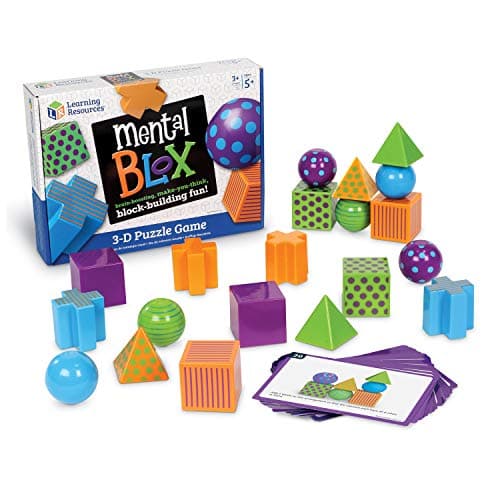
Reviewed from Learning Resources' published specifications. We have not played it, and the attribute structure is what makes it more than a block set.
By Sawyer V. · Published
The short answer
Mental Blox is worth it for a five- to eight-year-old, especially for more than one child at a time. Learning Resources publishes 20 chunky plastic blocks, 20 activity cards, four shapes across three attributes, an activity guide and no batteries, rated 5+.
Block & Beaker earns a commission when you buy through our links, at no cost to you. It never changes a ranking, and we say so plainly when the right answer is the cheaper set, or nothing at all. Full disclosure · How we pick.
At a glance
The picks, ranked
Tap any row to jump to the full reasoning. Prices come live from Amazon where we have them and read “check price” where we don’t — never a number we cannot stand behind today.
| # | Product | Best for | Price |
|---|---|---|---|
| 1 | The product Mental Blox Critical Thinking Game 20 blocks and 20 cards built around four shapes and three attributes. | Five to eight, alone or in a small group | |
| 2 | 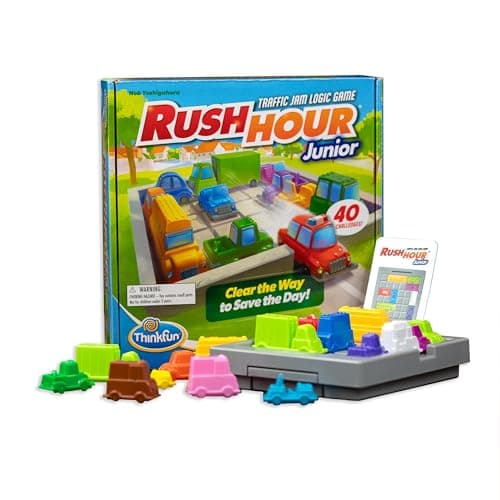 The single-player alternative ThinkFun Rush Hour Junior 40 graded challenges, self-checking, in a travel bag. | Five to seven, playing alone | |
| 3 | 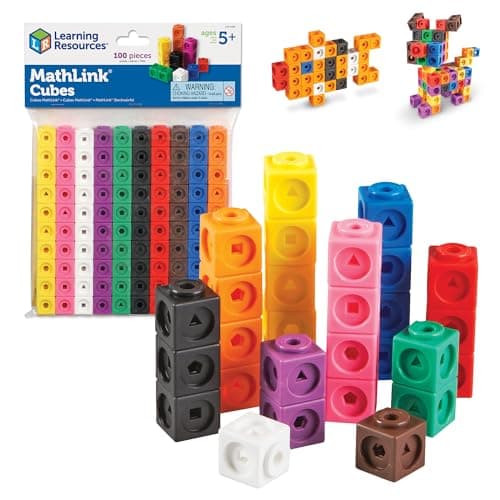 More open-ended, same age MathLink Cubes, Set of 100 100 cubes in 10 colors that link on all sides, with shape cut-outs for patterning. | Five and up | |
| — | 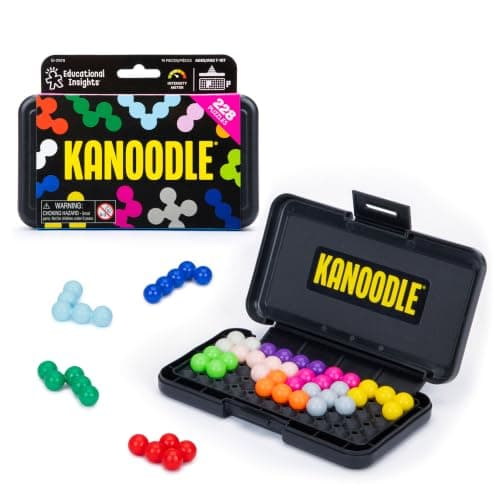 Not yet at five Kanoodle 200+ puzzles in a pocket case — the longest ladder in single-player logic. | Seven and up |
4 picks, including 1 we tell you to skip. Ages shown are the manufacturer’s own rating, not ours.
What we can tell you, and what we cannot
We have not played it. No lab, no samples, no test children, and no star rating on this page or in its structured data.
Learning Resources publishes the block count, card count, the shape-and-attribute structure and the age rating. How many of the 20 cards a bright six-year-old clears in one sitting, we cannot tell you.
The specification that decides it
The arithmetic
Mental Blox, published
| Blocks | 20 chunky plastic blocks |
|---|---|
| Activity cards | 20 |
| Structure | Four shapes across three attributes |
| Also includes | Activity guide |
| Batteries | None |
| Stated age | Ages 5+ |
What the numbers mean in practice
Twenty cards is two or three sittings. Read the cards as a teaching device rather than the whole product: they demonstrate the kind of task an adult can then invent endlessly with the same 20 blocks.
Chunky blocks matter at five. Spatial tasks fail when a child cannot hold the piece steady while looking at a card. Published as chunky is a fine-motor decision, not a cosmetic one.
Three attributes is what allows “which one is different?” Attribute games are the foundation of sorting, classification and eventually Boolean logic. That is a real curriculum link, and it is published on the box rather than inferred.
No batteries and nothing consumable. It hands down intact, and there is nothing to replace when it resurfaces for a younger sibling.
The group-play case
Almost everything in this category publishes a single player. Kanoodle, IQ Puzzler Pro, Rush Hour Junior and Gravity Maze are all published as one-player products.
Mental Blox is the exception in practice: a card can be held up for a table, and two children can build the same structure side by side. For siblings close in age, or for a classroom corner, that changes what the toy is for.
It also means it works with an adult who cannot sit still for twenty minutes. A card, a build, a check — that is a two-minute interaction, which is a realistic weeknight rather than an aspiration.
Twenty blocks is a table-sized set. Unlike a hundred-piece building system, everything fits in front of one child at once, which is part of why a card can specify a build precisely enough to be checked.
Who should skip it
A child who wants to play alone. Rush Hour Junior self-checks; Mental Blox usually wants somebody to confirm the build.
Children eight and over. Kanoodle publishes 200+ puzzles from 7 and IQ Puzzler Pro publishes 120 from 6, both with far longer ladders.
Anyone who already owns a good block set. If an adult is willing to invent tasks, 100 MathLink Cubes and a notebook do much of this for less.
Worth knowing before you buy
Where it sits
Mental Blox appears in spatial reasoning toys, logic games for 5 year olds and STEM toys for groups.
In full
Every pick, and what is wrong with it
Published specifications only, each linked back to the page it came from. Where a manufacturer publishes nothing, the row says so — we do not fill blanks in.
1. The product
Mental Blox Critical Thinking Game
Learning Resources · LER9280 · maker rates it 5+
20 blocks and 20 cards built around four shapes and three attributes.
- Blocks
- 20 chunky plastic blocks
- Activity cards
- 20
- Attributes
- Four shapes across three attributes
- Includes
- Activity guide
Learning Resources publishes 20 chunky plastic blocks, 20 activity cards, four shapes across three attributes, an activity guide, no batteries, and a stated age of 5+.
“Four shapes across three attributes” is the specification that makes this a game rather than a bag of blocks. Shape, color and pattern give a card enough to describe precisely — build this, but the striped one on the bottom — which is where the reasoning lives.
It is also one of the few genuinely multi-player STEM toys we cover. Most logic products publish a single player; this one can be a table activity with two or three children racing the same card.
Replay signal
- Open-ended or one-shot
- The 20 cards end; the blocks then work for free pattern and copy games
- Does anything run out
- Nothing runs out
- Room to grow
- An adult can invent harder arrangements indefinitely — the cards are a starting ladder
Why we say so: Learning Resources publishes 20 blocks and 20 activity cards across four shapes and three attributes. Attributes are the point: sorting by shape, then by color, then by both at once is the first properly logical thing a five-year-old does with a toy.
What’s wrong with it
Twenty cards is a short printed ladder for the price.
| Blocks | 20 chunky plastic blocks |
|---|---|
| Activity cards | 20 |
| Attributes | Four shapes across three attributes |
| Includes | Activity guide |
| Batteries | None |
| Stated age | Ages 5+ |
Every figure above is from Learning Resources, Mental Blox Critical Thinking Game. Blanks are shown as “not published” rather than filled in.
2. The single-player alternative
ThinkFun Rush Hour Junior
ThinkFun · 76583 · maker rates it 5+
40 graded challenges, self-checking, in a travel bag.
- Challenges
- 40, easy to expert
- Contents
- Ice cream truck, 15 blocking vehicles, 40 challenge cards, travel bag
- Players
- 1
- Batteries
- None
ThinkFun publishes 40 challenges from easy to expert, an ice cream truck, 15 blocking vehicles, 40 challenge cards and a travel bag, single player, no batteries, rated ages 5+.
If the goal is a child occupied without an adult, Rush Hour Junior wins because it checks its own answers. See the Rush Hour Junior review.
Replay signal
- Open-ended or one-shot
- Finite — 40 challenges
- Does anything run out
- The cards end; the grid does not, and children invent their own jams
- Room to grow
- Steps up to the full Rush Hour at 8+, same idea with harder cards
Why we say so: ThinkFun publishes 40 challenges across four difficulty tiers and a travel bag. Forty single-player puzzles is a school holiday, not a year — which is the honest framing for a gift-buyer.
What’s wrong with it
One player only, and 40 challenges is a short ladder too.
| Challenges | 40, easy to expert |
|---|---|
| Contents | Ice cream truck, 15 blocking vehicles, 40 challenge cards, travel bag |
| Players | 1 |
| Batteries | None |
| Stated age | Ages 5+ |
Every figure above is from ThinkFun, Rush Hour Junior. Blanks are shown as “not published” rather than filled in.
3. More open-ended, same age
MathLink Cubes, Set of 100
Learning Resources · LER4285 · maker rates it 5+
100 cubes in 10 colors that link on all sides, with shape cut-outs for patterning.
- Cubes
- 100, in 10 colors
- Cube size
- 3/4 inch
- Connection
- Links on all sides, with geometric shape cut-outs for patterning
- Stated age
- Ages 5 and up
Learning Resources publishes 100 cubes in 10 colors, three-quarters of an inch each, linking on all sides with geometric shape cut-outs for patterning, no batteries and no consumables, rated ages 5 and up.
Five times the pieces for open-ended counting and pattern work, and none of the structure. The two complement each other rather than competing. See the MathLink Cubes review.
Replay signal
- Open-ended or one-shot
- Completely open-ended, and unusually cheap for something that is
- Does anything run out
- Nothing runs out
- Room to grow
- The same cubes cover counting at five and volume, arrays and fractions at nine
Why we say so: Learning Resources publishes that the cubes link on all sides with geometric cut-outs. All-sides connection is what turns a counting toy into a building toy — a cube that only joins end to end makes towers, and one that joins on six faces makes arrays, volumes and models.
What’s wrong with it
No cards and no game — it needs an adult to set tasks.
| Cubes | 100, in 10 colors |
|---|---|
| Cube size | 3/4 inch |
| Connection | Links on all sides, with geometric shape cut-outs for patterning |
| Stated age | Ages 5 and up |
| Batteries | None |
| Consumables | None |
Every figure above is from Learning Resources, MathLink Cubes, Set of 100. Blanks are shown as “not published” rather than filled in.
Skip this one
Kanoodle
Educational Insights · Kanoodle · maker rates it 7+
200+ puzzles in a pocket case — the longest ladder in single-player logic.
- Puzzles
- 200+
- Formats
- Two — flat 2D puzzles and 3D pyramids
- Pieces
- Connected-bead puzzle pieces
- Players
- 1
Educational Insights publishes 200+ puzzles across flat 2D puzzles and 3D pyramids, using connected-bead pieces, single player, no batteries, rated 7 and up.
The obvious “lasts longer” purchase, two years early. At five the pieces are small and the difficulty curve starts above the child.
Replay signal
- Open-ended or one-shot
- Finite, but 200+ published puzzles is the largest count on this site
- Does anything run out
- Nothing runs out; the booklet is long enough to feel endless
- Room to grow
- 2D first, then the 3D pyramid set, which is a genuine step in difficulty
Why we say so: Educational Insights publishes 200-plus puzzles across 2D and 3D formats from one small case. Two hundred is roughly three times what a typical single-player logic game ships with, which is why this one survives a long car journey and a wet week.
What’s wrong with it
Published 7 and up, and the pieces are small.
| Puzzles | 200+ |
|---|---|
| Formats | Two — flat 2D puzzles and 3D pyramids |
| Pieces | Connected-bead puzzle pieces |
| Players | 1 |
| Batteries | None |
| Stated age | Ages 7 and up |
Every figure above is from Educational Insights, Kanoodle. Blanks are shown as “not published” rather than filled in.
We are not putting a buy button on this one. It is easy enough to find if you want it anyway — but we would rather send you to something that gets played with twice.
Questions people actually ask
Frequently asked
Is Mental Blox worth it?
For a five- to eight-year-old, and particularly for two children at once, yes. Learning Resources publishes 20 chunky blocks, 20 activity cards and a structure of four shapes across three attributes, with no batteries. The 20 cards are a short printed ladder, so the activity guide matters.
What age is Mental Blox for?
Learning Resources publishes ages 5+. The chunky blocks are sized for that age; by eight, most children are ready for the longer published ladders of Kanoodle (200+ puzzles) or IQ Puzzler Pro (120 challenges).
How many challenges does Mental Blox include?
Twenty activity cards, plus an activity guide. The blocks themselves are open-ended - four shapes across three attributes means an adult can invent new tasks indefinitely. Spatial reasoning toys.
Can more than one child play Mental Blox?
Yes, and that is its main advantage over the alternatives. Kanoodle, IQ Puzzler Pro, Rush Hour Junior and Gravity Maze are all published as single-player games. STEM games for one player.
Mental Blox or MathLink Cubes?
Both are published at 5+. Mental Blox brings 20 cards and a game structure; MathLink Cubes brings 100 linking cubes in 10 colors with no cards at all. Buy the cubes if an adult will set the tasks, Mental Blox if you want the tasks supplied.
Does Mental Blox need batteries?
No. Learning Resources publishes no batteries and no consumables - 20 chunky blocks, 20 activity cards and an activity guide.
Is Mental Blox useful for homeschool or classroom use?
It is one of the few logic products here that works for a group, because a card can be held up for a table. The published structure - four shapes across three attributes - covers sorting and classification, which is the foundation of later logic work. STEM toys for homeschool.
How many blocks come with Mental Blox?
Twenty chunky plastic blocks, alongside 20 activity cards and an activity guide, built on four shapes across three attributes.
Sources
Where these figures came from
Every specification on this page traces to one of these. If a manufacturer publishes nothing on a point, the page says so rather than filling the gap.
Read next
Where to go from here
Back to Reviews, or read how we pick.