The picks
Spatial Reasoning Toys for Kids
The mathematical skill with no numbers in it, and the one that correlates most with later geometry.
By Sawyer V. · Published
The short answer
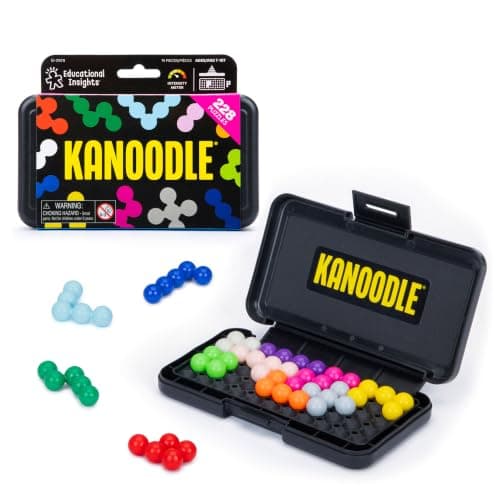
Spatial reasoning is rotation, reflection and holding a shape in your head while you turn it — and none of it involves a number. Kanoodle publishes 200-plus puzzles across 2D and 3D formats, which is the largest published challenge count on this site.
Block & Beaker earns a commission when you buy through our links, at no cost to you. It never changes a ranking, and we say so plainly when the right answer is the cheaper set, or nothing at all. Full disclosure · How we pick.
At a glance
The picks, ranked
Tap any row to jump to the full reasoning. Prices come live from Amazon where we have them and read “check price” where we don’t — never a number we cannot stand behind today.
| # | Product | Best for | Price |
|---|---|---|---|
| 1 | Best overall Kanoodle Two hundred-plus published puzzles across flat tiling and 3D pyramids, in a case the size of a phone. | Seven and up, and the deepest challenge count here | |
| 2 | 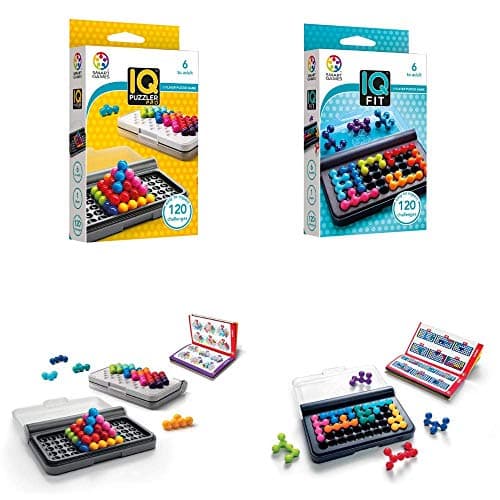 Best value SmartGames IQ Puzzler Pro One hundred and twenty published challenges from twelve pieces, in 2D and 3D. | Six and up, and the best content-per-piece on the site | |
| 3 | 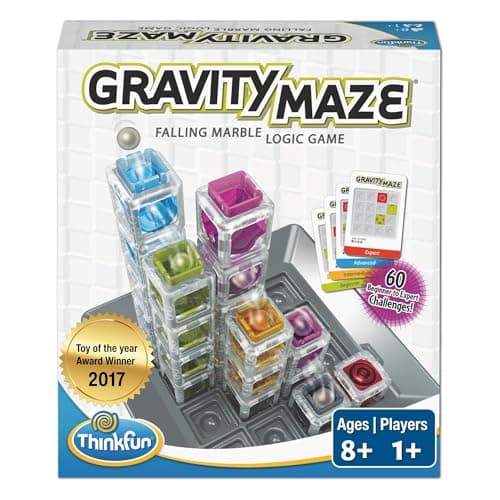 Best physical spatial puzzle ThinkFun Gravity Maze Sixty challenges where the solution is checked by a marble rather than by an adult. | Eight and up, and a child who wants the answer to fall out | |
| 4 | 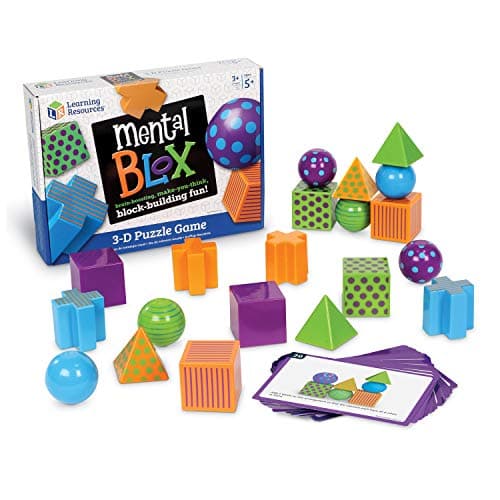 Best for younger children Mental Blox Critical Thinking Game Twenty chunky blocks across four shapes and three attributes — sorting by two properties at once. | Five and up, as the first properly spatial toy | |
| — | 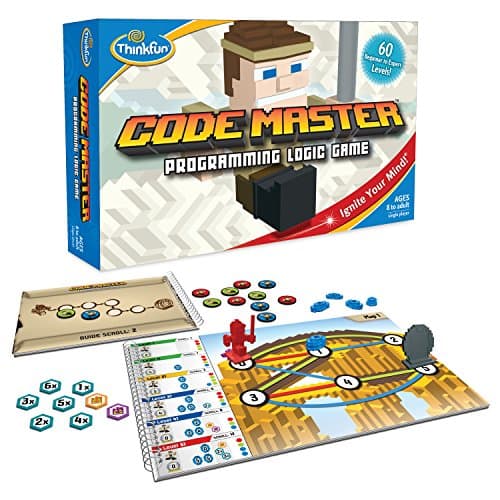 The one to skip here ThinkFun Code Master A good sequencing game with almost no spatial content in it. | Programming logic, on a different page |
5 picks, including 1 we tell you to skip. Ages shown are the manufacturer’s own rating, not ours.
What spatial reasoning actually is
Three related abilities, none of which involves arithmetic:
Mental rotation. Looking at a shape and knowing what it would look like turned. This is the one most directly trained by packing puzzles, because a piece that does not fit one way may fit rotated.
Visualisation. Holding an arrangement in your head while you change part of it. A 3D pyramid puzzle demands this — you cannot see the back.
Spatial relations. Understanding how objects sit relative to each other. This is what a gravity maze trains: a marble's path depends on what is above and below as well as beside.
These are mathematical skills that correlate with later geometry, and they are almost entirely absent from arithmetic drill. A child can be excellent at times tables and weak at this.
Published challenge counts, compared
The arithmetic
Content per box
| Kanoodle — puzzles | 200+, 2D and 3D |
|---|---|
| IQ Puzzler Pro — challenges / pieces | 120 / 12 |
| Gravity Maze — challenges | 60 |
| Mental Blox — activity cards | 20 |
| Rush Hour Junior — challenges | 40 |
Why 3D is the step that matters
A flat packing puzzle can be solved by trial and error. A patient child will place pieces, fail, rotate, and eventually stumble into the answer without ever picturing it in advance.
A three-dimensional puzzle resists that. In a pyramid, a piece placed on the first layer determines what can go above it, and there are too many combinations to brute-force. The child has to look ahead — which is the actual skill.
This is why both Kanoodle and IQ Puzzler Pro publish two modes, and why the 3D mode is where an older child spends their time.
Making a finite deck last
Every game here has a card count, and every card count gets reached. Three things extend them, none of which is printed in the box:
- Let the child set the challenge. They arrange a starting position and an adult solves it. Designing a puzzle that is hard but possible is harder than solving one.
- Re-solve against a stopwatch. A completed deck becomes usable again the moment speed is the objective.
- Use the pieces freely. Gravity Maze towers make any run a child invents, though nothing in the box suggests it.
Say the unwelcome thing
Do not buy a spatial puzzle as the main present
Even the deepest box here has a countable end, and a determined child reaches it faster than you expect. These are second presents.
Buy one alongside something with no finish line — a tile set or a plank set — and the puzzle gets played the weekend the big present is still being figured out.
What to buy
- Five to six, first spatial toy: Mental Blox.
- Six and up, best value: IQ Puzzler Pro.
- Seven and up, deepest: Kanoodle.
- Eight and up, wants it physical: Gravity Maze.
See also logic puzzles, math games and pattern and sequencing toys.
In full
Every pick, and what is wrong with it
Published specifications only, each linked back to the page it came from. Where a manufacturer publishes nothing, the row says so — we do not fill blanks in.
1. Best overall
Kanoodle
Educational Insights · Kanoodle · maker rates it 7+
Two hundred-plus published puzzles across flat tiling and 3D pyramids, in a case the size of a phone.
- Puzzles
- 200+
- Formats
- Two — flat 2D puzzles and 3D pyramids
- Pieces
- Connected-bead puzzle pieces
- Players
- 1
Educational Insights publishes 200-plus puzzles across two formats — flat 2D puzzles and 3D pyramids — using connected-bead pieces in a small case, rated 7 and up.
The two formats are the reason this outlasts a flat-only puzzle. 2D tiling can be brute-forced by a patient child; a pyramid cannot, because pieces have to be placed with their eventual height in mind.
Two hundred published challenges against Gravity Maze at 60 and Rush Hour Junior at 40 is a different order of content for a similar outlay.
Replay signal
- Open-ended or one-shot
- Finite, but 200+ published puzzles is the largest count on this site
- Does anything run out
- Nothing runs out; the booklet is long enough to feel endless
- Room to grow
- 2D first, then the 3D pyramid set, which is a genuine step in difficulty
Why we say so: Educational Insights publishes 200-plus puzzles across 2D and 3D formats from one small case. Two hundred is roughly three times what a typical single-player logic game ships with, which is why this one survives a long car journey and a wet week.
What’s wrong with it
Entirely solo. If what the household needs is something to do together, this is not it.
| Puzzles | 200+ |
|---|---|
| Formats | Two — flat 2D puzzles and 3D pyramids |
| Pieces | Connected-bead puzzle pieces |
| Players | 1 |
| Batteries | None |
| Stated age | Ages 7 and up |
Every figure above is from Educational Insights, Kanoodle. Blanks are shown as “not published” rather than filled in.
2. Best value
SmartGames IQ Puzzler Pro
SmartGames · SG455 · maker rates it 6+
One hundred and twenty published challenges from twelve pieces, in 2D and 3D.
- Challenges
- 120, across 2D and 3D modes
- Contents
- Compact board with a transparent lid, 12 puzzle pieces, challenge booklet with solutions
- Players
- 1
- Batteries
- None
SmartGames publishes 120 challenges across 2D and 3D modes from a compact board with a transparent lid, 12 puzzle pieces and a challenge booklet with solutions, rated 6 to adult.
Twelve components producing 120 published problems is the best ratio anywhere on this site. That density is what makes it survive a car journey and a waiting room.
Between this and Kanoodle the choice is mostly age: six-plus here against seven-plus there, and a slightly gentler difficulty curve.
Replay signal
- Open-ended or one-shot
- Finite, but 120 challenges is roughly double what most single-player puzzle games ship with
- Does anything run out
- The booklet ends. The pieces do not
- Room to grow
- The same 12 pieces run 2D and 3D challenge sets, so the difficulty ceiling is well above the entry point
Why we say so: SmartGames publishes 120 challenges across two modes from a single 12-piece set. Twelve pieces generating 120 published problems is the best challenge-per-component ratio of any logic game on this site, and it is the reason this one travels well and lasts.
What’s wrong with it
It looks like nothing wrapped, and it will be the last present opened.
| Challenges | 120, across 2D and 3D modes |
|---|---|
| Contents | Compact board with a transparent lid, 12 puzzle pieces, challenge booklet with solutions |
| Players | 1 |
| Batteries | None |
| Stated age | Ages 6 to adult |
| Travel case | Yes — the board is the case |
Every figure above is from SmartGames, IQ Puzzler Pro. Blanks are shown as “not published” rather than filled in.
3. Best physical spatial puzzle
ThinkFun Gravity Maze
ThinkFun · 44001006 · maker rates it 8+
Sixty challenges where the solution is checked by a marble rather than by an adult.
- Challenges
- 60, beginner to expert
- Contents
- Game grid, 9 towers, 1 target piece, 3 marbles, 60 challenge cards
- Players
- 1
- Batteries
- None
ThinkFun publishes 60 challenges from beginner to expert with a game grid, nine towers, one target piece, three marbles and 60 challenge cards, single-player, no batteries, rated 8+.
The spatial work here is genuinely three-dimensional: the child has to picture a marble's path through towers of different heights before placing any of them.
Self-verification is the other advantage. The marble reaches the target or it does not, so nobody has to adjudicate and there is nothing to argue about.
Replay signal
- Open-ended or one-shot
- Finite by design — 60 challenges, and a determined child will finish them
- Does anything run out
- Nothing physically runs out, but the challenge cards do end
- Room to grow
- The towers can be used freely once the cards are done, though nothing in the box prompts that
Why we say so: ThinkFun publishes 60 challenges and a fixed component list. Sixty is a real number with a real end, and single-player puzzle games are the category where that matters most — better to know before you buy it as the main present.
What’s wrong with it
Sixty challenges and the cards are done. Nothing in the box prompts free play afterwards.
| Challenges | 60, beginner to expert |
|---|---|
| Contents | Game grid, 9 towers, 1 target piece, 3 marbles, 60 challenge cards |
| Players | 1 |
| Batteries | None |
| Stated age | Ages 8+ |
| Consumables | None |
Every figure above is from ThinkFun, Gravity Maze. Blanks are shown as “not published” rather than filled in.
4. Best for younger children
Mental Blox Critical Thinking Game
Learning Resources · LER9280 · maker rates it 5+
Twenty chunky blocks across four shapes and three attributes — sorting by two properties at once.
- Blocks
- 20 chunky plastic blocks
- Activity cards
- 20
- Attributes
- Four shapes across three attributes
- Includes
- Activity guide
Learning Resources publishes 20 chunky plastic blocks and 20 activity cards across four shapes with three attributes, plus an activity guide, rated 5+, with no batteries.
Attributes are the point. Sorting by shape is easy; sorting by shape and color simultaneously is the first genuinely logical thing a five-year-old does with a toy, and it is the foundation everything on this page builds on.
Chunky blocks also mean this works at an age where the pieces in the picks above are too small and too fiddly.
Replay signal
- Open-ended or one-shot
- The 20 cards end; the blocks then work for free pattern and copy games
- Does anything run out
- Nothing runs out
- Room to grow
- An adult can invent harder arrangements indefinitely — the cards are a starting ladder
Why we say so: Learning Resources publishes 20 blocks and 20 activity cards across four shapes and three attributes. Attributes are the point: sorting by shape, then by color, then by both at once is the first properly logical thing a five-year-old does with a toy.
What’s wrong with it
Twenty activity cards is a short ladder, and after those an adult has to invent the next arrangement.
| Blocks | 20 chunky plastic blocks |
|---|---|
| Activity cards | 20 |
| Attributes | Four shapes across three attributes |
| Includes | Activity guide |
| Batteries | None |
| Stated age | Ages 5+ |
Every figure above is from Learning Resources, Mental Blox Critical Thinking Game. Blanks are shown as “not published” rather than filled in.
Skip this one
ThinkFun Code Master
ThinkFun · 1950 · maker rates it 8+
A good sequencing game with almost no spatial content in it.
- Levels
- 60, beginner to expert
- Players
- 1
- Format
- Map-based programming logic — sequence the avatar's moves to collect power crystals
- Batteries
- None
ThinkFun publishes 60 levels from beginner to expert, single-player, in a map-based format where the child sequences an avatar's moves to collect power crystals, rated 8 and up.
It appears in spatial reasoning lists because it has a board and a route, and route-finding sounds spatial.
What it actually trains is ordering instructions and handling branches — genuinely valuable, and covered on the coding board games page. Nothing in it asks a child to rotate a shape.
Replay signal
- Open-ended or one-shot
- Finite — 60 levels, and they are worked through in order
- Does anything run out
- Nothing runs out, but the level book does end
- Room to grow
- The later levels introduce conditionals and loops, so the concept ladder is real rather than cosmetic
Why we say so: ThinkFun publishes 60 levels from beginner to expert and a map-and-sequence format. The concepts the later levels introduce — branching and repetition — are the same two ideas that make a real program, which is why this works as preparation for a screen rather than as a substitute for one.
What’s wrong with it
Route-planning on a fixed map is sequencing rather than spatial reasoning. Nothing gets rotated or visualised in three dimensions.
| Levels | 60, beginner to expert |
|---|---|
| Players | 1 |
| Format | Map-based programming logic — sequence the avatar's moves to collect power crystals |
| Batteries | None |
| Stated age | Ages 8 and up |
Every figure above is from ThinkFun, Code Master. Blanks are shown as “not published” rather than filled in.
We are not putting a buy button on this one. It is easy enough to find if you want it anyway — but we would rather send you to something that gets played with twice.
Questions people actually ask
Frequently asked
What is spatial reasoning and why does it matter?
Three abilities with no arithmetic in them: mental rotation, visualisation, and understanding how objects sit relative to each other. They correlate with later geometry and are almost entirely absent from arithmetic drill — a child can be excellent at times tables and weak at this.
What is the best spatial reasoning toy?
Kanoodle, for depth. Educational Insights publishes 200-plus puzzles across flat 2D tiling and 3D pyramids, rated 7 and up — roughly three times the challenge count of a typical single-player puzzle game, in a case the size of a phone.
Why does 3D matter in a puzzle?
A flat packing puzzle can be brute-forced by a patient child rotating pieces until something fits. A pyramid resists that: a piece on the first layer determines what can go above it, and there are too many combinations to stumble through. The child has to look ahead, which is the actual skill.
How do I make a puzzle game last after the cards are done?
Have the child design challenges for an adult to solve — building a puzzle that is hard but possible is harder than solving one. Re-solve completed cards against a stopwatch. And use the pieces freely: Gravity Maze towers make any run a child invents, though nothing in the box says so.
Sources
Where these figures came from
Every specification on this page traces to one of these. If a manufacturer publishes nothing on a point, the page says so rather than filling the gap.
Read next
Where to go from here
Back to Math & Logic, or read how we pick.