The picks
STEM Toys for 6 Year Olds
Six is the year a child finishes what they start — which makes a long published project count worth paying for.
By Sawyer V. · Published
The short answer
Six is the first year a child will work through a numbered manual to the end, which changes what is worth buying. A set publishing 305 projects stops being a marketing number and starts being a two-year plan — and the difference between 21 published projects and 305 becomes real for the first time.
Block & Beaker earns a commission when you buy through our links, at no cost to you. It never changes a ranking, and we say so plainly when the right answer is the cheaper set, or nothing at all. Full disclosure · How we pick.
At a glance
The picks, ranked
Tap any row to jump to the full reasoning. Prices come live from Amazon where we have them and read “check price” where we don’t — never a number we cannot stand behind today.
| # | Product | Best for | Price |
|---|---|---|---|
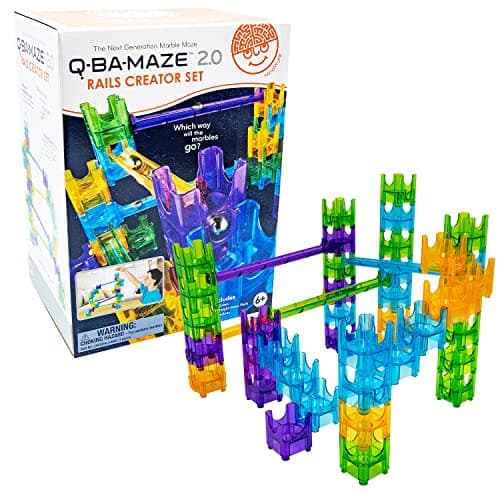
| 1 | Best overall Q-BA-MAZE 2.0 Big Box Seventy-two cubes that interlock in any direction, so the structure branches rather than following a path. | Six, and a child who resists being told what to make | |
| 2 | Best subscription Kiwi Crate monthly subscription One hands-on project a month, pitched at the exact age a child can mostly do it alone. | Six to nine, in a household with a reliably free adult | |
| 3 | 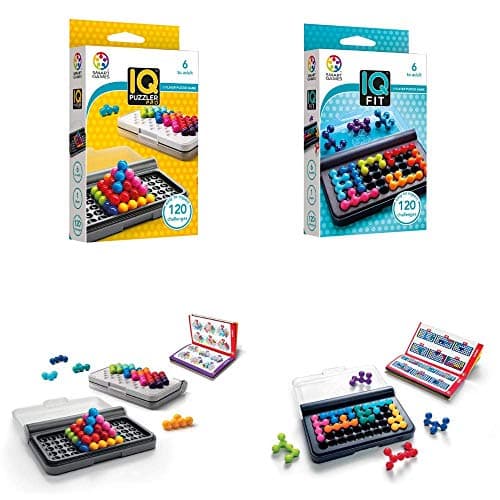 Best value SmartGames IQ Puzzler Pro One hundred and twenty published challenges from twelve pieces, in a case the size of a phone. | Six and up, and any bag that has to contain a quiet activity | |
| 4 | 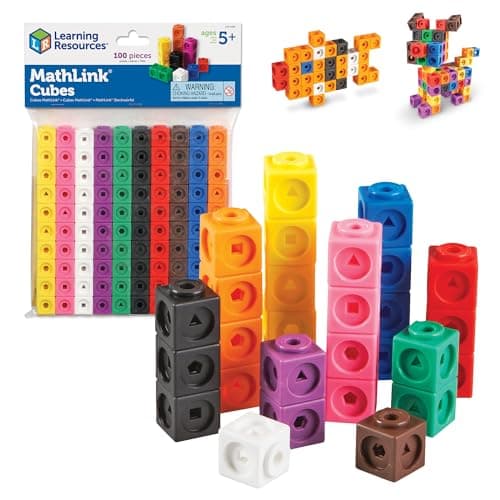 Best math purchase MathLink Cubes, Set of 100 A hundred cubes that link on all six sides, which is what turns counting into building. | Five to nine, quietly, without anybody calling it math | |
| — | 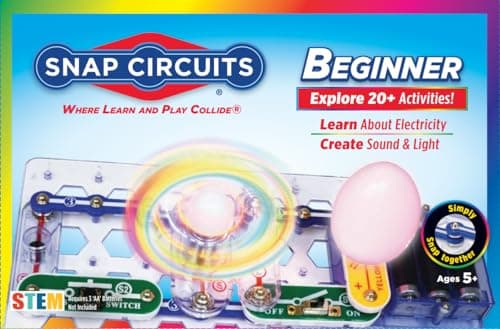 The one to skip Snap Circuits Beginner Twenty-one projects from fourteen parts, at the exact age the child is ready for fifteen times that. | Five, at a push — not six |
5 picks, including 1 we tell you to skip. Ages shown are the manufacturer’s own rating, not ours.
What changes at six
Six is the year a child finishes things. Given a numbered manual, they will start at project one and work forward — not always to the end, but far enough that a long list stops being decorative.
That single change reshapes what is worth buying. At five, the difference between a 21-project set and a 305-project set is theoretical because the child dips in. At six it is the whole purchase.
Reading is the other shift. Most six-year-olds can decode simple instructions, which opens up sets that were adult-operated a year ago — though picture-led manuals still work considerably better than prose.
Why the project count starts mattering now
The arithmetic
Published content, and whether a six-year-old will reach the end
| Snap Circuits Beginner | 21 projects / 14 parts |
|---|---|
| Snap Circuits Classic | 305 projects / 60+ parts |
| IQ Puzzler Pro | 120 challenges / 12 pieces |
| Q-BA-MAZE Big Box | 72 cubes, no fixed challenges |
| Kiwi Crate | 12 projects a year, one at a time |
The good purchase at six is usually one of each: something with a ladder to climb, and something with no top.
Where a subscription fits, honestly
Six is the youngest age at which a monthly crate genuinely works, because the child can do most of the build. Below that an adult does it and the child watches.
The honest caveat is scheduling rather than content. Twelve projects across a year, one at a time, only works if somebody sits down in the week the box arrives. Where that is reliable, a subscription creates a monthly ritual that a box on a shelf cannot. Where it is not, boxes accumulate.
Compare it against a single large purchase before committing: Snap Circuits Classic publishes 305 projects available whenever anyone is free, against twelve arriving on a schedule. Neither answer is automatically right, and the subscription page does the arithmetic properly.
Worth knowing before you buy
Q-BA-MAZE ships 20 steel marbles and marble sets in general are the category most likely to leave small parts on a floor. If there is a child under three in the house, this is a table toy rather than a floor toy.
Snap Circuits sets publish a four-AA-battery requirement, not included. The same warning as every year: a circuit kit that cannot be switched on is the worst thing in a pile of presents.
Say the unwelcome thing
Do not buy by the age on the box alone
The Snap Circuits Beginner set is rated 5-8 and looks like the correct choice for a six-year-old. The published numbers say otherwise: 21 projects against 305, for around a third of the price.
Where an age rating is about reading and patience rather than safety, an adult sitting alongside can bridge a year comfortably. Where it is about contents — a chemistry set at 10+ — it cannot.
What to buy
- Open-ended: Q-BA-MAZE, for the branching structures.
- With a ladder: Snap Circuits Classic, not the Beginner set.
- Small and travels: IQ Puzzler Pro, 120 challenges.
- Monthly ritual, adult available: Kiwi Crate, shortest plan first.
Next year the child can handle real project counts and comparison tables — the seven-year-old page. For the full electronics ladder, Snap Circuits compared.
In full
Every pick, and what is wrong with it
Published specifications only, each linked back to the page it came from. Where a manufacturer publishes nothing, the row says so — we do not fill blanks in.
1. Best overall
Q-BA-MAZE 2.0 Big Box
MindWare · 48168W · maker rates it 6+
Seventy-two cubes that interlock in any direction, so the structure branches rather than following a path.
- Cubes
- 72, in five colors
- Cube mix
- 18 bottom-exit, 36 single-exit, 18 double-exit
- Marbles
- 20 steel
- Stated age
- 6 and up
MindWare publishes 72 cubes in five colors — 18 bottom-exit, 36 single-exit and 18 double-exit — with 20 steel marbles, in phthalate-free and BPA-free ABS, rated 6 and up.
That exit-type split is the product. Double-exit cubes make the marble’s route genuinely uncertain, so the same structure produces different outcomes and a child watches ten marbles instead of one.
Because the cubes join in every direction rather than stacking, structures grow outward as well as up. At six a child can hold the idea of a branching path in their head, which is exactly what this asks for.
Replay signal
- Open-ended or one-shot
- Genuinely open-ended — the cubes interlock in any direction, so there is no single correct structure
- Does anything run out
- Nothing runs out
- Room to grow
- MindWare sells stunt and expansion sets that clip into the same cubes
Why we say so: MindWare publishes the 72-cube count, the exact exit-type mix, the 20 marbles and the ages 6+ rating. Three different exit types is what makes a structure branch rather than follow one fixed path.
What’s wrong with it
Twenty steel marbles, and the cubes take genuine hand strength to pull apart — a six-year-old will ask for help separating them.
| Cubes | 72, in five colors |
|---|---|
| Cube mix | 18 bottom-exit, 36 single-exit, 18 double-exit |
| Marbles | 20 steel |
| Stated age | 6 and up |
| Material | Phthalate-free and BPA-free ABS plastic |
| Consumables | None, though marbles are the part that disappears under the sofa |
Every figure above is from MindWare, Q-BA-MAZE 2.0. Blanks are shown as “not published” rather than filled in.
2. Best subscription
Kiwi Crate monthly subscription
KiwiCo · Kiwi Crate · maker rates it 6-9
One hands-on project a month, pitched at the exact age a child can mostly do it alone.
- Stated age
- Ages 6-9
- Cadence
- “a brand-new project delivered to their door each month”
- Plans
- Monthly, 3-month, 6-month or 12-month
- Subject
- “hands-on STEAM”
KiwiCo publishes Kiwi Crate as hands-on STEAM for ages 6-9, with a brand-new project each month and monthly, three, six or twelve-month plans.
Six to nine is the sweet spot for this format because a child can follow illustrated instructions largely unaided but still wants somebody to show the result to. Below six an adult does the build; above ten one project a month feels thin.
Start with the shortest plan. What you are testing is not whether the projects are good — they are — but whether your household actually does them.
Replay signal
- Open-ended or one-shot
- Each crate is a one-shot build; the subscription is what creates the repeat
- Does anything run out
- Every crate runs out. That is the model, not a flaw — you are buying twelve projects, not one toy
- Room to grow
- KiwiCo publishes a ladder by age: Kiwi 6-9, Tinker 9-12, Eureka 12+
Why we say so: KiwiCo publishes the age bands and the one-project-per-month cadence. A subscription's replay value is structural — it arrives again next month — which is a different thing from a toy that keeps getting picked up, and the two should not be compared as if they were the same.
What’s wrong with it
One build per month. A busy month means the box goes unopened, and there is no catching up.
| Stated age | Ages 6-9 |
|---|---|
| Cadence | “a brand-new project delivered to their door each month” |
| Plans | Monthly, 3-month, 6-month or 12-month |
| Subject | “hands-on STEAM” |
| Consumables | Yes — each crate is built once |
Every figure above is from KiwiCo, monthly crates by age. Blanks are shown as “not published” rather than filled in.
3. Best value
SmartGames IQ Puzzler Pro
SmartGames · SG455 · maker rates it 6+
One hundred and twenty published challenges from twelve pieces, in a case the size of a phone.
- Challenges
- 120, across 2D and 3D modes
- Contents
- Compact board with a transparent lid, 12 puzzle pieces, challenge booklet with solutions
- Players
- 1
- Batteries
- None
SmartGames publishes 120 challenges across 2D and 3D modes from a compact board with a transparent lid, 12 puzzle pieces and a challenge booklet with solutions, rated 6 to adult.
Twelve pieces producing 120 published problems is the best challenge-per-component ratio of anything on this site, and the 3D mode means the top challenges hold up for adults.
The board being its own case is what makes it get used. This is the thing that goes in a bag and gets played in a waiting room.
Replay signal
- Open-ended or one-shot
- Finite, but 120 challenges is roughly double what most single-player puzzle games ship with
- Does anything run out
- The booklet ends. The pieces do not
- Room to grow
- The same 12 pieces run 2D and 3D challenge sets, so the difficulty ceiling is well above the entry point
Why we say so: SmartGames publishes 120 challenges across two modes from a single 12-piece set. Twelve pieces generating 120 published problems is the best challenge-per-component ratio of any logic game on this site, and it is the reason this one travels well and lasts.
What’s wrong with it
It looks like nothing under a tree, and it will be the last present opened.
| Challenges | 120, across 2D and 3D modes |
|---|---|
| Contents | Compact board with a transparent lid, 12 puzzle pieces, challenge booklet with solutions |
| Players | 1 |
| Batteries | None |
| Stated age | Ages 6 to adult |
| Travel case | Yes — the board is the case |
Every figure above is from SmartGames, IQ Puzzler Pro. Blanks are shown as “not published” rather than filled in.
4. Best math purchase
MathLink Cubes, Set of 100
Learning Resources · LER4285 · maker rates it 5+
A hundred cubes that link on all six sides, which is what turns counting into building.
- Cubes
- 100, in 10 colors
- Cube size
- 3/4 inch
- Connection
- Links on all sides, with geometric shape cut-outs for patterning
- Stated age
- Ages 5 and up
Learning Resources publishes 100 cubes in 10 colors, three quarters of an inch each, linking on all sides with geometric shape cut-outs for patterning, rated 5 and up.
All-sides connection is the specification. A cube that joins end to end makes number lines; a cube that joins on six faces makes arrays, rectangles and volumes — which is the difference between counting and mathematics.
One question makes it work: “can you make a rectangle with twelve cubes, and how many different ones are there?” That is factorization, at six, from a tub of plastic.
Replay signal
- Open-ended or one-shot
- Completely open-ended, and unusually cheap for something that is
- Does anything run out
- Nothing runs out
- Room to grow
- The same cubes cover counting at five and volume, arrays and fractions at nine
Why we say so: Learning Resources publishes that the cubes link on all sides with geometric cut-outs. All-sides connection is what turns a counting toy into a building toy — a cube that only joins end to end makes towers, and one that joins on six faces makes arrays, volumes and models.
What’s wrong with it
It looks like school equipment because it is school equipment, and some children react to that.
| Cubes | 100, in 10 colors |
|---|---|
| Cube size | 3/4 inch |
| Connection | Links on all sides, with geometric shape cut-outs for patterning |
| Stated age | Ages 5 and up |
| Batteries | None |
| Consumables | None |
Every figure above is from Learning Resources, MathLink Cubes, Set of 100. Blanks are shown as “not published” rather than filled in.
Skip this one
Snap Circuits Beginner
Elenco · SCB-20 · maker rates it 5-8
Twenty-one projects from fourteen parts, at the exact age the child is ready for fifteen times that.
- Projects
- 21
- Parts
- 14
- Projects per part
- 1.5
- Stated age
- Ages 5-8
Elenco publishes 21 projects from 14 parts, rated 5 to 8, with no tools required.
The rating makes this look like the right choice at six, and the arithmetic says otherwise. The Classic set publishes 305 projects from over 60 parts for around three times the price — five times the projects per part, and a supply of components deep enough that the child can build something the manual did not describe.
Six is precisely the age when that matters, because it is the first year a child will work through a manual rather than dipping into it. Buy the ladder, not the first rung.
Replay signal
- Open-ended or one-shot
- Limited. 14 parts is a small vocabulary, and once the 21 projects are built the set goes quiet
- Does anything run out
- Nothing runs out
- Room to grow
- Parts work with the bigger sets, so it is not a dead end — but it is a short road
Why we say so: Elenco publishes 21 projects from 14 parts. That ratio is the whole story: this is the entry rung, and the number to hold it against is the 305 projects the Classic set publishes from 60+ parts.
What’s wrong with it
Elenco rates it 5-8 and publishes 21 projects. A six-year-old with an adult alongside can use the 305-project Classic instead.
| Projects | 21 |
|---|---|
| Parts | 14 |
| Projects per part | 1.5 |
| Stated age | Ages 5-8 |
| Tools needed | None — parts snap together |
| Consumables | None |
Every figure above is from Elenco, Snap Circuits Beginner. Blanks are shown as “not published” rather than filled in.
We are not putting a buy button on this one. It is easy enough to find if you want it anyway — but we would rather send you to something that gets played with twice.
Questions people actually ask
Frequently asked
What is the best STEM toy for a 6-year-old?
Something open-ended plus something with a ladder. Q-BA-MAZE publishes 72 cubes with three exit types and no fixed challenges; Snap Circuits Classic publishes 305 projects from over 60 parts. Six is the first year a child works through a numbered manual, which is what makes the second number matter.
Is Snap Circuits Beginner right for a 6-year-old?
The rating says 5-8 and the arithmetic says no. Elenco publishes 21 projects from 14 parts for the Beginner set against 305 from over 60 for the Classic — roughly three times the price for fifteen times the content, and a six-year-old with an adult alongside can use the bigger one. The full line compared.
Are subscription boxes worth it at six?
Six is the youngest age they genuinely work, because the child can do most of the build themselves. KiwiCo publishes Kiwi Crate for ages 6-9. Start with the shortest plan — what you are testing is whether your household does them, not whether they are good.
What math toy works at six without feeling like homework?
MathLink Cubes. Learning Resources publishes 100 cubes linking on all sides, which lets the same set be counting at five and arrays at seven. One question — can you make a rectangle with twelve cubes, and how many different ones are there — turns a tub of plastic into factorization.
Sources
Where these figures came from
Every specification on this page traces to one of these. If a manufacturer publishes nothing on a point, the page says so rather than filling the gap.
Read next
Where to go from here
Back to Shop by Age, or read how we pick.