The picks
Engineering Toys for Kids
A building toy makes a shape. An engineering toy makes a mechanism — something that moves when you turn it.
By Sawyer V. · Published
The short answer
The distinction worth buying on is whether the finished build does anything. Gears turn other gears, rods and connectors make rigid three-dimensional frames, a real drill drives a real bolt. A tower is architecture; a mechanism is engineering.
Block & Beaker earns a commission when you buy through our links, at no cost to you. It never changes a ranking, and we say so plainly when the right answer is the cheaper set, or nothing at all. Full disclosure · How we pick.
At a glance
The picks, ranked
Tap any row to jump to the full reasoning. Prices come live from Amazon where we have them and read “check price” where we don’t — never a number we cannot stand behind today.
| # | Product | Best for | Price |
|---|---|---|---|
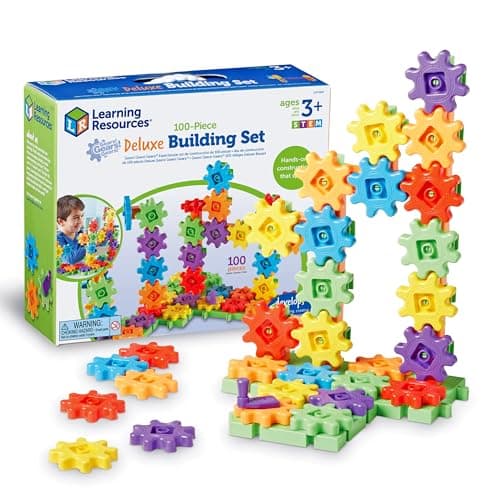
| 1 | Best overall Gears! Gears! Gears! 100-Piece Deluxe Building Set Turn one handle and forty-six gears move, including the ones nobody touched. | Three and up, and the clearest cause and effect in the category | |
| 2 | Best for real structures K'NEX 35 Model Building Set Rods and connectors that lock at fixed angles — the first system here that builds genuinely rigid three-dimensional frames. | Seven and up, and a child who wants a frame rather than a wall | |
| 3 | 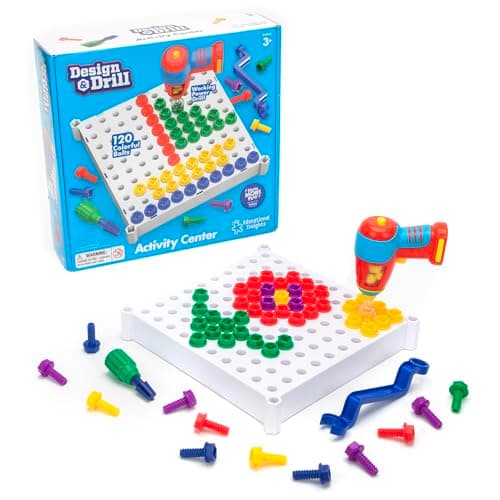 Best real tool Design & Drill Activity Center A working, trigger-operated drill at a 3+ rating — the child is using a tool rather than a representation of one. | Three to five, and a child who watches adults use tools | |
| 4 | 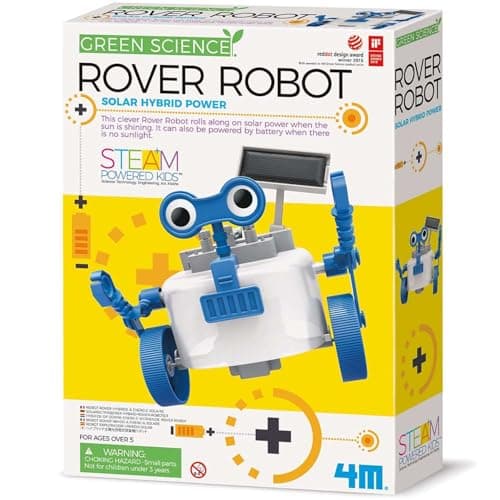 Best first motor 4M Green Science Solar Rover Assemble a rover that drives on sunlight, with a battery fallback for when there is none. | Five and up, as a single-afternoon build with a working result | |
| — | 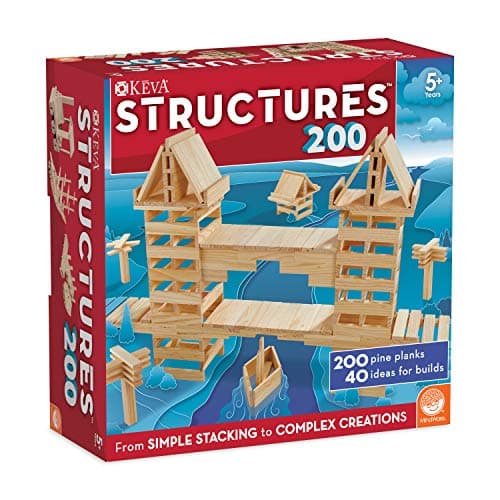 The one to skip here KEVA Structures 200 Plank Set A superb construction set with no mechanism in it — engineering-adjacent rather than engineering. | Balance and architecture, on a different page |
5 picks, including 1 we tell you to skip. Ages shown are the manufacturer’s own rating, not ours.
What separates an engineering toy from a building toy
One question: after the build, does anything happen?
A tower is finished when it is standing. A gear train is finished when it turns, and turning it reveals whether the build was right. That feedback loop — build, test, adjust — is the thing engineering toys have and construction toys mostly do not.
The arithmetic
Does the finished build do something?
| Gears! Gears! Gears! | Yes — crank drives the whole train |
|---|---|
| K'NEX 35 Model | Yes on the moving models; frames are static |
| Design & Drill | Yes — the drill is the mechanism |
| 4M Solar Rover | Yes — it drives |
| KEVA planks | No — structure only |
| Magnetic tiles | No — structure only |
The three mechanisms worth owning
Gear trains teach ratio and transmission. A small gear driving a large one turns slowly; the relationship is exact, visible and countable by a seven-year-old willing to count teeth.
Triangulated frames teach why bridges do not fall down. Rods and connectors that lock at fixed angles let a child discover that a triangle is rigid and a square is not — by pushing one and watching it collapse into a parallelogram.
Fasteners teach that things come apart. A real drill and real bolts is the first time a child understands that objects are assembled rather than simply existing.
Age order through this category
- 3 to 5: Gears and Design & Drill. Immediate cause and effect, no reading.
- 5 to 7: the solar rover as a first build-and-keep.
- 7 and up: K'NEX, for rigid frames and 35 published models.
- 8 and up, wants circuits: this is where Snap Circuits takes over — a circuit is a mechanism with no moving parts.
Worth knowing before you buy
Two battery requirements to buy alongside: the Design & Drill drill, and one AAA for the solar rover. Neither is included, and both are the difference between a working present and a disappointing morning.
K'NEX rods are long, thin and rated 7+ for small-parts reasons. In a household with a younger sibling this is a table toy rather than a floor toy.
Say the unwelcome thing
Do not buy a motorised kit for a child under five
Motors and battery packs add assembly steps that a four-year-old cannot do and an adult ends up doing, which turns the child into a spectator at their own present.
A hand crank is better at that age in every respect: the child supplies the energy, so the connection between their action and the movement is direct rather than mediated by a switch.
Where this fits
Engineering toys sit between pure construction and electronics. A child who has enjoyed gears is usually ready for circuits at eight, and a child who has enjoyed K'NEX frames is usually ready for a buildable robot.
In full
Every pick, and what is wrong with it
Published specifications only, each linked back to the page it came from. Where a manufacturer publishes nothing, the row says so — we do not fill blanks in.
1. Best overall
Gears! Gears! Gears! 100-Piece Deluxe Building Set
Learning Resources · LER9162 · maker rates it 3+
Turn one handle and forty-six gears move, including the ones nobody touched.
- Pieces
- 100
- Contents
- 46 gears, 26 square pillars, 21 six-way axles, 6 interlocking bases, 1 crank handle, activity guide
- Stated age
- 3+
- Batteries
- None — hand-cranked
Learning Resources publishes 46 gears, 26 square pillars, 21 six-way axles, 6 interlocking bases, a crank handle and an activity guide, rated 3+, with no batteries.
The crank is what makes this engineering rather than construction. The child builds something, turns a handle, and motion travels across the board to parts they are not touching — which is the first experience of a mechanism.
The interlocking bases mean a second set doubles the machine rather than starting a separate one, and no batteries means it still works in three years.
Replay signal
- Open-ended or one-shot
- Open-ended, with immediate cause and effect: turn the handle, the whole thing moves
- Does anything run out
- Nothing runs out
- Room to grow
- Sets from the same line interlock, so a second box doubles the machine
Why we say so: Learning Resources publishes the full 100-piece contents list, the ages 3+ rating and the hand crank. No batteries appear in the published contents, which is why this one still works when everything else in the toy box is flat.
What’s wrong with it
The central idea is grasped quickly. Once a child knows gears drive gears, what remains is arrangement rather than discovery.
| Pieces | 100 |
|---|---|
| Contents | 46 gears, 26 square pillars, 21 six-way axles, 6 interlocking bases, 1 crank handle, activity guide |
| Stated age | 3+ |
| Batteries | None — hand-cranked |
| Consumables | None |
Every figure above is from Learning Resources, Gears! Gears! Gears! Deluxe Building Set. Blanks are shown as “not published” rather than filled in.
2. Best for real structures
K'NEX 35 Model Building Set
K'NEX · 35 Model Building Set · maker rates it 7+
Rods and connectors that lock at fixed angles — the first system here that builds genuinely rigid three-dimensional frames.
- Pieces
- 480, in a mix of classic and micro sizes
- Models in the instruction booklet
- 35
- System
- Rods and connectors that attach in multiple orientations
- Stated age
- Ages 7 and above
K'NEX publishes 480 pieces in a mix of classic and micro sizes with an instruction booklet covering 35 models, rated 7 and above, using rods and connectors that attach in multiple orientations.
A connector accepting rods at several fixed angles is the engineering property. It means a beginner gets a triangulated, rigid frame — the thing that actually holds a bridge up — rather than a stack that relies on gravity.
Thirty-five published models gives a ladder to climb; the rods and connectors afterwards give somewhere to go.
Replay signal
- Open-ended or one-shot
- Both: 35 published models to work through, then a rod-and-connector system with no correct answer
- Does anything run out
- Nothing runs out
- Room to grow
- Rods and connectors are a shared standard across the K'NEX range, so later sets combine
Why we say so: K'NEX publishes 480 pieces and 35 models in the booklet. The rod-and-connector geometry is the reason this builds in three dimensions from the start — a connector accepts rods at several fixed angles, so a beginner gets a rigid frame rather than a flat wall.
What’s wrong with it
Fiddly. Pushing a rod fully into a connector takes more hand strength than a five-year-old reliably has.
| Pieces | 480, in a mix of classic and micro sizes |
|---|---|
| Models in the instruction booklet | 35 |
| System | Rods and connectors that attach in multiple orientations |
| Stated age | Ages 7 and above |
| Consumables | None |
Every figure above is from Basic Fun, K'NEX 35 Model Building Set. Blanks are shown as “not published” rather than filled in.
3. Best real tool
Design & Drill Activity Center
Educational Insights · EI-4112 · maker rates it 3+
A working, trigger-operated drill at a 3+ rating — the child is using a tool rather than a representation of one.
- Pieces
- 146
- Contents
- Kid-friendly power drill, activity board, colored bolts, design and activity cards
- Stated age
- Ages 3+
- Batteries
- Required for the drill (not included)
Educational Insights publishes 146 pieces including a kid-friendly power drill, an activity board, colored bolts and design and activity cards, rated 3+.
A drill that actually spins at a 3+ rating is unusual, and it is the entire appeal. The concentration a three-year-old brings to a tool that works is visibly different from what they bring to a pretend one.
Buy batteries at the same time. A drill that does not spin is the wrong present entirely.
Replay signal
- Open-ended or one-shot
- Both: the activity cards give a ladder, and the board can be filled freely once they are done
- Does anything run out
- Nothing runs out
- Room to grow
- Little beyond about five — this is squarely a preschool toy
- Adult required
- For the first go, then not. The drill is designed for a three-year-old to hold
Why we say so: Educational Insights publishes the 146-piece contents including the child-sized drill and pattern cards. A real trigger-operated tool at a 3+ rating is unusual, and it is the whole appeal: the child is using a tool rather than a representation of one.
What’s wrong with it
A short runway. Most children are finished with it around five, and the drill needs batteries that are not included.
| Pieces | 146 |
|---|---|
| Contents | Kid-friendly power drill, activity board, colored bolts, design and activity cards |
| Stated age | Ages 3+ |
| Batteries | Required for the drill (not included) |
| Consumables | None |
Every figure above is from Educational Insights, Design & Drill Activity Center. Blanks are shown as “not published” rather than filled in.
4. Best first motor
4M Green Science Solar Rover
4M · Green Science Solar Rover · maker rates it 5+
Assemble a rover that drives on sunlight, with a battery fallback for when there is none.
- Power
- Solar panel in sunlight, battery in its absence — hybrid
- Batteries
- 1 x AAA (not included)
- Build
- One solar-powered rover, assembled by the child
- Stated age
- Ages 5+
4M publishes a hybrid drive — solar in sunlight, battery in its absence — requiring one AAA battery not included, rated 5+.
The hybrid is the detail worth paying attention to. A purely solar toy is a disappointment on a cloudy afternoon and in a British winter; the battery fallback means the thing moves indoors.
Treat it as a build-and-keep rather than a system. That is a fine thing to buy — just not the main construction present.
Replay signal
- Open-ended or one-shot
- One-shot build, then a working toy — the rover survives the assembly
- Does anything run out
- Nothing runs out
- Room to grow
- Little. It builds one thing and that thing then drives around
- Adult required
- For the first assembly at five; not for running it
Why we say so: 4M publishes a hybrid solar-and-battery drive requiring one AAA. The hybrid is the useful detail: a purely solar toy is a disappointment on a cloudy afternoon, and the battery fallback means the thing still moves indoors.
What’s wrong with it
It builds one thing. Once the rover exists it is a toy car, and there is no second model in the box.
| Power | Solar panel in sunlight, battery in its absence — hybrid |
|---|---|
| Batteries | 1 x AAA (not included) |
| Build | One solar-powered rover, assembled by the child |
| Stated age | Ages 5+ |
| Consumables | None beyond the battery |
Every figure above is from 4M, Green Science Solar Rover. Blanks are shown as “not published” rather than filled in.
Skip this one
KEVA Structures 200 Plank Set
KEVA Planks · Structures 200 · maker rates it 5+
A superb construction set with no mechanism in it — engineering-adjacent rather than engineering.
- Planks
- 200, solid pine, precision-cut to identical dimensions
- Plank size
- About 4 1/2 in long x 3/4 in wide x 1/4 in thick
- Connectors
- None — planks stack with no glue, clips or notches
- Includes
- Idea booklet
The manufacturer publishes 200 solid pine planks precision-cut to identical dimensions with no glue, clips or notches, rated 5 and up.
We rate KEVA planks extremely highly — they are our top pick on the LEGO alternatives page and they score four out of four on our replay test.
They are the skip on this specific page because nothing in the box moves. Balance and load-bearing are structural engineering; this page is about mechanisms, and a plank set has none.
Replay signal
- Open-ended or one-shot
- As open-ended as construction gets — every plank is identical, so nothing constrains the build but balance
- Does anything run out
- Nothing runs out, and wood does not break the way plastic clips do
- Room to grow
- The same planks are used in adult-level structural challenges; there is no ceiling
Why we say so: The manufacturer publishes that the planks are precision-cut to identical dimensions and use no connectors of any kind. Identical, connector-free pieces is why this set has no upper age limit: the difficulty comes entirely from what the child attempts, not from what the box permits.
What’s wrong with it
Nothing in the box moves, connects or transmits force. It teaches structure, which is a different subject.
| Planks | 200, solid pine, precision-cut to identical dimensions |
|---|---|
| Plank size | About 4 1/2 in long x 3/4 in wide x 1/4 in thick |
| Connectors | None — planks stack with no glue, clips or notches |
| Includes | Idea booklet |
| Stated age | 5 and up |
| Consumables | None |
Every figure above is from KEVA Planks, Structures 200 Plank Set. Blanks are shown as “not published” rather than filled in.
We are not putting a buy button on this one. It is easy enough to find if you want it anyway — but we would rather send you to something that gets played with twice.
Questions people actually ask
Frequently asked
What is an engineering toy?
One where the finished build does something. A tower is finished when it stands; a gear train is finished when it turns, and turning it shows whether the build was right. That build-test-adjust loop is what engineering toys have and construction toys mostly do not.
What is the best engineering toy for a 3 year old?
Gears! Gears! Gears!. Learning Resources publishes 46 gears, a crank handle and no batteries at a 3+ rating. Turning the handle moves parts the child is not touching, which is the first experience of a mechanism.
Are K'NEX better than LEGO for engineering?
For frames, yes. K'NEX connectors accept rods at several fixed angles, so a beginner builds a triangulated rigid frame — the thing that actually holds a bridge up. Bricks build by stacking, which relies on gravity rather than on geometry.
Should I buy a motorised kit for a young child?
Not under five. Motors and battery packs add assembly steps a four-year-old cannot do, so an adult does them and the child becomes a spectator. A hand crank is better at that age because the child supplies the energy themselves.
Sources
Where these figures came from
Every specification on this page traces to one of these. If a manufacturer publishes nothing on a point, the page says so rather than filling the gap.
Read next
Where to go from here
Back to Building Sets, or read how we pick.