Best science gift
Gifts for Kids Who Like Science
Science gifts sorted into experiences and equipment, so you know which one you are buying.
Top pick
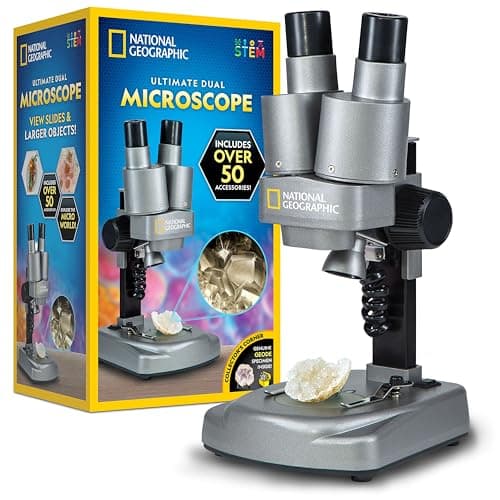
NATIONAL GEOGRAPHIC Dual LED Student Microscope
Category
For when you know roughly what they are into and have a number in your head.
The short answer
Gift-buying has a different shape from shopping: you usually know an interest and a budget rather than a category, and you cannot ask the child what they already own. These guides are built for that — organized by interest and by price band, and every one of them names something popular that we think you should skip.
Block & Beaker earns a commission when you buy through our links, at no cost to you. It never changes a ranking, and we say so plainly when the right answer is the cheaper set, or nothing at all. Full disclosure · How we pick.

Start here
In this section
Each one carries its top pick’s live price and a buy link, so you never have to click twice to find out what something costs.
Best science gift
Science gifts sorted into experiences and equipment, so you know which one you are buying.
Top pick
NATIONAL GEOGRAPHIC Dual LED Student Microscope
Best coding gift
Coding gifts sorted by what they require — a tablet, an adult, or nothing at all.
Top pick
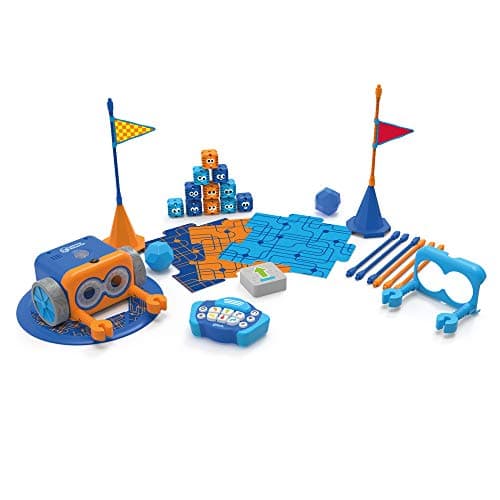
Botley 2.0 The Coding Robot Activity Set
Best STEM gift under $50
Genuinely good sub-$50 picks, with the finite ones labeled as finite rather than sold as toys.
Top pick
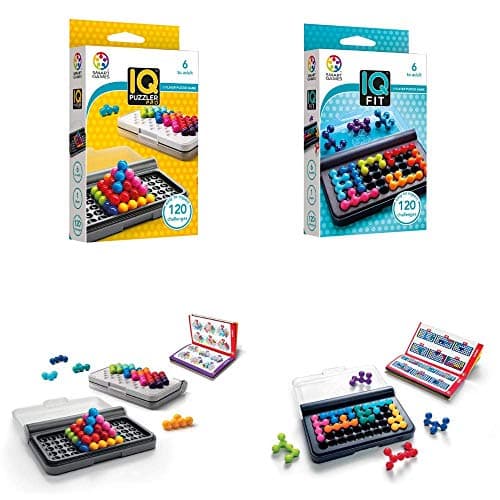
SmartGames IQ Puzzler Pro
Best STEM gift for teens
Gifts that survive a teenager looking at the box — real optics, real code, real components.
Top pick
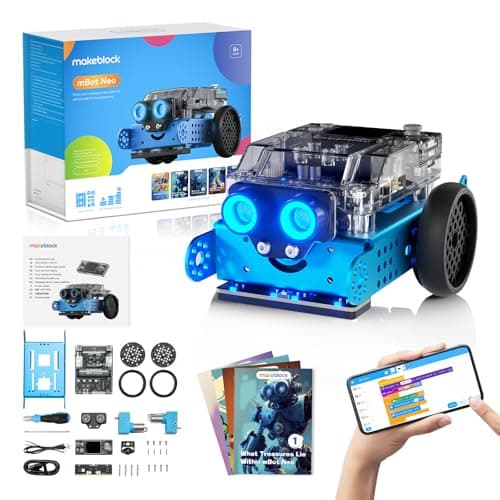
Makeblock mBot Neo (mBot2)
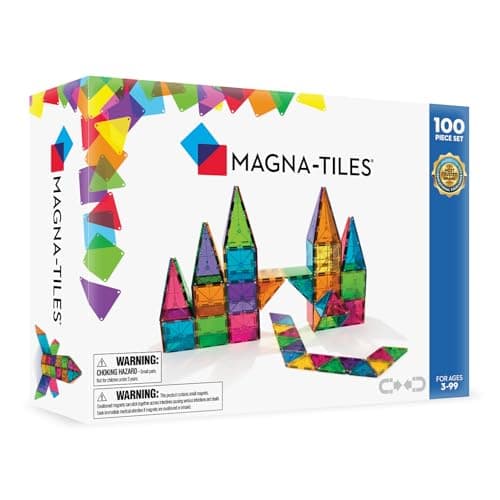
Best gift from a grandparent
Picks chosen for the specific constraints of buying for a grandchild: no duplicates, no batteries, no parental irritation.
Top pick
MAGNA-TILES Classic 100-Piece Set
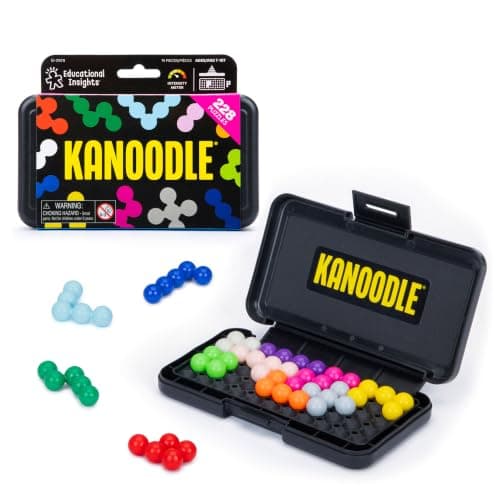
Best small STEM gift
Pocket-sized picks with high published challenge counts, chosen for travel rather than for price.
Top pick
Kanoodle
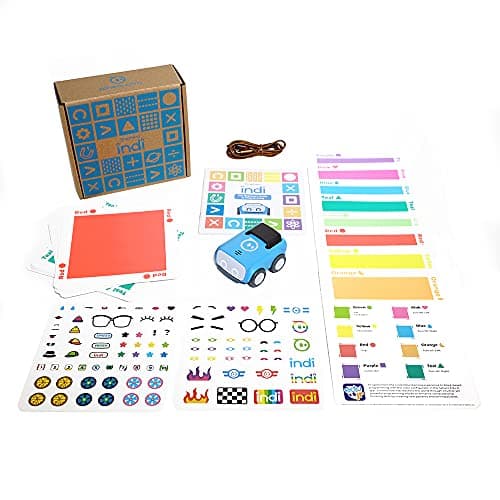
Best STEM gift for an active child
Floor-scale, outdoor and moving-about STEM toys for children who do their thinking upright.
Top pick
Sphero indi At-Home Learning Kit
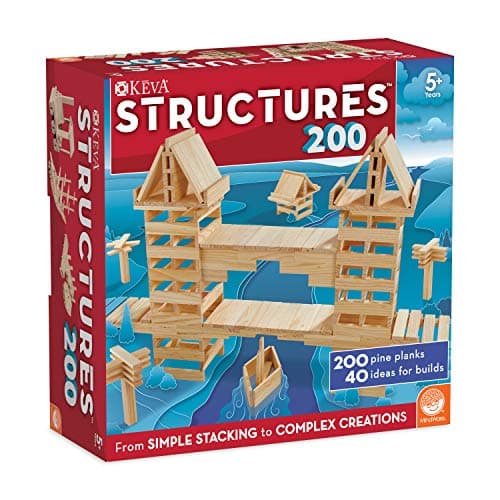
Best shared gift
Toys with enough pieces, a wide enough age range and no turn order - the three things a shared gift needs.
Top pick
KEVA Structures 200 Plank Set
Best gift when you know little
What to buy when the only reliable fact is the age, chosen on wide age ranges and no dependencies.
Top pick
MAGNA-TILES Classic 100-Piece Set
Best ready-to-use gift
Gifts with nothing to charge, install, assemble or fetch - usable in the first five minutes.
Top pick
MAGNA-TILES Classic 100-Piece Set
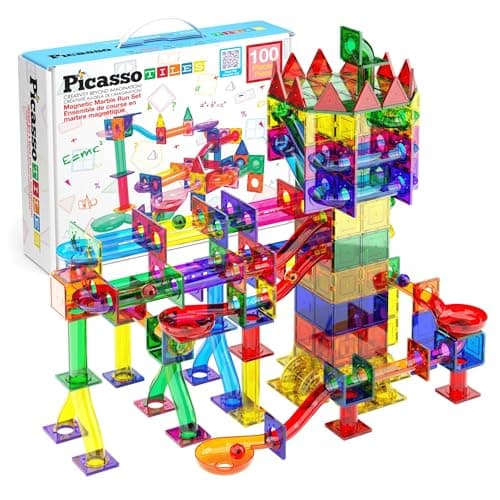
Best gift for a full shelf
Additions that change what an existing collection can do, rather than enlarging it.
Top pick
PicassoTiles 100 Piece Marble Run Building Set
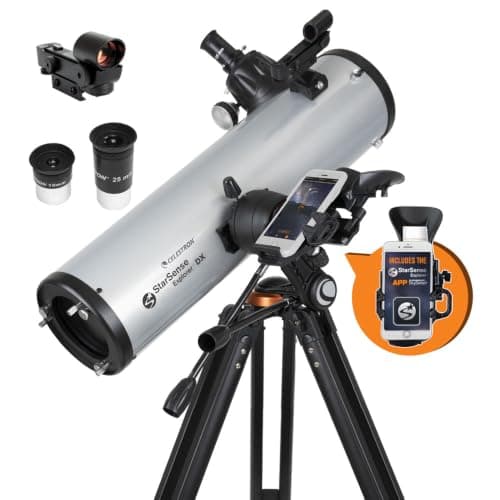
Best STEM kit for adults
Adult-grade instruments, languages and puzzles, chosen on specifications a grown-up would actually use.
Top pick
Celestron StarSense Explorer DX 130AZ
Best quiet STEM toy
STEM toys chosen for silence — no buzzers, motors or marbles — for travel, waiting and bedtime.
Top pick
SmartGames IQ Puzzler Pro
Most eco-friendly
STEM toys chosen on the three published facts that decide waste: materials, power and consumables.
Top pick
KEVA Structures 200 Plank Set
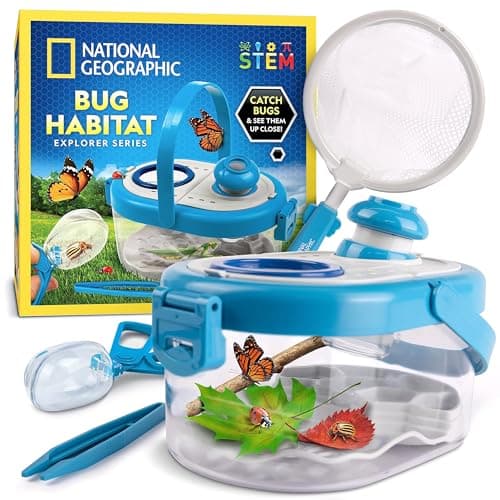
Best for animal lovers
The STEM toys built around animals, from live insects in the garden to a programmable mouse.
Top pick
NATIONAL GEOGRAPHIC Bug Catcher Kit

Best for creative kids
The STEM toys that start with drawing, sculpting and designing rather than with a manual.
Top pick
Circuit Scribe Basic Kit
Not stocked on Amazon. This link goes to the maker and we earn nothing on it.
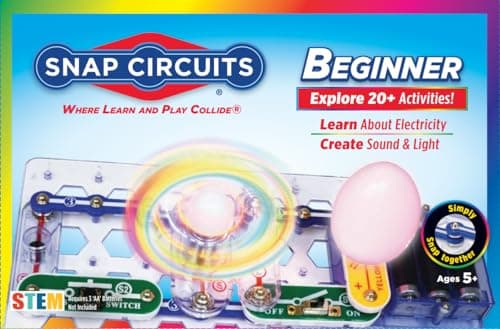
Best STEM gift under $20
Five sub-$20 picks that publish genuine content, spanning ages one to eight, plus the cheap kit that ends the same day.
Top pick
Snap Circuits Beginner
Best Christmas STEM gift
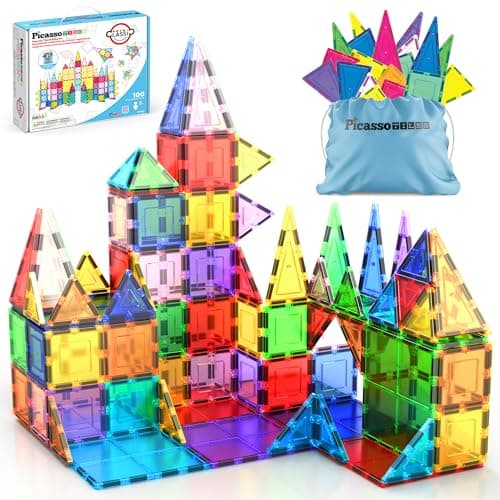
A single STEM pick for each age band from three upward, and the one December mis-buy to avoid.
Top pick
PicassoTiles 100 Piece Magnetic Tile Set
Best Christmas gift for a toddler
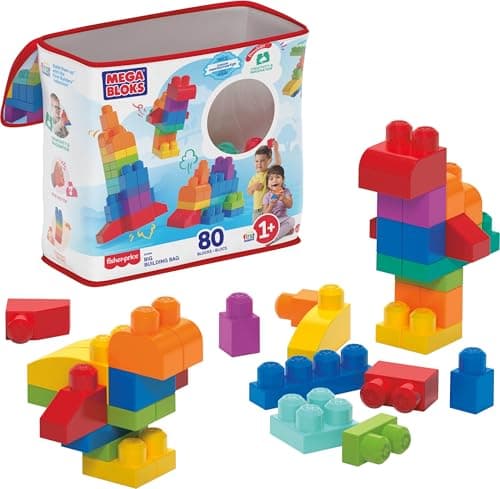
The handful of toys published for under-threes, ranked on what a toddler can do alone.
Top pick
MEGA BLOKS First Builders Big Building Bag, 80 Pieces
Best STEM advent calendar
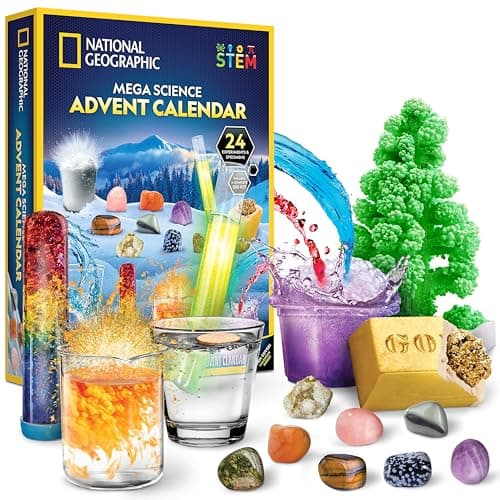
The published experiment-versus-specimen split on every science calendar worth buying, and the LEGO one that contains no science at all.
Top pick
NATIONAL GEOGRAPHIC Science Advent Calendar
They are predictable, which means they are avoidable.
It duplicates something they own. The most common outcome for popular sets, and the hardest to avoid at distance. The defense is to buy either the obviously-not-owned thing (a microscope, a telescope, a subscription) or an expansion of a system so widely owned that duplication is fine — extra magnetic tiles are never wasted, and neither is a bigger baseplate.
It is a single afternoon. Geode kits, crystal-growing kits, one-model build kits. These are genuinely enjoyable and completely finite, and they disappoint mainly because they were sold as toys. If you buy one, buy it as an event and say so on the card. Our under fifty guide flags every kit in this shape explicitly.
It needs something you did not send. Five AAA batteries. Four AA batteries. An iPad. A parent with an hour free every Saturday. Manufacturers publish these requirements and retailers rarely repeat them, which is why every product page on this site lists the battery requirement in the spec table rather than in the small print.
“They like science” usually means one of three quite different things, and the right present differs for each.
A child who likes looking at things — bugs, rocks, pond water — wants a microscope, and it is the highest-hit-rate present in this whole category because the supply of things to look at is infinite and free.
A child who likes reactions — fizzing, color changes, the moment something happens — wants a chemistry set, and specifically one whose manual you can read online before buying. Thames & Kosmos publishes its full manuals free, which is unusual and useful.
A child who likes how things work wants a circuit set or a robot they build rather than drive. This is the interest most often mis-served: it gets bought a science kit when it wanted a screwdriver.
Value in this category is not linear, and there are two places where spending slightly more changes the product qualitatively rather than quantitatively.
The first is around the entry point of any system. The published example we keep returning to is Snap Circuits: the Beginner set publishes 21 projects from 14 parts, the Classic publishes 305 from over 60. The gap between those two boxes is roughly three times the price and roughly fifteen times the content. There is no version of that arithmetic where the small box is the better present for a child over about six.
The second is the sixty-to-a-hundred-piece boundary in building sets. Below about sixty tiles or bricks, a child runs out mid-build, which is the most common reason a construction set is abandoned in week two. Above a hundred they can build something enclosed and roofed, which is when it becomes a house rather than a wall.
Both cliffs argue the same way: one larger present beats two smaller ones, in a category where a second small set of a different brand may not even connect to the first.
Prices in this category move, and the live prices on these pages move with them — every figure you see is pulled from the retailer rather than typed by us, and where we cannot verify one today the page says “check price” rather than showing you a number from last month. That is the whole of our position on deals: we will show you what something costs right now, and we will not tell you it is a bargain, because we have no way to know that and neither does anyone else writing these lists.
Questions people actually ask
A microscope, a telescope, or an expansion to a system so common that duplication does not matter — extra magnetic tiles are never wasted. Avoid buying the flagship set of a popular line at distance, because that is exactly what they are most likely to already have.
They are a good experience and a poor toy. National Geographic publishes ten geodes in its Break Open kit, and ten single-use items is a finite afternoon. Buy one as an event rather than as the main present, and it lands well.
Enough to clear the value cliff in whatever system you are buying into. In building sets that is about a hundred pieces; in Snap Circuits it is the Classic rather than the Beginner set. One larger present beats two smaller ones almost every time here. What is genuinely good under $50.
We show the live price from the retailer, dated, and nothing else. Where we cannot verify a price today the page says check price rather than showing a stale number. We do not claim anything is a bargain, because we have no way to verify that.
Sources
Every specification on this page traces to one of these. If a manufacturer publishes nothing on a point, the page says so rather than filling the gap.
Not sure where to start? Try shopping by age instead, or read how we pick.