STEM toys explained
What Are STEM Toys?
The term explained without marketing: what it covers, who decides, and how to tell a real STEM toy from a sticker.
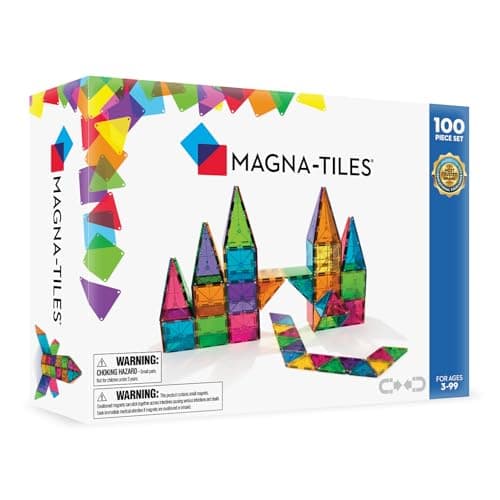
Top pick
MAGNA-TILES Classic 100-Piece Set
Category
The background reading, for when the question is not which one but what and why.
The short answer
These pages answer the questions that come before a purchase decision: what the term STEM toy actually covers, what separates a toy that lasts from one that does not, how Montessori materials differ, and what to do with a box of tiles once the novelty has worn off. Every one of them links through to picks, so you are never left with theory alone.
Block & Beaker earns a commission when you buy through our links, at no cost to you. It never changes a ranking, and we say so plainly when the right answer is the cheaper set, or nothing at all. Full disclosure · How we pick.

Start here
In this section
Each one carries its top pick’s live price and a buy link, so you never have to click twice to find out what something costs.
STEM toys explained
The term explained without marketing: what it covers, who decides, and how to tell a real STEM toy from a sticker.
Top pick
MAGNA-TILES Classic 100-Piece Set
What makes a toy last
The four-part test this whole site runs on, explained — and how to apply it yourself in a shop.
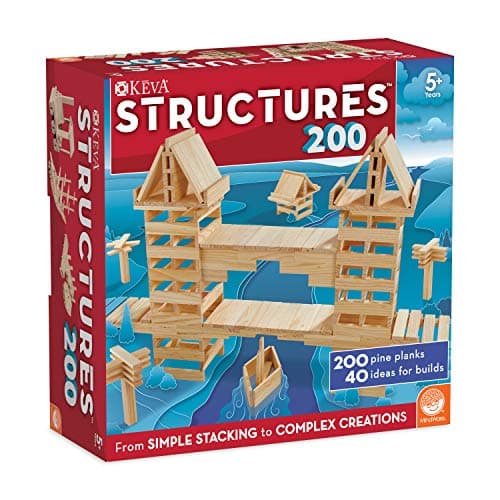
Top pick
KEVA Structures 200 Plank Set
Choosing the first one
A practical guide to the first purchase, with the age-by-age answer and the mistakes that cost the most.
Top pick
MAGNA-TILES Classic 100-Piece Set
Montessori vs STEM
An honest comparison of two philosophies, and the toys that genuinely satisfy both sets of criteria.
Top pick
KEVA Structures 200 Plank Set
Tile build ideas
Build ideas with piece counts, plus what to add to a tile collection that has gone quiet.
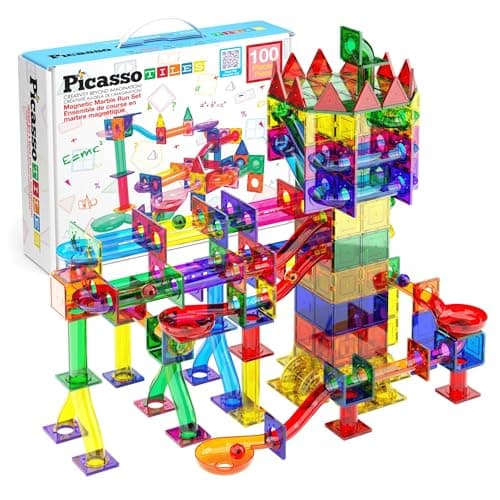
Top pick
PicassoTiles 100 Piece Marble Run Building Set
STEM toys for girls
Picks chosen on published specs rather than colorway, with a straight answer about what the pink version usually is.
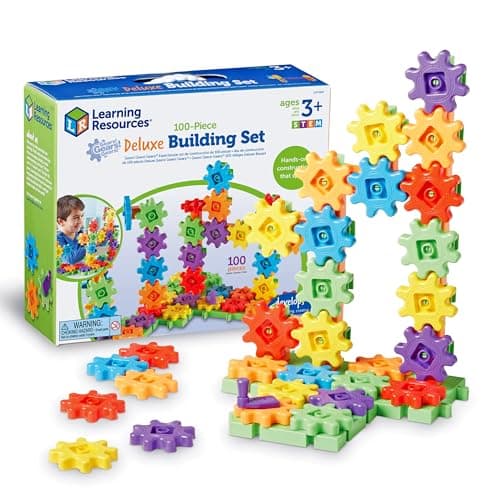
Top pick
Gears! Gears! Gears! 100-Piece Deluxe Building Set
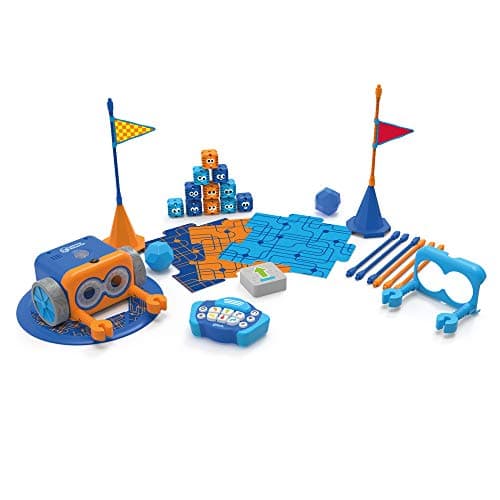
Toys vs apps
An honest comparison of physical coding toys and screen-based coding, and how to sequence them.
Top pick
Botley 2.0 The Coding Robot Activity Set

Storing magnetic tiles
Practical storage that keeps a tile set in use, plus the damage check that should go with it.
Top pick
CONNETIX Rainbow Creative Pack, 100 Pieces
Batteries and STEM toys
Published battery requirements across the site, and the toys that need none at all.
Top pick
Gears! Gears! Gears! 100-Piece Deluxe Building Set

Toy safety, explained
What the toy safety standards cover, which brands name them, and how to read an age rating properly.
Top pick
Magformers Basic 62-Piece Set
Guide
A material-by-material cleaning guide built from what manufacturers publish about how each toy is made.
Guide
The published component lists that decide whether a missing piece is an annoyance or the end of a toy.
Guide
A diagnostic for the toy that stopped being played with, and the cheap fixes that work more often than a new purchase.

Guide
The honest limits of what any toy can claim, and the narrower thing these ones genuinely do.
Head to head
Where the label helps, where it misleads, and the toys that qualify without carrying the word.

Guide
The five numbers worth reading, the three worth ignoring, and what is published but never printed.

Guide
Every device requirement on the site, and the three levels of screen independence worth distinguishing.
Best-documented brand
Which STEM toy companies document their products properly, which leave gaps, and why it decides the purchase.
Top pick
MAGNA-TILES Classic 100-Piece Set
Best cause-and-effect toy
Toys whose mechanism makes cause and effect visible, from a baby's first pull to a working circuit.
Top pick
Gears! Gears! Gears! 100-Piece Deluxe Building Set
Best sensory-friendly STEM toy
STEM toys chosen for quiet, predictable and tactile properties, from the maker's own component lists.
Top pick
KEVA Structures 200 Plank Set

Guide
Reusable equipment, multi-age sets and project ladders, chosen on what does not run out.
Top pick
My First Lab Duo-Scope Microscope
Not stocked on Amazon. This link goes to the maker and we earn nothing on it.
Guide
How to tell a difficulty floor from a hazard line on a published age rating, and which toys are safe to buy ahead.
Top pick
MAGNA-TILES Classic 100-Piece Set
Guide
Why the category does not exist, what people are actually asking, and one published pick for each age from four to twelve.
Top pick
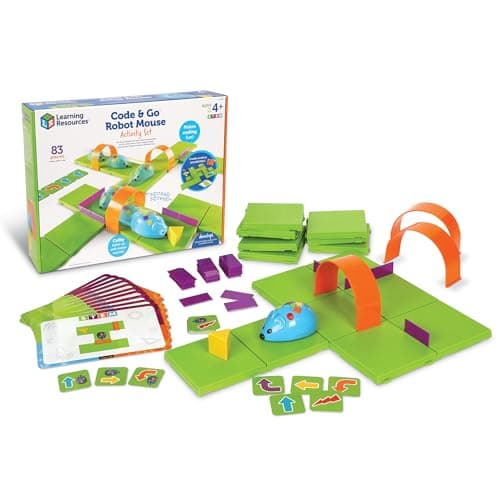
Code & Go Robot Mouse Activity Set
Because most of the questions people have in this category are not product questions. “What are STEM toys?” has real, measurable search volume and a genuinely useful answer, and it is not served by another list of ten things to buy. Neither is “what do I do with these tiles now”, which is the question that turns an existing purchase into a used one.
We write these because they are the pages we would want to read, and because a site that only publishes roundups is a catalog. But we do not pretend they are disinterested: every guide links to the roundups it supports, and if you buy through one of those links we earn a commission. That is stated at the top of every page, not just in the footer, and it is set out in full on the disclosure page.
Every guide here comes back to the same distinction, which is the reason this site exists at all: the difference between a toy that is good and a toy that keeps being picked up.
Those are not the same property, and the entire review field measures the first one. Read any of the big “best STEM toys” lists and you will find quality assessments — build quality, educational value, fun factor — and no assessment at all of whether the thing is still in use six weeks later. That is the question the person buying it actually has.
Our answer is the Replay Signal: four things you can check from published information before you buy. Is it open-ended or does it have a finished state? Does anything run out? Is there room to grow — expansions, cross-compatibility, a published project count deep enough to climb? And does it need an adult, every time, to work at all?
That last one is the most under-rated and the most predictive. A toy that structurally requires a grown-up gets used when a grown-up is free, which for most families is not often. Robot Turtles is a good game and its published rules require an adult to act as the computer — that is not a criticism, but it is the single most important thing to know before buying it for a child who mostly plays alone.
We do not claim to have tested anything. We have not. There is no lab, no shelf of samples and no panel of children, and where a competitor says they spent months with twenty toys, we say we read the manuals and did the arithmetic. That is a smaller claim and it has the advantage of being true and checkable — every specification we quote links to the manufacturer’s own page, so you can verify any number on this site in about fifteen seconds.
We also do not do age-graded developmental claims. Plenty of toy marketing asserts that a particular set builds spatial reasoning or improves problem-solving, usually with no citation. Some of that literature is real and some of it is a press release. Where we make a claim about what a toy teaches, it is a claim about what the toy mechanically requires the child to do — sequencing steps, completing a circuit, planning two moves ahead — because that we can point at.
Each guide routes into the money pages it supports, usually within the first two screens, because a guide that leaves you with an understanding and no way to act on it has done half a job. If you would rather skip the reading, the fastest useful route into the site is the age pages, and the most-used single page we publish is the magnetic tile roundup.
Questions people actually ask
There is no certifying body and no definition anyone has to meet, so in practice it is a marketing category. The usable working definition is a toy where the play itself requires science, technology, engineering or math reasoning, rather than one with those words on the box. The full explainer.
The honest answer is that we make claims about what a toy mechanically requires a child to do — sequence steps, complete a circuit, plan two moves ahead — and not about downstream educational outcomes, which we have no way to measure and no business asserting.
Montessori materials are designed around self-correction and a single isolated concept, usually in natural materials with no batteries. There is real overlap with open-ended STEM toys and real divergence on anything electronic. The comparison in full.
We earn an affiliate commission if you buy through our links, at no cost to you. It does not affect which product we recommend or where it ranks, and every roundup includes at least one product we tell you not to buy. Full disclosure.
Not sure where to start? Try shopping by age instead, or read how we pick.