Guide
Replacement Parts and Missing Pieces
Some toys lose a piece and carry on. Others lose one card and stop working. The published component list tells you which you own.
By Sawyer V. · Published
The short answer
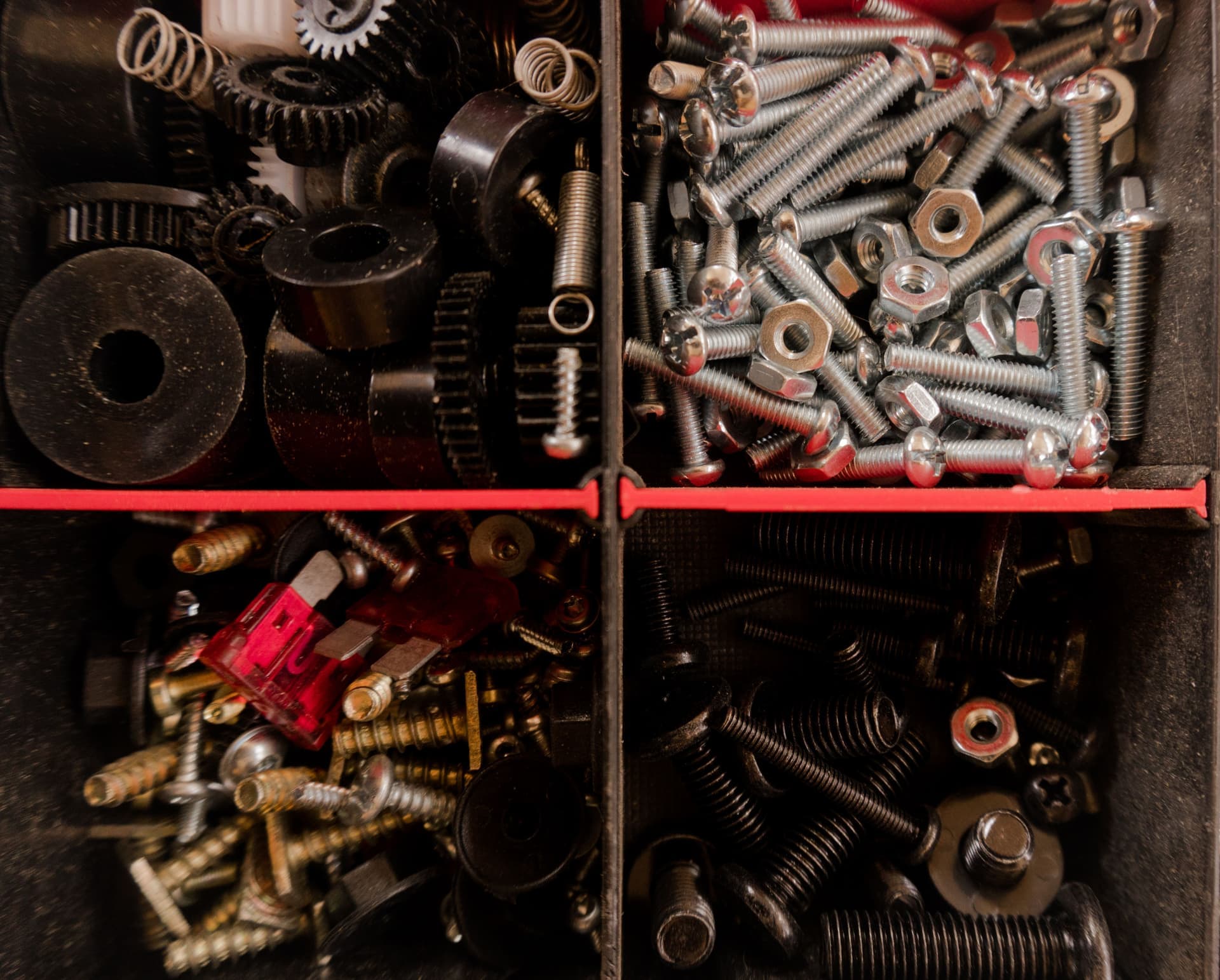
Toys built from many identical pieces survive losses; toys built around a unique component do not. Losing one of 200 KEVA planks or one of 790 LEGO bricks changes nothing. Losing one challenge card, the Osmo reflector or a chemistry set’s reagent ends the activity.
Block & Beaker earns a commission when you buy through our links, at no cost to you. It never changes a ranking, and we say so plainly when the right answer is the cheaper set, or nothing at all. Full disclosure · How we pick.
The two kinds of toy
The arithmetic
What a missing piece costs, by published component list
| KEVA Structures | 200 identical planks — a loss is invisible |
|---|---|
| LEGO Classic | 790 pieces, 33 colors — a loss is invisible |
| Magna-Tiles Classic | 100 tiles, published shape mix — noticeable, not fatal |
| GraviTrax Starter | 6 marbles — replaceable, and the run stops without one |
| Gravity Maze | 3 marbles, 9 towers, 60 cards — losing a tower ends challenges |
| Robot Mouse | 30 coding cards — losing cards degrades the whole set |
| Osmo Genius | Base and reflector — the reflector is the system |
| Chemistry C500 | 5 chemicals, consumed — refills sold by the maker |
Toys that shrug off a loss
KEVA Structures publishes 200 planks precision-cut to identical dimensions. Every plank is interchangeable, so a missing one is not even detectable. This is the most loss-tolerant product on the site.
LEGO Classic publishes 790 pieces in 33 colors and compatibility with all LEGO construction sets. Both halves help: the count absorbs losses, and the compatibility means any future set replenishes the pile.
Magnetic tiles sit just behind. One hundred tiles with a published shape mix means losing a large square is noticeable — there are only four — but losing one of fifty squares is not.
Toys where one piece is the whole thing
Marbles. GraviTrax publishes six and Gravity Maze publishes three. A marble run without a marble is furniture. Ravensburger sells replacements, and buying a spare set at the same time as the toy is the cheapest insurance available in this category.
Challenge cards. ThinkFun publishes 60 cards for Gravity Maze and Circuit Maze, 40 for Rush Hour Junior. The cards are the game — the plastic is just the equipment. Lose a third of the deck and you have lost a third of what you paid for.
Coding cards. The Robot Mouse publishes 30 double-sided cards and Sphero indi publishes 30 color cards with an exact color breakdown — 5 green, 4 yellow, 3 red, 2 purple, 3 teal, 3 orange, 5 blue, 5 pink. Losing the two purple cards removes a capability, not just a card.
The Osmo reflector. Osmo publishes a Base and reflector as the mechanism that lets the iPad camera see the table. Without it, 52 Words tiles and 40 Numbers tiles do nothing at all.
Consumables are not losses, they are the design
The Chem C500 publishes 28 experiments using five chemicals, and Thames & Kosmos sells replacements. That is not a toy breaking — it is the refill model working as intended.
Similarly 4M crystal growing publishes seven experiments where the compound is the whole product, and Break Open Geodes publishes ten geodes. A geode kit with no geodes has not failed; it has finished.
The distinction matters when deciding what to buy for a child who loses things. A consumable kit has a known end either way.
What to do about it before it happens
Buy spare marbles with the marble run. They cost almost nothing next to the set and they are the single most likely thing to disappear.
Photograph the component list. One photo of the manual page listing what is in the box, kept on a phone, settles every future argument about whether something is missing or was never there.
Store cards separately from pieces. Cards get lost because they are flat and go under things. A freezer bag inside the box costs nothing.
Contact the manufacturer first. Several publish replacement part services. It is worth an email before assuming a toy is finished.
Worth knowing before you buy
A found piece is not automatically safe to return to use. A magnetic tile that has been trodden on may have a split seam even if it looks intact — the published safety case depends on the magnets staying encased, so a cracked tile is retired rather than rescued.
Rebuilding a set that has lost its instructions
Losing the manual feels terminal and usually is not. Several of the products we cover publish their contents and instructions online, which is one of the practical reasons to prefer a manufacturer that documents things properly.
Construction sets do not need the manual at all. Magna-Tiles publishes a 3-99 age range precisely because there is no instruction to follow. KEVA ships an idea booklet that most children ignore within a fortnight. Losing either changes nothing.
Numbered-project sets do need it. Snap Circuits Classic publishes a manual covering projects 1 to 305, and without it you own 60 parts and no ladder. This is the case where contacting the manufacturer is genuinely worth the email.
Challenge cards cannot be reconstructed. A logic game’s cards are the game, and unlike a manual they are consumed one at a time during play, which is exactly when they go missing.
A five-minute audit worth doing once a year
Pull each construction and logic set out, and check three things.
Count the irreplaceables. Marbles, reflectors, remotes, battery covers. These are the parts whose absence ends a toy, and they are cheap to replace while the product is still sold.
Check the batteries and the compartments. Cells left in over a summer leak, and a corroded contact turns a working robot into scrap. Removing them takes a minute per toy.
Retire what is damaged. Cracked magnetic tiles, split seams, frayed cables. A toy that is 90% intact is usually worth keeping; the exception is anything whose safety case depends on staying sealed.
Say the unwelcome thing
Do not buy a card-driven game for a child who loses things
A 60-card logic game is 60 cards of value sitting in a box that gets tipped out on a carpet. For a household where small flat things vanish, an open-ended construction set is a far better bet.
One hundred tiles minus three is still 97 tiles. Sixty challenges minus twenty is a different product.
Where to go next
How to store magnetic tiles covers the storage side. When a STEM toy gets abandoned covers what to do when the pieces are all present and nobody is playing.
Questions people actually ask
Frequently asked
Which STEM toys survive losing a piece?
Ones built from many identical components. KEVA Structures publishes 200 planks precision-cut to identical dimensions and LEGO Classic publishes 790 pieces, so a loss is effectively invisible. Toys built around a unique part — an Osmo reflector, a marble, a specific challenge card — do not.
Can you buy replacement marbles for a marble run?
Yes, and it is worth buying spares at the same time as the set. GraviTrax publishes six marbles and Gravity Maze publishes three, and a marble run without a marble does nothing. Ravensburger sells replacements.
What happens if you lose the challenge cards from a logic game?
You lose the game. ThinkFun publishes 60 challenge cards for Gravity Maze and Circuit Maze and 40 for Rush Hour Junior — the cards are the content and the plastic is the equipment. Store them separately from the pieces.
Is a chemistry set broken when the chemicals run out?
No, it has finished. Thames & Kosmos publishes five chemicals across 28 experiments in the C500 and sells replacements, so the refill is part of the design. The glassware, spoon and safety glasses survive and are what make the larger C1000 a sensible next step. Chemistry sets, compared.
Sources
Where these figures came from
Every specification on this page traces to one of these. If a manufacturer publishes nothing on a point, the page says so rather than filling the gap.
Read next
Where to go from here
Back to Guides, or read how we pick.