Guide
When a STEM Toy Gets Abandoned
The toy is usually fine. Before buying a replacement, work out which of five things actually happened.
By Sawyer V. · Published
The short answer
Five things end a STEM toy: it ran out, it hit its ceiling, it needs an adult, it needs batteries nobody has, or it is stored somewhere unusable. Only the first two are the toy’s fault, and the last three are fixed for nothing.
Block & Beaker earns a commission when you buy through our links, at no cost to you. It never changes a ranking, and we say so plainly when the right answer is the cheaper set, or nothing at all. Full disclosure · How we pick.
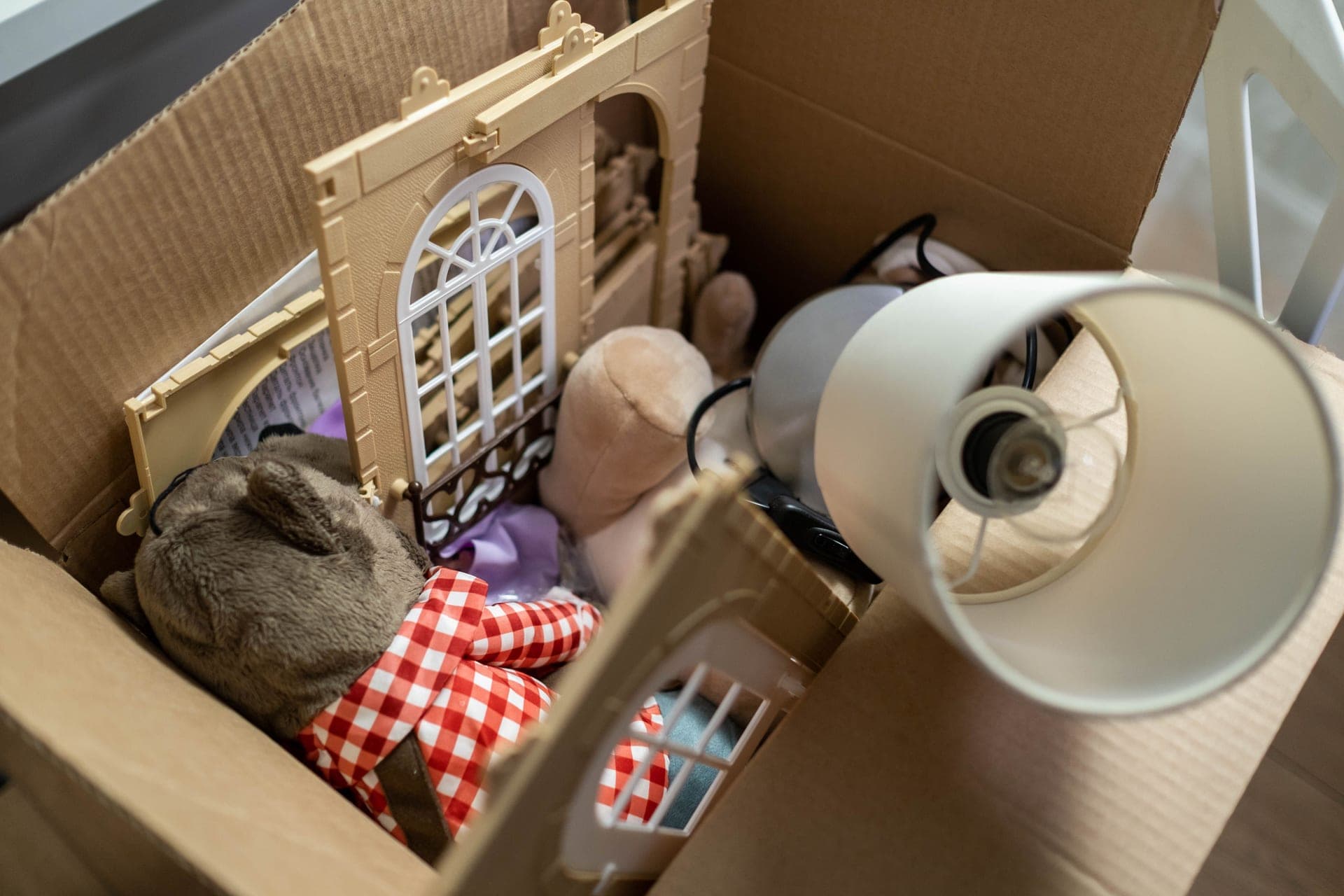
Work out which of five things happened
The Replay Signal we apply to every product on this site is built from four published properties: whether a toy is open-ended, whether anything runs out, whether there is room to grow, and whether an adult is needed. Run the same four checks backwards and you can usually tell why a toy stopped.
The arithmetic
Diagnosis, and what it costs to fix
| It ran out | Consumables spent — refill, or accept it finished |
|---|---|
| It hit its ceiling | Challenges done — needs a new capability |
| It needs an adult | Nobody is free — swap to a self-checking toy |
| It needs batteries | Free to fix, and the commonest cause |
| It is stored badly | Free to fix, and the second commonest |
One: it genuinely ran out
Some purchases are experiences with a published length, and finishing one is success rather than failure.
Break Open Geodes publishes ten geodes. The Chem C500 publishes 28 experiments using five chemicals. 4M crystal growing publishes seven experiments in which the compound is the product.
If one of these has stopped, it is finished. Buy a refill where the maker sells one, or move on — and next time consider a tool rather than a kit. See lab tools that never run out.
Two: it hit its ceiling
Logic games publish their own expiry dates. ThinkFun publishes 60 challenges for Gravity Maze and Circuit Maze and 40 for Rush Hour Junior; SmartGames publishes 120 for IQ Puzzler Pro. When those are done, the box is done.
Construction sets hit a different ceiling: the child has built everything they can currently imagine. That is not the same as finished, and it does not need a new toy — it needs a new capability. A marble run added to an existing tile collection changes the success condition from “does it look good” to “does the marble arrive.” What to buy after the first 100 tiles covers this properly.
Three: it needs an adult who is never free
This is the most under-diagnosed cause. Adult-needed is one of the four things we check precisely because a toy requiring a grown-up gets used when a grown-up is available, which is rarely.
A 10+ chemistry set with real reagents assumes supervision. Robot Turtles is published as 2-5 players with an adult acting as the computer. Neither is going to be picked up on a wet Tuesday.
The fix is not to try harder. It is to own at least one thing that needs nobody: the Robot Mouse publishes picture-based cards requiring no reading, and every ThinkFun logic game is self-checking. See STEM games for one player.
Four: the batteries
Free to fix and startlingly common. The published requirements, none included: Botley 2.0 five AAA, the Robot Mouse three AAA, Snap Circuits Classic four AA, the Chem C500 one 9V, the Duo-Scope three AA.
A toy that went flat in March and was put on a shelf is not an abandoned toy. It is a working toy with dead cells, and half an hour and a packet of AAAs brings it back. The battery guide has the full list.
Five: it is stored where it cannot be used
The other free fix, and the one nobody suspects.
Magnetic tiles kept in a deep box clump into a single magnetic brick. A child who cannot separate them concludes there is nothing to build with, and that looks exactly like boredom. How to store magnetic tiles covers the shallow-container fix.
Track systems and marble runs have a related problem: if the build has to be dismantled every evening, it gets started half as often. A toy that needs a surface it cannot have will lose to one that does not, every time.
Missing cards are the third version. A logic game with a third of its deck gone is not much of a game — replacement parts and missing pieces covers what can be recovered.
Worth knowing before you buy
Before returning a toy to use after a long gap, check it. Battery compartments corrode, and any magnetic tile with a cracked corner or a rattle should be retired rather than put back in the box — the published safety case depends on the magnets staying sealed inside.
The rotation trick
One thing worth trying before any purchase: put half the toys away for six weeks. Open-ended sets in particular — tiles, planks, bricks — recover almost all of their novelty after a gap, because the child has changed even though the toy has not.
This works precisely because these sets have no finished state. A 60-challenge logic game does not come back from a rest; a box of 200 identical planks does.
Say the unwelcome thing
Do not replace a toy before diagnosing it
Buying a second construction set to fix a storage problem is the commonest expensive mistake in this whole category. The new set goes in the same deep box and stops being used for the same reason.
Batteries, a shallow container and a six-week rest cost nothing and fix this more often than a purchase does.
Where to go next
How we pick explains the Replay Signal in full. Toys that actually teach covers the four-part test applied before buying rather than after.
Questions people actually ask
Frequently asked
Why has my child stopped playing with their STEM toy?
Usually one of five things: it ran out of consumables, the child finished its published challenges, it needs an adult who is never free, the batteries are dead, or it is stored somewhere that makes it unusable. The last two are free to fix and account for a large share of cases.
Should I buy a new toy if the old one is not being used?
Diagnose first. If the child finished a 60-challenge game, the box really is done. If a construction set is sitting unused, check the storage and the batteries before spending — magnetic tiles in a deep box clump together, and a child who cannot separate them decides there is nothing to build with.
Do open-ended toys come back into use after a break?
Usually. Sets with no finished state — magnetic tiles, planks, bricks — recover most of their novelty after six weeks away, because the child has changed even though the toy has not. Challenge-card games do not come back the same way, because the challenges stay solved.
What kind of STEM toy is least likely to be abandoned?
One that is open-ended, has no consumables, needs no adult and has no published ceiling. KEVA Structures publishes 200 identical planks with no connectors and no upper age limit; Magna-Tiles publishes a 3-99 age range and no consumables. Neither has anything to finish. How we pick.
Sources
Where these figures came from
Every specification on this page traces to one of these. If a manufacturer publishes nothing on a point, the page says so rather than filling the gap.
Read next
Where to go from here
Back to Guides, or read how we pick.