The picks
STEM Toys for 4 Year Olds
Four is when a child can turn a plan into a sequence — which is why the first coding toys land here and not before.
By Sawyer V. · Published
The short answer
Four is the year coding toys start working, provided they need no reading. Learning Resources rates the Code & Go Robot Mouse 4+ and publishes that its cards use directional symbols, so a child who cannot read a word can still sequence six instructions and watch them execute.
Block & Beaker earns a commission when you buy through our links, at no cost to you. It never changes a ranking, and we say so plainly when the right answer is the cheaper set, or nothing at all. Full disclosure · How we pick.
At a glance
The picks, ranked
Tap any row to jump to the full reasoning. Prices come live from Amazon where we have them and read “check price” where we don’t — never a number we cannot stand behind today.
| # | Product | Best for | Price |
|---|---|---|---|
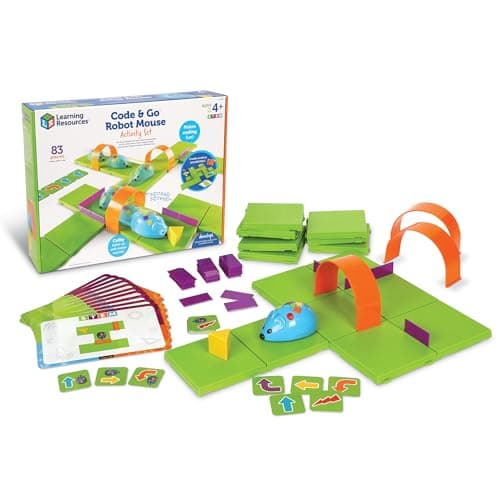
| 1 | Best first coding toy Code & Go Robot Mouse Activity Set Eighty-three pieces, sixteen rearrangeable maze grids, and cards a pre-reader can use unaided. | Four, and the moment sequencing becomes possible | |
| 2 | Best construction CONNETIX Rainbow Creative Pack, 100 Pieces Doors, windows and fences at the exact age pretend play takes over construction. | A four-year-old who tells stories about what they build | |
| 3 | 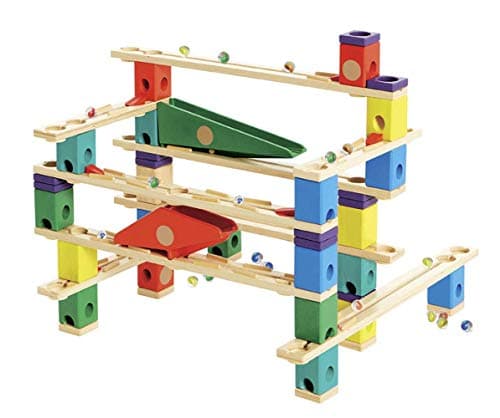 Best marble run Quadrilla Wooden Marble Run: Vertigo Wooden blocks heavy enough to stand without a base plate, plus 50 marbles and three spiral funnels. | Four and up, and a household that leaves things out | |
| 4 | 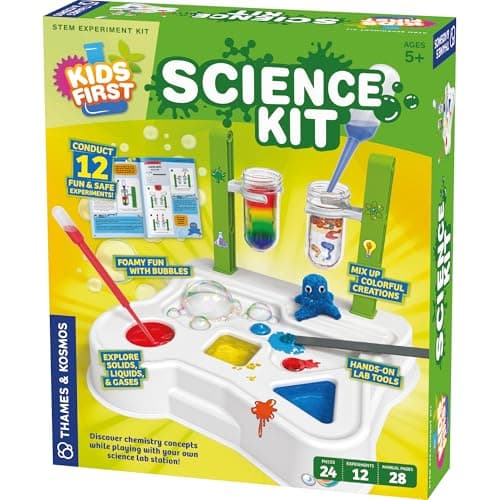 Best science kit Kids First Science Laboratory Twenty-four real tools, no chemicals, and experiments that run on things already in the kitchen. | Four, where almost every science kit is rated 8+ | |
| — | 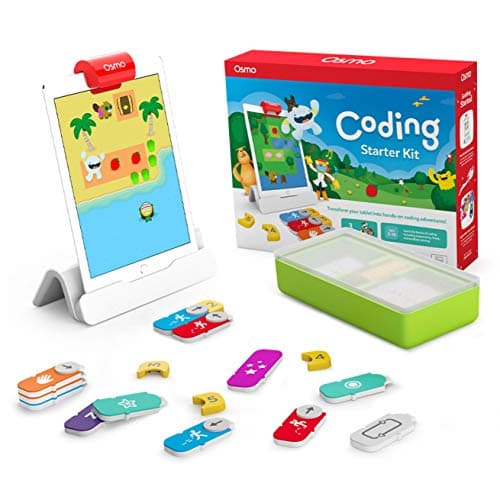 The one to skip at four Osmo Coding Starter Kit for iPad Clever hybrid coding, rated 5-10, and it puts a tablet in the middle of a four-year-old's play. | Five to ten, and a household comfortable with the iPad |
5 picks, including 1 we tell you to skip. Ages shown are the manufacturer’s own rating, not ours.
What changes at four
The important shift is that a four-year-old can hold a plan. They can decide where they want something to end up, work out roughly how to get there, and then carry that intention through several steps.
That is exactly what a coding toy requires, and it is why four is the floor for the whole category rather than three. It is also why marble runs start working here: a marble run is a plan that either succeeds or fails, which is only interesting if you had a plan.
What is still missing is reading. This single fact eliminates most of the coding shelf, and it is the specification to check before anything else.
The pre-reading test
The arithmetic
What a four-year-old can operate alone
| Code & Go Robot Mouse — instructions | Directional symbol cards |
|---|---|
| Code & Go Robot Mouse — stated age | 4+ |
| Matatalab — instructions | Graphic symbol blocks, no literacy required |
| Sphero indi — instructions | Colored cards read by the robot |
| Osmo Coding Starter — requirement | iPad, rated 5-10 |
| Botley 2.0 — stated age | 5+ |
What a coding toy teaches a four-year-old
Three things, and it is worth being accurate about which three.
That order matters. The same four cards in a different sequence take the mouse somewhere else. This is genuinely surprising to a four-year-old and it is the foundation of everything after it.
That the machine does what you said. Not what you meant. Four-year-olds find this outrageous and then find it funny, and the realization is the whole of debugging.
That a mistake is findable. The mouse turned left at the third step, so the third card is wrong. That is a repeatable procedure rather than a feeling, and it is what transfers.
What it does not teach is programming in any literal sense, and no manufacturer here claims otherwise in its own copy.
Say the unwelcome thing
Do not buy the expensive robot at four
The gap between what an inexpensive card-driven robot teaches a four-year-old and what a robot costing five times as much teaches the same four-year-old is very small. Sequencing is sequencing.
Expensive robots earn their money at nine or ten, when a child wants to write real code. Buy the cheap one now and a buildable kit in five years, and you will have spent less and had more.
Worth knowing before you buy
Check the battery requirement before wrapping anything. The Code & Go Robot Mouse publishes three AAA cells, not included. A coding robot that will not move on the morning it is opened is a bad first impression that is hard to undo.
Marble runs at this age carry the usual caution: 50 marbles will spread across the house, and a younger sibling makes that a genuine hazard rather than an inconvenience.
What to buy
- First coding toy: Code & Go Robot Mouse. Nothing else at this price works pre-reading.
- Construction: Connetix, for the doors and windows.
- Building with a goal: Quadrilla, the wooden marble run.
- Science: Kids First Science Laboratory.
Next year brings Botley’s 150-step ceiling and the first logic games — the five-year-old page covers it. For the whole coding category, screen-free coding toys.
In full
Every pick, and what is wrong with it
Published specifications only, each linked back to the page it came from. Where a manufacturer publishes nothing, the row says so — we do not fill blanks in.
1. Best first coding toy
Code & Go Robot Mouse Activity Set
Learning Resources · LER2831 · maker rates it 4+
Eighty-three pieces, sixteen rearrangeable maze grids, and cards a pre-reader can use unaided.
- Set size
- 83 pieces
- Contents
- Colby the robot mouse, 16 maze grids, 22 maze walls, 3 tunnels, 30 double-sided coding cards, 10 activity cards, cheese wedge, activity guide
- Maze size
- The 16 grids build a 20″ x 20″ board
- Screen required
- None
Learning Resources publishes 83 pieces: Colby the mouse, 16 maze grids that build a 20-inch square board, 22 walls, 3 tunnels, 30 double-sided coding cards, 10 activity cards, a cheese wedge and a guide, rated 4+, requiring three AAA batteries.
The picture-based cards are what make this a four-year-old’s toy rather than a six-year-old’s. Directional symbols mean nothing has to be read to anyone, and the child owns the whole activity from the first minute.
The rearrangeable maze is why it does not go stale. Sixteen grids and 22 walls means the child sets the problem, which is a bottomless supply of difficulty in a way a fixed challenge deck is not.
Replay signal
- Open-ended or one-shot
- The mouse is fixed, but the maze is not — 16 grids and 22 walls is a new problem every time
- Does anything run out
- Nothing runs out
- Room to grow
- The 10 activity cards are a starting ladder; after that the child sets the puzzles
- Adult required
- Reading is not required — the coding cards use directional symbols, so a four-year-old can work alone
Why we say so: Learning Resources publishes the 83-piece contents including 16 rearrangeable grids and 22 walls, and states the cards are picture-based. A rearrangeable maze is why this does not become a solved puzzle after one weekend.
What’s wrong with it
The mouse itself is simple. Longevity comes entirely from rebuilding the maze, not from the robot getting harder.
| Set size | 83 pieces |
|---|---|
| Contents | Colby the robot mouse, 16 maze grids, 22 maze walls, 3 tunnels, 30 double-sided coding cards, 10 activity cards, cheese wedge, activity guide |
| Maze size | The 16 grids build a 20″ x 20″ board |
| Screen required | None |
| Batteries | 3 x AAA (not included) |
| Stated age | Ages 4+ |
Every figure above is from Learning Resources, Code & Go Robot Mouse Activity Set. Blanks are shown as “not published” rather than filled in.
2. Best construction
CONNETIX Rainbow Creative Pack, 100 Pieces
Connetix · Rainbow Creative Pack 100 pc · maker rates it 3+
Doors, windows and fences at the exact age pretend play takes over construction.
- Pieces
- 100
- Stated age
- “Recommended for builders aged 3+”
- Material
- “non-toxic, BPA and phthalate-free ABS plastic”
- Construction
- “ultrasonically sealed and riveted for extra safety”
Connetix publishes a 100-piece pack for builders aged 3+, in non-toxic BPA and phthalate-free ABS, ultrasonically sealed and riveted, with window and door pieces, fences and a travel bag.
At four the building has a story attached. What gets made is a hospital, a rocket, a house for a specific toy — and architectural pieces are what allow the build to match the story rather than approximate it.
If the household already has plain tiles, this set is the more interesting addition than another hundred squares.
Replay signal
- Open-ended or one-shot
- Open-ended, and the window, door and fence pieces push play toward buildings rather than abstract towers
- Does anything run out
- Nothing runs out
- Room to grow
- Connetix publishes ball-run and expansion packs that attach to the same tiles
Why we say so: Connetix publishes the age rating, the material and the ultrasonic-seal-plus-rivet construction, and sells ball-run packs built for the same tiles.
What’s wrong with it
Shape breakdown is not published, and at four a child will notice if they have run short of triangles.
| Pieces | 100 |
|---|---|
| Stated age | “Recommended for builders aged 3+” |
| Material | “non-toxic, BPA and phthalate-free ABS plastic” |
| Construction | “ultrasonically sealed and riveted for extra safety” |
| Includes | Window and door pieces, fences, and a travel bag |
| Consumables | None |
Every figure above is from Connetix, Rainbow Creative Pack 100 pc. Blanks are shown as “not published” rather than filled in.
3. Best marble run
Quadrilla Wooden Marble Run: Vertigo
Hape · E6009 · maker rates it 4+
Wooden blocks heavy enough to stand without a base plate, plus 50 marbles and three spiral funnels.
- Total pieces
- 134
- Track and block pieces
- 84
- Marbles
- 50
- Materials
- Birch and rubber wood
Hape publishes 134 pieces — 84 track and block pieces plus 50 marbles — in birch and rubber wood, with straightaway rails, three spiral funnels and a seesaw, rated 4 and above.
A marble run gives building a success condition: the marble reaches the bottom or it does not. At four that is the first experience of iterating on a design because it did not work, which is a genuinely different thing from building until it looks right.
The wood is a mechanical advantage rather than an aesthetic one. The blocks are heavy enough that a tall run stands on its own, which removes the most common failure of plastic sets at this age.
Replay signal
- Open-ended or one-shot
- Open-ended, and the wooden blocks work as plain blocks when nobody wants a marble run
- Does anything run out
- Nothing runs out
- Room to grow
- Quadrilla sets combine, and the blocks are the standard the whole system is built on
Why we say so: Hape publishes the 84 track pieces plus 50 marbles, the wood species and the named action pieces. Wood matters here for a specific reason rather than a sentimental one: the blocks are heavy enough that a tall run does not need a base plate to stay standing.
What’s wrong with it
Fifty marbles is far more than the run needs, and every one of them ends up under something.
| Total pieces | 134 |
|---|---|
| Track and block pieces | 84 |
| Marbles | 50 |
| Materials | Birch and rubber wood |
| Includes | Straightaway rails, three spiral funnels, a seesaw |
| Stated age | 4 and above |
Every figure above is from Hape, Quadrilla Vertigo. Blanks are shown as “not published” rather than filled in.
4. Best science kit
Kids First Science Laboratory
Thames & Kosmos · Kids First Science Laboratory · maker rates it 3-6+
Twenty-four real tools, no chemicals, and experiments that run on things already in the kitchen.
- Contents
- 24 large plastic scientific tools, described as durable, reusable and easy to handle
- Experiment cards
- 10, double-sided
- Stated age
- 3 to 6+
- Chemicals included
- None — experiments use household materials
Thames & Kosmos publishes 24 large plastic scientific tools — durable, reusable and easy to handle — with 10 double-sided experiment cards, for ages 3 to 6 and up.
No chemicals is the design rather than an omission. A four-year-old does not need reagents; they need a beaker they can hold and a pipette that works with a weak grip, plus an adult saying what is happening.
It is also the rare science purchase at this age with no consumable, so it is still a science kit in March.
Replay signal
- Open-ended or one-shot
- The 20 card sides are a starting ladder; the tools then work on anything in the kitchen
- Does anything run out
- Nothing in the box runs out, because nothing in the box is consumed
- Room to grow
- The same tools carry into any household-materials experiment for years
- Adult required
- Yes at three, less so at five. The cards are picture-led but the setup is not
Why we say so: Thames & Kosmos publishes 24 reusable tools and no chemicals. A preschool science kit with no consumables in it is unusual, and it is the reason this one survives past its first fortnight when kit-of-the-week alternatives do not.
What’s wrong with it
Ten cards is a short ladder, and past those it needs an adult willing to invent the next thing to pour.
| Contents | 24 large plastic scientific tools, described as durable, reusable and easy to handle |
|---|---|
| Experiment cards | 10, double-sided |
| Stated age | 3 to 6+ |
| Chemicals included | None — experiments use household materials |
| Consumables | None in the box |
Every figure above is from Thames & Kosmos, Kids First range. Blanks are shown as “not published” rather than filled in.
Skip this one
Osmo Coding Starter Kit for iPad
Osmo · Coding Starter Kit · maker rates it 5-10
Clever hybrid coding, rated 5-10, and it puts a tablet in the middle of a four-year-old's play.
- Contents
- Osmo Base and Reflector for iPad, 31 magnetic coding blocks, stackable storage, 3 game apps
- Games
- Coding Awbie, Coding Jam, Coding Duo
- Screen required
- Yes — an iPad is required and is not included
- Compatibility
- All iPads except generations 1-4 and certain newer models; minimum iOS 11
Osmo publishes an Osmo Base and reflector, 31 magnetic coding blocks, stackable storage and three game apps — Coding Awbie, Coding Jam and Coding Duo — for ages 5-10, requiring an iPad that is not included.
The design is genuinely inventive and we are not dismissing the product. At four, two published facts count against it: the rating starts at five, and it requires a device.
The device is the bigger issue. A four-year-old’s screen time is usually already negotiated, and a coding toy that has to be unlocked, charged and permitted gets used far less than a mouse on the floor.
Replay signal
- Open-ended or one-shot
- Guided by the three games rather than open-ended; Coding Jam is the one with no ending
- Does anything run out
- Nothing physical runs out
- Room to grow
- Three games at rising difficulty, described by Osmo as beginner to expert
- Adult required
- Only to hand over the iPad — which is precisely the friction: this one competes with screen time rather than replacing it
Why we say so: Osmo publishes the 31-block count, the three named games, the iPad requirement and the compatibility list. The iPad dependency is a published requirement, and it is the fact most likely to decide whether this gets used.
What’s wrong with it
Rated 5-10 rather than 4+, and an iPad is a published requirement — which means the toy competes with everything else on that iPad.
| Contents | Osmo Base and Reflector for iPad, 31 magnetic coding blocks, stackable storage, 3 game apps |
|---|---|
| Games | Coding Awbie, Coding Jam, Coding Duo |
| Screen required | Yes — an iPad is required and is not included |
| Compatibility | All iPads except generations 1-4 and certain newer models; minimum iOS 11 |
| Stated age | Ages 5-10 |
Every figure above is from Osmo, Coding Starter Kit. Blanks are shown as “not published” rather than filled in.
We are not putting a buy button on this one. It is easy enough to find if you want it anyway — but we would rather send you to something that gets played with twice.
Questions people actually ask
Frequently asked
What is the best coding toy for a 4-year-old?
The Code & Go Robot Mouse. Learning Resources rates it 4+ and publishes that its cards use directional symbols, so a child who cannot read a word can sequence instructions unaided. The 16 rearrangeable maze grids mean the child sets the difficulty.
Can a 4-year-old use Botley or Osmo?
Both are rated above four — Learning Resources rates Botley 5+, and Osmo publishes 5-10 for its coding kits plus an iPad requirement. Botley is worth buying at five; Osmo puts a device in the middle of play, which is the bigger objection at four.
Why do coding toys start at 4 rather than 3?
Because a coding toy requires holding a plan across several steps — deciding where the robot should end up, translating that into a sequence, then waiting to see if the plan was right. That capacity arrives at around four.
Is a marble run good for a 4-year-old?
Yes, and Hape rates the Quadrilla Vertigo 4 and above. A marble run gives building a success condition, which at four is the first experience of changing a design because it did not work. Wooden sets are better at this age because the blocks stand without a base plate. The marble run roundup.
Sources
Where these figures came from
Every specification on this page traces to one of these. If a manufacturer publishes nothing on a point, the page says so rather than filling the gap.
Read next
Where to go from here
Back to Shop by Age, or read how we pick.