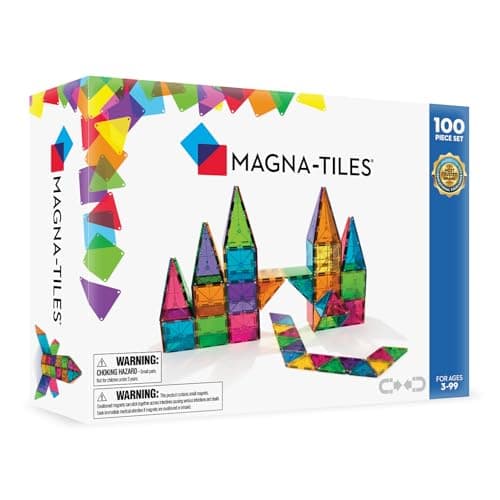
Best magnetic tiles
Magnetic Tiles for Kids
Five magnetic tile sets compared on published shape breakdowns, magnet construction and named safety standards.
Top pick
MAGNA-TILES Classic 100-Piece Set
Category
The category with the best odds in the whole toy shop — and the one where the price per piece varies by a factor of three.
The short answer
Building sets are the most reliably replayed category in STEM toys, because the good ones have no finished state: nothing runs out and there is no last page of the manual. The decision inside the category is mostly about the child’s hands. Magnetic tiles need almost no fine motor control and work from three. Brick sets need considerably more and pay off from about five. Marble runs sit on top of either, and add a problem to solve.
Block & Beaker earns a commission when you buy through our links, at no cost to you. It never changes a ranking, and we say so plainly when the right answer is the cheaper set, or nothing at all. Full disclosure · How we pick.

Start here
In this section
Each one carries its top pick’s live price and a buy link, so you never have to click twice to find out what something costs.
Best magnetic tiles
Five magnetic tile sets compared on published shape breakdowns, magnet construction and named safety standards.
Top pick
MAGNA-TILES Classic 100-Piece Set
Magna-Tiles vs PicassoTiles
The premium brand against the popular budget one, judged on what each manufacturer is willing to publish.
Top pick
MAGNA-TILES Classic 100-Piece Set

Best three-way tile comparison
The definitive three-way table: shape counts, magnet retention, extras and what each brand refuses to publish.
Top pick
CONNETIX Rainbow Creative Pack, 100 Pieces
Magna-Tiles vs Connetix
Published shape mix against published contents — the two premium tile brands compared on what each one chose to include.
Top pick
MAGNA-TILES Classic 100-Piece Set
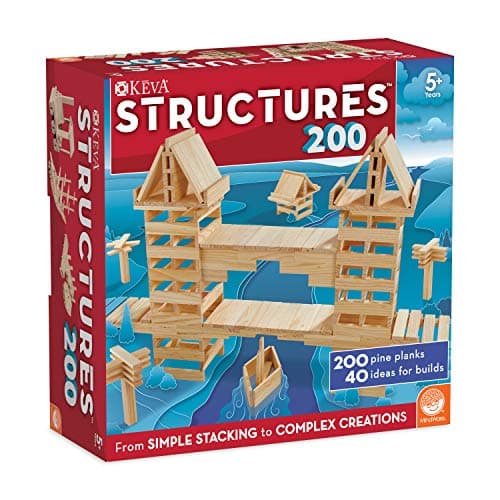
Best LEGO alternative
Five construction systems that do something LEGO does not, from toddler-safe blocks to connector-free wooden planks.
Top pick
KEVA Structures 200 Plank Set
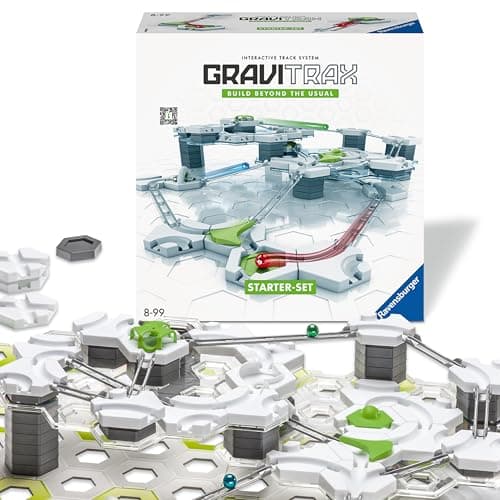
Best marble run
Five marble runs from wooden Quadrilla to GraviTrax, compared on track pieces, bases and what actually limits height.
Top pick
GraviTrax Starter Set
Magna-Tiles vs Magformers
Solid tiles against open frames — the two magnetic systems that build genuinely different shapes.
Top pick
MAGNA-TILES Classic 100-Piece Set
Magnetic tiles vs LEGO
The two dominant construction systems, compared on hand skills, age ratings and what each actually builds.
Top pick
MAGNA-TILES Classic 100-Piece Set
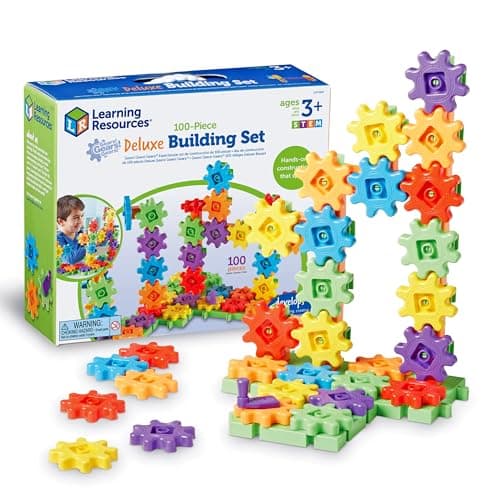
Best engineering toy
Construction sets that produce working mechanisms rather than static models.
Top pick
Gears! Gears! Gears! 100-Piece Deluxe Building Set
Best wooden building set
Wooden construction sets, compared on how they join and why mass makes them build differently.
Top pick
KEVA Structures 200 Plank Set
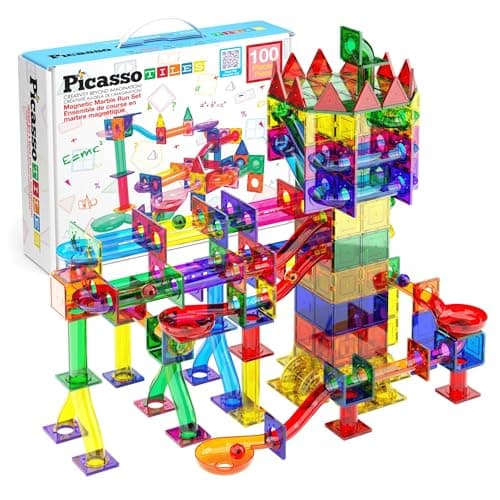
Best magnetic tile marble run
Marble-run packs that work with an existing tile collection, and why they beat buying more tiles.
Top pick
PicassoTiles 100 Piece Marble Run Building Set
Best tile expansion
Four ways to extend a tile set a child already owns, ranked on what each one actually adds.
Top pick
PicassoTiles 100 Piece Marble Run Building Set

Guide
Published compatibility claims across every construction system on this site, and the honest gaps.
Best first building set
One decision across four categories, resolved on published age floors and what each system can physically make.
Top pick
MAGNA-TILES Classic 100-Piece Set
Best for small spaces
Which construction systems survive being packed away every evening, and which quietly need a permanent table.
Top pick
MAGNA-TILES Classic 100-Piece Set
Guide
Real thresholds by category and by number of children, and the point where buying more stops helping.
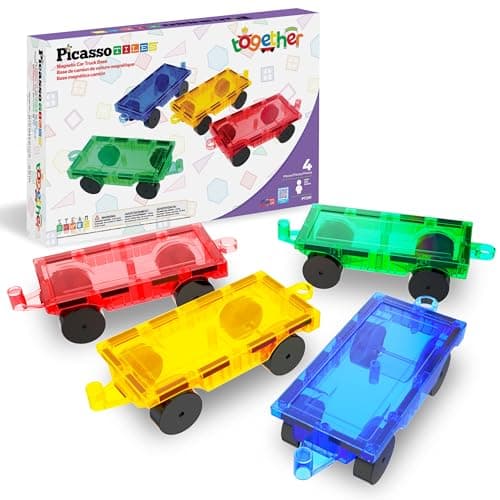
Best tile vehicle set
Wheelbases and vehicle sets that turn a static tile collection into something that rolls.
Top pick
PicassoTiles Car Truck 2-Piece Set
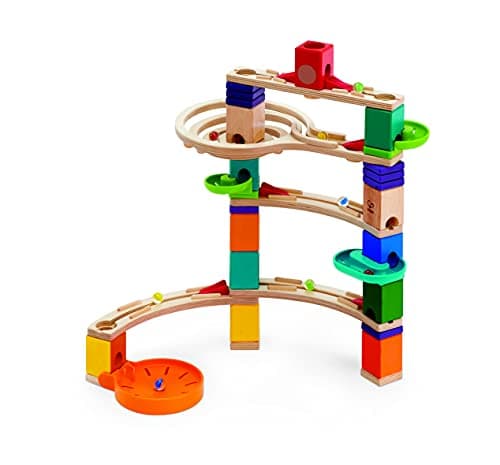
Best wooden marble run
Wooden runs ranked on published construction pieces, marble counts and the action pieces that make a track do something.
Top pick
Quadrilla Wooden Marble Run: Cliffhanger
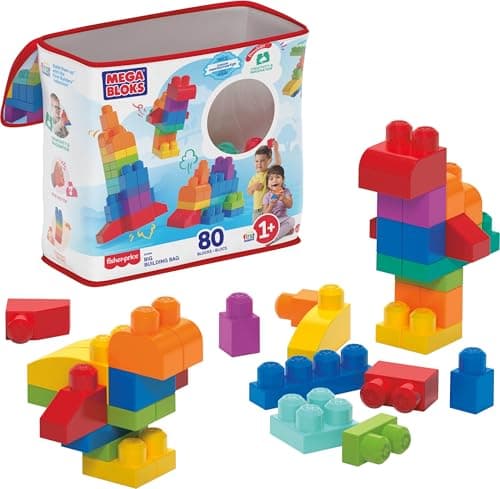
Best building blocks
Blocks ranked by the hand they are sized for, from oversized toddler bricks to precision planks.
Top pick
MEGA BLOKS First Builders Big Building Bag, 80 Pieces
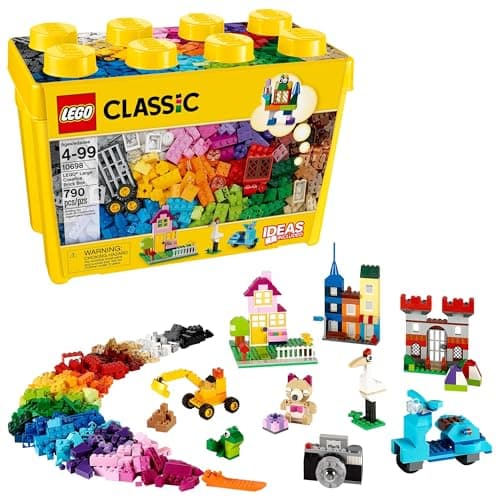
Best LEGO set
DUPLO, Classic, Creator 3in1 and SPIKE, matched to the age each one is published for.
Top pick
LEGO Classic Large Creative Brick Box
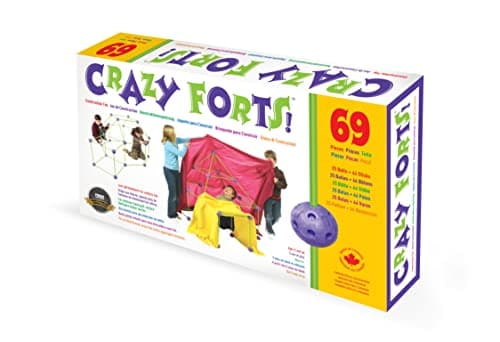
Best fort building kit
Kits that build a structure a child can sit in, compared on frame versus panel design.
Top pick
Crazy Forts! Original
K'NEX vs LEGO
Rods and connectors against studded bricks, compared on what each system is good at building.
Top pick
LEGO Classic Large Creative Brick Box
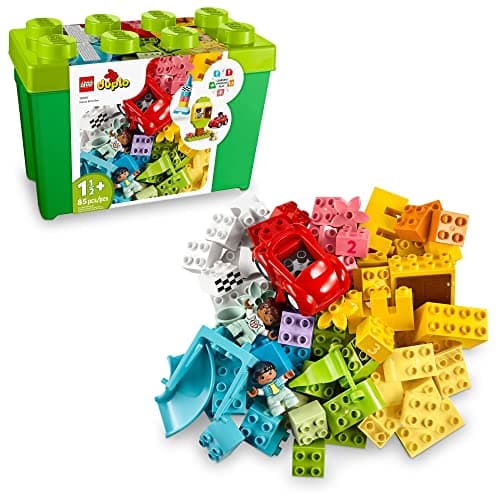
DUPLO vs MEGA Bloks
The two toddler brick systems compared on age rating, contents and where each one leads.
Top pick
LEGO DUPLO Classic Deluxe Brick Box
Best for preschoolers
Engineering toys rated 3+ that a preschooler can work without an adult holding the pieces.
Top pick
Gears! Gears! Gears! 100-Piece Deluxe Building Set
Best for structures
The sets built for towers, bridges and spans, ranked on what each joining method can hold.
Top pick
KEVA Structures 200 Plank Set
Best for teens
Mechanical and structural sets that still hold up at thirteen, on published ceilings.
Top pick
GraviTrax Starter Set
GraviTrax vs Quadrilla
Plastic system at eight against wooden blocks at four — and why the element count matters more than the piece count.
Top pick
GraviTrax Starter Set
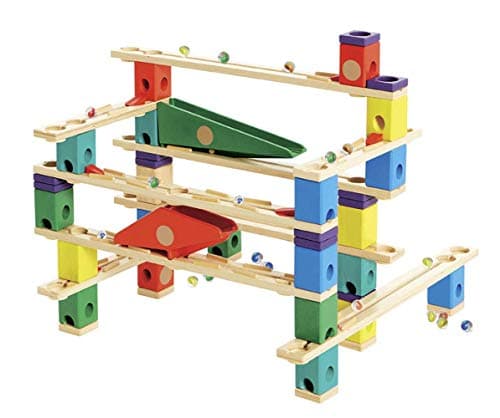
Wooden vs plastic marble runs
Wood starts earlier and hides the route; plastic starts later and shows everything.
Top pick
Quadrilla Wooden Marble Run: Vertigo
Guide
Why every magnetic tile brand publishes 3+, what that rating is actually protecting against, and what to buy under three.
Top pick
MAGNA-TILES Classic 100-Piece Set
Marble runs for toddlers
The two marble runs published at 3+, why nothing publishes lower, and the honest substitute at two.
Top pick
PicassoTiles 100 Piece Marble Run Building Set
Best building set for 6 to 10
Five construction sets with published ceilings high enough to last from six to ten, and the starter set to stop buying.
Top pick
KEVA Structures 200 Plank Set
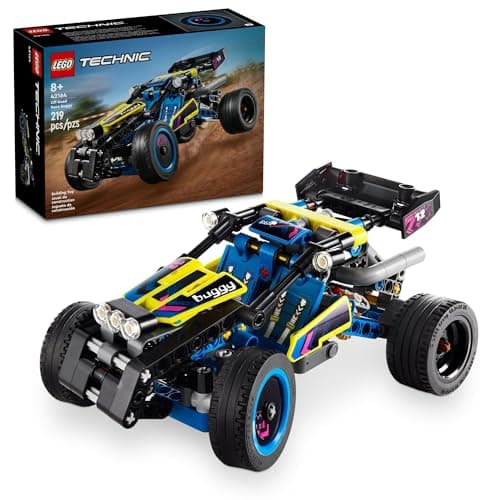
Best LEGO Technic set by age
Where the Technic line actually starts, which set at eight and nine, and the mechanism toys to buy below its floor.
Top pick
LEGO Technic Off-Road Race Buggy
Best mechanical toy
The published mechanisms in each set — gear ratios, engines, switches, motors — and the 500-piece set with none.
Top pick
LEGO Technic Off-Road Race Buggy
Run the Replay Signal over any building set and three of the four components come back positive almost automatically. Nothing is consumed. There is no correct finished object, so there is no moment where the toy is done. And the ceiling is set by the child rather than by the box — a five-year-old and a nine-year-old can use the identical set of tiles and neither is playing with it wrongly.
That is not true of most of the toy shop. A geode-cracking kit has ten geodes in it and then it has none. A chemistry set has a numbered last experiment. Those are perfectly good purchases, but they are purchases of an experience rather than of a toy, and they should be compared against a cinema ticket rather than against a box of tiles.
Piece counts are published by every brand here, which makes price per piece the one honest cross-brand comparison available — and almost nobody publishes it. It is worth doing yourself before you buy, because the spread is genuinely large: premium magnetic tile brands and value brands sell what looks like the same 100-piece box at prices that differ by a factor of two or more.
Two cautions on that arithmetic, both of which we apply on the comparison pages. First, piece counts are not like-for-like: a set with 50 squares and 50 triangles builds different things from one with 36 squares, 36 triangles and a pile of window and door frames. Second, the cheap brands are cheap in the magnets, which is where the disappointment lives. A tile that will not hold a wall vertical is not a cheaper tile, it is a different and worse toy. We quote the published construction detail — ultrasonic sealing, riveting, magnet type — on every tile page for exactly that reason.
Magnetic tiles are the lowest-friction entry to building anywhere. The magnets do the work a young child’s hands cannot, so the child gets a standing structure in their first minute. The tradeoff is that the structures stay simple for longer: a magnetic tile castle at eight does not look very different from one at four.
Brick sets demand real precision and reward it with real detail. The published number to look at is not the piece count but whether the box contains a model to build or no model at all. A box with 790 assorted pieces and no instructions is a fundamentally different product from a 790-piece kit of one spaceship, even though the shelf label is the same.
Marble runs are the interesting middle. A marble run has a success condition — the marble reaches the bottom — which turns building into a problem rather than a decoration. That is a genuine step up in what the toy is teaching, and it is why marble runs work well from about six, when a child can hold a two-step plan in their head. Below that they are still fun, but the fun is watching an adult build.
Buying a second small set instead of an expansion of the first. Two 62-piece boxes of different brands is very rarely as good as one 124-piece system, because cross-brand fit is not guaranteed. Magna-Tilespublishes compatibility across its own range and makes no claim about anyone else’s. Connetix, PicassoTiles and Magformers do the same. Where brands genuinely interoperate it is usually a happy accident of a shared three-inch standard rather than a commitment anyone has made, and it can change between production runs.
The safe rule is to add to whatever the child already has, and to prefer a bigger single box on the first purchase. It is also the cheaper rule per piece almost every time.
If you know the age but not the type, the age pages pull picks from this category and from the others. If you want the ideas rather than the products, things to build with magnetic tiles is a better use of ten minutes than another roundup.
Questions people actually ask
No brand promises it. Magna-Tiles states compatibility across its own sets only, and Connetix, PicassoTiles and Magformers do the same for theirs. Many brands happen to share a three-inch square format so they physically connect, but that is not a commitment any manufacturer has made and it can change between production runs. The three-way comparison.
Magna-Tiles states 3 to 99 years and Connetix recommends its sets for builders aged 3+. The floor is a small-parts safety rating rather than a difficulty one, so the practical answer is that they work from three and keep working for years.
A hundred is the number at which a child can build something enclosed rather than flat. Below about sixty, tall or roofed structures run out of tiles mid-build, which is the most common cause of a set being abandoned early.
Both, and which one it is depends on the set. Open construction systems like GraviTrax and Q-BA-MAZE are building sets with a success condition. Fixed-challenge games like Gravity Maze are puzzles that happen to use marbles, and they end when the challenge cards do. The marble run picks.
Sources
Every specification on this page traces to one of these. If a manufacturer publishes nothing on a point, the page says so rather than filling the gap.
Not sure where to start? Try shopping by age instead, or read how we pick.