Head to head
Magnetic Tiles vs LEGO
Not a rivalry — a sequence. One works two years before the other, for a reason you can see in the ratings.
By Sawyer V. · Published
The short answer
Magnetic tiles first, bricks second. Magna-Tiles publishes a 3-99 rating and LEGO Classic publishes 4+, and that one-year gap is almost entirely about hands: tiles need no grip strength and no precision, bricks need both. Most households want the two in that order rather than one or the other.
Block & Beaker earns a commission when you buy through our links, at no cost to you. It never changes a ranking, and we say so plainly when the right answer is the cheaper set, or nothing at all. Full disclosure · How we pick.
At a glance
The picks, ranked
Tap any row to jump to the full reasoning. Prices come live from Amazon where we have them and read “check price” where we don’t — never a number we cannot stand behind today.
| # | Product | Best for | Price |
|---|---|---|---|
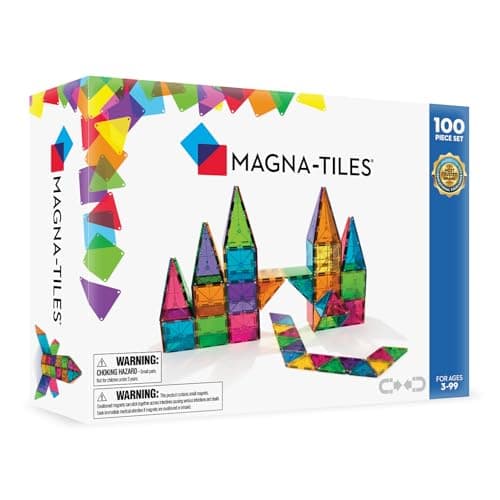
| 1 | Buy first MAGNA-TILES Classic 100-Piece Set The magnets supply the precision small hands do not have, so a structure stands in the first minute. | Three to five, before fine motor control arrives | |
| 2 | 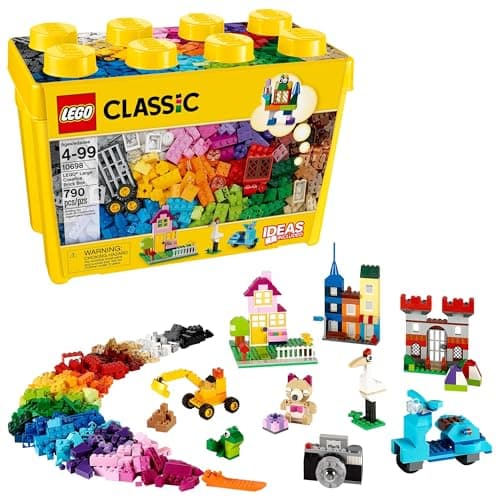 Buy second LEGO Classic Large Creative Brick Box Seven hundred and ninety pieces, 33 colors, no instructions — the version of LEGO worth owning. | Five and up, once the pinch grip is reliable | |
| 3 | 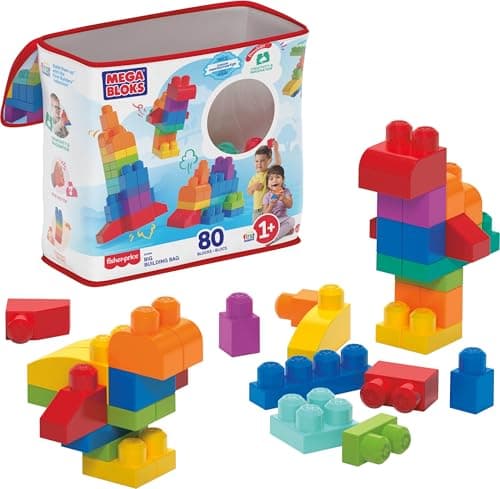 Before either MEGA BLOKS First Builders Big Building Bag, 80 Pieces Rated from one year old — three years earlier than LEGO Classic and two before tiles. | One to three, where both of the above are unavailable | |
| 4 | 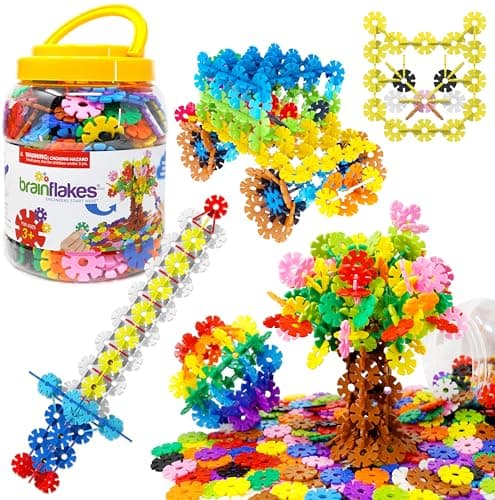 The third way Brain Flakes 500 Piece Interlocking Disc Set Five hundred interlocking discs that curve — shapes neither tiles nor bricks can make. | Five and up, and a household that already has both | |
| — | 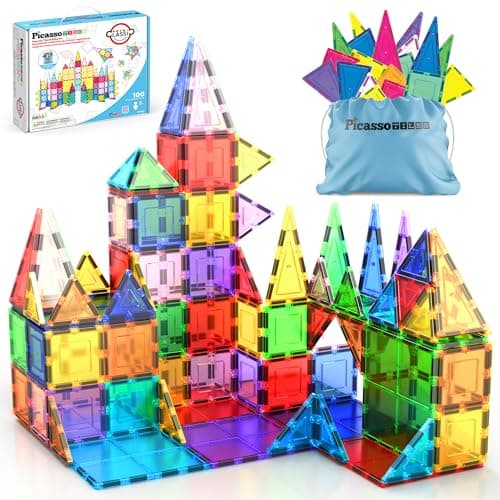 The one to skip here PicassoTiles 100 Piece Magnetic Tile Set A reasonable budget tile set, and the wrong purchase when the real question is tiles versus bricks. | Topping up an existing tile collection |
5 picks, including 1 we tell you to skip. Ages shown are the manufacturer’s own rating, not ours.
The one-year gap in the ratings is about hands
The arithmetic
What each system demands
| Magna-Tiles Classic — stated age | 3-99 years |
|---|---|
| LEGO Classic 10698 — stated age | 4+ |
| Force needed to join two tiles | Effectively none |
| Alignment accuracy needed for tiles | About a centimeter |
| Force needed to join two bricks | A firm pinch |
| Alignment accuracy needed for bricks | Stud-exact |
The practical consequence is what happens in the first ten minutes. A three-year-old with tiles builds independently. A three-year-old with bricks asks for help — and whether a child needed help the first time largely determines whether they come back to it tomorrow.
What bricks give that tiles never will
Resolution. A tile is a three-inch panel. A brick is a centimetre. The smallest feature a child can express is a whole order of magnitude finer with bricks, which is why brick models can have doors, wheels and windows and tile builds have holes where those things would go.
Permanence. A brick model survives being carried into another room. A tile structure does not survive being lifted, which genuinely upsets children who wanted to show somebody.
A collection that compounds. LEGO publishes compatibility across all its sets, so every future purchase pours into the same box. Tiles do this too within a brand — but the brick ecosystem is far larger.
What tiles give that bricks never will
Speed. A tile structure goes up in ninety seconds. That matters enormously for a young child whose attention is measured in minutes.
Light. Translucent tiles against a window are a genuinely different object, and it is a property bricks do not have.
Scale. A hundred tiles builds something a child can sit inside the footprint of. Seven hundred and ninety bricks builds something the size of a shoebox.
Say the unwelcome thing
Do not treat this as either/or
Almost every household that buys one eventually buys the other, and the sequencing is what actually matters: tiles at three, bricks at five.
The failure mode we would warn against is buying bricks at three because they seem like better value per piece. Seven hundred and ninety pieces a child cannot join is worse value than a hundred they can.
Worth knowing before you buy
Both systems are small-parts rated and neither belongs on a floor shared with a child under three. Bricks are the more common household hazard for a simple reason: there are more of them and they are smaller.
Magnetic tiles carry the additional magnet-ingestion consideration — two or more loose magnets can attract through tissue. Magna-Tiles publishes a lattice plus fastening rivets specifically to keep magnets in. Inspect for cracked corners and retire damaged tiles rather than taping them.
Which to buy
- Under three: neither. Oversized blocks are the only rated option.
- Three to four: tiles, without hesitation.
- Five and up, no bricks yet: the Classic brick box — the one with no model in it.
- Has both, wants something new: Brain Flakes, for the curves.
For alternatives to bricks specifically, see LEGO alternatives. For the tile brands against each other, the three-way comparison. For wooden systems, wooden building sets.
In full
Every pick, and what is wrong with it
Published specifications only, each linked back to the page it came from. Where a manufacturer publishes nothing, the row says so — we do not fill blanks in.
1. Buy first
MAGNA-TILES Classic 100-Piece Set
Magna-Tiles · 4300 · maker rates it 3-99 years
The magnets supply the precision small hands do not have, so a structure stands in the first minute.
- Pieces
- 100
- Shape mix
- 50 squares, 4 large squares, 20 equilateral triangles, 11 right triangles, 15 isosceles triangles
- Stated age
- “3-99 Years”
- Material
- “Food-grade, non-toxic MABS plastic that are free from BPAs, phthalates, and latex”
Magna-Tiles publishes the full 100-piece shape mix, rated 3 to 99 years, with all pieces compatible across every Magna-Tiles set.
Get a tile within about a centimeter of another and the magnet closes the gap. No grip strength, no alignment, no adult. That is why this works at three and why a brick set does not.
The ceiling is the honest cost. Tiles are a superb first construction system and a limited long-term one — the detail a child can express plateaus early.
Replay signal
- Open-ended or one-shot
- Open-ended — there is no finished state to reach
- Does anything run out
- Nothing runs out
- Room to grow
- Every set combines with every other Magna-Tiles set
Why we say so: Magna-Tiles publishes the full 100-piece shape breakdown, lists no consumable parts, and states that “all pieces are compatible with and complementary to all other MAGNA-TILES sets.”
What’s wrong with it
Structures stay relatively simple for years. A tile castle at eight looks much like one at five.
| Pieces | 100 |
|---|---|
| Shape mix | 50 squares, 4 large squares, 20 equilateral triangles, 11 right triangles, 15 isosceles triangles |
| Stated age | “3-99 Years” |
| Material | “Food-grade, non-toxic MABS plastic that are free from BPAs, phthalates, and latex” |
| Magnet retention | Signature lattice plus “fastening rivets keep magnets safe and secure” |
| Consumables | None |
Every figure above is from Magna-Tiles, Classic 100-Piece Set. Blanks are shown as “not published” rather than filled in.
2. Buy second
LEGO Classic Large Creative Brick Box
LEGO · 10698 · maker rates it 4+
Seven hundred and ninety pieces, 33 colors, no instructions — the version of LEGO worth owning.
- Pieces
- 790
- Colors
- 33
- Stated age
- 4 and up
- Includes
- 8 types of windows and doors, 2 green baseplates, 6 tires and wheel rims
LEGO publishes 790 pieces in 33 colors with 8 window and door types, 2 green baseplates and 6 tires and wheel rims, compatible with all LEGO construction sets, rated 4 and up — and with no model to build.
The absence of instructions is the specification. A box with 790 assorted pieces and no model is a construction toy; a box with 790 pieces and one spaceship is a jigsaw that gets built once.
What bricks buy over tiles is resolution. A tile structure is blocky by definition; a brick structure can have a chimney, a steering wheel and a letterbox.
Replay signal
- Open-ended or one-shot
- Open-ended — this is the box with no instructions and no finished model
- Does anything run out
- Nothing runs out
- Room to grow
- Every LEGO set the child is ever given pours into the same box
Why we say so: LEGO publishes the 790-piece count, the 33 colors and the box's compatibility with all LEGO construction sets. The absence of a build-this model is the product's stated design, not an omission.
What’s wrong with it
Rated 4+, and four is optimistic for the smaller pieces. Real fluency arrives closer to five or six.
| Pieces | 790 |
|---|---|
| Colors | 33 |
| Stated age | 4 and up |
| Includes | 8 types of windows and doors, 2 green baseplates, 6 tires and wheel rims |
| Compatibility | Compatible with all LEGO construction sets |
| Consumables | None |
Every figure above is from LEGO, Large Creative Brick Box 10698. Blanks are shown as “not published” rather than filled in.
3. Before either
MEGA BLOKS First Builders Big Building Bag, 80 Pieces
MEGA · DCH62 · maker rates it 1+
Rated from one year old — three years earlier than LEGO Classic and two before tiles.
- Pieces
- 80, in 10 shapes and 9 colors
- Includes
- Reusable storage bag; an attachable wheelbase
- Stated age
- 1 and up
- Block size
- Oversized — designed for toddler hands
MEGA publishes 80 blocks across 10 shapes and 9 colors with a reusable storage bag and an attachable wheelbase, rated 1 and up.
Included because the real question behind "tiles or LEGO" is often "what can my child use now", and if the child is under three the answer is neither.
The published 1+ rating means these pieces passed small-parts testing for a child who still mouths things. Nothing else in this comparison did.
Replay signal
- Open-ended or one-shot
- Open-ended, and at this age that is the entire point
- Does anything run out
- Nothing runs out
- Room to grow
- Outgrown at four or five, when the child's hands are ready for smaller bricks
Why we say so: MEGA publishes the 80-piece count across 10 shapes and 9 colors with a 1+ rating. A 1+ rating on a construction toy means the pieces have passed small-parts testing for children who still mouth things, which is the specification that matters most at this age and the reason most brick sets start at three.
What’s wrong with it
Outgrown around four. This is a bridge, not a destination.
| Pieces | 80, in 10 shapes and 9 colors |
|---|---|
| Includes | Reusable storage bag; an attachable wheelbase |
| Stated age | 1 and up |
| Block size | Oversized — designed for toddler hands |
| Consumables | None |
Every figure above is from MEGA, First Builders Big Building Bag. Blanks are shown as “not published” rather than filled in.
4. The third way
Brain Flakes 500 Piece Interlocking Disc Set
VIAHART · Brain Flakes 500 · maker rates it 5+
Five hundred interlocking discs that curve — shapes neither tiles nor bricks can make.
- Pieces
- 500 interlocking discs
- Disc size
- 1.3 inches across, 1/10 inch thick
- Includes
- Storage jar and idea booklet
- Materials
- BPA-free; free from lead, heavy metals and phthalates
VIAHART publishes 500 interlocking discs, each 1.3 inches across and a tenth of an inch thick, rated 5 and up, with named ASTM and CPSIA compliance and a storage jar.
Because the discs join at an angle rather than face to face, the structures curve. A rectilinear system approximates a sphere with steps; this one actually curves.
At the price, it is the cheapest way to add a genuinely different geometry to a household that already owns both of the above.
Replay signal
- Open-ended or one-shot
- Open-ended, and the discs curve — which means spheres and domes, not just walls
- Does anything run out
- Nothing runs out
- Room to grow
- 500 identical pieces is enough for structures a child cannot exhaust
Why we say so: VIAHART publishes the 500-piece count, the disc dimensions and compliance with ASTM and CPSIA. Naming the actual standards is unusual at this price and is a genuine reason to prefer it over unbranded equivalents.
What’s wrong with it
One shape, five hundred times. A child who wants recognisable objects rather than abstract forms may not find them.
| Pieces | 500 interlocking discs |
|---|---|
| Disc size | 1.3 inches across, 1/10 inch thick |
| Includes | Storage jar and idea booklet |
| Materials | BPA-free; free from lead, heavy metals and phthalates |
| Standards named | ASTM and US CPSIA compliant |
| Stated age | 5 and up |
Every figure above is from VIAHART, Brain Flakes 500 Piece Interlocking Disc Set. Blanks are shown as “not published” rather than filled in.
Skip this one
PicassoTiles 100 Piece Magnetic Tile Set
PicassoTiles · PT100 · maker rates it 3+
A reasonable budget tile set, and the wrong purchase when the real question is tiles versus bricks.
- Pieces
- 100
- Stated age
- 3 and up
- Material
- Non-toxic ABS plastic, BPA-free, with a smooth surface and rounded edges
- Shape breakdown
- Not published by the manufacturer
PicassoTiles publishes 100 pieces at ages 3 and up in non-toxic BPA-free ABS with rounded edges, and publishes no shape breakdown or magnet retention detail.
The reason it is the skip here is structural rather than about quality. Somebody weighing tiles against bricks is deciding which system to add; buying a second tile set adds nothing new.
As a top-up it is fine, and it is treated that way on the roundup.
Replay signal
- Open-ended or one-shot
- Open-ended — the same build-anything format
- Does anything run out
- Nothing runs out
- Room to grow
- PicassoTiles publishes a large expansion-pack range in the same 3-inch format
Why we say so: PicassoTiles states the ages 3+ rating, the non-toxic BPA-free ABS with rounded edges, and sells a dedicated expansion range. It publishes no shape breakdown and makes no cross-brand compatibility claim, so we do not make one on its behalf.
What’s wrong with it
Buying a cheaper version of the system you already have does not answer the question this page is about.
| Pieces | 100 |
|---|---|
| Stated age | 3 and up |
| Material | Non-toxic ABS plastic, BPA-free, with a smooth surface and rounded edges |
| Shape breakdown | Not published by the manufacturer |
| Cross-brand compatibility | Not published — PicassoTiles makes no compatibility claim |
| Consumables | None |
Every figure above is from PicassoTiles, magnetic building tiles. Blanks are shown as “not published” rather than filled in.
We are not putting a buy button on this one. It is easy enough to find if you want it anyway — but we would rather send you to something that gets played with twice.
Questions people actually ask
Frequently asked
Should I buy magnetic tiles or LEGO first?
Tiles first. Magna-Tiles publishes a 3-99 rating and LEGO Classic publishes 4+, and that gap is about hands: a brick needs a pinch grip and stud-exact alignment at the same time, a tile needs neither. Most households eventually own both — the sequencing is what matters.
What can LEGO build that magnetic tiles cannot?
Detail and permanence. A brick is roughly a centimeter and a tile is a three-inch panel, so brick models can have doors, wheels and windows where tile builds have holes. A brick model also survives being carried into another room; a tile structure does not survive being lifted.
What can magnetic tiles do that LEGO cannot?
Speed, light and scale. A tile structure goes up in ninety seconds, translucent tiles against a window are a genuinely different object, and a hundred tiles builds something far larger than 790 bricks does.
Is LEGO Classic suitable for a 4 year old?
LEGO publishes 4+, and four is the optimistic end of it — real fluency with the smaller pieces arrives closer to five or six. If the child is four and has never used bricks, expect the first few sessions to be shared.
Sources
Where these figures came from
Every specification on this page traces to one of these. If a manufacturer publishes nothing on a point, the page says so rather than filling the gap.
Read next
Where to go from here
Back to Building Sets, or read how we pick.