Guide and picks
What Are STEM Toys?
There is no certifying body and no definition anyone has to meet. Here is the working definition that is actually useful.
By Sawyer V. · Published
The short answer
A STEM toy is one where the play itself requires science, technology, engineering or math reasoning — not one with those words on the box. There is no certifying body and no standard a manufacturer has to meet, so the label is marketing. The useful test is whether the child has to think structurally to succeed.
Block & Beaker earns a commission when you buy through our links, at no cost to you. It never changes a ranking, and we say so plainly when the right answer is the cheaper set, or nothing at all. Full disclosure · How we pick.
At a glance
The picks, ranked
Tap any row to jump to the full reasoning. Prices come live from Amazon where we have them and read “check price” where we don’t — never a number we cannot stand behind today.
| # | Product | Best for | Price |
|---|---|---|---|
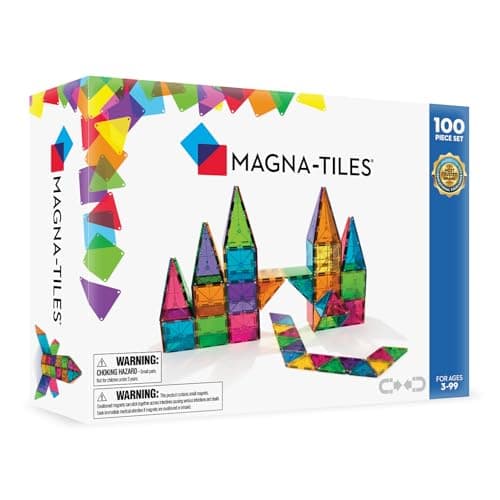
| 1 | A clear example MAGNA-TILES Classic 100-Piece Set No electronics, no science branding, and the play is engineering the whole way through. | Showing what the term means in practice | |
| 2 | 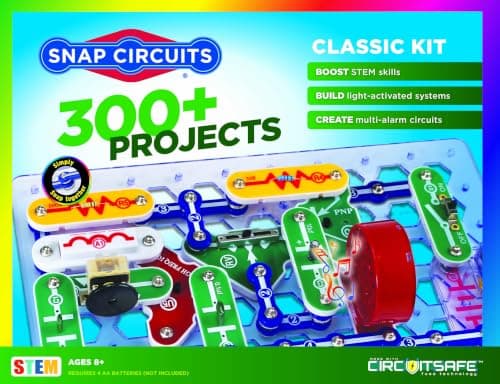 The explicit version Snap Circuits Classic Three hundred and five published projects that teach circuits by building circuits. | Eight and up, where the subject is named | |
| 3 | 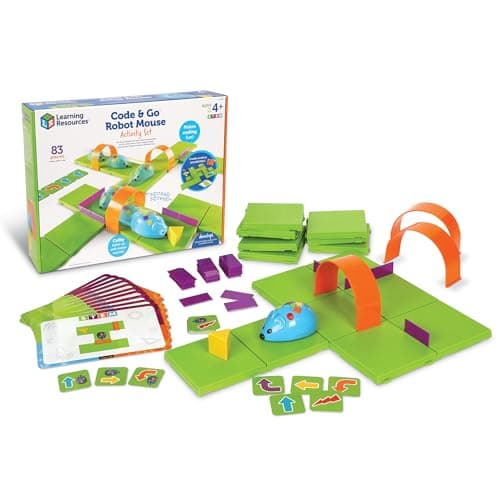 The youngest real example Code & Go Robot Mouse Activity Set Eighty-three pieces and picture cards that teach sequencing before a child can read. | Four, and proof that STEM toys do not need to be complicated | |
| — | 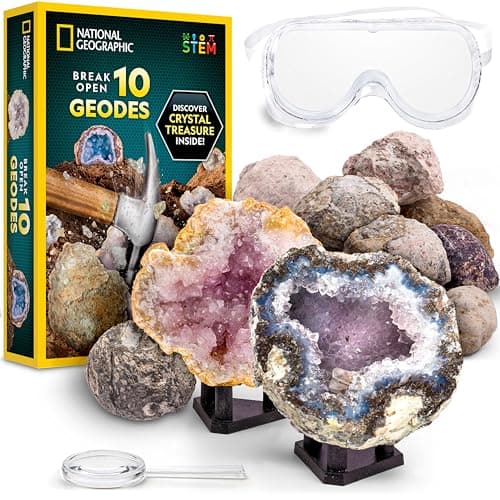 The edge case NATIONAL GEOGRAPHIC Break Open 10 Premium Geodes Real geology, genuinely interesting, and closer to an experience than to a toy. | Illustrating where the label stretches |
4 picks, including 1 we tell you to skip. Ages shown are the manufacturer’s own rating, not ours.
The short answer, in one paragraph
STEM stands for science, technology, engineering and mathematics. A STEM toy is one where playing with it requires reasoning from one of those four fields. There is no certifying body, no standard, and nobody checking — so the phrase on a box tells you what the manufacturer wants you to think, and the toy itself tells you whether it is true.
Why there is no definition
Unlike safety, which has real published standards — ASTM F963 in the US, EN 71 in Europe, EN 71-4 specifically for chemistry kits — the educational claim is unregulated. No organization certifies that a toy is a STEM toy, and no manufacturer has to justify the label.
That is why it appears on things that plainly are not: a plastic dinosaur with a sticker, a coloring book about space, a torch. None of those are frauds exactly, and none of them requires a child to reason.
The absence of a standard also cuts the other way. Some of the best STEM toys never use the term at all, because they were designed before the marketing category existed and their makers see no reason to start. Wooden planks and linking cubes are STEM toys by any reasonable test, and neither is sold as one.
The test that actually works
Ask what the child has to figure out in order to succeed.
- A tower that keeps falling: the child has to reason about base width and center of mass. That is engineering.
- A marble that stops halfway: the child has to find where the gradient failed. That is debugging.
- A circuit that will not light: the child has to trace the path. That is electronics.
- A robot that turned the wrong way: the child has to find which instruction was wrong. That is programming.
In each case the reasoning is unavoidable — the toy does not work until it happens. Compare that to a kit where the child follows twelve numbered steps and gets a result: real, enjoyable, and closer to a recipe than to a problem.
The four letters, and what each looks like in a toy
The arithmetic
Which is which, with examples
| Science | Microscopes, chemistry sets, experiment kits |
|---|---|
| Technology | Coding robots, programmable kits |
| Engineering | Construction sets, marble runs, gears |
| Mathematics | Linking cubes, packing puzzles, logic games |
What STEM toys do and do not do
We will be careful here, because this is where most writing on the subject overreaches.
What we can say: a toy that requires sequencing requires sequencing. A child who has debugged a six-step program has practiced finding an error in a procedure. A child who has built a tower that stayed up has reasoned about structure. Those are descriptions of what the toy mechanically demands, and they are checkable.
What we will not say: that any of it produces measurable academic gains, raises test scores, or predicts a career. Some of that literature exists and much of what gets quoted is a press release. We have no way to verify those claims and no business asserting them.
The honest position: buy these because they are absorbing, open-ended and good for a child to spend an afternoon on. If they also help with school, excellent — but that is not the reason.
Say the unwelcome thing
Do not buy the label
The STEM sticker is the least informative thing on the box. It costs a manufacturer nothing, it is checked by nobody, and it appears on products with no reasoning content at all.
Read the published contents instead. Piece counts, project counts, whether anything runs out, what the instructions look like. Those are facts, and this whole site is built on the assumption that they are more useful than a claim.
Where to start
If you are buying a first one, the first STEM toy guide is the practical version of this page. If you want the argument about which ones keep getting played with, that is toys that actually teach. And if you know the child’s age and nothing else, the age pages are the fastest route.
In full
Every pick, and what is wrong with it
Published specifications only, each linked back to the page it came from. Where a manufacturer publishes nothing, the row says so — we do not fill blanks in.
1. A clear example
MAGNA-TILES Classic 100-Piece Set
Magna-Tiles · 4300 · maker rates it 3-99 years
No electronics, no science branding, and the play is engineering the whole way through.
- Pieces
- 100
- Shape mix
- 50 squares, 4 large squares, 20 equilateral triangles, 11 right triangles, 15 isosceles triangles
- Stated age
- “3-99 Years”
- Material
- “Food-grade, non-toxic MABS plastic that are free from BPAs, phthalates, and latex”
Magna-Tiles publishes 100 pieces in a specified mix of squares and three triangle types, rated 3-99 years, with no batteries and no instructions.
Building a structure that stands requires reasoning about balance, base width, symmetry and which triangle closes which angle. None of that is stated on the box and all of it is unavoidable if the child wants a roof.
That is what a STEM toy is: the thinking is the mechanism, not a claim on the packaging.
Replay signal
- Open-ended or one-shot
- Open-ended — there is no finished state to reach
- Does anything run out
- Nothing runs out
- Room to grow
- Every set combines with every other Magna-Tiles set
Why we say so: Magna-Tiles publishes the full 100-piece shape breakdown, lists no consumable parts, and states that “all pieces are compatible with and complementary to all other MAGNA-TILES sets.”
What’s wrong with it
Nothing about it announces itself as educational, which is exactly why some people overlook it.
| Pieces | 100 |
|---|---|
| Shape mix | 50 squares, 4 large squares, 20 equilateral triangles, 11 right triangles, 15 isosceles triangles |
| Stated age | “3-99 Years” |
| Material | “Food-grade, non-toxic MABS plastic that are free from BPAs, phthalates, and latex” |
| Magnet retention | Signature lattice plus “fastening rivets keep magnets safe and secure” |
| Consumables | None |
Every figure above is from Magna-Tiles, Classic 100-Piece Set. Blanks are shown as “not published” rather than filled in.
2. The explicit version
Snap Circuits Classic
Elenco · SC-300 · maker rates it 8+
Three hundred and five published projects that teach circuits by building circuits.
- Projects
- “Build over 300 exciting projects” — manual covers projects 1-305
- Parts
- “Contains over 60 Snap-Together parts”
- Projects per part
- 5.1 — the highest ratio in the line
- Stated age
- “Ages 8+” and “Not for Children under 3 yrs.”
Elenco publishes over 300 projects with a manual covering 1-305, from over 60 snap-together parts, rated 8+.
This is the explicit kind of STEM toy: the subject is named, the manual explains the theory, and the child builds working circuits. Both kinds are legitimate — this one teaches content, and a tile set teaches reasoning.
The published project count is what makes it a system rather than a demonstration. Sixty parts is enough for a child to build something the manual did not describe.
Replay signal
- Open-ended or one-shot
- The sweet spot of the line — enough parts to invent with, cheap enough not to be an event
- Does anything run out
- Nothing runs out
- Room to grow
- 305 published projects is years of Sunday afternoons at one a week
Why we say so: Elenco publishes 305 numbered projects against 60+ parts. Five projects per part is the highest ratio anywhere in the Snap Circuits line, which is the arithmetic reason this is the set to buy rather than the cheap one or the big one.
What’s wrong with it
Requires four AA batteries not included, and the components are proprietary rather than transferable.
| Projects | “Build over 300 exciting projects” — manual covers projects 1-305 |
|---|---|
| Parts | “Contains over 60 Snap-Together parts” |
| Projects per part | 5.1 — the highest ratio in the line |
| Stated age | “Ages 8+” and “Not for Children under 3 yrs.” |
| Batteries | “Requires 4 ‘AA’ batteries (not included)” |
| Relationship to SC-100 | Manual includes all SC-100 projects plus 200 new ones |
Every figure above is from Elenco, Snap Circuits Classic. Blanks are shown as “not published” rather than filled in.
3. The youngest real example
Code & Go Robot Mouse Activity Set
Learning Resources · LER2831 · maker rates it 4+
Eighty-three pieces and picture cards that teach sequencing before a child can read.
- Set size
- 83 pieces
- Contents
- Colby the robot mouse, 16 maze grids, 22 maze walls, 3 tunnels, 30 double-sided coding cards, 10 activity cards, cheese wedge, activity guide
- Maze size
- The 16 grids build a 20″ x 20″ board
- Screen required
- None
Learning Resources publishes 83 pieces including 16 rearrangeable maze grids, 30 double-sided coding cards using directional symbols and 10 activity cards, rated 4+.
A four-year-old sequencing six symbol cards is doing genuine computational thinking: order matters, the machine does what it was told, and a mistake can be located.
It is a useful example because nothing about it is advanced. STEM toys do not have to be complicated, and complexity is not the same as content.
Replay signal
- Open-ended or one-shot
- The mouse is fixed, but the maze is not — 16 grids and 22 walls is a new problem every time
- Does anything run out
- Nothing runs out
- Room to grow
- The 10 activity cards are a starting ladder; after that the child sets the puzzles
- Adult required
- Reading is not required — the coding cards use directional symbols, so a four-year-old can work alone
Why we say so: Learning Resources publishes the 83-piece contents including 16 rearrangeable grids and 22 walls, and states the cards are picture-based. A rearrangeable maze is why this does not become a solved puzzle after one weekend.
What’s wrong with it
Simple by design — the mouse does not get harder, only the mazes do.
| Set size | 83 pieces |
|---|---|
| Contents | Colby the robot mouse, 16 maze grids, 22 maze walls, 3 tunnels, 30 double-sided coding cards, 10 activity cards, cheese wedge, activity guide |
| Maze size | The 16 grids build a 20″ x 20″ board |
| Screen required | None |
| Batteries | 3 x AAA (not included) |
| Stated age | Ages 4+ |
Every figure above is from Learning Resources, Code & Go Robot Mouse Activity Set. Blanks are shown as “not published” rather than filled in.
Skip this one
NATIONAL GEOGRAPHIC Break Open 10 Premium Geodes
National Geographic · NGGEO10 · maker rates it 8+
Real geology, genuinely interesting, and closer to an experience than to a toy.
- Geodes
- 10, hand-selected, 1.25 to 2.25 inches across
- Includes
- Safety goggles, magnifying glass, display stands, full-color learning guide
- Stated age
- Manufacturer's minimum age 8 years
- Safety note
- Contains small parts; not for children under 3
National Geographic publishes ten hand-selected natural geodes, 1.25 to 2.25 inches across, with goggles, a magnifying glass, display stands and a learning guide, rated 8+.
This is a useful edge case rather than a bad product. The specimens are real, the geology is real, and the learning guide explains how geodes form.
But it is a demonstration rather than a toy: the child follows a procedure ten times and there is no reasoning to iterate on. That is the boundary of the term, and it is worth being able to see it.
Replay signal
- Open-ended or one-shot
- One-shot by design. Ten geodes, ten moments, then it is a bowl of pretty rocks
- Does anything run out
- Yes, definitively — the clearest example on this site of a kit that ends
Why we say so: National Geographic publishes the count as ten natural geodes. Ten single-use items is a finite number, and we would rather say so than let a gift-buyer find out on Christmas afternoon.
What’s wrong with it
Ten single-use items. Marketed as a science toy, it is an activity with a fixed number of repetitions.
| Geodes | 10, hand-selected, 1.25 to 2.25 inches across |
|---|---|
| Includes | Safety goggles, magnifying glass, display stands, full-color learning guide |
| Stated age | Manufacturer's minimum age 8 years |
| Safety note | Contains small parts; not for children under 3 |
| Consumables | Yes — ten geodes, and each one only cracks open once |
Every figure above is from National Geographic toys, Break Open Geodes. Blanks are shown as “not published” rather than filled in.
We are not putting a buy button on this one. It is easy enough to find if you want it anyway — but we would rather send you to something that gets played with twice.
Questions people actually ask
Frequently asked
What does STEM stand for?
Science, technology, engineering and mathematics. A STEM toy is one where playing with it requires reasoning from one of those four fields — as opposed to one with the letters printed on the box.
Is there a standard for what counts as a STEM toy?
No. Unlike safety, which has real published standards like ASTM F963 and EN 71, the educational claim is unregulated. No organization certifies it and no manufacturer has to justify the label, which is why it appears on plastic dinosaurs and coloring books.
How can I tell a real STEM toy from a label?
Ask what the child has to figure out in order to succeed. A tower that keeps falling forces reasoning about balance; a circuit that will not light forces tracing the path. If the toy works without any reasoning, the label is decoration.
Do STEM toys improve school performance?
We do not make that claim, because we have no way to verify it. What we can say is what a toy mechanically requires — sequencing, debugging, structural reasoning. Buy them because they are absorbing and open-ended; if they help at school, that is a bonus rather than the argument.
Are construction toys STEM toys?
Among the strongest examples, and they are the most under-recognized because they rarely carry the label. Building a structure that stands requires continuous reasoning about balance, base width and geometry, none of which is announced on the box. The building sets category.
Sources
Where these figures came from
Every specification on this page traces to one of these. If a manufacturer publishes nothing on a point, the page says so rather than filling the gap.
Read next
Where to go from here
Back to Guides, or read how we pick.