The picks
STEM Toys for 11 Year Olds
Eleven is the year the packaging becomes a problem. What still works is anything whose published ceiling is well above the child.
By Sawyer V. · Published
The short answer
At eleven, buy on published ceiling rather than published age. A robot that runs Python, a microscope reaching 400x and an electronics set with 750+ projects all have headroom left; a set labeled “ages 8-12” is usually being outgrown at the moment it is opened.
Block & Beaker earns a commission when you buy through our links, at no cost to you. It never changes a ranking, and we say so plainly when the right answer is the cheaper set, or nothing at all. Full disclosure · How we pick.
At a glance
The picks, ranked
Tap any row to jump to the full reasoning. Prices come live from Amazon where we have them and read “check price” where we don’t — never a number we cannot stand behind today.
| # | Product | Best for | Price |
|---|---|---|---|
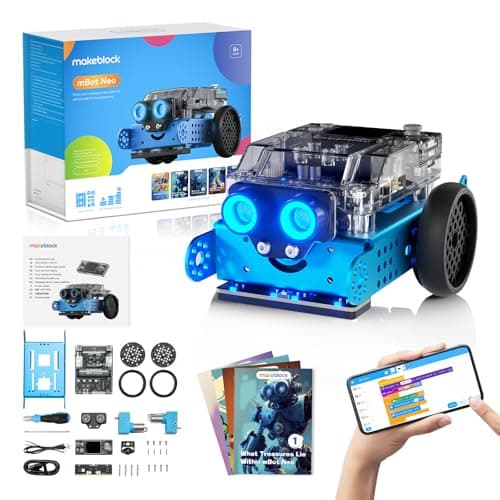
| 1 | Best for 11 year olds Makeblock mBot Neo (mBot2) Blocks, Python and Arduino C on one chassis, with a published 240 MHz controller and 60+ modules. | Eleven, and still interesting at sixteen | |
| 2 | Best instrument My First Lab Duo-Scope Microscope 40x, 100x and 400x from real optical glass, with dual lighting and five blank slides. | Eleven, for a tool with no age label on it at all | Sold direct by My First Lab → Not stocked on Amazon. This link goes to the maker and we earn nothing on it. |
| 3 | 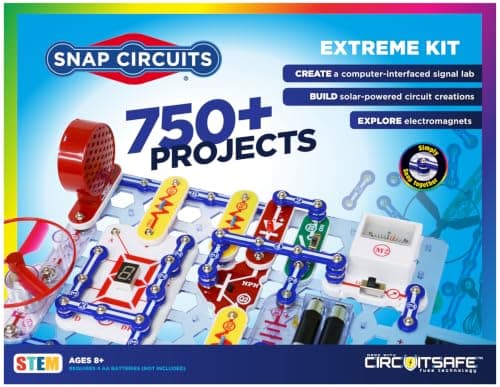 Best published ladder Snap Circuits Extreme Over 750 projects from over 80 parts — 9.4 projects per part, the best ratio in the line. | Eleven, for the longest runway in electronics | |
| 4 | 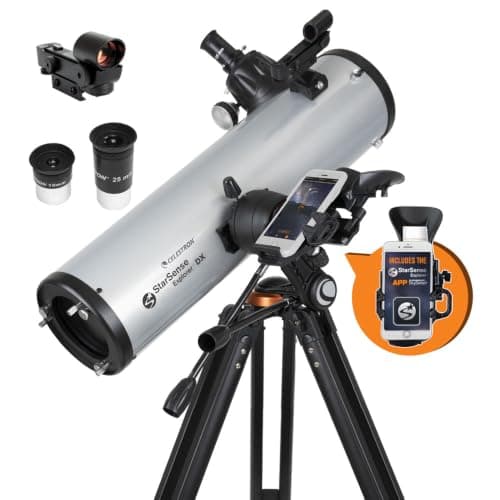 Best if the interest is space Celestron StarSense Explorer DX 130AZ 130 mm of aperture at f/5, plus an app that identifies where the telescope is pointing. | Eleven, with an adult willing to stand outside | |
| — | 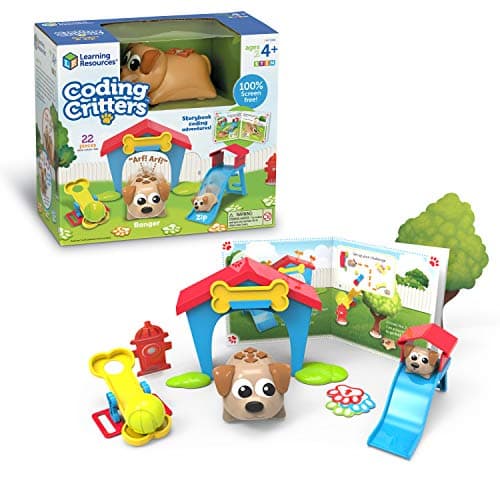 Not for eleven Coding Critters Ranger & Zip Still shelved under coding and seven years too young. | Four |
5 picks, including 1 we tell you to skip. Ages shown are the manufacturer’s own rating, not ours.
What changes at eleven
Two things, and only one of them is about capability.
The packaging starts working against the product. An eleven-year-old reads a box before they read a specification, and a cartoon character or a bright plastic robot gets dismissed before it is opened. This is the year presentation begins to matter more than content.
The child can hold a bigger goal. A younger child builds project 47 because it is next. An eleven-year-old wants to build a thing they chose, which needs a set with enough parts to improvise with and enough headroom not to run out.
The arithmetic
Published ceilings that still have headroom at eleven
| mBot Neo | Blocks, then Python, then Arduino C — no ceiling |
|---|---|
| Duo-Scope | 400x, and blank slides for any specimen |
| Snap Circuits Extreme | 750+ projects, 9.4 per part |
| StarSense DX 130AZ | 130 mm aperture; the sky restocks itself |
| KEVA Structures | No published upper age limit at all |
| Kanoodle | 200+ puzzles, published 7 to adult |
Ignore the age band, read the ceiling
A published range like “ages 8-12” tells you the manufacturer expects the product to be finished by twelve. At eleven you are buying the last year of it.
The alternative is products whose published limits sit far above the child. Real programming languages have no ceiling. Optical instruments are limited by the specimen, not the user. Open-ended construction sets like KEVA planks publish no upper age at all, because there is no mechanism to exhaust.
That is the whole buying rule for this year.
Things that still work and do not look young
Instruments. A microscope or a telescope is equipment rather than a toy, and no eleven-year-old has ever been embarrassed by one.
Real languages. Python is what the adults use. That fact does a lot of work at this age.
Logic puzzles with an adult range. SmartGames publishes IQ Puzzler Pro as 6 to adult and Educational Insights publishes Kanoodle at 200+ puzzles for 7 and up — both stay respectable.
Plain construction sets. Identical planks and bricks have no character on the box to age out of.
Worth knowing before you buy
An eleven-year-old can be trusted with a 10+ chemistry set under EN 71-4, and the supervision requirement does not disappear — Thames & Kosmos supplies safety glasses because they are needed, not as packaging.
What to skip this year
Anything with a licensed character. It will be judged on the box alone.
Sets published as 8-12. You are buying the tail end.
Screen-free coding robots aimed at four to seven. The idea has landed years ago; what is needed now is a language.
Consumable kits as the main present. A ten-geode box is a fine second gift and a thin headline one at this age.
Say the unwelcome thing
Do not buy down to be safe
The instinct at eleven is to pick something a bit easier so the child is not frustrated. It backfires: a capable eleven-year-old given a set aimed at eight-year-olds finishes it in an evening and concludes the whole subject is for children.
Buy the thing with headroom and accept that the first session may need help.
Where to go next
Ten-year-olds covers the year before and twelve-year-olds the year after. From coding toy to real code covers the language step in detail.
In full
Every pick, and what is wrong with it
Published specifications only, each linked back to the page it came from. Where a manufacturer publishes nothing, the row says so — we do not fill blanks in.
1. Best for 11 year olds
Makeblock mBot Neo (mBot2)
Makeblock · mBot2 · maker rates it 8+
Blocks, Python and Arduino C on one chassis, with a published 240 MHz controller and 60+ modules.
- Controller
- CyberPi — Xtensa 32-bit LX6 dual-core at 240 MHz, 8 MB flash, 8 MB PSRAM
- Programming
- Scratch-style blocks, Python in mBlock, and Arduino C/C++ via the Arduino IDE
- Sensors
- On-board light, microphone, gyroscope and accelerometer, plus ultrasonic, quad RGB, temperature and IR modules
- Battery
- Built-in 2500 mAh LiPo, about 1 hour to charge, about 5 hours of play
Makeblock publishes the CyberPi controller — Xtensa 32-bit LX6 dual-core at 240 MHz, 8 MB flash, 8 MB PSRAM — with Scratch-style blocks, Python in mBlock and Arduino C/C++ via the Arduino IDE, on-board light, microphone, gyroscope and accelerometer sensors, a 2500 mAh battery giving about five hours, and 60+ compatible modules with up to 10 connected at once, rated 8+.
Eleven is exactly when the published Python path stops being theoretical. A child who has done block coding for two or three years can make the jump, and the hardware does not change underneath them.
Publishing the actual processor also matters at this age. An eleven-year-old can be told this is a real embedded computer and check that it is.
Replay signal
- Open-ended or one-shot
- Open-ended at the top of the range — this is the one a child does not outgrow at eleven
- Does anything run out
- Nothing runs out; rechargeable
- Room to grow
- Blocks, then Python, then Arduino C on the same robot, with 60+ add-on modules
- Adult required
- Not for driving it. Probably for the first Python session
Why we say so: Makeblock publishes the processor, the three programming environments on one robot, the 2500 mAh battery figures and the 60+ compatible modules. Blocks-to-Python-to-C on one chassis is the published upgrade path, and it is why this survives the year a child gets bored of pressing buttons.
What’s wrong with it
The step from blocks to Python usually needs an adult for the first session.
| Controller | CyberPi — Xtensa 32-bit LX6 dual-core at 240 MHz, 8 MB flash, 8 MB PSRAM |
|---|---|
| Programming | Scratch-style blocks, Python in mBlock, and Arduino C/C++ via the Arduino IDE |
| Sensors | On-board light, microphone, gyroscope and accelerometer, plus ultrasonic, quad RGB, temperature and IR modules |
| Battery | Built-in 2500 mAh LiPo, about 1 hour to charge, about 5 hours of play |
| Expansion | 60+ compatible modules, up to 10 connected at once, 8 motor and servo ports |
| Stated age | Ages 8+ |
Every figure above is from Makeblock, mBot2 coding robot kit. Blanks are shown as “not published” rather than filled in.
2. Best instrument
My First Lab Duo-Scope Microscope
My First Lab · MFL-06 · maker rates it 9+
40x, 100x and 400x from real optical glass, with dual lighting and five blank slides.
- Magnifications
- 40x, 100x and 400x, from a 10x eyepiece with 4x, 10x and 40x objectives
- Optics
- Real optical glass lenses
- Lighting
- Dual LED, above and below the stage
- Slides included
- 5 blank, 1 concavity (well), 4 prepared
My First Lab publishes 40x, 100x and 400x from a 10x eyepiece paired with 4x, 10x and 40x objectives, real optical glass, dual LED lighting above and below the stage, 5 blank slides, 1 concavity slide and 4 prepared slides, rated 9 and older, weighing 1.95 lb.
The 400x figure is what makes this an eleven-year-old’s purchase rather than a child’s toy: it is the magnification where cells become visible, which is the same thing being done in a school laboratory.
Top lighting matters as much. A scope that works on leaves, insects and sand has an unlimited specimen supply; one limited to prepared slides is finished in a session.
Replay signal
- Open-ended or one-shot
- Genuinely open-ended, unusually so for a science purchase — the world is the consumable
- Does anything run out
- The four prepared slides run out; the five blanks and everything in the garden do not
- Room to grow
- Light from above as well as below means it works on rocks, leaves and insects, not only on slides
Why we say so: The manufacturer publishes the dual-LED lighting, the blank-slide count and the real-glass optics. Blank slides plus top lighting is what turns a microscope from four pictures into a thing you point at whatever you found outside.
What’s wrong with it
Three AA batteries required and not included.
| Magnifications | 40x, 100x and 400x, from a 10x eyepiece with 4x, 10x and 40x objectives |
|---|---|
| Optics | Real optical glass lenses |
| Lighting | Dual LED, above and below the stage |
| Slides included | 5 blank, 1 concavity (well), 4 prepared |
| Stated age | Ages 9 and older |
| Batteries | 3 x AA (not included) |
| Weight | 1.95 lb |
Every figure above is from My First Lab, Duo-Scope MFL-06. Blanks are shown as “not published” rather than filled in.
Not stocked on Amazon. This link goes to the maker and we earn nothing on it.
3. Best published ladder
Snap Circuits Extreme
Elenco · SC-750 · maker rates it 8+
Over 750 projects from over 80 parts — 9.4 projects per part, the best ratio in the line.
- Projects
- Over 750
- Parts
- Over 80
- Projects per part
- 9.4
- Adds over the SC-500
- Solar, electromagnetism, vibration switches, and 70 computer-interfaced projects
Elenco publishes over 750 projects and over 80 parts, rated 8+, with no consumables.
At 9.4 projects per part this is the most efficient set Elenco makes — every component appears in nine different circuits, which is the arithmetic definition of a kit that teaches recombination rather than instruction following.
Be honest about the format though. If the child has already dismissed snap modules as babyish, no project count will change their mind.
Replay signal
- Open-ended or one-shot
- As open as the line gets
- Does anything run out
- Nothing runs out
- Room to grow
- Nowhere further to go inside Snap Circuits, which is either the point or the problem
Why we say so: Elenco publishes 750+ projects from 80+ parts and names solar, electromagnetism and vibration switches as the additions over the SC-500. Watch the shape of those numbers: parts rise from 75 to 80 while projects rise from 500 to 750, so most of what you are paying for is more manual, not more components.
What’s wrong with it
Still the snap-together format, which some eleven-year-olds read as young.
| Projects | Over 750 |
|---|---|
| Parts | Over 80 |
| Projects per part | 9.4 |
| Adds over the SC-500 | Solar, electromagnetism, vibration switches, and 70 computer-interfaced projects |
| Stated age | Ages 8+ |
| Consumables | None |
Every figure above is from Elenco, Snap Circuits Extreme. Blanks are shown as “not published” rather than filled in.
4. Best if the interest is space
Celestron StarSense Explorer DX 130AZ
Celestron · 22461 · maker rates it Not published
130 mm of aperture at f/5, plus an app that identifies where the telescope is pointing.
- Aperture
- 130 mm (5.1 in)
- Focal length
- 650 mm
- Focal ratio
- f/5
- Optical design
- Newtonian reflector
Celestron publishes 130 mm aperture, 650 mm focal length, f/5, a Newtonian reflector on an altazimuth mount with slow-motion controls, and the StarSense app which identifies the sky and directs you where to move. No stated age is published.
Eleven is old enough for the patience a telescope demands and young enough that an adult will still come outside. The app removes the step that ends most first telescope nights — not finding anything.
Replay signal
- Open-ended or one-shot
- Open-ended — the sky is the consumable and it restocks itself
- Does anything run out
- Nothing runs out
- Room to grow
- Standard eyepieces; 130 mm gathers enough light for planets and brighter deep-sky objects
- Adult required
- Much less than a normal telescope. The published point of StarSense is that the phone does the finding
Why we say so: Celestron publishes 130 mm of aperture at 650 mm focal length, f/5, with a smartphone app that identifies where the telescope is pointing. The app is the specification that matters for a family: not finding anything is what ends most first telescope nights, and this removes that step.
What’s wrong with it
Large, needs a charged phone, and Celestron publishes no stated age.
| Aperture | 130 mm (5.1 in) |
|---|---|
| Focal length | 650 mm |
| Focal ratio | f/5 |
| Optical design | Newtonian reflector |
| Finding aid | StarSense smartphone app — the phone identifies the sky and directs you |
| Mount | Altazimuth with slow-motion controls |
| Stated age | Not published |
Every figure above is from Celestron, StarSense Explorer DX 130AZ. Blanks are shown as “not published” rather than filled in.
Skip this one
Coding Critters Ranger & Zip
Learning Resources · LER3081 · maker rates it 4+
Still shelved under coding and seven years too young.
- Set size
- 22 pieces
- Screen required
- None — “100% screen-free coding”
- Format
- Interactive pet plus playset and a storybook of coding activities
- Stated age
- Ages 4+
Learning Resources publishes a 22-piece set — an interactive pet, a playset and a storybook of coding activities — 100% screen-free, rated 4+.
It is included as a warning about shelf placement. “Coding” spans products with a published Python path and products with a storybook, and at eleven the difference is the whole purchase.
An eleven-year-old handed this concludes the subject is beneath them, which is a worse outcome than buying nothing.
Replay signal
- Open-ended or one-shot
- Half toy, half coding set — the pretend play carries on long after the programming stops
- Does anything run out
- Nothing runs out
- Room to grow
- Little: the coding ceiling here is low by design
- Adult required
- The storybook is read-aloud at four; the pet is not
Why we say so: Learning Resources publishes the 22-piece count, the screen-free format and the storybook-led activity structure. We call the coding ceiling low because the published format is a storybook sequence rather than a programmable step count — compare Botley's published 150-step maximum.
What’s wrong with it
A storybook format with no published step ceiling at all.
| Set size | 22 pieces |
|---|---|
| Screen required | None — “100% screen-free coding” |
| Format | Interactive pet plus playset and a storybook of coding activities |
| Stated age | Ages 4+ |
| Consumables | None |
Every figure above is from Learning Resources, Coding Critters. Blanks are shown as “not published” rather than filled in.
We are not putting a buy button on this one. It is easy enough to find if you want it anyway — but we would rather send you to something that gets played with twice.
Questions people actually ask
Frequently asked
What are the best STEM toys for an 11 year old?
Ones whose published ceiling sits well above them. The Makeblock mBot Neo publishes blocks, Python and Arduino C on one chassis; the My First Lab Duo-Scope publishes 400x with blank slides; Snap Circuits Extreme publishes 750+ projects at 9.4 per part. All have headroom left at eleven.
Are 11 year olds too old for STEM toys?
Not for the products, only for the packaging. What changes at eleven is that a box gets judged before it is opened, so anything with a cartoon character or a bright plastic robot gets dismissed. Instruments, real programming languages and plain construction sets have no presentation problem.
Should I buy a set labeled ages 8-12 for an 11 year old?
It is the last year of that product, by the manufacturer's own estimate. Where a set publishes an upper bound the child is about to hit, you are buying the tail end — prefer products with no published ceiling, like a real programming language or an optical instrument limited by the specimen rather than the user.
Is a telescope a good gift for an 11 year old?
It can be, with one condition: an adult willing to stand outside in the cold. Celestron's StarSense DX 130AZ publishes 130mm of aperture at f/5 plus a smartphone app that identifies where the telescope is pointing, which removes the step that ends most first telescope nights. Telescopes for kids.
Sources
Where these figures came from
Every specification on this page traces to one of these. If a manufacturer publishes nothing on a point, the page says so rather than filling the gap.
Read next
Where to go from here
Back to Shop by Age, or read how we pick.