The picks
KiwiCo Alternatives
Most people looking for a KiwiCo alternative want either a cheaper subscription or an end to the monthly bill. Those are different answers.
By Sawyer V. · Published
The short answer
On published volume, a boxed kit wins easily: KiwiCo publishes one project a month — twelve a year — against 130+ published experiments in a single National Geographic kit or 305 projects in one Snap Circuits set. The subscription is worth keeping only if the arriving box is what makes anyone sit down.
Block & Beaker earns a commission when you buy through our links, at no cost to you. It never changes a ranking, and we say so plainly when the right answer is the cheaper set, or nothing at all. Full disclosure · How we pick.
At a glance
The picks, ranked
Tap any row to jump to the full reasoning. Prices come live from Amazon where we have them and read “check price” where we don’t — never a number we cannot stand behind today.
| # | Product | Best for | Price |
|---|---|---|---|
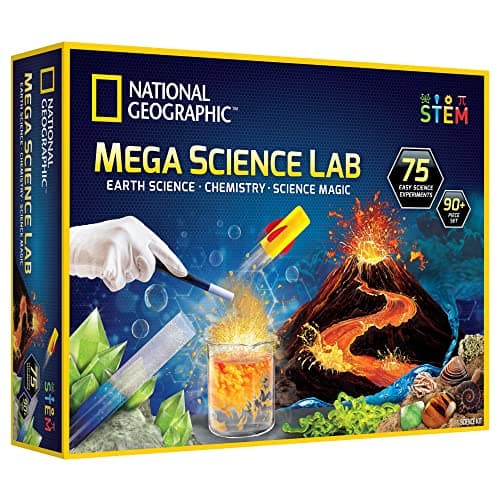
| 1 | Best alternative overall NATIONAL GEOGRAPHIC Mega Science Lab 130+ published experiments in one box, of which 85+ need only a kitchen cupboard. | Eight and up, replacing a subscription with one purchase | |
| 2 | 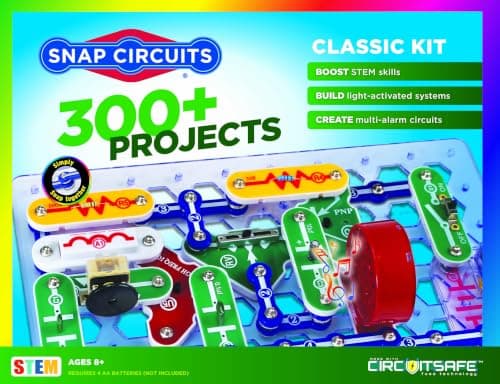 Best for a year of Sundays Snap Circuits Classic 305 numbered projects from 60+ parts, with nothing consumed and no monthly bill. | Eight and up, for the longest published ladder | |
| 3 | Best if you want to stay on a subscription Tinker Crate monthly subscription The engineering-led KiwiCo line, for children who want to build rather than craft. | A household where the arriving box is the point | |
| 4 | Best subscription for a committed child MEL Chemistry monthly subscription A first shipment including a home lab — flask, solid fuel stove, safety glasses, beakers. | Ten and up, where chemistry is already the interest | |
| — | Not an alternative to itself Kiwi Crate monthly subscription Included so the comparison is honest — this is the product people are trying to replace. | Five to eight, if you like it already |
5 picks, including 1 we tell you to skip. Ages shown are the manufacturer’s own rating, not ours.
Work out which problem you are solving
People searching for a KiwiCo alternative are usually solving one of three different problems, and each has a different answer.
The arithmetic
Three reasons to leave, and what to buy
| The monthly cost | A boxed kit — one purchase, no bill |
|---|---|
| The pace is too slow | A long-ladder kit: 130+ or 305 projects |
| The projects are too crafty | Tinker Crate, or an electronics set |
| Nobody opens the box | Not a product problem — see below |
| The child outgrew it | A tool: microscope, tumbler, weather station |
The volume comparison, stated plainly
A subscription publishes one project a month. That is twelve a year, and it is the number to hold against everything else.
The Mega Science Lab publishes 130+ experiments in one box. Snap Circuits Classic publishes 305 numbered projects. The Chem C500 publishes 28 experiments with a 48-page manual.
Any of those is more content than several years of crates, for a single payment. That is the case for leaving, and it is a strong one on paper.
What the subscription is actually selling
The honest counter-argument is that volume is not the product. A crate is selling a recurring reason to sit down at a table, and that is genuinely hard to replicate with a kit on a shelf.
A boxed kit with 305 projects and nobody opening it delivers zero projects. A crate with one project that gets done delivers one. The arithmetic that favours the box assumes somebody initiates, and in plenty of households that assumption is exactly what fails.
If the crates have been arriving and getting done, the subscription is working and the volume comparison is beside the point.
The middle path most households want
Cancel the subscription and buy one boxed kit plus one permanent tool, then put a recurring slot in the calendar to replace the trigger the box was providing.
One long-ladder kit for the project sessions — 130+ or 305 published items covers years.
One tool with no ending for the days between: a microscope, a bug catcher, a weather station or a rock tumbler. None has a consumable and all are available without anybody planning anything.
That combination costs less than a year of most subscriptions and removes the recurring bill entirely.
Worth knowing before you buy
Chemistry subscriptions carry a recurring supervision obligation rather than a one-off one. MEL Science publishes a 10+ rating and a first shipment that includes a solid fuel stove, which means an adult present every month rather than once.
Say the unwelcome thing
Do not gift a subscription to replace a subscription
Swapping one recurring bill for another commits somebody else’s household to a delivery, a cost and — for chemistry boxes — a supervised hour every month.
A boxed kit asks nothing after it is opened. If you are buying for a family other than your own, that is the safer choice by a wide margin.
Where to go next
Science kits vs subscription boxes works through the arithmetic in full. The KiwiCo review covers Kiwi Crate and Tinker Crate specifically, and lab tools that never run out covers the permanent half of the middle path.
In full
Every pick, and what is wrong with it
Published specifications only, each linked back to the page it came from. Where a manufacturer publishes nothing, the row says so — we do not fill blanks in.
1. Best alternative overall
NATIONAL GEOGRAPHIC Mega Science Lab
National Geographic · Mega Science Lab · maker rates it 8+
130+ published experiments in one box, of which 85+ need only a kitchen cupboard.
- Experiments in the kit
- 45, across chemistry, earth science and science magic
- Bonus guide
- 85+ further experiments using household items, for 130+ in total
- Includes
- Volcano build, glow-in-the-dark crystal growth, and the tools for both
- Stated age
- 8+
National Geographic publishes 45 in-kit experiments across chemistry, earth science and science magic, plus a bonus guide of 85+ further experiments using household items, for 130+ in total, rated 8+.
Set against twelve projects a year, this is not a close comparison. The 85+ household experiments are also the closest thing here to a subscription’s best property — they can be repeated, varied and got wrong without using anything up.
What it lacks is the arriving box. If the genuine problem is that nobody in the house initiates, no experiment count solves that.
Replay signal
- Open-ended or one-shot
- Guided, and the 45 in-kit experiments end. The 85 household ones do not
- Does anything run out
- The supplied materials run out; the household half of the book never does
- Room to grow
- The bonus guide is the genuinely durable part, and it costs the manufacturer almost nothing to include
- Adult required
- Supervision for the chemistry third; the earth science and household experiments are largely self-run
Why we say so: National Geographic publishes 45 in-kit experiments plus a bonus guide of 85+ using household items. That second number is why this kit outlasts most of its price band: roughly two-thirds of the published content needs nothing but a kitchen.
What’s wrong with it
The in-kit chemicals are consumed; only the household half is durable.
| Experiments in the kit | 45, across chemistry, earth science and science magic |
|---|---|
| Bonus guide | 85+ further experiments using household items, for 130+ in total |
| Includes | Volcano build, glow-in-the-dark crystal growth, and the tools for both |
| Stated age | 8+ |
| Consumables | Yes — the supplied chemicals and crystal compounds are used up |
Every figure above is from National Geographic toys, Mega Science Lab. Blanks are shown as “not published” rather than filled in.
2. Best for a year of Sundays
Snap Circuits Classic
Elenco · SC-300 · maker rates it 8+
305 numbered projects from 60+ parts, with nothing consumed and no monthly bill.
- Projects
- “Build over 300 exciting projects” — manual covers projects 1-305
- Parts
- “Contains over 60 Snap-Together parts”
- Projects per part
- 5.1 — the highest ratio in the line
- Stated age
- “Ages 8+” and “Not for Children under 3 yrs.”
Elenco publishes over 300 projects with the manual covering projects 1 to 305, over 60 snap-together parts and a 5.1 projects-per-part ratio, rated 8+, with no consumables.
At one project a week this is six years of content for a single purchase. The trade against a subscription is variety: a crate arrives with a different subject each month, and this is electronics every time.
Replay signal
- Open-ended or one-shot
- The sweet spot of the line — enough parts to invent with, cheap enough not to be an event
- Does anything run out
- Nothing runs out
- Room to grow
- 305 published projects is years of Sunday afternoons at one a week
Why we say so: Elenco publishes 305 numbered projects against 60+ parts. Five projects per part is the highest ratio anywhere in the Snap Circuits line, which is the arithmetic reason this is the set to buy rather than the cheap one or the big one.
What’s wrong with it
One subject rather than a varied box, and four AA batteries not included.
| Projects | “Build over 300 exciting projects” — manual covers projects 1-305 |
|---|---|
| Parts | “Contains over 60 Snap-Together parts” |
| Projects per part | 5.1 — the highest ratio in the line |
| Stated age | “Ages 8+” and “Not for Children under 3 yrs.” |
| Batteries | “Requires 4 ‘AA’ batteries (not included)” |
| Relationship to SC-100 | Manual includes all SC-100 projects plus 200 new ones |
Every figure above is from Elenco, Snap Circuits Classic. Blanks are shown as “not published” rather than filled in.
3. Best if you want to stay on a subscription
Tinker Crate monthly subscription
KiwiCo · Tinker Crate · maker rates it 9-12
The engineering-led KiwiCo line, for children who want to build rather than craft.
- Stated age
- Ages 9-12
- Subject
- “learn how things work and create new inventions” through monthly hands-on STEM kits
- Cadence
- One project per month
- Plans
- Monthly, 3-month, 6-month or 12-month
KiwiCo publishes one project per month for Tinker Crate, its engineering and build-focused line.
The honest reason to stay subscribed is ritual rather than volume. A box that arrives forces a session; a kit on a shelf waits for somebody to decide. In a busy household that external trigger is worth real money.
Replay signal
- Open-ended or one-shot
- One-shot per crate, and the builds are more machine than craft at this age band
- Does anything run out
- Yes, monthly by design
- Room to grow
- Steps up into Eureka Crate at 12+
Why we say so: KiwiCo publishes the 9-12 age band, the monthly engineering-project format, and the step up to Eureka Crate at 12+.
What’s wrong with it
Still one project a month, and still a recurring bill.
| Stated age | Ages 9-12 |
|---|---|
| Subject | “learn how things work and create new inventions” through monthly hands-on STEM kits |
| Cadence | One project per month |
| Plans | Monthly, 3-month, 6-month or 12-month |
| Consumables | Yes — each crate is built once |
Every figure above is from KiwiCo, Tinker Crate. Blanks are shown as “not published” rather than filled in.
4. Best subscription for a committed child
MEL Chemistry monthly subscription
MEL Science · MEL Chemistry · maker rates it 10+
A first shipment including a home lab — flask, solid fuel stove, safety glasses, beakers.
- Stated age
- 10+
- Experiments per set
- 2-3
- Cadence
- A new kit by the 23rd of each month
- First shipment
- Includes a home lab — flask, solid fuel stove, safety glasses, beakers
MEL Science publishes 2-3 experiments per set, a new kit by the 23rd of each month, a first shipment including a home lab with a flask, solid fuel stove, safety glasses and beakers, and a 10+ rating.
The included home lab is a genuine one-time benefit that survives cancellation. The recurring commitment is larger than any other subscription here, because a solid fuel stove means an adult present every month.
Replay signal
- Open-ended or one-shot
- Guided experiments, not open-ended play
- Does anything run out
- Each month's reagents run out; the equipment from the first shipment does not
- Room to grow
- The reusable home lab means later months arrive as refills rather than restarts
- Adult required
- A solid fuel stove and real reagents at a 10+ rating means an adult in the room
Why we say so: MEL Science publishes the 2-3 experiments per set, the monthly cadence, the 10+ rating and the contents of the first shipment's home lab.
What’s wrong with it
Published as 2-3 experiments per monthly set, with a supervised hour every month.
| Stated age | 10+ |
|---|---|
| Experiments per set | 2-3 |
| Cadence | A new kit by the 23rd of each month |
| First shipment | Includes a home lab — flask, solid fuel stove, safety glasses, beakers |
| Consumables | Yes — reagents are used up each month |
Every figure above is from MEL Science, chemistry subscription. Blanks are shown as “not published” rather than filled in.
Skip this one
Kiwi Crate monthly subscription
KiwiCo · Kiwi Crate · maker rates it 6-9
Included so the comparison is honest — this is the product people are trying to replace.
- Stated age
- Ages 6-9
- Cadence
- “a brand-new project delivered to their door each month”
- Plans
- Monthly, 3-month, 6-month or 12-month
- Subject
- “hands-on STEAM”
KiwiCo publishes one project per month for Kiwi Crate, its main age-banded line.
Two reasons people look for alternatives: cost, and the pace. If it is cost, a boxed kit is dramatically better value. If it is pace — a child finishing the crate in an afternoon and waiting four weeks — then the answer is a kit with a long ladder rather than a different subscription.
If neither is the problem, the honest advice is to stay. Ritual is a real product and this one delivers it.
Replay signal
- Open-ended or one-shot
- Each crate is a one-shot build; the subscription is what creates the repeat
- Does anything run out
- Every crate runs out. That is the model, not a flaw — you are buying twelve projects, not one toy
- Room to grow
- KiwiCo publishes a ladder by age: Kiwi 6-9, Tinker 9-12, Eureka 12+
Why we say so: KiwiCo publishes the age bands and the one-project-per-month cadence. A subscription's replay value is structural — it arrives again next month — which is a different thing from a toy that keeps getting picked up, and the two should not be compared as if they were the same.
What’s wrong with it
One project a month, twelve a year, on a recurring bill.
| Stated age | Ages 6-9 |
|---|---|
| Cadence | “a brand-new project delivered to their door each month” |
| Plans | Monthly, 3-month, 6-month or 12-month |
| Subject | “hands-on STEAM” |
| Consumables | Yes — each crate is built once |
Every figure above is from KiwiCo, monthly crates by age. Blanks are shown as “not published” rather than filled in.
We are not putting a buy button on this one. It is easy enough to find if you want it anyway — but we would rather send you to something that gets played with twice.
Questions people actually ask
Frequently asked
What is a good alternative to KiwiCo?
It depends what is wrong. For cost or pace, a boxed kit wins on published volume — National Geographic's Mega Science Lab publishes 130+ experiments and Snap Circuits Classic publishes 305 projects, against KiwiCo's one project per month. For a child who wants building rather than crafting, Tinker Crate is the engineering-led line within the same family.
Is KiwiCo worth the money?
Not on volume — one project a month is twelve a year, against 130+ published experiments in a single boxed kit. What a subscription actually sells is a recurring reason to sit down, and in a household where kits get bought and never opened, that trigger is worth real money. Kits vs subscription boxes.
What should I buy if my child finishes the crate too quickly?
A kit with a long published ladder rather than a different subscription. Elenco publishes 305 numbered projects for Snap Circuits Classic — at one a week that is six years — and nothing in it is consumed, so a fast worker is not penalized.
How do I replace the routine a subscription box provides?
With a calendar slot and a permanent tool. The crate's real product is a recurring prompt, so put a recurring session in the diary, and own at least one thing with no ending — a microscope, bug catcher, weather station or rock tumbler — so there is always something available between sessions.
Sources
Where these figures came from
Every specification on this page traces to one of these. If a manufacturer publishes nothing on a point, the page says so rather than filling the gap.
Read next
Where to go from here
Back to Science Kits, or read how we pick.