Single review
KiwiCo Review: Kiwi Crate and Tinker Crate
Twelve projects a year, one at a time. Whether that is good value depends entirely on one household fact.
By Sawyer V. · Published
The short answer
KiwiCo publishes a clear ladder by age — Kiwi Crate at 6-9, Tinker Crate at 9-12, Eureka at 12+ — with one project delivered each month on monthly, three, six or twelve-month plans. It is good value if somebody sits down in the week each box arrives, and poor value otherwise.
Block & Beaker earns a commission when you buy through our links, at no cost to you. It never changes a ranking, and we say so plainly when the right answer is the cheaper set, or nothing at all. Full disclosure · How we pick.

At a glance
The picks, ranked
Tap any row to jump to the full reasoning. Prices come live from Amazon where we have them and read “check price” where we don’t — never a number we cannot stand behind today.
| # | Product | Best for | Price |
|---|---|---|---|
| 1 | The right rung for most Kiwi Crate monthly subscription One hands-on STEAM project a month at the age a child can mostly build it alone. | Six to nine, in a household with a reliably free evening | |
| 2 | The engineering rung Tinker Crate monthly subscription Monthly builds that are mechanisms rather than crafts, with a published step up at twelve. | Nine to twelve, and a child who asks how things work | |
| 3 | The specialist alternative MEL Chemistry monthly subscription Two to three experiments a month with a reusable home lab supplied once. | Ten and up, where the interest is specifically chemistry | |
| 4 |  The one-box alternative NATIONAL GEOGRAPHIC Mega Science Lab One hundred and thirty published experiments available whenever somebody is free, rather than on the 23rd. | Any household that cannot promise a free evening every month | |
| — | 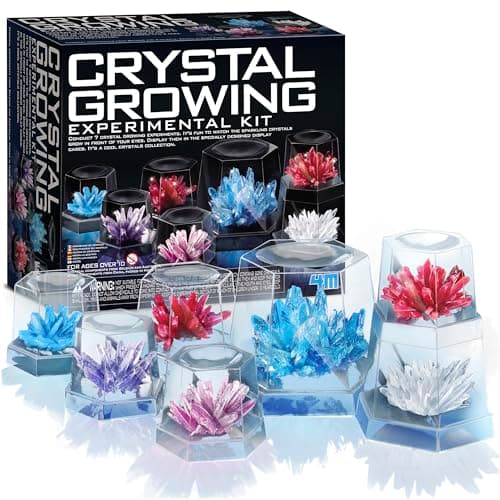 Not a substitute 4M Crystal Growing Experiment Kit Bought instead of a subscription, it delivers seven slow results and then stops. | Nothing on this page |
5 picks, including 1 we tell you to skip. Ages shown are the manufacturer’s own rating, not ours.
What we can and cannot tell you
We have not subscribed to KiwiCo. There is no rating on this page and no rating in the structured data behind it, because a rating would imply we had used the product.
What we can do is set out the published information — age bands, cadence, plan lengths — and do the annual arithmetic against the alternatives. That arithmetic is the thing most missing from writing about subscriptions, and it is entirely reproducible.
What we cannot tell you: the quality of any individual crate, how good the instructions are, or whether the projects are well designed. Those would require having done them.
The published ladder
The arithmetic
KiwiCo, by age band
| Kiwi Crate | Ages 6-9, hands-on STEAM |
|---|---|
| Tinker Crate | Ages 9-12, how things work and inventions |
| Eureka Crate | Ages 12+, creative problem-solving |
| Atlas Crate | Ages 6-12, geography and cultures |
| Cadence, all lines | One new project each month |
| Plan lengths | Monthly, 3, 6 or 12 months |
The annual arithmetic
This is the comparison the format usually escapes, and it is not complicated.
The arithmetic
Twelve months, against one purchase
| Kiwi Crate — projects across a year | 12 |
|---|---|
| Tinker Crate — projects across a year | 12 |
| MEL Chemistry — experiments across a year | 24-36 |
| NatGeo Mega Science Lab — one purchase | 130+ experiments |
| Snap Circuits Classic — one purchase | 305 projects |
The honest reading: a subscription buys ritual and novelty, not volume. If a household needs more things to do, one large open set delivers dramatically more per pound. If it needs a reason to do something on a Tuesday in February, the subscription is doing something a box cannot.
The one question that decides it
Will somebody reliably sit down with the child in the week the box arrives?
If yes, this is a genuinely good product: a monthly ritual, no choosing required, and a format children find exciting for reasons unrelated to the contents.
If the honest answer is “most months, probably”, buy a box instead. The failure mode is not a bad project — it is unopened crates and a monthly charge nobody cancels out of guilt.
Say the unwelcome thing
Do not start with a twelve-month plan
KiwiCo publishes monthly, three, six and twelve-month options. Start with the shortest one that is not punitively priced.
What you are testing is not whether the projects are good. It is whether your household actually does them, and three months answers that. Twelve months answers the same question nine months later.
Where it sits
KiwiCo appears on the subscription boxes roundup alongside MEL Science and the one-box alternatives, and on the six-year-old page, which is the youngest age the format genuinely works.
In full
Every pick, and what is wrong with it
Published specifications only, each linked back to the page it came from. Where a manufacturer publishes nothing, the row says so — we do not fill blanks in.
1. The right rung for most
Kiwi Crate monthly subscription
KiwiCo · Kiwi Crate · maker rates it 6-9
One hands-on STEAM project a month at the age a child can mostly build it alone.
- Stated age
- Ages 6-9
- Cadence
- “a brand-new project delivered to their door each month”
- Plans
- Monthly, 3-month, 6-month or 12-month
- Subject
- “hands-on STEAM”
KiwiCo publishes Kiwi Crate as hands-on STEAM for ages 6-9, with a brand-new project delivered each month, on monthly, 3-month, 6-month or 12-month plans.
Six to nine is the band where this format works best, for a specific reason: the child can follow illustrated instructions largely unaided but still wants somebody to show the result to. Below six an adult does the build; above ten one project a month starts to feel thin.
The published ladder is a genuine advantage over one-off boxes. A household that starts here has an obvious next step at nine and again at twelve, without re-choosing.
Replay signal
- Open-ended or one-shot
- Each crate is a one-shot build; the subscription is what creates the repeat
- Does anything run out
- Every crate runs out. That is the model, not a flaw — you are buying twelve projects, not one toy
- Room to grow
- KiwiCo publishes a ladder by age: Kiwi 6-9, Tinker 9-12, Eureka 12+
Why we say so: KiwiCo publishes the age bands and the one-project-per-month cadence. A subscription's replay value is structural — it arrives again next month — which is a different thing from a toy that keeps getting picked up, and the two should not be compared as if they were the same.
What’s wrong with it
One build per month. A busy month is simply lost — there is no catching up on a crate.
| Stated age | Ages 6-9 |
|---|---|
| Cadence | “a brand-new project delivered to their door each month” |
| Plans | Monthly, 3-month, 6-month or 12-month |
| Subject | “hands-on STEAM” |
| Consumables | Yes — each crate is built once |
Every figure above is from KiwiCo, monthly crates by age. Blanks are shown as “not published” rather than filled in.
2. The engineering rung
Tinker Crate monthly subscription
KiwiCo · Tinker Crate · maker rates it 9-12
Monthly builds that are mechanisms rather than crafts, with a published step up at twelve.
- Stated age
- Ages 9-12
- Subject
- “learn how things work and create new inventions” through monthly hands-on STEM kits
- Cadence
- One project per month
- Plans
- Monthly, 3-month, 6-month or 12-month
KiwiCo publishes Tinker Crate for ages 9-12, described as learning how things work and creating new inventions through monthly hands-on STEM kits.
The shift from craft to mechanism is the point of this rung, and it is the right shift: a nine-year-old who has outgrown decorating things wants something with moving parts and a reason for them.
The pacing problem is sharper here than at the younger band. For a genuinely engaged child, a large open set with hundreds of published projects is available every day rather than once a month.
Replay signal
- Open-ended or one-shot
- One-shot per crate, and the builds are more machine than craft at this age band
- Does anything run out
- Yes, monthly by design
- Room to grow
- Steps up into Eureka Crate at 12+
Why we say so: KiwiCo publishes the 9-12 age band, the monthly engineering-project format, and the step up to Eureka Crate at 12+.
What’s wrong with it
A motivated eleven-year-old finishes a monthly project in an evening and then waits three weeks.
| Stated age | Ages 9-12 |
|---|---|
| Subject | “learn how things work and create new inventions” through monthly hands-on STEM kits |
| Cadence | One project per month |
| Plans | Monthly, 3-month, 6-month or 12-month |
| Consumables | Yes — each crate is built once |
Every figure above is from KiwiCo, Tinker Crate. Blanks are shown as “not published” rather than filled in.
3. The specialist alternative
MEL Chemistry monthly subscription
MEL Science · MEL Chemistry · maker rates it 10+
Two to three experiments a month with a reusable home lab supplied once.
- Stated age
- 10+
- Experiments per set
- 2-3
- Cadence
- A new kit by the 23rd of each month
- First shipment
- Includes a home lab — flask, solid fuel stove, safety glasses, beakers
MEL Science publishes 2-3 experiments per monthly set for ages 10 and up, arriving by the 23rd of each month, with the first shipment containing a home lab — flask, solid fuel stove, safety glasses and beakers.
The reusable-lab structure is smarter than KiwiCo’s on one axis: after month one, deliveries are reagents rather than whole restarts, which is less wasteful and cheaper to produce.
The supervision requirement is stricter. This is the only subscription here where an adult being unavailable means the box cannot be opened at all.
Replay signal
- Open-ended or one-shot
- Guided experiments, not open-ended play
- Does anything run out
- Each month's reagents run out; the equipment from the first shipment does not
- Room to grow
- The reusable home lab means later months arrive as refills rather than restarts
- Adult required
- A solid fuel stove and real reagents at a 10+ rating means an adult in the room
Why we say so: MEL Science publishes the 2-3 experiments per set, the monthly cadence, the 10+ rating and the contents of the first shipment's home lab.
What’s wrong with it
A solid fuel stove and real reagents at a 10+ rating means an adult must be present every single month.
| Stated age | 10+ |
|---|---|
| Experiments per set | 2-3 |
| Cadence | A new kit by the 23rd of each month |
| First shipment | Includes a home lab — flask, solid fuel stove, safety glasses, beakers |
| Consumables | Yes — reagents are used up each month |
Every figure above is from MEL Science, chemistry subscription. Blanks are shown as “not published” rather than filled in.
4. The one-box alternative
NATIONAL GEOGRAPHIC Mega Science Lab
National Geographic · Mega Science Lab · maker rates it 8+
One hundred and thirty published experiments available whenever somebody is free, rather than on the 23rd.
- Experiments in the kit
- 45, across chemistry, earth science and science magic
- Bonus guide
- 85+ further experiments using household items, for 130+ in total
- Includes
- Volcano build, glow-in-the-dark crystal growth, and the tools for both
- Stated age
- 8+
National Geographic publishes 45 experiments across chemistry, earth science and science magic, plus a bonus guide of 85-plus using household items — over 130 in total — rated 8+.
This is the honest comparison KiwiCo should be held against. One hundred and thirty published experiments sitting on a shelf survives a busy month; twelve arriving on a schedule does not.
For a household where the answer to “will somebody sit down on the 23rd?” is not a confident yes, this is usually the better purchase and usually cheaper than three months of a subscription.
Replay signal
- Open-ended or one-shot
- Guided, and the 45 in-kit experiments end. The 85 household ones do not
- Does anything run out
- The supplied materials run out; the household half of the book never does
- Room to grow
- The bonus guide is the genuinely durable part, and it costs the manufacturer almost nothing to include
- Adult required
- Supervision for the chemistry third; the earth science and household experiments are largely self-run
Why we say so: National Geographic publishes 45 in-kit experiments plus a bonus guide of 85+ using household items. That second number is why this kit outlasts most of its price band: roughly two-thirds of the published content needs nothing but a kitchen.
What’s wrong with it
Nothing arrives in the post, which for some children is most of the appeal of a subscription.
| Experiments in the kit | 45, across chemistry, earth science and science magic |
|---|---|
| Bonus guide | 85+ further experiments using household items, for 130+ in total |
| Includes | Volcano build, glow-in-the-dark crystal growth, and the tools for both |
| Stated age | 8+ |
| Consumables | Yes — the supplied chemicals and crystal compounds are used up |
Every figure above is from National Geographic toys, Mega Science Lab. Blanks are shown as “not published” rather than filled in.
Skip this one
4M Crystal Growing Experiment Kit
4M · 5557 · maker rates it 10+
Bought instead of a subscription, it delivers seven slow results and then stops.
- Experiments
- 7 crystal-growing experiments
- Contents
- 3 bags of crystal compound, 3 bags of seeding mixture, stirring bowl and spoon, 7 display bases, 7 display covers, 7 ring templates
- Stated age
- 10 years and up
- Consumables
- Yes — the compound is the whole product
4M publishes seven crystal-growing experiments from three bags of crystal compound and three of seeding mixture, rated 10 and up.
This appears in subscription comparisons because it looks like a recurring thing spread over time. The time is the crystals growing rather than the child doing anything, which is a different experience entirely.
Somebody shopping for a subscription wants recurring engagement. This delivers recurring waiting.
Replay signal
- Open-ended or one-shot
- One-shot, seven times over
- Does anything run out
- Definitively. Three bags of compound, and when they are gone the kit is a set of display cases
Why we say so: 4M publishes three bags of crystal compound across seven experiments. That is the arithmetic that decides this purchase: it is seven results, spread over weeks because crystals take days to grow, and then it is finished. Excellent as an event; poor as the main present.
What’s wrong with it
Three bags of compound across seven experiments, days between action and result, rated 10+.
| Experiments | 7 crystal-growing experiments |
|---|---|
| Contents | 3 bags of crystal compound, 3 bags of seeding mixture, stirring bowl and spoon, 7 display bases, 7 display covers, 7 ring templates |
| Stated age | 10 years and up |
| Consumables | Yes — the compound is the whole product |
| Time per experiment | Days, not minutes — crystals grow on their own schedule |
Every figure above is from 4M, Crystal Growing Experiment Kit. Blanks are shown as “not published” rather than filled in.
We are not putting a buy button on this one. It is easy enough to find if you want it anyway — but we would rather send you to something that gets played with twice.
Questions people actually ask
Frequently asked
Is KiwiCo worth the money?
It depends on one household fact: whether somebody will reliably sit down with the child in the week each box arrives. If yes, it buys a monthly ritual with no choosing required. If not, it is a monthly charge and a stack of unopened boxes.
What ages are KiwiCo crates for?
KiwiCo publishes Kiwi Crate for 6-9, Tinker Crate for 9-12, Eureka Crate for 12+, and Atlas Crate for 6-12 on geography. Respect the bands rather than stretching them — a subscription pitched too high produces twelve consecutive disappointments rather than one.
How many projects does a KiwiCo subscription include?
One per month, so twelve across a year. Held against a single purchase — National Geographic publishes 130-plus experiments in its Mega Science Lab, and Elenco publishes 305 projects in Snap Circuits Classic — a subscription buys ritual and novelty rather than volume.
Should I buy a 12-month KiwiCo subscription?
Not first. KiwiCo publishes shorter plans, and three months tells you what you actually need to know — whether your household does the projects. Twelve months answers the same question nine months later.
Why is there no rating on this review?
Because we have not subscribed. What we can do is set out the published age bands, cadence and plan lengths, and do the annual arithmetic against the alternatives — which is the thing most missing from writing about subscriptions and is entirely reproducible. How we pick.
Sources
Where these figures came from
Every specification on this page traces to one of these. If a manufacturer publishes nothing on a point, the page says so rather than filling the gap.
Read next
Where to go from here
Back to Reviews, or read how we pick.