Guide and picks
How to Choose a First STEM Toy
The first one matters more than the rest, because a bad first experience decides whether there is a second.
By Sawyer V. · Published
The short answer
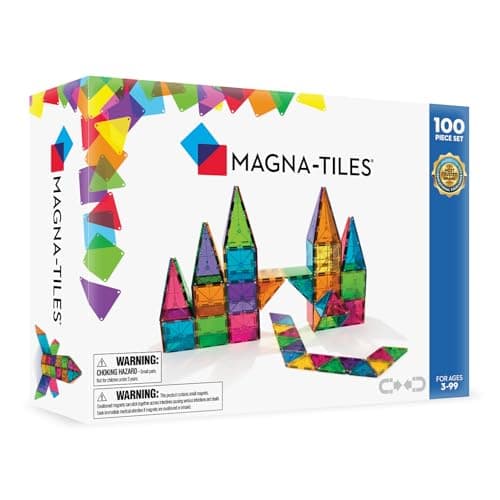
Buy open-ended, buy age-rated, and buy bigger than feels necessary. For most households the first STEM toy should be a 100-piece magnetic tile set — it works from three, has nothing to run out, and never reaches a finished state, which means the first experience is success rather than instructions.
Block & Beaker earns a commission when you buy through our links, at no cost to you. It never changes a ranking, and we say so plainly when the right answer is the cheaper set, or nothing at all. Full disclosure · How we pick.
At a glance
The picks, ranked
Tap any row to jump to the full reasoning. Prices come live from Amazon where we have them and read “check price” where we don’t — never a number we cannot stand behind today.
| # | Product | Best for | Price |
|---|---|---|---|
| 1 | The default answer MAGNA-TILES Classic 100-Piece Set A standing structure in the first minute, with no adult and no instructions. | Three to six, and the first purchase for most households | |
| 2 | 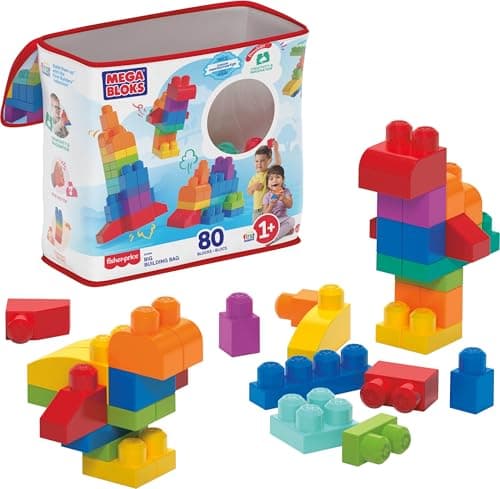 If they are under three MEGA BLOKS First Builders Big Building Bag, 80 Pieces Eighty oversized blocks rated from one year old — the only genuine option below three. | One to three, where almost nothing else is rated | |
| 3 | 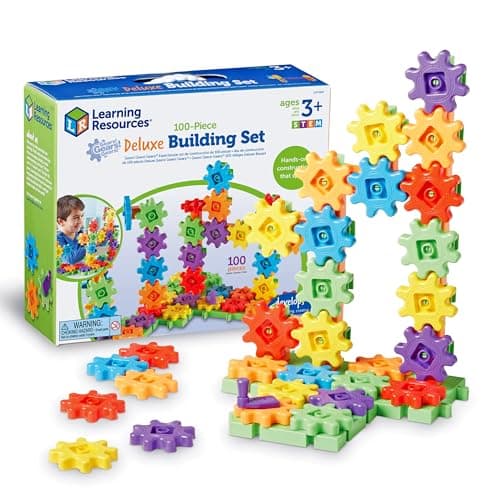 If they want to know why Gears! Gears! Gears! 100-Piece Deluxe Building Set A hundred pieces, one crank handle, and everything moves at once. | Three and up, for a child who asks how things work | |
| 4 | 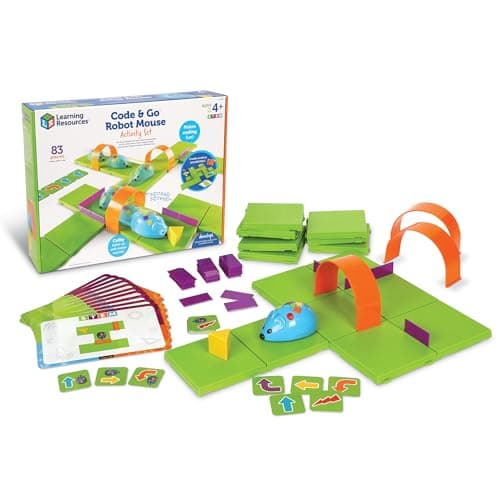 If they are four and want a robot Code & Go Robot Mouse Activity Set Picture-based cards, so a pre-reader owns the whole activity from the first minute. | Four and five, as a first coding toy | |
| — |  Never the first one Thames & Kosmos Chemistry C500 An excellent chemistry set and a poor first STEM purchase at any age. | Ten and up, and after several other things |
5 picks, including 1 we tell you to skip. Ages shown are the manufacturer’s own rating, not ours.
Why the first one matters more
A first STEM toy carries a disproportionate weight, because it sets whether the child thinks of this whole category as something they enjoy or something adults keep buying them.
A first purchase that produces immediate success gets played with, and the next one gets opened with interest. A first purchase that produces frustration, a request for help, or a wait for batteries produces a child who is politely unenthusiastic about the next box.
Three rules
Buy open-ended. Nothing with a correct final form, nothing consumable, nothing with twelve numbered steps. The first experience should be the child making something rather than following something.
Buy age-rated. Not a year up. The instinct to buy ahead so it lasts is the most expensive mistake in this category, because a toy opened before a child can use it never recovers its novelty.
Buy bigger. Within a system, buy the larger set. The arithmetic is consistently brutal on entry-level versions: Elenco publishes 21 projects from 14 parts for the Snap Circuits Beginner set against 305 from over 60 for the Classic.
The arithmetic
The first purchase, by age
| 1 to 3 | MEGA Bloks — the only 1+ rated option |
|---|---|
| 3 to 5 | 100 magnetic tiles, or Gears if they like mechanisms |
| 4 to 5, wants a robot | Code & Go Robot Mouse |
| 6 to 8 | Snap Circuits Classic, or a microscope |
| Any age, likes science | A microscope — nothing runs out |
The mistakes that cost most
Buying a year ahead. The toy sits unused, loses its novelty, and by the time the child is ready it is an old thing that has always been there.
Buying the beginner version. It looks age-appropriate and it is usually a fifth of the content for a third of the price.
Buying a kit when they wanted a toy. A kit is done when it is built. If the child has asked for something specific, buy that thing.
Forgetting the batteries. Botley publishes five AAA cells, not included; the Robot Mouse publishes three. A first STEM toy that will not switch on is the worst possible first experience and it is entirely avoidable.
Say the unwelcome thing
Do not buy a chemistry set as a first STEM toy
It is the most common first purchase for a child who says they like science and one of the weakest. The rating is about the reagents, the materials are consumed, and the first session needs an adult free.
For a child who likes science, the first purchase should be a microscope: nothing runs out, the specimens are free, and it can be used the moment it is unwrapped.
Where to go next
The age pages give the specific picks for a specific year. For the reasoning behind all of it, toys that actually teach sets out the four-part test, and what are STEM toys explains the term.
In full
Every pick, and what is wrong with it
Published specifications only, each linked back to the page it came from. Where a manufacturer publishes nothing, the row says so — we do not fill blanks in.
1. The default answer
MAGNA-TILES Classic 100-Piece Set
Magna-Tiles · 4300 · maker rates it 3-99 years
A standing structure in the first minute, with no adult and no instructions.
- Pieces
- 100
- Shape mix
- 50 squares, 4 large squares, 20 equilateral triangles, 11 right triangles, 15 isosceles triangles
- Stated age
- “3-99 Years”
- Material
- “Food-grade, non-toxic MABS plastic that are free from BPAs, phthalates, and latex”
Magna-Tiles publishes the full 100-piece shape mix, rated 3 to 99 years, in food-grade MABS plastic, with all pieces compatible across the range.
The reason this is the default first purchase is about the first five minutes rather than the first five years. A magnetic tile snaps into place from a centimeter away, so a three-year-old gets a standing structure before an adult has finished reading the box.
First experiences decide second experiences. A toy that produces success immediately gets picked up again; one that produces a request for help does not.
Replay signal
- Open-ended or one-shot
- Open-ended — there is no finished state to reach
- Does anything run out
- Nothing runs out
- Room to grow
- Every set combines with every other Magna-Tiles set
Why we say so: Magna-Tiles publishes the full 100-piece shape breakdown, lists no consumable parts, and states that “all pieces are compatible with and complementary to all other MAGNA-TILES sets.”
What’s wrong with it
The most expensive per tile of any brand, and the Classic set is squares and triangles only.
| Pieces | 100 |
|---|---|
| Shape mix | 50 squares, 4 large squares, 20 equilateral triangles, 11 right triangles, 15 isosceles triangles |
| Stated age | “3-99 Years” |
| Material | “Food-grade, non-toxic MABS plastic that are free from BPAs, phthalates, and latex” |
| Magnet retention | Signature lattice plus “fastening rivets keep magnets safe and secure” |
| Consumables | None |
Every figure above is from Magna-Tiles, Classic 100-Piece Set. Blanks are shown as “not published” rather than filled in.
2. If they are under three
MEGA BLOKS First Builders Big Building Bag, 80 Pieces
MEGA · DCH62 · maker rates it 1+
Eighty oversized blocks rated from one year old — the only genuine option below three.
- Pieces
- 80, in 10 shapes and 9 colors
- Includes
- Reusable storage bag; an attachable wheelbase
- Stated age
- 1 and up
- Block size
- Oversized — designed for toddler hands
MEGA publishes 80 blocks across 10 shapes and 9 colors with a reusable storage bag and an attachable wheelbase, rated 1 and up.
The 1+ rating is a small-parts safety result and it is what makes this available when nothing else is. Almost every construction toy in this category starts at three for exactly that reason.
Buy this now and the tiles at three. That sequencing is worth more than any individual product choice.
Replay signal
- Open-ended or one-shot
- Open-ended, and at this age that is the entire point
- Does anything run out
- Nothing runs out
- Room to grow
- Outgrown at four or five, when the child's hands are ready for smaller bricks
Why we say so: MEGA publishes the 80-piece count across 10 shapes and 9 colors with a 1+ rating. A 1+ rating on a construction toy means the pieces have passed small-parts testing for children who still mouth things, which is the specification that matters most at this age and the reason most brick sets start at three.
What’s wrong with it
Outgrown around four, so it is a two-year toy rather than a decade-long one.
| Pieces | 80, in 10 shapes and 9 colors |
|---|---|
| Includes | Reusable storage bag; an attachable wheelbase |
| Stated age | 1 and up |
| Block size | Oversized — designed for toddler hands |
| Consumables | None |
Every figure above is from MEGA, First Builders Big Building Bag. Blanks are shown as “not published” rather than filled in.
3. If they want to know why
Gears! Gears! Gears! 100-Piece Deluxe Building Set
Learning Resources · LER9162 · maker rates it 3+
A hundred pieces, one crank handle, and everything moves at once.
- Pieces
- 100
- Contents
- 46 gears, 26 square pillars, 21 six-way axles, 6 interlocking bases, 1 crank handle, activity guide
- Stated age
- 3+
- Batteries
- None — hand-cranked
Learning Resources publishes 46 gears, 26 square pillars, 21 six-way axles, 6 interlocking bases, a crank handle and an activity guide, rated 3+, with no batteries.
For a child whose interest is mechanisms rather than structures, this is a better first purchase than tiles. Turning the handle and watching movement travel across the board is a different kind of satisfaction from making something stand up.
No batteries also means it survives being rediscovered in a cupboard eighteen months later, which is a genuine advantage in a first purchase.
Replay signal
- Open-ended or one-shot
- Open-ended, with immediate cause and effect: turn the handle, the whole thing moves
- Does anything run out
- Nothing runs out
- Room to grow
- Sets from the same line interlock, so a second box doubles the machine
Why we say so: Learning Resources publishes the full 100-piece contents list, the ages 3+ rating and the hand crank. No batteries appear in the published contents, which is why this one still works when everything else in the toy box is flat.
What’s wrong with it
The core insight is grasped fast — after a child understands that gears drive gears, the rest is arrangement.
| Pieces | 100 |
|---|---|
| Contents | 46 gears, 26 square pillars, 21 six-way axles, 6 interlocking bases, 1 crank handle, activity guide |
| Stated age | 3+ |
| Batteries | None — hand-cranked |
| Consumables | None |
Every figure above is from Learning Resources, Gears! Gears! Gears! Deluxe Building Set. Blanks are shown as “not published” rather than filled in.
4. If they are four and want a robot
Code & Go Robot Mouse Activity Set
Learning Resources · LER2831 · maker rates it 4+
Picture-based cards, so a pre-reader owns the whole activity from the first minute.
- Set size
- 83 pieces
- Contents
- Colby the robot mouse, 16 maze grids, 22 maze walls, 3 tunnels, 30 double-sided coding cards, 10 activity cards, cheese wedge, activity guide
- Maze size
- The 16 grids build a 20″ x 20″ board
- Screen required
- None
Learning Resources publishes 83 pieces including 16 rearrangeable maze grids, 22 walls, 3 tunnels, 30 double-sided symbol coding cards and 10 activity cards, rated 4+.
If a child has specifically asked for a robot, buy a robot. Buying tiles instead because they last longer is technically correct and practically a mistake — a first STEM toy the child did not want is not a first STEM toy.
This is the cheapest thing in the category that genuinely works pre-reading, which makes it the right robot to say yes with.
Replay signal
- Open-ended or one-shot
- The mouse is fixed, but the maze is not — 16 grids and 22 walls is a new problem every time
- Does anything run out
- Nothing runs out
- Room to grow
- The 10 activity cards are a starting ladder; after that the child sets the puzzles
- Adult required
- Reading is not required — the coding cards use directional symbols, so a four-year-old can work alone
Why we say so: Learning Resources publishes the 83-piece contents including 16 rearrangeable grids and 22 walls, and states the cards are picture-based. A rearrangeable maze is why this does not become a solved puzzle after one weekend.
What’s wrong with it
Needs three AAA batteries not included, and there is no depth beyond building harder mazes.
| Set size | 83 pieces |
|---|---|
| Contents | Colby the robot mouse, 16 maze grids, 22 maze walls, 3 tunnels, 30 double-sided coding cards, 10 activity cards, cheese wedge, activity guide |
| Maze size | The 16 grids build a 20″ x 20″ board |
| Screen required | None |
| Batteries | 3 x AAA (not included) |
| Stated age | Ages 4+ |
Every figure above is from Learning Resources, Code & Go Robot Mouse Activity Set. Blanks are shown as “not published” rather than filled in.
Skip this one
Thames & Kosmos Chemistry C500
Thames & Kosmos · 665012 · maker rates it 10+
An excellent chemistry set and a poor first STEM purchase at any age.
- Experiments
- 28
- Manual
- 48 pages
- Chemicals included
- 5
- Equipment
- Safety glasses, test tubes, dropper pipettes, double-headed measuring spoon
Thames & Kosmos publishes 28 experiments, a 48-page manual, five chemicals and lab equipment, rated 10 years and up, requiring a 9V battery.
Chemistry sets are a common first purchase for a child who says they like science, and they are a poor one. The rating is about the contents rather than the difficulty; the materials are consumed; and a first session needs an adult free.
A first STEM toy should be usable immediately, unsupervised and repeatedly. A chemistry set is none of those. It is an excellent fourth or fifth purchase — see the chemistry set roundup for when that time comes.
Replay signal
- Open-ended or one-shot
- Guided, not open-ended: 28 experiments, then the manual is finished
- Does anything run out
- Yes — the chemicals are consumed, and Thames & Kosmos sells replacements
- Room to grow
- Steps up to the larger C1000, C2000 and C3000 sets in the same line
- Adult required
- The maker rates it 10+ and it involves real chemicals
Why we say so: Thames & Kosmos publishes 28 experiments, a 48-page manual and five chemicals. Five finite chemicals across 28 experiments is arithmetic, not opinion — this set has an end, and it is better to know that before Boxing Day than after.
What’s wrong with it
Rated 10+ for its contents, consumable, and it requires an adult present for a first session.
| Experiments | 28 |
|---|---|
| Manual | 48 pages |
| Chemicals included | 5 |
| Equipment | Safety glasses, test tubes, dropper pipettes, double-headed measuring spoon |
| Stated age | 10 years and up |
| Batteries | 1 x 9V (not included) |
| Consumables | Yes — the five chemicals are used up |
Every figure above is from Thames & Kosmos, Chemistry C500. Blanks are shown as “not published” rather than filled in.
We are not putting a buy button on this one. It is easy enough to find if you want it anyway — but we would rather send you to something that gets played with twice.
Questions people actually ask
Frequently asked
What should a child's first STEM toy be?
For most households, a 100-piece magnetic tile set. Magna-Tiles publishes a 3-99 age range, nothing runs out, and a structure stands within the first minute without an adult — which means the first experience is success rather than instructions.
Should I buy a STEM toy a year ahead so it lasts longer?
No, and this is the most expensive mistake in the category. A toy opened before a child can use it loses its novelty while sitting unused, and by the time they are ready it is an old thing that has always been there.
Is a chemistry set a good first STEM toy?
One of the weakest, despite being one of the most commonly chosen. Thames & Kosmos rates its sets 10+ for their contents, the chemicals are consumed, and a first session needs an adult free. A microscope is the better first purchase for a child who likes science.
Should I buy the small version first to see if they like it?
Usually not. Elenco publishes 21 projects from 14 parts for the Snap Circuits Beginner set against 305 from over 60 for the Classic — roughly three times the price for fifteen times the content. The small version tests the wrong thing, because it can disappoint on its own terms.
Sources
Where these figures came from
Every specification on this page traces to one of these. If a manufacturer publishes nothing on a point, the page says so rather than filling the gap.
Read next
Where to go from here
Back to Guides, or read how we pick.