The picks
Science Kits for Teens
The whole category tops out at a published 12, so the age on the box has stopped being useful. What replaces it is whether the kit takes days rather than minutes.
By Sawyer V. · Published
The short answer
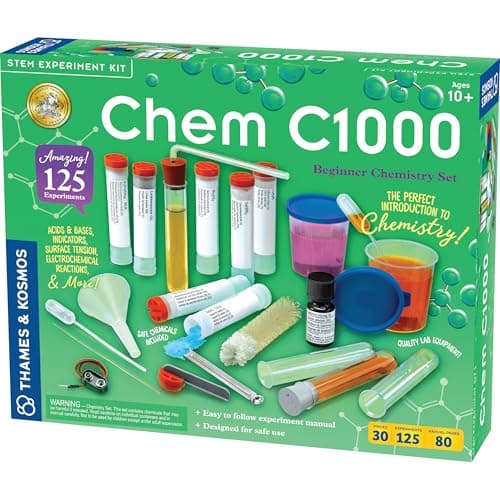
Nothing in this category publishes an age above twelve, so at thirteen the rating has stopped discriminating and the figure to buy on is whether the kit runs for days. The Thames & Kosmos CHEM C1000 publishes 125 experiments, seven chemicals and compliance with EN 71-4 at 10 and up — the only named safety standard here. The AmScope M30 kit publishes six magnifications to 1200x on a metal frame. The rock tumbler publishes a process that takes weeks. Avoid anything published 8-12.
Block & Beaker earns a commission when you buy through our links, at no cost to you. It never changes a ranking, and we say so plainly when the right answer is the cheaper set, or nothing at all. Full disclosure · How we pick.
At a glance
The picks, ranked
Tap any row to jump to the full reasoning. Prices come live from Amazon where we have them and read “check price” where we don’t — never a number we cannot stand behind today.
| # | Product | Best for | Price |
|---|---|---|---|
| 1 | The only kit here that names a safety standard Thames & Kosmos CHEM C1000 125 experiments, seven chemicals in vials, and compliance with EN 71-4. | Thirteen and up, for a teenager who wants to actually do chemistry | |
| 2 | 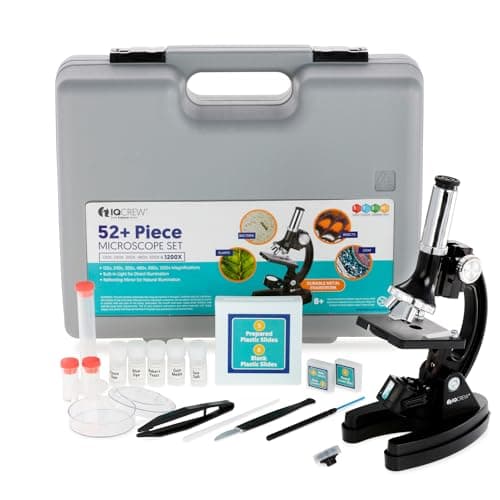 Best instrument rather than kit AmScope 120X-1200X Beginner Microscope Kit Six magnifications from 120x to 1200x on a metal arm, with a 52-piece accessory kit. | Thirteen and up, where the thing should still work at twenty | |
| 3 | 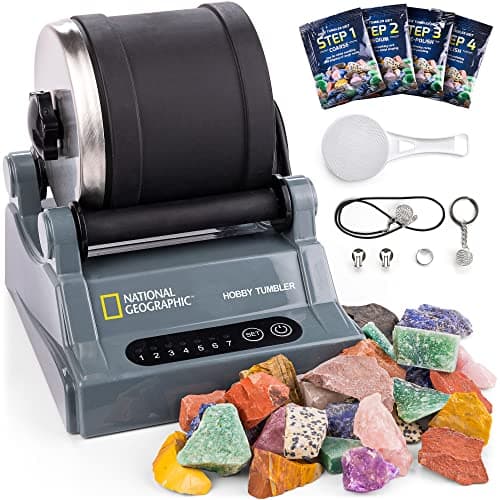 The one with a process that takes weeks NATIONAL GEOGRAPHIC Hobby Rock Tumbler Kit A tumbler, four polishing grits, nine types of rough gemstone and jewelry fastenings. | Thirteen and up, for patience rather than novelty | |
| 4 | 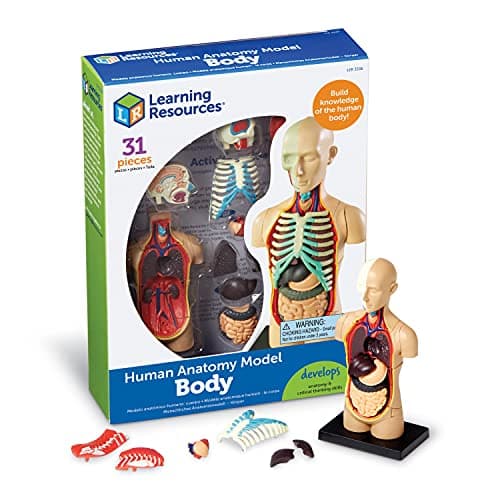 Best for a biology syllabus Learning Resources Human Body Anatomy Model A 31-piece anatomy model with eleven named organ groups and a Fact Guide. | Thirteen and up, where the kit should support schoolwork | |
| 5 | 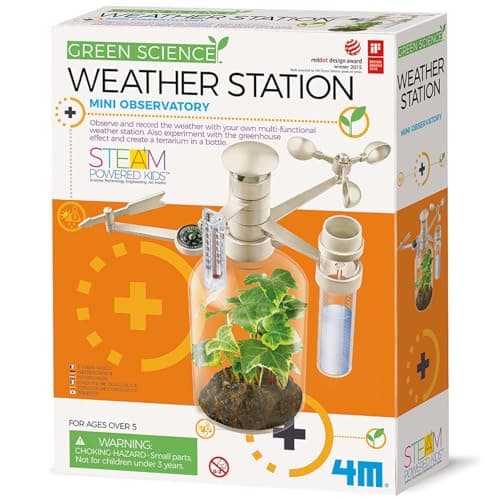 Lowest price band, and it collects data 4M Weather Station Kit Four instruments to build — wind vane, anemometer, thermometer and rain gauge. | Thirteen and up, as an add-on rather than the main gift | |
| — | 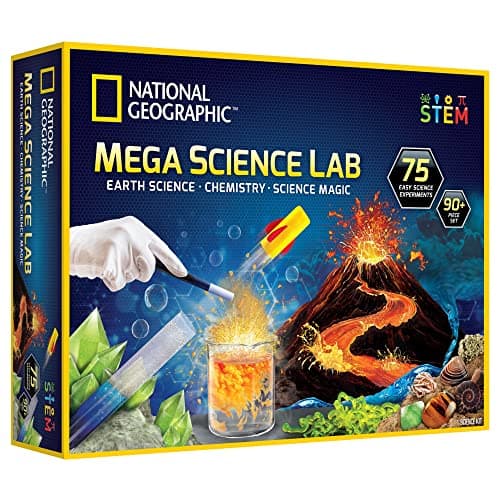 Published 8-12 — the wrong band NATIONAL GEOGRAPHIC Mega Science Lab 45 experiments in the kit plus 85+ household ones, for 130+ in total. | Eight to twelve, where it is genuinely good value |
6 picks, including 1 we tell you to skip. Ages shown are the manufacturer’s own rating, not ours.
The published ceiling in this category
The arithmetic
Science kits: the highest published age on this site's shelf
| Thames & Kosmos CHEM C1000 | 10 and up — 125 experiments, 7 chemicals, EN 71-4 |
|---|---|
| Thames & Kosmos Chem C500 | 10 years and up — 28 experiments, 5 chemicals |
| My First Lab Duo-Scope | Ages 9 and older — 40x to 400x |
| AmScope M30 kit | “For ages 8+” — six levels to 1200x |
| NATIONAL GEOGRAPHIC Rock Tumbler | 8+ — four grit stages, nine rough types |
| NATIONAL GEOGRAPHIC Mega Science Lab | 8+, sold into 8-12 — 130+ experiments |
| Learning Resources Human Body Model | Ages 8+, grades 3+ — 31 pieces |
| 4M Weather Station | 8 and up — four instruments |
| Anything published 13, 14, 15 or 16 | Nothing. The category stops at 12 |
What to buy on instead
How long the process takes. The clearest divide between a kit for a nine-year-old and one for a fifteen-year-old is not difficulty, it is duration. Four grit stages in a rock tumbler is weeks; a volcano is twenty minutes. A teenager can hold a project open across a fortnight, and that capability is wasted on a kit of six-minute demonstrations.
Whether the contents are real. Seven chemicals in vials under EN 71-4 is a different proposition from powders described as science magic. A named standard is published precisely because the reagents do something.
Whether it is an instrument. A microscope, a telescope and a tumbler have no upper age because tools do not expire. This is the single most reliable way to buy above the published ceiling: buy something that was never age-rated in spirit.
Whether it produces data or an object. Four daily measurements, a polished stone, a slide you prepared yourself. Output that exists outside the activity is what separates a project from an afternoon.
Not the experiment count. 130+ beats 125 on the box and loses on everything else. Count what each experiment actually involves.
What changes between twelve and fifteen
Patience becomes available. A multi-day process with nothing visible happening is intolerable at nine and interesting at fourteen. Everything on this page that beats the published ceiling does so by using that.
School starts asking the same questions. At thirteen, biology, chemistry and physics are timetabled. A kit that overlaps a syllabus stops being a hobby and starts being useful, which is why a 31-piece anatomy model earns a place it would not earn at nine.
Novelty stops working. A glowing test tube is a trick, and a teenager has seen tricks. What holds up is a result that took effort to get, which is also the honest reason kits get abandoned at this age.
And the toy aisle stops being the right shop. Past about fourteen the genuinely better purchases are in other categories entirely: an Arduino kit, a telescope, or real electronics. This site says so on the teens page too.
A note on subscriptions at this age
The teen-science query cluster includes “monthly science kits for teens”, and the honest answer is that the subscription market thins out sharply above twelve. This site covers what exists at STEM subscription boxes and chemistry subscription boxes, and the pattern there is the same as here: the boxes publish bands that stop around fourteen, and the ones that do not are aimed at adults.
For a thirteen-year-old, a subscription has one specific advantage over anything on this page — it arrives again next month, so it survives a loss of interest and recovers from it. That is worth paying for if the interest is new. If the interest is established, a single reagent chemistry set with 125 published experiments is more science for the money.
Worth knowing before you buy
So which one
One kit, and it should be real chemistry: the CHEM C1000 — 125 experiments, seven reagents, EN 71-4.
It should still be used at twenty: the AmScope M30 kit, six levels to 1200x.
They need a project rather than an activity: the rock tumbler and its four grit stages.
It has to help with schoolwork: the 31-piece anatomy model.
A small add-on that collects data: the 4M Weather Station, four instruments built by hand.
Say the unwelcome thing
Do not buy the biggest experiment count for a teenager
The Mega Science Lab publishes 130+ experiments and ages 8-12, and the second figure beats the first. Against it, the CHEM C1000 publishes 125 experiments, seven chemicals in vials and compliance with EN 71-4 at 10 and up. A hundred and thirty demonstrations using household materials is not more chemistry than a hundred and twenty-five experiments with reagents; it is a different product for a different child, and the published age band says so plainly on the box.
Where to go next
Microscopes for teens goes deeper on optics, STEM toys for teens covers every category rather than this one, STEM gifts for teens is the gift framing, and science kits by age is the whole shelf sorted on published ratings.
In full
Every pick, and what is wrong with it
Published specifications only, each linked back to the page it came from. Where a manufacturer publishes nothing, the row says so — we do not fill blanks in.
1. The only kit here that names a safety standard
Thames & Kosmos CHEM C1000
Thames & Kosmos · 640118 · maker rates it 10+
125 experiments, seven chemicals in vials, and compliance with EN 71-4.
- Chemicals included
- Seven, in cylindrical vials
- Manual
- Full experiment manual published free on the manufacturer's own site
- Safety standard
- “EN 71-4, in which the safety requirements for chemistry experimental kits are established”
- Covers
- Lab setup and safe handling, indicators and litmus, invisible ink, gas reactions
Thames & Kosmos publishes 125 experiments, seven included chemicals in cylindrical vials, a full experiment manual free on its own site, and compliance with “EN 71-4, in which the safety requirements for chemistry experimental kits are established”. The published coverage is lab setup and safe handling, indicators and litmus, invisible ink and gas reactions. Rated 10 and up.
A named standard is what makes this a teenage purchase. EN 71-4 exists because a chemistry set contains reagents that can do something, and a maker who cites it is telling you the contents are real rather than theatrical. Nothing else on this page names a standard at all — most of the category does not need to.
A hundred and twenty-five experiments is also simply a lot. At roughly one a weekend that is more than two years of material, which is the right shape for a gift to a thirteen-year-old whose interests may not survive to fifteen: the kit does not have to be finished to have been worth buying.
The published manual on the maker’s own site is worth a sentence of its own, because it means you can read exactly what the 125 experiments are before buying. See the CHEM C1000 review, chemistry sets by age and chemistry sets for kids.
Replay signal
- Open-ended or one-shot
- Guided rather than open-ended, but the manual is a term's worth of weekends
- Does anything run out
- Yes — seven finite chemicals, with replacements sold separately
- Room to grow
- The C-series continues into C2000 and C3000, carrying the same equipment forward
- Adult required
- Real chemicals at a 10+ rating: a sit-with-them kit at the lower end of that range
Why we say so: Thames & Kosmos publishes the full manual free on its own site — you can read exactly what your child will be doing before spending anything — and states compliance with EN 71-4, the European chemistry-kit safety standard.
What’s wrong with it
The seven chemicals are used up, and refills are the maker's own line.
| Chemicals included | Seven, in cylindrical vials |
|---|---|
| Manual | Full experiment manual published free on the manufacturer's own site |
| Safety standard | “EN 71-4, in which the safety requirements for chemistry experimental kits are established” |
| Covers | Lab setup and safe handling, indicators and litmus, invisible ink, gas reactions |
| Stated age | 10 and up |
| Consumables | Yes — the seven chemicals are used up |
Every figure above is from Thames & Kosmos, experiment manuals. Blanks are shown as “not published” rather than filled in.
2. Best instrument rather than kit
AmScope 120X-1200X Beginner Microscope Kit
AmScope · M30-ABS-KT2 · maker rates it 8+
Six magnifications from 120x to 1200x on a metal arm, with a 52-piece accessory kit.
- Magnifications
- Six levels — 120x, 240x, 300x, 480x, 600x and 1200x
- Frame
- Metal arm, with stage clips
- Lighting
- Built-in LED plus a reflecting mirror
- Extras
- Rotating color filter wheel; 52-piece accessory kit
AmScope publishes six magnification levels — 120x, 240x, 300x, 480x, 600x and 1200x — a metal arm with stage clips, built-in LED plus a reflecting mirror, a rotating color filter wheel, a 70 x 65 mm stage and a 52-piece accessory kit. It publishes a 6 lb shipping weight and no product weight, and “For ages 8+”.
This is here as the category’s answer to the ceiling problem. A microscope has no upper age because an instrument never becomes age-inappropriate: a 1200x compound scope is a tool a biology undergraduate would recognize, and the published figure that matters is the magnification range rather than the rating.
Six published levels is the specification to compare. A scope with three levels runs out of things to show quickly; six means the same slide is a different object at the top and the bottom of the range, and the 52-piece accessory kit means there are slides to put under it on day one.
Our microscopes for teens page goes deeper on the optics; see also the AmScope M30 review and microscope versus telescope.
Replay signal
- Open-ended or one-shot
- Open-ended — specimens are free and infinite
- Does anything run out
- The prepared slides in the accessory kit run out; blank slides do not
- Room to grow
- 1200x is well past what a child needs and past what the optics comfortably resolve, but the metal frame will outlast the interest
Why we say so: AmScope publishes six magnification levels, a metal arm and a 70 x 65 mm stage. Treat the top magnification with skepticism — at 1200x an entry-level objective delivers a large, dim, blurry image — and buy this for the metal frame and the usable lower range instead.
What’s wrong with it
AmScope publishes “For ages 8+”, which tells you nothing about a teenager.
| Magnifications | Six levels — 120x, 240x, 300x, 480x, 600x and 1200x |
|---|---|
| Frame | Metal arm, with stage clips |
| Lighting | Built-in LED plus a reflecting mirror |
| Extras | Rotating color filter wheel; 52-piece accessory kit |
| Stage | 70 x 65 mm |
| Shipping weight | 6 lb — AmScope publishes no product weight |
| Stated age | “For ages 8+” |
Every figure above is from AmScope, M30-ABS-KT2 microscope. Blanks are shown as “not published” rather than filled in.
3. The one with a process that takes weeks
NATIONAL GEOGRAPHIC Hobby Rock Tumbler Kit
National Geographic · Hobby Rock Tumbler · maker rates it 8+
A tumbler, four polishing grits, nine types of rough gemstone and jewelry fastenings.
- Includes
- Tumbler, four polishing grits, sifter, learning guide
- Rough gemstones
- Nine types
- Barrel
- Noise-reducing, leak-proof, stainless steel lid
- Controls
- One-touch settings with an automatic shutoff timer
National Geographic publishes a tumbler with four polishing grits, a sifter and a learning guide, nine types of rough gemstone, a noise-reducing leak-proof barrel with a stainless steel lid, one-touch controls with an automatic shutoff timer, and jewelry fastenings for the finished stones. Rated 8+.
Four published grit stages is the reason this works at thirteen when most of the category does not. A tumbler runs for days per stage, which makes the whole process a multi-week project with four checkpoints — the opposite of a kit whose experiments each take six minutes. Nothing else in this hub publishes a process measured in weeks.
It also produces an object somebody else can wear, which is a different kind of output from a result in a notebook. The published jewelry fastenings are the maker acknowledging that.
The published 8+ is the category’s usual uninformative floor. See the rock tumbler review and rock and geology kits.
Replay signal
- Open-ended or one-shot
- Semi-open: the machine is permanent, the grit is not, and rocks from a beach are free
- Does anything run out
- The grits and the supplied gemstones run out; refill grit is sold separately
- Room to grow
- Once the supplied rough is gone, the tumbler works on anything the child collects
- Adult required
- For loading and for the timer; the tumbling itself is unattended
Why we say so: National Geographic publishes four polishing grits, nine gemstone types and an automatic shutoff timer. The machine outliving the grit is what makes this different from a one-shot geology kit — but it runs for days per batch, so it is a patience purchase, not an afternoon one.
What’s wrong with it
The four grits and the supplied rough are used up, and the machine is audible.
| Includes | Tumbler, four polishing grits, sifter, learning guide |
|---|---|
| Rough gemstones | Nine types |
| Barrel | Noise-reducing, leak-proof, stainless steel lid |
| Controls | One-touch settings with an automatic shutoff timer |
| Extras | Jewelry fastenings for the polished stones |
| Stated age | 8+ |
| Consumables | Yes — the four grits and the supplied rough are used up |
Every figure above is from National Geographic toys, Hobby Rock Tumbler Kit. Blanks are shown as “not published” rather than filled in.
4. Best for a biology syllabus
Learning Resources Human Body Anatomy Model
Learning Resources · LER3336 · maker rates it 8+
A 31-piece anatomy model with eleven named organ groups and a Fact Guide.
- Pieces
- 31
- Organs included
- Brain, skull, heart, rib cage, lungs, liver, stomach, pancreas, kidneys, intestines, spine
- Assembled height
- 4½ inches
- Includes
- Fact Guide and photo-illustrated assembly instructions
Learning Resources publishes 31 pieces including brain, skull, heart, rib cage, lungs, liver, stomach, pancreas, kidneys, intestines and spine, an assembled height of 4½ inches, and a Fact Guide with photo-illustrated assembly instructions. Rated ages 8+, grades 3+, not for children under 3.
Here for a narrow and real reason: a thirteen-year-old is usually studying this material at school, and a physical model is the one science purchase that maps directly onto a syllabus. Eleven named organ groups in 31 pieces is a published figure you can check against a biology textbook’s contents page.
It is fourth rather than first because it is finite in a way the three above are not. Assembly is an afternoon; after that it is a reference object. That is genuinely useful and it is not a project.
See the anatomy model review, anatomy and biology kits and STEM toys for homeschool.
Replay signal
- Open-ended or one-shot
- A model rather than an experiment — assembled, dismantled and reassembled
- Does anything run out
- Nothing runs out
- Room to grow
- The Fact Guide carries it past assembly into naming and function
- Adult required
- Not after the first build
Why we say so: Learning Resources publishes 31 named parts and a 4½-inch assembled height. Naming the organs individually is the specification that matters — a torso that comes apart into identifiable pieces teaches anatomy, and a sealed display model does not.
What’s wrong with it
Assembled once, it is a model on a shelf rather than an activity.
| Pieces | 31 |
|---|---|
| Organs included | Brain, skull, heart, rib cage, lungs, liver, stomach, pancreas, kidneys, intestines, spine |
| Assembled height | 4½ inches |
| Includes | Fact Guide and photo-illustrated assembly instructions |
| Stated age | Ages 8+, grades 3+; not for children under 3 |
| Consumables | None |
Every figure above is from Learning Resources, Human Body Anatomy Model. Blanks are shown as “not published” rather than filled in.
5. Lowest price band, and it collects data
4M Weather Station Kit
4M · 4573 · maker rates it 8+
Four instruments to build — wind vane, anemometer, thermometer and rain gauge.
- Instruments built
- 4 — wind vane, anemometer, thermometer and rain gauge
- Contents
- Thermometer and support arm, two support-column halves, rain gauge arm, funnel, plastic tube, wind vane and arm, compass, anemometer arm, cups, hub, spindles, cap screws, instructions
- Assembled size
- About 8.5 in x 4.75 in
- Extra experiment
- A greenhouse-effect terrarium using a recycled bottle
4M publishes four instruments built from the kit — a wind vane, an anemometer, a thermometer and a rain gauge — with a named parts list, an assembled size of about 8.5 x 4.75 inches, and an extra greenhouse-effect experiment using a recycled bottle. Rated 8 and up, with a separate Green Science version rated 5+.
The reason this earns a place on a teenage page from the lowest price band here: four instruments means four measurements, and four measurements taken daily is a dataset. A thirteen-year-old with a spreadsheet and three weeks of readings is doing something no other kit on this page sets up.
The published assembled size is also the honest limit. At 8.5 inches this is a demonstration instrument that will disagree with the weather service, and the interesting question — why does it disagree — is the actual lesson.
Replay signal
- Open-ended or one-shot
- Genuinely open-ended: the weather supplies new data every single day
- Does anything run out
- Nothing runs out
- Room to grow
- Readings become a record; the interest scales into charting and comparison
- Adult required
- For the build, which is fiddly; not for the daily readings
Why we say so: 4M publishes four working instruments and a full parts list. Once built, nothing is consumed and the sky restocks the experiment daily — which makes this one of the few science kits with no published ending.
What’s wrong with it
An 8.5-inch assembled station is a demonstration instrument, not a real one.
| Instruments built | 4 — wind vane, anemometer, thermometer and rain gauge |
|---|---|
| Contents | Thermometer and support arm, two support-column halves, rain gauge arm, funnel, plastic tube, wind vane and arm, compass, anemometer arm, cups, hub, spindles, cap screws, instructions |
| Assembled size | About 8.5 in x 4.75 in |
| Extra experiment | A greenhouse-effect terrarium using a recycled bottle |
| Stated age | 8 and up (a Green Science version is rated 5+) |
| Consumables | None — the instruments are permanent |
Every figure above is from 4M, Weather Station Kit (4573). Blanks are shown as “not published” rather than filled in.
Skip this one
NATIONAL GEOGRAPHIC Mega Science Lab
National Geographic · Mega Science Lab · maker rates it 8+
45 experiments in the kit plus 85+ household ones, for 130+ in total.
- Experiments in the kit
- 45, across chemistry, earth science and science magic
- Bonus guide
- 85+ further experiments using household items, for 130+ in total
- Includes
- Volcano build, glow-in-the-dark crystal growth, and the tools for both
- Stated age
- 8+
National Geographic publishes 45 experiments across chemistry, earth science and science magic, a bonus guide of 85+ household experiments for 130+ in total, a volcano build and glow-in-the-dark crystal growth with the tools for both. Rated 8+ and sold into the 8-12 band.
This is the specific mis-buy for a teenager and it happens because the headline number is the biggest on the shelf. A hundred and thirty experiments sounds like more science than 125, but the CHEM C1000’s 125 come with seven reagents and EN 71-4 while these are largely demonstrations with household materials.
Read “science magic” literally. It is a published category of the contents and it is the right register for a nine-year-old. At fifteen it is the reason the box goes on a shelf unopened, which is the outcome this site exists to prevent.
It is an excellent kit for the age it is published for. See the Mega Science Lab review and science kits by age, where it sits in its correct band.
Replay signal
- Open-ended or one-shot
- Guided, and the 45 in-kit experiments end. The 85 household ones do not
- Does anything run out
- The supplied materials run out; the household half of the book never does
- Room to grow
- The bonus guide is the genuinely durable part, and it costs the manufacturer almost nothing to include
- Adult required
- Supervision for the chemistry third; the earth science and household experiments are largely self-run
Why we say so: National Geographic publishes 45 in-kit experiments plus a bonus guide of 85+ using household items. That second number is why this kit outlasts most of its price band: roughly two-thirds of the published content needs nothing but a kitchen.
What’s wrong with it
Published for ages 8-12. At fifteen the experiments are demonstrations, not work.
| Experiments in the kit | 45, across chemistry, earth science and science magic |
|---|---|
| Bonus guide | 85+ further experiments using household items, for 130+ in total |
| Includes | Volcano build, glow-in-the-dark crystal growth, and the tools for both |
| Stated age | 8+ |
| Consumables | Yes — the supplied chemicals and crystal compounds are used up |
Every figure above is from National Geographic toys, Mega Science Lab. Blanks are shown as “not published” rather than filled in.
We are not putting a buy button on this one. It is easy enough to find if you want it anyway — but we would rather send you to something that gets played with twice.
Questions people actually ask
Frequently asked
What is the best science kit for a teenager?
The Thames & Kosmos CHEM C1000, on published figures: 125 experiments, seven chemicals in cylindrical vials, a full manual free on the maker's site, and compliance with EN 71-4, rated 10 and up. It is the only kit on this site that names a chemistry safety standard, which is how you can tell the reagents are real.
Are there science kits rated for 13 or 14 year olds?
No, and that is the useful fact. Nothing in this category publishes an age above 12 - the highest floor anywhere on this site is the CHEM C1000's "10 and up". At thirteen the rating has stopped discriminating, so buy on how long the process takes and whether the contents are real. Buying above the age rating.
What science kit works for a 15 year old?
Something with a process measured in days. The National Geographic rock tumbler publishes four grit stages and nine rough gemstone types, which is a multi-week project; the AmScope M30 kit publishes six magnifications to 1200x, which is an instrument with no upper age. Both beat any kit of six-minute demonstrations.
Is the Mega Science Lab good for a teenager?
No. National Geographic publishes 130+ experiments but rates it 8+ and sells it into the 8-12 band, and the published contents include "science magic". It is excellent value for a nine-year-old. At fifteen it is demonstrations rather than work, and the CHEM C1000's 125 reagent experiments are the better purchase. Mega Science Lab review.
What is EN 71-4 and why does it matter?
It is the European standard Thames & Kosmos cites for the CHEM C1000 - "EN 71-4, in which the safety requirements for chemistry experimental kits are established". It matters because a maker cites it when the kit contains reagents that can actually react. Most of this category does not need to name a standard, which tells you something about the contents. Toy safety standards explained.
Are there monthly science kits for teens?
Few, and the ones that exist publish bands that stop around fourteen. A subscription's advantage at thirteen is that it arrives again next month, so it survives a loss of interest. If the interest is already established, one reagent chemistry set with 125 published experiments is more science for the money. STEM subscription boxes.
What should I buy for a teenager who has outgrown science kits?
Something that was never age-rated in spirit. A microscope, a telescope or an Arduino kit are tools rather than kits, and tools do not expire - Arduino publishes 11+ for its Student Kit with nine 90-minute lessons and a semester of content. Arduino kits for kids.
Sources
Where these figures came from
Every specification on this page traces to one of these. If a manufacturer publishes nothing on a point, the page says so rather than filling the gap.
Read next
Where to go from here
Back to Science Kits, or read how we pick.