Single review
National Geographic Mega Science Lab Review
Reviewed from the manufacturer's published specifications and the arithmetic on them. We have not used it, and we say so.
By Sawyer V. · Published
The short answer
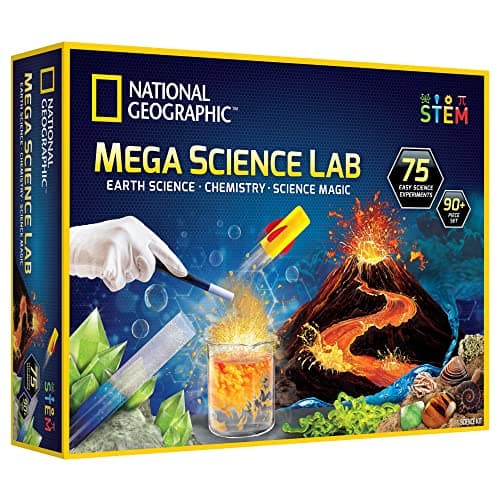
The Mega Science Lab publishes 45 experiments in the kit across chemistry, earth science and science magic, plus a bonus guide of 85+ further experiments using household items — 130+ in total — rated 8+. The 85+ figure is the one that decides the purchase, because that half never runs out.
Block & Beaker earns a commission when you buy through our links, at no cost to you. It never changes a ranking, and we say so plainly when the right answer is the cheaper set, or nothing at all. Full disclosure · How we pick.
At a glance
The picks, ranked
Tap any row to jump to the full reasoning. Prices come live from Amazon where we have them and read “check price” where we don’t — never a number we cannot stand behind today.
| # | Product | Best for | Price |
|---|---|---|---|
| 1 | The product NATIONAL GEOGRAPHIC Mega Science Lab Roughly two-thirds of the published experiment count needs nothing but a kitchen, which is unusual value. | Eight and up, for a child who likes science generally | |
| 2 | 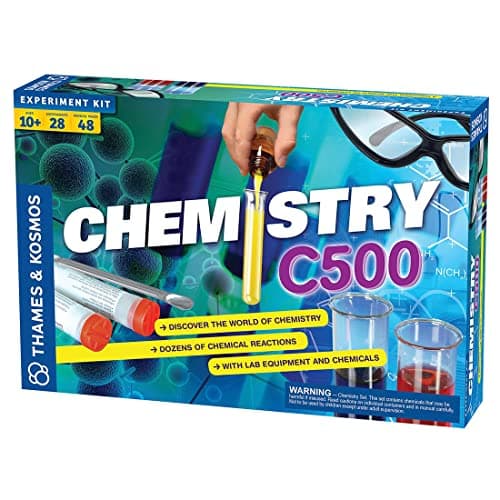 The serious chemistry option Thames & Kosmos Chemistry C500 28 experiments, a 48-page manual and five real chemicals under EN 71-4. | Ten and up, for depth rather than breadth | |
| 3 | 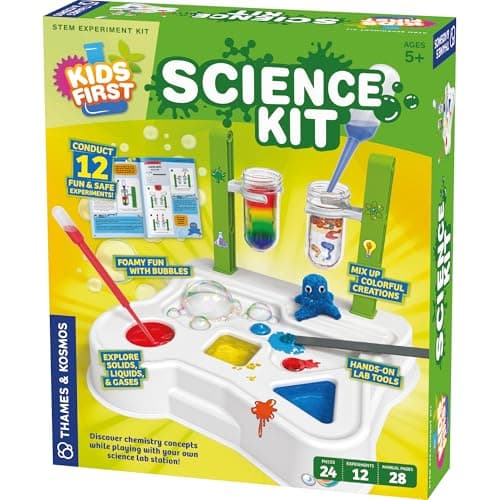 The younger version of the same idea Kids First Science Laboratory 24 durable plastic tools and 10 experiment cards, with the materials coming from the kitchen. | Three to six, with no chemicals at all | |
| — | 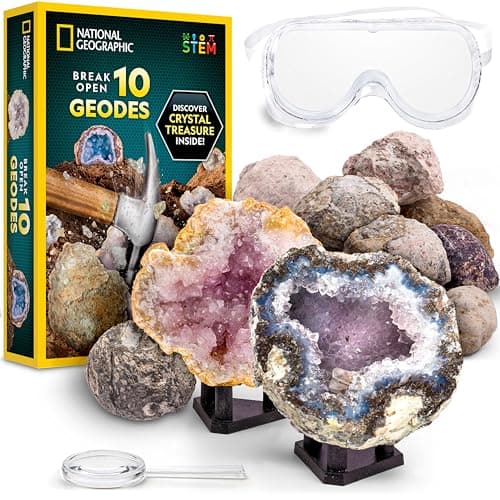 Not a science kit NATIONAL GEOGRAPHIC Break Open 10 Premium Geodes Frequently shelved alongside and it is ten single-use objects. | One afternoon, deliberately |
4 picks, including 1 we tell you to skip. Ages shown are the manufacturer’s own rating, not ours.
What we can tell you, and what we cannot
We have not run these experiments. No lab, no samples, no test children, no star rating on this page or in its structured data.
Published experiment counts and contents we can report and do arithmetic on. Whether experiment 31 is impressive, and how messy the volcano actually gets, we cannot.
The specification that decides it
The arithmetic
Mega Science Lab, published
| In-kit experiments | 45 — chemistry, earth science, science magic |
|---|---|
| Bonus guide | 85+ using household items |
| Total published | 130+ |
| Includes | Volcano build, glow-in-the-dark crystal growth, tools for both |
| Stated age | 8+ |
| Consumables | Yes — supplied chemicals and crystal compounds |
What the numbers mean in practice
Household-item experiments are the only ones with no refill cost. They are also the ones a child can repeat, vary and get wrong without wasting anything — which is closer to how science actually works than following a sealed sachet.
Breadth is right when the child has not chosen. Chemistry, earth science and science magic in one box means three chances that something catches. A single-subject kit has one.
The volcano is the marketing and the crystals are the commitment. Crystal growth takes days, so it needs a shelf that stays undisturbed. Plan for that before starting it.
8+ here is a supervision-light rating. Unlike a 10+ chemistry set with real reagents, most of this is designed to be run by the child with an adult nearby for the chemistry third.
Worth knowing before you buy
The chemistry portion still involves supplied chemicals and should be run with an adult present. The earth-science and household experiments are largely self-run, which is the part that gets used on a wet afternoon.
Who should skip it
A household that does not cook. Two-thirds of the published content assumes a cupboard with vinegar, bicarbonate of soda and similar. Without those, the kit is a 45-experiment kit.
A child who has already chosen chemistry. Depth beats breadth at that point — see chemistry sets.
A buyer wanting something permanent. Half of this is consumable by design. A microscope or bug catcher is the purchase with no end — see lab tools that never run out.
Where it sits
The Mega Science Lab appears in science experiment kits and on the eight-year-old page.
In full
Every pick, and what is wrong with it
Published specifications only, each linked back to the page it came from. Where a manufacturer publishes nothing, the row says so — we do not fill blanks in.
1. The product
NATIONAL GEOGRAPHIC Mega Science Lab
National Geographic · Mega Science Lab · maker rates it 8+
Roughly two-thirds of the published experiment count needs nothing but a kitchen, which is unusual value.
- Experiments in the kit
- 45, across chemistry, earth science and science magic
- Bonus guide
- 85+ further experiments using household items, for 130+ in total
- Includes
- Volcano build, glow-in-the-dark crystal growth, and the tools for both
- Stated age
- 8+
National Geographic publishes 45 in-kit experiments spanning chemistry, earth science and science magic, a volcano build and glow-in-the-dark crystal growth with the tools for both, and a bonus guide of 85+ further experiments using household items.
Split that number and the product makes sense. Forty-five experiments are gated by consumables that will be used up. Eighty-five-plus are gated by whether the house has vinegar, baking soda and food coloring. One of those halves ends and one does not.
The bonus guide costs the manufacturer almost nothing to include and is the most durable thing in the box. That is worth saying plainly, because it is the reverse of how the kit is marketed.
Replay signal
- Open-ended or one-shot
- Guided, and the 45 in-kit experiments end. The 85 household ones do not
- Does anything run out
- The supplied materials run out; the household half of the book never does
- Room to grow
- The bonus guide is the genuinely durable part, and it costs the manufacturer almost nothing to include
- Adult required
- Supervision for the chemistry third; the earth science and household experiments are largely self-run
Why we say so: National Geographic publishes 45 in-kit experiments plus a bonus guide of 85+ using household items. That second number is why this kit outlasts most of its price band: roughly two-thirds of the published content needs nothing but a kitchen.
What’s wrong with it
The supplied chemicals and crystal compounds are consumed, so the in-kit 45 have a real end.
| Experiments in the kit | 45, across chemistry, earth science and science magic |
|---|---|
| Bonus guide | 85+ further experiments using household items, for 130+ in total |
| Includes | Volcano build, glow-in-the-dark crystal growth, and the tools for both |
| Stated age | 8+ |
| Consumables | Yes — the supplied chemicals and crystal compounds are used up |
Every figure above is from National Geographic toys, Mega Science Lab. Blanks are shown as “not published” rather than filled in.
2. The serious chemistry option
Thames & Kosmos Chemistry C500
Thames & Kosmos · 665012 · maker rates it 10+
28 experiments, a 48-page manual and five real chemicals under EN 71-4.
- Experiments
- 28
- Manual
- 48 pages
- Chemicals included
- 5
- Equipment
- Safety glasses, test tubes, dropper pipettes, double-headed measuring spoon
Thames & Kosmos publishes 28 experiments, a 48-page manual, five chemicals, and equipment including safety glasses, test tubes and dropper pipettes, rated 10 years and up.
This is the choice when a child has already picked chemistry. The Mega Science Lab is the choice when they have not picked anything yet.
Replay signal
- Open-ended or one-shot
- Guided, not open-ended: 28 experiments, then the manual is finished
- Does anything run out
- Yes — the chemicals are consumed, and Thames & Kosmos sells replacements
- Room to grow
- Steps up to the larger C1000, C2000 and C3000 sets in the same line
- Adult required
- The maker rates it 10+ and it involves real chemicals
Why we say so: Thames & Kosmos publishes 28 experiments, a 48-page manual and five chemicals. Five finite chemicals across 28 experiments is arithmetic, not opinion — this set has an end, and it is better to know that before Boxing Day than after.
What’s wrong with it
Rated 10+, needs an adult, and everything in it is consumed.
| Experiments | 28 |
|---|---|
| Manual | 48 pages |
| Chemicals included | 5 |
| Equipment | Safety glasses, test tubes, dropper pipettes, double-headed measuring spoon |
| Stated age | 10 years and up |
| Batteries | 1 x 9V (not included) |
| Consumables | Yes — the five chemicals are used up |
Every figure above is from Thames & Kosmos, Chemistry C500. Blanks are shown as “not published” rather than filled in.
3. The younger version of the same idea
Kids First Science Laboratory
Thames & Kosmos · Kids First Science Laboratory · maker rates it 3-6+
24 durable plastic tools and 10 experiment cards, with the materials coming from the kitchen.
- Contents
- 24 large plastic scientific tools, described as durable, reusable and easy to handle
- Experiment cards
- 10, double-sided
- Stated age
- 3 to 6+
- Chemicals included
- None — experiments use household materials
Thames & Kosmos publishes 24 large plastic scientific tools described as durable, reusable and easy to handle, 10 double-sided experiment cards, no chemicals included, rated 3 to 6+.
Same underlying insight — household materials never run out — executed for a much younger child.
Replay signal
- Open-ended or one-shot
- The 20 card sides are a starting ladder; the tools then work on anything in the kitchen
- Does anything run out
- Nothing in the box runs out, because nothing in the box is consumed
- Room to grow
- The same tools carry into any household-materials experiment for years
- Adult required
- Yes at three, less so at five. The cards are picture-led but the setup is not
Why we say so: Thames & Kosmos publishes 24 reusable tools and no chemicals. A preschool science kit with no consumables in it is unusual, and it is the reason this one survives past its first fortnight when kit-of-the-week alternatives do not.
What’s wrong with it
An adult has to read the card first, every time.
| Contents | 24 large plastic scientific tools, described as durable, reusable and easy to handle |
|---|---|
| Experiment cards | 10, double-sided |
| Stated age | 3 to 6+ |
| Chemicals included | None — experiments use household materials |
| Consumables | None in the box |
Every figure above is from Thames & Kosmos, Kids First range. Blanks are shown as “not published” rather than filled in.
Skip this one
NATIONAL GEOGRAPHIC Break Open 10 Premium Geodes
National Geographic · NGGEO10 · maker rates it 8+
Frequently shelved alongside and it is ten single-use objects.
- Geodes
- 10, hand-selected, 1.25 to 2.25 inches across
- Includes
- Safety goggles, magnifying glass, display stands, full-color learning guide
- Stated age
- Manufacturer's minimum age 8 years
- Safety note
- Contains small parts; not for children under 3
National Geographic publishes ten hand-selected geodes 1.25 to 2.25 inches across, with safety goggles, a magnifying glass, display stands and a learning guide, minimum age 8 years.
This is a genuinely lovely afternoon and it is not comparable to a kit with 130+ published experiments. Buying it as the main science present is the mistake; buying it as an event is not.
Replay signal
- Open-ended or one-shot
- One-shot by design. Ten geodes, ten moments, then it is a bowl of pretty rocks
- Does anything run out
- Yes, definitively — the clearest example on this site of a kit that ends
Why we say so: National Geographic publishes the count as ten natural geodes. Ten single-use items is a finite number, and we would rather say so than let a gift-buyer find out on Christmas afternoon.
What’s wrong with it
Each geode cracks open exactly once; then it is a bowl of pretty rocks.
| Geodes | 10, hand-selected, 1.25 to 2.25 inches across |
|---|---|
| Includes | Safety goggles, magnifying glass, display stands, full-color learning guide |
| Stated age | Manufacturer's minimum age 8 years |
| Safety note | Contains small parts; not for children under 3 |
| Consumables | Yes — ten geodes, and each one only cracks open once |
Every figure above is from National Geographic toys, Break Open Geodes. Blanks are shown as “not published” rather than filled in.
We are not putting a buy button on this one. It is easy enough to find if you want it anyway — but we would rather send you to something that gets played with twice.
Questions people actually ask
Frequently asked
How many experiments are in the Mega Science Lab?
National Geographic publishes 45 in the kit itself, plus a bonus guide of 85+ using household items, for 130+ total. The two numbers behave differently: the in-kit 45 are gated by consumables that get used up, while the household 85+ can be repeated indefinitely.
What age is the Mega Science Lab for?
8 and up. Unlike a 10+ chemistry set with real reagents, most of this is designed for the child to run with an adult nearby rather than beside them — the chemistry third wants supervision, the earth science and household experiments largely do not.
Does the Mega Science Lab run out?
Half of it does. The supplied chemicals and crystal compounds are consumed, so the 45 in-kit experiments have a real end. The 85+ household experiments in the bonus guide need nothing but a kitchen cupboard and never expire.
Mega Science Lab or a chemistry set?
Breadth versus depth. Buy the Mega Science Lab for a child who likes science generally and has not picked a subject — three fields in one box means three chances something catches. Buy the Chem C500 for a child who has already chosen chemistry. Chem C500 review.
Sources
Where these figures came from
Every specification on this page traces to one of these. If a manufacturer publishes nothing on a point, the page says so rather than filling the gap.
Read next
Where to go from here
Back to Reviews, or read how we pick.