The picks
STEM Toys for 7 Year Olds
Seven is the age to stop buying toys and start buying systems.
By Sawyer V. · Published
The short answer
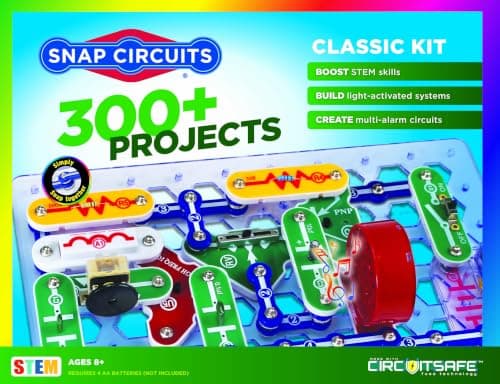
At seven, buy the system rather than the toy. Snap Circuits Classicpublishes 305 projects from over 60 parts — enough that a seven-year-old can go off-manual and invent, which is the point at which a set stops being an activity and becomes a hobby.
Block & Beaker earns a commission when you buy through our links, at no cost to you. It never changes a ranking, and we say so plainly when the right answer is the cheaper set, or nothing at all. Full disclosure · How we pick.
At a glance
The picks, ranked
Tap any row to jump to the full reasoning. Prices come live from Amazon where we have them and read “check price” where we don’t — never a number we cannot stand behind today.
| # | Product | Best for | Price |
|---|---|---|---|
| 1 | Best overall Snap Circuits Classic Three hundred and five published projects from 60-plus parts — the point where a child can build off-manual. | Seven, as the single purchase with the deepest published ladder | |
| 2 | 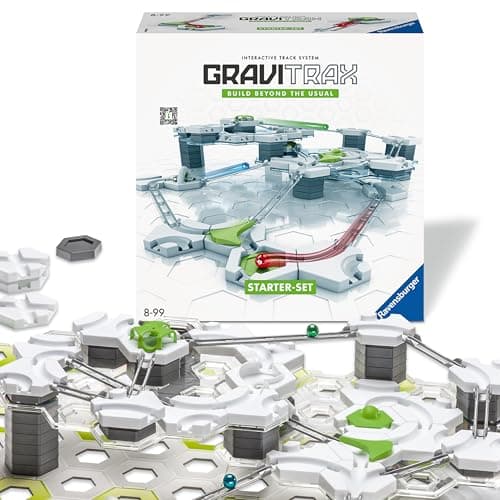 Best construction GraviTrax Starter Set One hundred and twenty-two pieces across 18 element types, including a magnetic cannon and a vortex. | Seven going on eight, and a child who wants to engineer | |
| 3 | 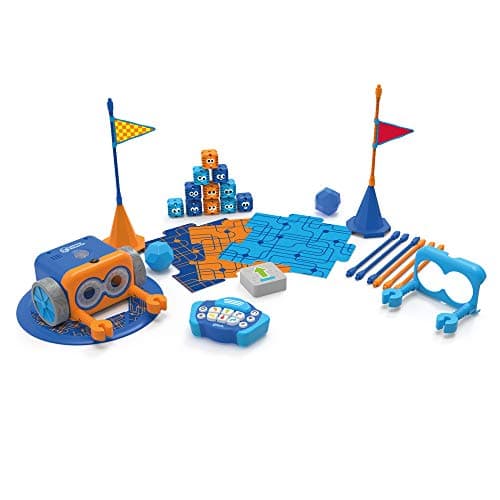 Best coding toy Botley 2.0 The Coding Robot Activity Set Bought at five, still interesting at seven. Bought at seven, it has two good years in it. | Seven, still — the 150-step ceiling has not been reached | |
| 4 | 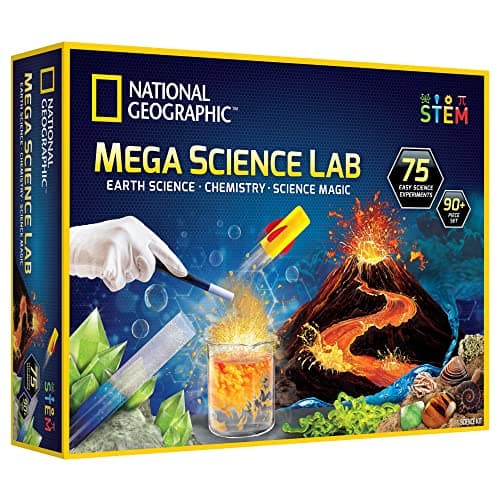 Best science kit NATIONAL GEOGRAPHIC Mega Science Lab Forty-five kit experiments plus 85 using household items — most of the content outlives the supplies. | Seven to eight, and a household that will keep going after the box empties | |
| — | 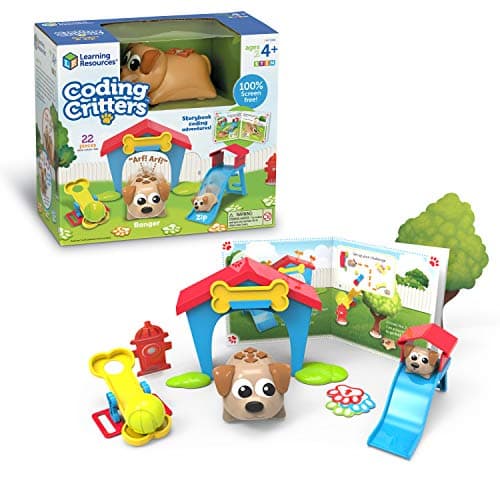 The one to skip Coding Critters Ranger & Zip Charming at four and considerably below a seven-year-old, with a coding ceiling to match. | Four, not seven |
5 picks, including 1 we tell you to skip. Ages shown are the manufacturer’s own rating, not ours.
What changes at seven
Seven is when a child can hold a multi-step plan and revise it. Not just follow a sequence — but notice that step four was wrong, change it, and run the whole thing again without starting from scratch.
That is the capacity that makes systems worth buying. A set with 305 published projects is only valuable to someone who will work through it, adapt it, and eventually ignore it in favor of their own idea. That arrives at about seven.
Seven also brings self-consciousness about what a toy looks like. A seven-year-old notices whether something is for little kids, and that judgment is made from the packaging in about two seconds. It is a real constraint on what will get used, whatever its published capabilities.
Buying a system rather than a toy
The arithmetic
Depth available at seven
| Snap Circuits Classic — projects / parts | 305 / 60+ |
|---|---|
| GraviTrax Starter — pieces / element types | 122 / 18 |
| Botley 2.0 — maximum program | 150 steps |
| NatGeo Mega Science Lab — total experiments | 130+ |
| Coding Critters — published step ceiling | None |
Reading age ratings at seven
Two of the picks above are rated 8+ and we are recommending them at seven. That deserves an explanation rather than a shrug.
Snap Circuits sets are rated 8+ for reading and patience: the manuals are diagram-led but assume a child can follow a numbered sequence and notice when the build does not match the picture. Nothing gets hot, there is no mains power, and Elenco publishes that the parts ensure correct connections. With an adult for the first few builds, seven works.
GraviTrax is rated 8+ for abstraction — the height-tile system requires thinking about levels rather than stacking. Again bridgeable with company for the first sessions.
What is not bridgeable is a rating about contents. A chemistry set rated 10+ is rated for what is in the bottles, and that is a floor rather than a suggestion.
Say the unwelcome thing
Do not buy something that looks younger than they are
At seven, presentation determines use. A toy that a child reads as being for little kids will be politely thanked for and left in the box, however good its published specifications are.
This is the year to prefer things that look like equipment: a circuit kit with a component tray, a marble run that looks engineered, a science lab with real tools. The same learning, in packaging a seven-year-old is willing to be seen with.
Worth knowing before you buy
Batteries: Snap Circuits Classic publishes four AA cells, not included. Botley publishes five AAA, not included.
The National Geographic science kit is rated 8+ and its chemistry section wants an adult nearby at seven. The earth science and household experiments are largely self-run.
What to buy
- One system: Snap Circuits Classic. Deepest published ladder here.
- Construction: GraviTrax, with an adult for the first builds.
- Science: NatGeo Mega Science Lab, for the household bonus guide.
- Coding, if not already owned: Botley 2.0, still unexhausted at seven.
Next year brings real chemistry, microscopes and buildable robots — the eight-year-old page.
In full
Every pick, and what is wrong with it
Published specifications only, each linked back to the page it came from. Where a manufacturer publishes nothing, the row says so — we do not fill blanks in.
1. Best overall
Snap Circuits Classic
Elenco · SC-300 · maker rates it 8+
Three hundred and five published projects from 60-plus parts — the point where a child can build off-manual.
- Projects
- “Build over 300 exciting projects” — manual covers projects 1-305
- Parts
- “Contains over 60 Snap-Together parts”
- Projects per part
- 5.1 — the highest ratio in the line
- Stated age
- “Ages 8+” and “Not for Children under 3 yrs.”
Elenco publishes “over 300 exciting projects” with a manual covering 1-305, from “over 60 Snap-Together parts,” rated 8+, requiring four AA batteries. The parts “require no tools and ensure correct connections.”
The rating says 8 and this is one of the cases where a year can be bridged. It is a reading and patience rating rather than a safety one — nothing gets hot, nothing is mains-powered, and the design makes a wrong connection impossible. A seven-year-old with an adult alongside for the first few builds does fine.
Sixty parts is the threshold where a child stops following and starts asking what happens if. That is the whole reason to buy this set rather than a smaller one.
Replay signal
- Open-ended or one-shot
- The sweet spot of the line — enough parts to invent with, cheap enough not to be an event
- Does anything run out
- Nothing runs out
- Room to grow
- 305 published projects is years of Sunday afternoons at one a week
Why we say so: Elenco publishes 305 numbered projects against 60+ parts. Five projects per part is the highest ratio anywhere in the Snap Circuits line, which is the arithmetic reason this is the set to buy rather than the cheap one or the big one.
What’s wrong with it
Four AA batteries not included, and 60-plus small components need somewhere to live or they scatter.
| Projects | “Build over 300 exciting projects” — manual covers projects 1-305 |
|---|---|
| Parts | “Contains over 60 Snap-Together parts” |
| Projects per part | 5.1 — the highest ratio in the line |
| Stated age | “Ages 8+” and “Not for Children under 3 yrs.” |
| Batteries | “Requires 4 ‘AA’ batteries (not included)” |
| Relationship to SC-100 | Manual includes all SC-100 projects plus 200 new ones |
Every figure above is from Elenco, Snap Circuits Classic. Blanks are shown as “not published” rather than filled in.
2. Best construction
GraviTrax Starter Set
Ravensburger · 27597 · maker rates it 8+
One hundred and twenty-two pieces across 18 element types, including a magnetic cannon and a vortex.
- Pieces
- 122
- Construction elements
- 18 types, including base plates, height tiles, curves, junctions, switches, tracks, a vortex, a launch pad and a magnetic cannon
- Marbles
- 6
- Stated age
- 8 and up
Ravensburger publishes 122 pieces across 18 construction element types, including four base plates, 40 large and 12 small height tiles, six marbles, a vortex, a launch pad and a magnetic cannon, with nine track designs included, rated 8 and up.
The height tiles are what make this different from stacking track on a tower: the child raises the ground rather than building upward, which is a more abstract idea and the reason for the rating.
At seven this works with an adult for the first few builds and alone after that. The nine included designs are enough scaffolding to learn the system before inventing with it.
Replay signal
- Open-ended or one-shot
- Open-ended once the nine included designs are done — the system is a construction kit, not a puzzle with an answer
- Does anything run out
- Nothing runs out
- Room to grow
- Ravensburger publishes a large expansion range built to enlarge the same system
Why we say so: Ravensburger publishes the 122-piece count, the 18 construction-element types, the nine included track designs and an expansion range designed to extend the same track system.
What’s wrong with it
Rated 8+ and it means it — the height-tile system requires planning two levels ahead, which is a genuine step.
| Pieces | 122 |
|---|---|
| Construction elements | 18 types, including base plates, height tiles, curves, junctions, switches, tracks, a vortex, a launch pad and a magnetic cannon |
| Marbles | 6 |
| Stated age | 8 and up |
| Track designs included | 9 |
| Consumables | None |
Every figure above is from Ravensburger, GraviTrax Starter Set. Blanks are shown as “not published” rather than filled in.
3. Best coding toy
Botley 2.0 The Coding Robot Activity Set
Learning Resources · LER2938 · maker rates it 5+
Bought at five, still interesting at seven. Bought at seven, it has two good years in it.
- Set size
- 78 pieces
- Contents
- Botley 2.0, remote programmer, 2 face plates, 40 coding cards, 6 double-sided boards, 27 obstacle pieces, starter guide
- Maximum program length
- “coding sequences of up to 150 steps”
- Movement
- Six directions, plus 16 coded interactions
Learning Resources publishes a 78-piece set with sequences of up to 150 steps, six directions, 16 interactions and 100% screen-free play, rated 5+.
The published ceiling is what keeps this relevant. A seven-year-old builds 20 and 30-step programs, sets themselves routes through a 27-piece obstacle course, and is still nowhere near 150.
The honest caveat is presentation rather than capability: some seven-year-olds read the robot as a toy for younger children. If that is likely, the coding board games teach the same ideas without looking like a preschool product.
Replay signal
- Open-ended or one-shot
- Open-ended once the cards are understood — the child builds the maze, not just the program
- Does anything run out
- Nothing runs out except batteries
- Room to grow
- A 150-step ceiling means the challenge scales for years past the first week
- Adult required
- Needed for the first session, then not — there is no app account and nothing to log into
Why we say so: Learning Resources publishes the 78-piece contents, the 150-step maximum sequence, the six directions and 16 interactions, and states the set is 100% screen-free with no tablet or app required.
What’s wrong with it
A seven-year-old may find the robot itself babyish even while the programming is still challenging.
| Set size | 78 pieces |
|---|---|
| Contents | Botley 2.0, remote programmer, 2 face plates, 40 coding cards, 6 double-sided boards, 27 obstacle pieces, starter guide |
| Maximum program length | “coding sequences of up to 150 steps” |
| Movement | Six directions, plus 16 coded interactions |
| Screen required | None — “100% screen-free play” |
| Batteries | “Requires 5 AAA batteries (not included)” |
| Stated age | 5+ (K-2nd grade) |
Every figure above is from Learning Resources, Botley 2.0 Activity Set. Blanks are shown as “not published” rather than filled in.
4. Best science kit
NATIONAL GEOGRAPHIC Mega Science Lab
National Geographic · Mega Science Lab · maker rates it 8+
Forty-five kit experiments plus 85 using household items — most of the content outlives the supplies.
- Experiments in the kit
- 45, across chemistry, earth science and science magic
- Bonus guide
- 85+ further experiments using household items, for 130+ in total
- Includes
- Volcano build, glow-in-the-dark crystal growth, and the tools for both
- Stated age
- 8+
National Geographic publishes 45 experiments across chemistry, earth science and science magic, plus a bonus guide of more than 85 experiments using household items — over 130 in total — rated 8+.
The bonus guide is the reason this beats its price band. Every other kit stops when the supplies run out; this one hands the child a book that works with vinegar and food coloring.
At seven the volcano and the glow-in-the-dark crystal are the headline draws, and they are the ones a child will ask to do again.
Replay signal
- Open-ended or one-shot
- Guided, and the 45 in-kit experiments end. The 85 household ones do not
- Does anything run out
- The supplied materials run out; the household half of the book never does
- Room to grow
- The bonus guide is the genuinely durable part, and it costs the manufacturer almost nothing to include
- Adult required
- Supervision for the chemistry third; the earth science and household experiments are largely self-run
Why we say so: National Geographic publishes 45 in-kit experiments plus a bonus guide of 85+ using household items. That second number is why this kit outlasts most of its price band: roughly two-thirds of the published content needs nothing but a kitchen.
What’s wrong with it
Rated 8+, and the chemistry third genuinely wants an adult nearby at seven.
| Experiments in the kit | 45, across chemistry, earth science and science magic |
|---|---|
| Bonus guide | 85+ further experiments using household items, for 130+ in total |
| Includes | Volcano build, glow-in-the-dark crystal growth, and the tools for both |
| Stated age | 8+ |
| Consumables | Yes — the supplied chemicals and crystal compounds are used up |
Every figure above is from National Geographic toys, Mega Science Lab. Blanks are shown as “not published” rather than filled in.
Skip this one
Coding Critters Ranger & Zip
Learning Resources · LER3081 · maker rates it 4+
Charming at four and considerably below a seven-year-old, with a coding ceiling to match.
- Set size
- 22 pieces
- Screen required
- None — “100% screen-free coding”
- Format
- Interactive pet plus playset and a storybook of coding activities
- Stated age
- Ages 4+
Learning Resources publishes a 22-piece set built around an interactive pet, a playset and a storybook of coding activities, 100% screen-free, rated 4+.
The absence of a published step ceiling is the tell, and it is accurate rather than an oversight: the coding here is a narrative device rather than a programmable system.
At four that is exactly right and it is a lovely toy. At seven a child will exhaust the coding in an afternoon and be left with a pretend-play set, which is not what was bought.
Replay signal
- Open-ended or one-shot
- Half toy, half coding set — the pretend play carries on long after the programming stops
- Does anything run out
- Nothing runs out
- Room to grow
- Little: the coding ceiling here is low by design
- Adult required
- The storybook is read-aloud at four; the pet is not
Why we say so: Learning Resources publishes the 22-piece count, the screen-free format and the storybook-led activity structure. We call the coding ceiling low because the published format is a storybook sequence rather than a programmable step count — compare Botley's published 150-step maximum.
What’s wrong with it
Learning Resources publishes a storybook-led format with no step count — the coding depth is low by design.
| Set size | 22 pieces |
|---|---|
| Screen required | None — “100% screen-free coding” |
| Format | Interactive pet plus playset and a storybook of coding activities |
| Stated age | Ages 4+ |
| Consumables | None |
Every figure above is from Learning Resources, Coding Critters. Blanks are shown as “not published” rather than filled in.
We are not putting a buy button on this one. It is easy enough to find if you want it anyway — but we would rather send you to something that gets played with twice.
Questions people actually ask
Frequently asked
What is the best STEM toy for a 7-year-old?
Snap Circuits Classic. Elenco publishes 305 projects from over 60 parts, and 60 parts is the threshold where a child stops following the manual and starts asking what happens if. Seven is the age that capacity arrives.
Can a 7-year-old use toys rated 8+?
It depends on what the rating is about. Snap Circuits is 8+ for reading and patience and GraviTrax is 8+ for abstraction — both bridgeable with an adult for the first few sessions. A chemistry set rated 10+ is rated for what is in the bottles, and that is a floor rather than a suggestion.
Is Botley still worth buying at seven?
Yes on capability — Learning Resources publishes a 150-step ceiling that a seven-year-old will not reach. The caveat is presentation: some seven-year-olds read the robot as being for younger children, in which case a coding board game teaches the same ideas without looking like a preschool product.
Why does what a toy looks like matter at seven?
Because seven-year-olds judge whether something is for little kids from the packaging in about two seconds, and that judgment decides whether it gets used. This is the year to prefer things that look like equipment rather than toys.
Sources
Where these figures came from
Every specification on this page traces to one of these. If a manufacturer publishes nothing on a point, the page says so rather than filling the gap.
Read next
Where to go from here
Back to Shop by Age, or read how we pick.