The picks
STEM Kits for Teens
A teenager decides whether a present is for them in about two seconds, from the box. Buy accordingly.
By Sawyer V. · Published
The short answer
For a teenager, the specification sheet is part of the gift. A processor clock, an aperture in millimetres, a named safety standard — those read as equipment. A piece count and a character name do not, and a box stating "ages 6-10" will not be opened twice.
Block & Beaker earns a commission when you buy through our links, at no cost to you. It never changes a ranking, and we say so plainly when the right answer is the cheaper set, or nothing at all. Full disclosure · How we pick.
At a glance
The picks, ranked
Tap any row to jump to the full reasoning. Prices come live from Amazon where we have them and read “check price” where we don’t — never a number we cannot stand behind today.
| # | Product | Best for | Price |
|---|---|---|---|
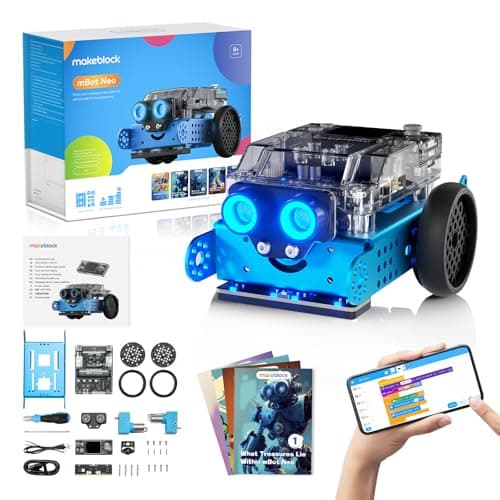
| 1 | Best overall Makeblock mBot Neo (mBot2) Python and Arduino C on real hardware, with a published specification an adult would read. | A teenager who will genuinely write code | |
| 2 | 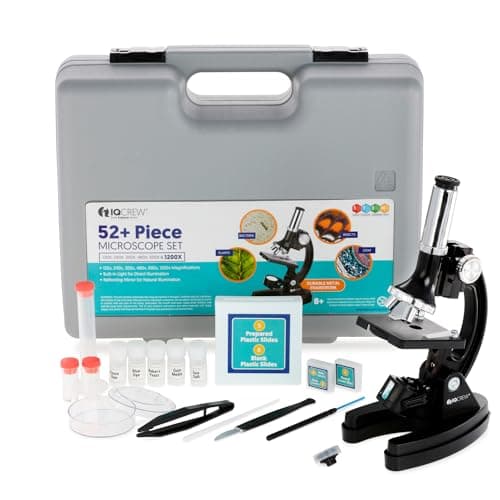 Best optics AmScope 120X-1200X Beginner Microscope Kit Metal arm, real stage, six magnifications — an instrument that will still work at university. | A teenager with a genuine biology interest | |
| 3 |  Best chemistry Thames & Kosmos CHEM C1000 Seven reagents, a named European safety standard, and the whole manual published free. | Squarely appropriate right through the teens | |
| 4 | 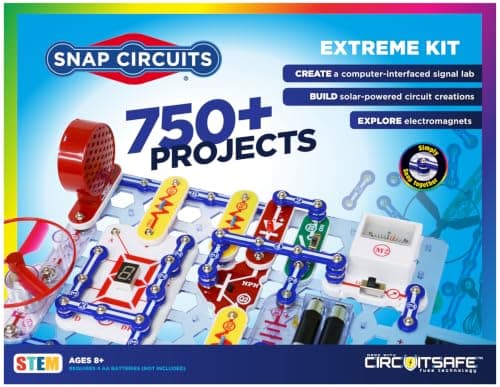 Best electronics breadth Snap Circuits Extreme Seven hundred and fifty published projects including solar, electromagnetism and computer interfacing. | A teenager who wants components without soldering yet | |
| — | 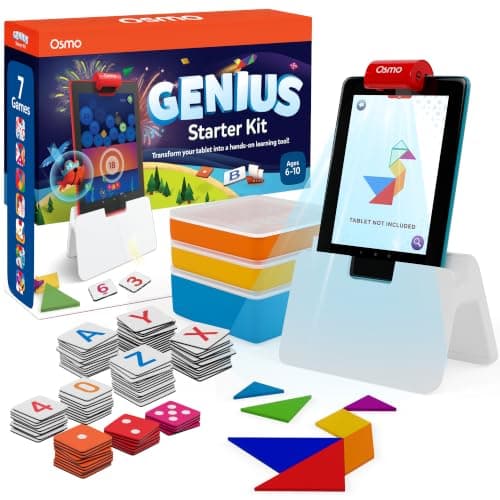 The one to skip Osmo Genius Starter Kit for iPad Five good games, published for ages 6-10, which is the entire problem. | Six to ten, not thirteen |
5 picks, including 1 we tell you to skip. Ages shown are the manufacturer’s own rating, not ours.
The packaging test
Everything on this page passes one filter: would the specification interest an adult?
The arithmetic
Equipment signals, as published
| mBot2 — controller | 240 MHz dual-core, 8 MB flash, 8 MB PSRAM |
|---|---|
| AmScope M30 — frame and stage | Metal arm, 70 x 65 mm stage |
| CHEM C1000 — safety standard named | EN 71-4 |
| Snap Circuits Extreme — computer-interfaced projects | 70 |
| Osmo Genius — published age band | 6-10 |
What actually holds a teenager's attention
Something that produces a result they can show someone. A robot that does a thing, a photograph down a microscope, a reaction that changes color. Sharing the output is most of the motivation at this age.
A ceiling they cannot see. A teenager abandons anything they can exhaust. Published upgrade paths — blocks to Python to C, C1000 to C2000 to C3000 — are what keep a purchase alive past the first month.
No pretending. Anything with a mascot, a story or a cheerful character is finished before it starts. This is the age group least tolerant of being talked down to.
Say the unwelcome thing
Do not buy a children's toy with a teenage rating on it
There is a whole shelf of products that are ordinary children's toys with "14+" printed on the box, usually the same product as the 8+ version with more pieces.
The test is the specification. An aperture, a clock speed, a named standard, a magnification range — those are equipment specifications. A piece count on its own is not.
Worth knowing before you buy
The chemistry set is the only item here with a real safety dimension, and at teenage the sensible approach is different from the one at ten: set the ground rules once, then leave them to it. Wipeable surface, goggles worn, chemicals back in labeled vials, nothing done with the door shut.
If the teenager progresses from Snap Circuits to breadboards and loose components, soldering and mains-powered projects follow quickly. That is the point at which supervision stops being optional, and it is worth knowing that is where this road goes.
What to buy
- Will actually code: mBot2.
- Biology interest: the AmScope.
- Chemistry interest: CHEM C1000 — read the free manual first.
- Electronics, wants breadth: Snap Circuits Extreme.
See also STEM gifts for teens, robot kits for teens and the ten-year-old page.
In full
Every pick, and what is wrong with it
Published specifications only, each linked back to the page it came from. Where a manufacturer publishes nothing, the row says so — we do not fill blanks in.
1. Best overall
Makeblock mBot Neo (mBot2)
Makeblock · mBot2 · maker rates it 8+
Python and Arduino C on real hardware, with a published specification an adult would read.
- Controller
- CyberPi — Xtensa 32-bit LX6 dual-core at 240 MHz, 8 MB flash, 8 MB PSRAM
- Programming
- Scratch-style blocks, Python in mBlock, and Arduino C/C++ via the Arduino IDE
- Sensors
- On-board light, microphone, gyroscope and accelerometer, plus ultrasonic, quad RGB, temperature and IR modules
- Battery
- Built-in 2500 mAh LiPo, about 1 hour to charge, about 5 hours of play
Makeblock publishes a CyberPi controller — Xtensa 32-bit LX6 dual-core at 240 MHz, 8 MB flash, 8 MB PSRAM — with on-board light, microphone, gyroscope and accelerometer sensors plus ultrasonic, quad RGB, temperature and IR modules; Scratch-style blocks, Python in mBlock and Arduino C/C++; a 2500 mAh LiPo giving about five hours from a one-hour charge; eight motor and servo ports and 60-plus compatible modules.
Python on hardware that moves is a materially better first programming experience than a browser tutorial, because the bugs are visible and the reward is physical.
The specification sheet itself does work here. A teenager who reads "240 MHz dual-core" understands they have been given equipment.
Replay signal
- Open-ended or one-shot
- Open-ended at the top of the range — this is the one a child does not outgrow at eleven
- Does anything run out
- Nothing runs out; rechargeable
- Room to grow
- Blocks, then Python, then Arduino C on the same robot, with 60+ add-on modules
- Adult required
- Not for driving it. Probably for the first Python session
Why we say so: Makeblock publishes the processor, the three programming environments on one robot, the 2500 mAh battery figures and the 60+ compatible modules. Blocks-to-Python-to-C on one chassis is the published upgrade path, and it is why this survives the year a child gets bored of pressing buttons.
What’s wrong with it
Expensive, and wasted on a teenager who is politely interested rather than actually interested.
| Controller | CyberPi — Xtensa 32-bit LX6 dual-core at 240 MHz, 8 MB flash, 8 MB PSRAM |
|---|---|
| Programming | Scratch-style blocks, Python in mBlock, and Arduino C/C++ via the Arduino IDE |
| Sensors | On-board light, microphone, gyroscope and accelerometer, plus ultrasonic, quad RGB, temperature and IR modules |
| Battery | Built-in 2500 mAh LiPo, about 1 hour to charge, about 5 hours of play |
| Expansion | 60+ compatible modules, up to 10 connected at once, 8 motor and servo ports |
| Stated age | Ages 8+ |
Every figure above is from Makeblock, mBot2 coding robot kit. Blanks are shown as “not published” rather than filled in.
2. Best optics
AmScope 120X-1200X Beginner Microscope Kit
AmScope · M30-ABS-KT2 · maker rates it 8+
Metal arm, real stage, six magnifications — an instrument that will still work at university.
- Magnifications
- Six levels — 120x, 240x, 300x, 480x, 600x and 1200x
- Frame
- Metal arm, with stage clips
- Lighting
- Built-in LED plus a reflecting mirror
- Extras
- Rotating color filter wheel; 52-piece accessory kit
AmScope publishes six magnification levels from 120x to 1200x, a metal arm with stage clips, a built-in LED plus a reflecting mirror, a rotating color filter wheel, a 70 x 65 mm stage and a 52-piece accessory kit, published “For ages 8+”.
The metal frame is the reason this belongs on a teenage page rather than a child's one: it holds focus, it has mass, and it does not feel like a toy in the hand.
If the interest is looking at whole objects rather than slides, the Duo-Scope keeps top lighting and is the better instrument despite the lower ceiling.
Replay signal
- Open-ended or one-shot
- Open-ended — specimens are free and infinite
- Does anything run out
- The prepared slides in the accessory kit run out; blank slides do not
- Room to grow
- 1200x is well past what a child needs and past what the optics comfortably resolve, but the metal frame will outlast the interest
Why we say so: AmScope publishes six magnification levels, a metal arm and a 70 x 65 mm stage. Treat the top magnification with skepticism — at 1200x an entry-level objective delivers a large, dim, blurry image — and buy this for the metal frame and the usable lower range instead.
What’s wrong with it
No top lighting, so every specimen must be thin and slide-mounted. The 1200x headline is optimistic.
| Magnifications | Six levels — 120x, 240x, 300x, 480x, 600x and 1200x |
|---|---|
| Frame | Metal arm, with stage clips |
| Lighting | Built-in LED plus a reflecting mirror |
| Extras | Rotating color filter wheel; 52-piece accessory kit |
| Stage | 70 x 65 mm |
| Shipping weight | 6 lb — AmScope publishes no product weight |
| Stated age | “For ages 8+” |
Every figure above is from AmScope, M30-ABS-KT2 microscope. Blanks are shown as “not published” rather than filled in.
3. Best chemistry
Thames & Kosmos CHEM C1000
Thames & Kosmos · 640118 · maker rates it 10+
Seven reagents, a named European safety standard, and the whole manual published free.
- Chemicals included
- Seven, in cylindrical vials
- Manual
- Full experiment manual published free on the manufacturer's own site
- Safety standard
- “EN 71-4, in which the safety requirements for chemistry experimental kits are established”
- Covers
- Lab setup and safe handling, indicators and litmus, invisible ink, gas reactions
Thames & Kosmos publishes seven chemicals in cylindrical vials, a full experiment manual free on its own site, and compliance with EN 71-4, rated 10 and up.
Naming the standard it complies with is the thing that separates this line from the rest of the category — almost nothing else names the document at all.
For a teenager who has already done a starter set, the C2000 and C3000 continue the same line with the equipment carrying forward.
Replay signal
- Open-ended or one-shot
- Guided rather than open-ended, but the manual is a term's worth of weekends
- Does anything run out
- Yes — seven finite chemicals, with replacements sold separately
- Room to grow
- The C-series continues into C2000 and C3000, carrying the same equipment forward
- Adult required
- Real chemicals at a 10+ rating: a sit-with-them kit at the lower end of that range
Why we say so: Thames & Kosmos publishes the full manual free on its own site — you can read exactly what your child will be doing before spending anything — and states compliance with EN 71-4, the European chemistry-kit safety standard.
What’s wrong with it
Consumable. Seven chemicals, replacements sold separately, and a teenager will work through them faster than a ten-year-old.
| Chemicals included | Seven, in cylindrical vials |
|---|---|
| Manual | Full experiment manual published free on the manufacturer's own site |
| Safety standard | “EN 71-4, in which the safety requirements for chemistry experimental kits are established” |
| Covers | Lab setup and safe handling, indicators and litmus, invisible ink, gas reactions |
| Stated age | 10 and up |
| Consumables | Yes — the seven chemicals are used up |
Every figure above is from Thames & Kosmos, experiment manuals. Blanks are shown as “not published” rather than filled in.
4. Best electronics breadth
Snap Circuits Extreme
Elenco · SC-750 · maker rates it 8+
Seven hundred and fifty published projects including solar, electromagnetism and computer interfacing.
- Projects
- Over 750
- Parts
- Over 80
- Projects per part
- 9.4
- Adds over the SC-500
- Solar, electromagnetism, vibration switches, and 70 computer-interfaced projects
Elenco publishes over 750 projects from over 80 parts, adding solar, electromagnetism, vibration switches and 70 computer-interfaced projects over the SC-500, rated 8+.
This is the one place on the site we would recommend the top of the Snap Circuits range, and the reason is breadth rather than depth: a teenager can cover solar and electromagnetism in one box rather than buying the Green set separately.
Be honest about the presentation problem before buying. If the teenager will read snap-together parts as a children's product, the money is better spent on the robot.
Replay signal
- Open-ended or one-shot
- As open as the line gets
- Does anything run out
- Nothing runs out
- Room to grow
- Nowhere further to go inside Snap Circuits, which is either the point or the problem
Why we say so: Elenco publishes 750+ projects from 80+ parts and names solar, electromagnetism and vibration switches as the additions over the SC-500. Watch the shape of those numbers: parts rise from 75 to 80 while projects rise from 500 to 750, so most of what you are paying for is more manual, not more components.
What’s wrong with it
Snap-together parts read as juvenile to some teenagers, and the format does not transfer to a breadboard.
| Projects | Over 750 |
|---|---|
| Parts | Over 80 |
| Projects per part | 9.4 |
| Adds over the SC-500 | Solar, electromagnetism, vibration switches, and 70 computer-interfaced projects |
| Stated age | Ages 8+ |
| Consumables | None |
Every figure above is from Elenco, Snap Circuits Extreme. Blanks are shown as “not published” rather than filled in.
Skip this one
Osmo Genius Starter Kit for iPad
Osmo · Genius Starter Kit · maker rates it 6-10
Five good games, published for ages 6-10, which is the entire problem.
- Games
- Five — Tangram, Numbers, Words, Newton and Masterpiece
- Contents
- Osmo Base and reflector, 52 Words tiles, 40 Numbers tiles, 7 Tangram pieces, stackable storage
- Screen required
- Yes — an iPad, not included
- Stated age
- Ages 6-10
Osmo publishes five games — Tangram, Numbers, Words, Newton and Masterpiece — with the Osmo Base and reflector, 52 Words tiles, 40 Numbers tiles and 7 Tangram pieces, for ages 6-10, requiring an iPad.
It is genuinely good, and it is on the math games page for the age it was built for.
At thirteen the published band is disqualifying. This is not a judgment about capability — it is about how a gift is received, and a box stating 6-10 will be thanked for and left closed.
Replay signal
- Open-ended or one-shot
- Five separate games rather than one, so it degrades gracefully — when one is exhausted, four remain
- Does anything run out
- Nothing physical runs out
- Room to grow
- Numbers and Tangram both scale well past the stated top age; Words does not
- Adult required
- Only to release the iPad, which in most households is the actual constraint
Why we say so: Osmo publishes the five named games and the exact tile counts. Five games in one box is the honest reason this is better value than a single-game Osmo kit, and the iPad requirement is a published dependency rather than an inference.
What’s wrong with it
The published age band is on the box. A teenager will read it, and no argument about the quality of the games survives that.
| Games | Five — Tangram, Numbers, Words, Newton and Masterpiece |
|---|---|
| Contents | Osmo Base and reflector, 52 Words tiles, 40 Numbers tiles, 7 Tangram pieces, stackable storage |
| Screen required | Yes — an iPad, not included |
| Stated age | Ages 6-10 |
| Batteries | None in the physical pieces |
Every figure above is from Osmo, Genius Starter Kit. Blanks are shown as “not published” rather than filled in.
We are not putting a buy button on this one. It is easy enough to find if you want it anyway — but we would rather send you to something that gets played with twice.
Questions people actually ask
Frequently asked
What is the best STEM kit for a teenager?
Makeblock's mBot2 if they will genuinely write code — it publishes Python and Arduino C alongside block coding on a 240 MHz dual-core controller. Python on hardware that moves beats a browser tutorial, because the bugs are visible and the reward is physical.
Why do teenagers not use STEM kits they are given?
Presentation, usually. A teenager decides whether something is for them in about two seconds from the box, and anything published for ages 6-10 will not survive that inspection however capable it is.
Is Snap Circuits too young for a teenager?
It depends on the teenager. The Extreme set publishes 750+ projects including solar, electromagnetism and 70 computer-interfaced projects, which is real content. But snap-together parts read as juvenile to some teenagers, and it is worth being honest about that before buying.
What should I look for in a teenage STEM gift?
Ask whether the specification would interest an adult. An aperture, a clock speed, a magnification range, a named safety standard — those signal equipment. A piece count and a character name signal a toy.
Sources
Where these figures came from
Every specification on this page traces to one of these. If a manufacturer publishes nothing on a point, the page says so rather than filling the gap.
Read next
Where to go from here
Back to Shop by Age, or read how we pick.