The picks
Slime and Polymer Kits for Kids
Most of a slime kit is a reusable toy with a science label. That is fine, as long as you know the ratio before you buy.
By Sawyer V. · Published
The short answer
Read the split. National Geographic publishes 8 varieties: 7 premade putties and 1 DIY slime lab. Seven eighths of that box is a reusable sensory toy and one eighth is the experiment — which is good value as a toy and thin as a science kit.
Block & Beaker earns a commission when you buy through our links, at no cost to you. It never changes a ranking, and we say so plainly when the right answer is the cheaper set, or nothing at all. Full disclosure · How we pick.
At a glance
The picks, ranked
Tap any row to jump to the full reasoning. Prices come live from Amazon where we have them and read “check price” where we don’t — never a number we cannot stand behind today.
| # | Product | Best for | Price |
|---|---|---|---|
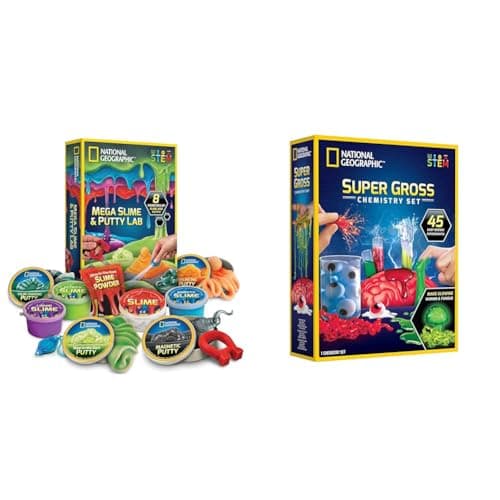
| 1 | Best slime kit NATIONAL GEOGRAPHIC Mega Slime Kit & Putty Lab Eight varieties including magnetic and color-changing putty, with tins so they survive. | Eight and up, for variety rather than chemistry | |
| 2 | 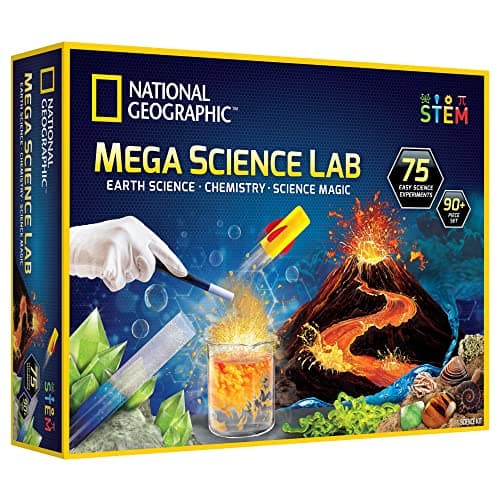 Best if you want the chemistry NATIONAL GEOGRAPHIC Mega Science Lab 45 in-kit experiments plus 85+ household ones, where the child mixes everything themselves. | Eight and up, for experiments rather than textures | |
| 3 | 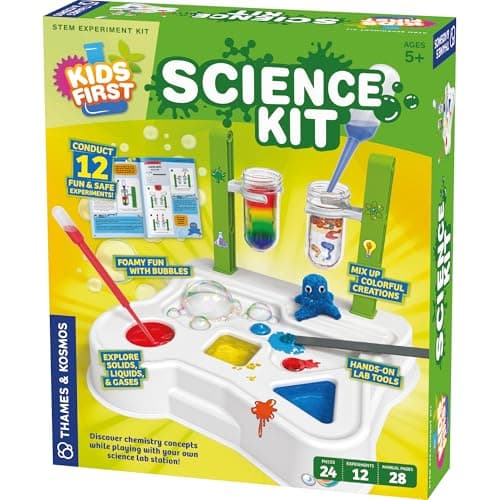 Best for under-eights Kids First Science Laboratory Twenty-four durable tools and ten experiment cards using kitchen materials. | Three to six, with no chemicals in the box | |
| 4 | 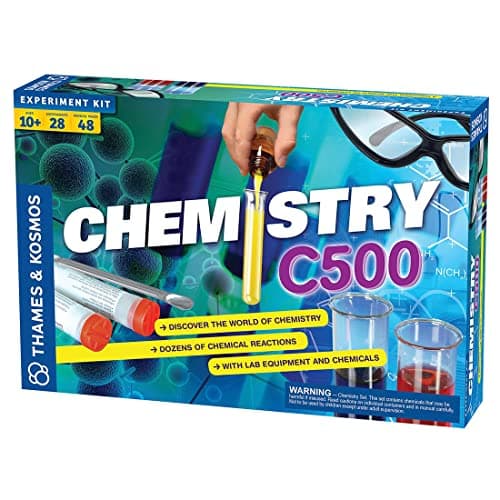 Best step up Thames & Kosmos Chemistry C500 Real reagents, a 48-page manual and EN 71-4 compliance named. | Ten and up, when the interest turns into chemistry | |
| — | 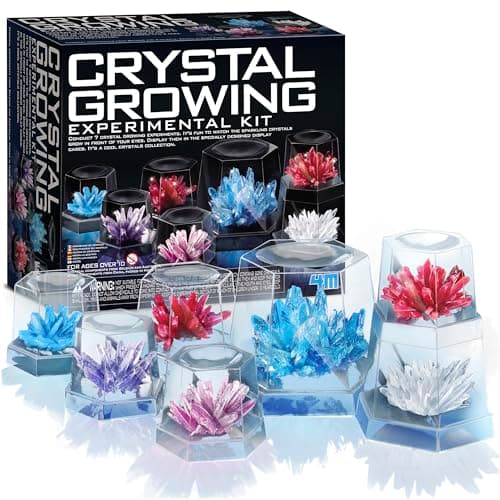 Not the same appeal 4M Crystal Growing Experiment Kit Shelved nearby as hands-on chemistry, and it is the opposite experience. | Ten and up, for a slow, tidy result |
5 picks, including 1 we tell you to skip. Ages shown are the manufacturer’s own rating, not ours.
The ratio that decides a slime kit
Slime kits are the least honest corner of the science aisle, not because the products are bad but because the label oversells them. The useful question is how much of the box the child actually makes.
The arithmetic
Premade versus made-by-the-child
| Nat Geo Mega Slime Kit | 7 premade varieties, 1 DIY lab |
|---|---|
| Storage | 8 tins — the reason it lasts |
| Properties demonstrated | Magnetic and heat-reactive putty |
| Mega Science Lab | No premade putty; everything is mixed |
| Kids First Science Lab | No chemicals at all; kitchen materials |
What slime actually demonstrates
Slime is a polymer, and the science in it is real even when the kit does not explain it.
Non-Newtonian behavior. Slime resists a fast force and yields to a slow one — hit it and it is firm, press it and it flows. That is a genuine physical property and it is visible in the first ten seconds.
Cross-linking. The DIY portion works because a binder links long polymer chains together. A child who varies the quantity gets a different consistency, which is a real experiment with a real variable.
Magnetic response. Magnetic putty contains iron particles and visibly crawls toward a magnet. Nothing in a kitchen reproduces that.
Thermochromism. Color-changing putty responds to hand heat, which is a clean demonstration that temperature can change a material property.
The storage problem, and why tins matter
Slime has a short life. It dries out, it picks up hair and carpet fiber, and it is thrown away within a fortnight in most households.
The published 8 storage tins are therefore doing more work than they appear to. Airtight storage is the difference between a kit that lasts months and one that is in the bin before the end of the school holidays.
Worth knowing before you buy
Slime and putty are rated 8+ here and should never be near a child who still mouths things. Magnetic putty in particular contains iron particles and must not be swallowed.
Slime also damages fabric and hair. A hard surface and a supervised space is worth insisting on, not because it is dangerous but because it is genuinely hard to remove.
Who this suits
A child who wants slime: buy the slime kit. Eight varieties in tins is good value and it will be used.
A parent who wants science: buy the broader experiment kit. The Mega Science Lab publishes 130+ experiments and the child mixes all of them.
A five-year-old asking for slime: the Kids First tool set, plus cornflour. Same sensation, right age, nothing hazardous.
Say the unwelcome thing
Do not buy a slime kit expecting a chemistry set
Seven premade putties in tins is a toy. It is a good toy with some real properties in it, and it is not going to teach polymer chemistry.
If the goal is science, the published ratio is the number to check — how many varieties the child makes versus how many arrive finished.
Where to go next
Kitchen science covers what a kit adds over the cupboard. Science experiment kits covers the broader category, and chemistry sets covers where the interest goes at ten.
In full
Every pick, and what is wrong with it
Published specifications only, each linked back to the page it came from. Where a manufacturer publishes nothing, the row says so — we do not fill blanks in.
1. Best slime kit
NATIONAL GEOGRAPHIC Mega Slime Kit & Putty Lab
National Geographic · NGMEGASPL · maker rates it 8+
Eight varieties including magnetic and color-changing putty, with tins so they survive.
- Varieties
- 8 in total — 7 premade plus 1 DIY slime lab
- Premade types
- Magnetic putty, fluffy slime, glow-in-the-dark putty, liquid slime, color-changing putty, snotty slime, bouncing putty
- DIY portion
- One glow-in-the-dark slime lab with a stir stick
- Storage
- 8 tins
National Geographic publishes magnetic putty, fluffy slime, glow-in-the-dark putty, liquid slime, color-changing putty, snotty slime and bouncing putty, plus one DIY glow-in-the-dark slime lab with a stir stick, 8 storage tins and a full-color learning guide, rated 8 and up.
The eight tins are a genuinely good decision. Slime dies when it dries out or picks up carpet, and a kit that ships its own airtight storage lasts months rather than days.
Magnetic and color-changing putty are the two varieties that earn the science label. Magnetic putty visibly responds to a field and color-changing putty responds to heat — both are real material properties a child can test rather than just feel.
Replay signal
- Open-ended or one-shot
- The seven premade putties are reusable toys rather than one-shot experiments
- Does anything run out
- Only the DIY lab runs out
- Room to grow
- Magnetic and color-changing putty demonstrate real properties, not just texture
- Adult required
- Not for the premade putties; briefly for the DIY mix
Why we say so: National Geographic publishes seven premade varieties plus one DIY lab. That ratio is the review: most of this kit is a reusable sensory toy with a science label, and one eighth of it is the experiment.
What’s wrong with it
Seven of the eight arrive premade — only the DIY lab is an actual experiment.
| Varieties | 8 in total — 7 premade plus 1 DIY slime lab |
|---|---|
| Premade types | Magnetic putty, fluffy slime, glow-in-the-dark putty, liquid slime, color-changing putty, snotty slime, bouncing putty |
| DIY portion | One glow-in-the-dark slime lab with a stir stick |
| Storage | 8 tins |
| Includes | Full-color learning guide |
| Stated age | 8 and up |
| Consumables | Partly — the DIY ingredients are used once; the putties are reusable |
Every figure above is from National Geographic toys, Mega Slime Kit & Putty Lab. Blanks are shown as “not published” rather than filled in.
2. Best if you want the chemistry
NATIONAL GEOGRAPHIC Mega Science Lab
National Geographic · Mega Science Lab · maker rates it 8+
45 in-kit experiments plus 85+ household ones, where the child mixes everything themselves.
- Experiments in the kit
- 45, across chemistry, earth science and science magic
- Bonus guide
- 85+ further experiments using household items, for 130+ in total
- Includes
- Volcano build, glow-in-the-dark crystal growth, and the tools for both
- Stated age
- 8+
National Geographic publishes 45 in-kit experiments across chemistry, earth science and science magic, plus a bonus guide of 85+ further experiments using household items, for 130+ in total, rated 8+.
If the appeal of slime is that a child made a strange substance appear, this is the kit that delivers that repeatedly rather than once. Roughly two thirds of its published content needs nothing but a kitchen cupboard.
Replay signal
- Open-ended or one-shot
- Guided, and the 45 in-kit experiments end. The 85 household ones do not
- Does anything run out
- The supplied materials run out; the household half of the book never does
- Room to grow
- The bonus guide is the genuinely durable part, and it costs the manufacturer almost nothing to include
- Adult required
- Supervision for the chemistry third; the earth science and household experiments are largely self-run
Why we say so: National Geographic publishes 45 in-kit experiments plus a bonus guide of 85+ using household items. That second number is why this kit outlasts most of its price band: roughly two-thirds of the published content needs nothing but a kitchen.
What’s wrong with it
No premade putty, so there is nothing to play with in the first minute.
| Experiments in the kit | 45, across chemistry, earth science and science magic |
|---|---|
| Bonus guide | 85+ further experiments using household items, for 130+ in total |
| Includes | Volcano build, glow-in-the-dark crystal growth, and the tools for both |
| Stated age | 8+ |
| Consumables | Yes — the supplied chemicals and crystal compounds are used up |
Every figure above is from National Geographic toys, Mega Science Lab. Blanks are shown as “not published” rather than filled in.
3. Best for under-eights
Kids First Science Laboratory
Thames & Kosmos · Kids First Science Laboratory · maker rates it 3-6+
Twenty-four durable tools and ten experiment cards using kitchen materials.
- Contents
- 24 large plastic scientific tools, described as durable, reusable and easy to handle
- Experiment cards
- 10, double-sided
- Stated age
- 3 to 6+
- Chemicals included
- None — experiments use household materials
Thames & Kosmos publishes 24 large plastic scientific tools described as durable, reusable and easy to handle, with 10 double-sided experiment cards and no chemicals included, rated 3 to 6+.
Slime kits are rated 8+, and the request usually arrives at five. Mixing gloopy substances from cornflour and water is exactly what this tool set is for, at the right age and with nothing hazardous in the box.
Replay signal
- Open-ended or one-shot
- The 20 card sides are a starting ladder; the tools then work on anything in the kitchen
- Does anything run out
- Nothing in the box runs out, because nothing in the box is consumed
- Room to grow
- The same tools carry into any household-materials experiment for years
- Adult required
- Yes at three, less so at five. The cards are picture-led but the setup is not
Why we say so: Thames & Kosmos publishes 24 reusable tools and no chemicals. A preschool science kit with no consumables in it is unusual, and it is the reason this one survives past its first fortnight when kit-of-the-week alternatives do not.
What’s wrong with it
An adult has to read the card and fetch the ingredients each time.
| Contents | 24 large plastic scientific tools, described as durable, reusable and easy to handle |
|---|---|
| Experiment cards | 10, double-sided |
| Stated age | 3 to 6+ |
| Chemicals included | None — experiments use household materials |
| Consumables | None in the box |
Every figure above is from Thames & Kosmos, Kids First range. Blanks are shown as “not published” rather than filled in.
4. Best step up
Thames & Kosmos Chemistry C500
Thames & Kosmos · 665012 · maker rates it 10+
Real reagents, a 48-page manual and EN 71-4 compliance named.
- Experiments
- 28
- Manual
- 48 pages
- Chemicals included
- 5
- Equipment
- Safety glasses, test tubes, dropper pipettes, double-headed measuring spoon
Thames & Kosmos publishes 28 experiments, a 48-page manual, five chemicals and equipment including safety glasses, test tubes and dropper pipettes, rated 10 years and up, stating compliance with EN 71-4.
Slime is polymer chemistry, whether or not the box says so. A child who wants to know why the mixture thickens has asked a chemistry question, and this is where that goes next.
Replay signal
- Open-ended or one-shot
- Guided, not open-ended: 28 experiments, then the manual is finished
- Does anything run out
- Yes — the chemicals are consumed, and Thames & Kosmos sells replacements
- Room to grow
- Steps up to the larger C1000, C2000 and C3000 sets in the same line
- Adult required
- The maker rates it 10+ and it involves real chemicals
Why we say so: Thames & Kosmos publishes 28 experiments, a 48-page manual and five chemicals. Five finite chemicals across 28 experiments is arithmetic, not opinion — this set has an end, and it is better to know that before Boxing Day than after.
What’s wrong with it
Rated 10+, five consumable chemicals, and an adult is assumed.
| Experiments | 28 |
|---|---|
| Manual | 48 pages |
| Chemicals included | 5 |
| Equipment | Safety glasses, test tubes, dropper pipettes, double-headed measuring spoon |
| Stated age | 10 years and up |
| Batteries | 1 x 9V (not included) |
| Consumables | Yes — the five chemicals are used up |
Every figure above is from Thames & Kosmos, Chemistry C500. Blanks are shown as “not published” rather than filled in.
Skip this one
4M Crystal Growing Experiment Kit
4M · 5557 · maker rates it 10+
Shelved nearby as hands-on chemistry, and it is the opposite experience.
- Experiments
- 7 crystal-growing experiments
- Contents
- 3 bags of crystal compound, 3 bags of seeding mixture, stirring bowl and spoon, 7 display bases, 7 display covers, 7 ring templates
- Stated age
- 10 years and up
- Consumables
- Yes — the compound is the whole product
4M publishes 7 crystal-growing experiments with 3 bags of crystal compound and 3 bags of seeding mixture, plus 7 display bases, covers and ring templates, rated 10 years and up, each taking days rather than minutes.
Slime is immediate, tactile and messy. Crystals are delayed, hands-off and tidy. A child who asked for slime will not accept a jar they are told not to touch for four days.
Replay signal
- Open-ended or one-shot
- One-shot, seven times over
- Does anything run out
- Definitively. Three bags of compound, and when they are gone the kit is a set of display cases
Why we say so: 4M publishes three bags of crystal compound across seven experiments. That is the arithmetic that decides this purchase: it is seven results, spread over weeks because crystals take days to grow, and then it is finished. Excellent as an event; poor as the main present.
What’s wrong with it
Seven experiments taking days each, with nothing to squeeze.
| Experiments | 7 crystal-growing experiments |
|---|---|
| Contents | 3 bags of crystal compound, 3 bags of seeding mixture, stirring bowl and spoon, 7 display bases, 7 display covers, 7 ring templates |
| Stated age | 10 years and up |
| Consumables | Yes — the compound is the whole product |
| Time per experiment | Days, not minutes — crystals grow on their own schedule |
Every figure above is from 4M, Crystal Growing Experiment Kit. Blanks are shown as “not published” rather than filled in.
We are not putting a buy button on this one. It is easy enough to find if you want it anyway — but we would rather send you to something that gets played with twice.
Questions people actually ask
Frequently asked
Are slime kits actually educational?
Partly, and the ratio is published. National Geographic's Mega Slime Kit contains 8 varieties: 7 premade putties and 1 DIY slime lab. The magnetic and color-changing putties demonstrate genuine material properties, but seven eighths of the box arrives finished — so it is a reusable sensory toy with some real science in it rather than a chemistry set.
What age are slime kits for?
National Geographic publishes 8 and up. Slime and putty should never be near a child who still mouths things, and magnetic putty in particular contains iron particles. For a five-year-old asking for slime, a tool set using cornflour and water delivers the same sensation safely.
How do you stop slime drying out?
Airtight storage, which is why the published 8 tins in the Nat Geo kit matter more than they look. Slime dies by drying out or picking up carpet fiber and hair, and a kit that ships its own sealed containers lasts months instead of a fortnight.
What is the science behind slime?
It is a polymer, and it behaves non-Newtonian — it resists a fast force and yields to a slow one, so it is firm when hit and flows when pressed. The DIY portion works by cross-linking long polymer chains, and varying the binder quantity changes the consistency, which is a real experiment with a real variable. Chemistry sets, compared.
Sources
Where these figures came from
Every specification on this page traces to one of these. If a manufacturer publishes nothing on a point, the page says so rather than filling the gap.
Read next
Where to go from here
Back to Science Kits, or read how we pick.