The picks
STEM Toys for 12 Year Olds
Twelve is where this site stops recommending toys. What still works is equipment a competent adult would also want.
By Sawyer V. · Published
The short answer
At twelve, stop buying from the toy category. What works is equipment with no age label: a robot published for Python and Arduino C, a 130 mm telescope, a 400x microscope, or a chemistry set rated 10+ under EN 71-4. All of these are things an adult would use.
Block & Beaker earns a commission when you buy through our links, at no cost to you. It never changes a ranking, and we say so plainly when the right answer is the cheaper set, or nothing at all. Full disclosure · How we pick.
At a glance
The picks, ranked
Tap any row to jump to the full reasoning. Prices come live from Amazon where we have them and read “check price” where we don’t — never a number we cannot stand behind today.
| # | Product | Best for | Price |
|---|---|---|---|
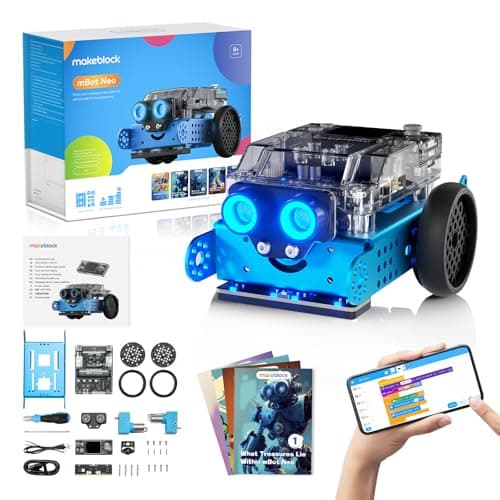
| 1 | Best for 12 year olds Makeblock mBot Neo (mBot2) Python and Arduino C on a published 240 MHz controller, with 8 motor and servo ports. | Twelve, where the code should outlive the robot | |
| 2 |  Best chemistry at twelve Thames & Kosmos CHEM C1000 The larger set in a line built to be climbed, on the same equipment quality. | Twelve, where the C500 would be finished in a fortnight | |
| 3 | 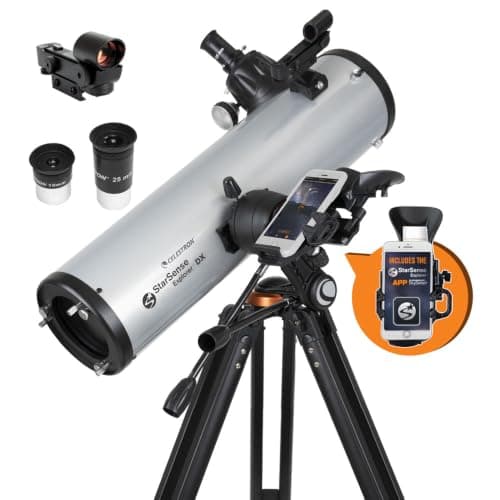 Best instrument for the outdoors Celestron StarSense Explorer DX 130AZ 130 mm at f/5 with slow-motion controls and an app that does the finding. | Twelve, with somewhere dark to stand | |
| 4 | 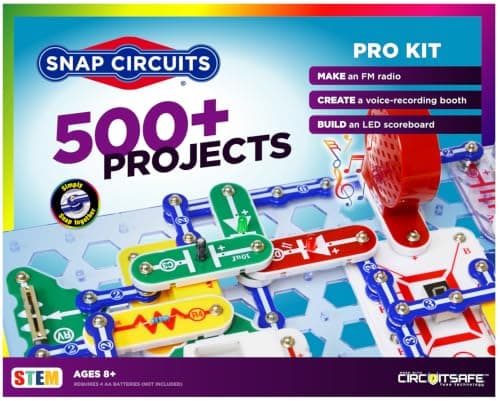 Best electronics with a computer link Snap Circuits Pro 73 published computer-interfaced experiments — the bridge from circuits to software. | Twelve, for a child who already codes | |
| — | 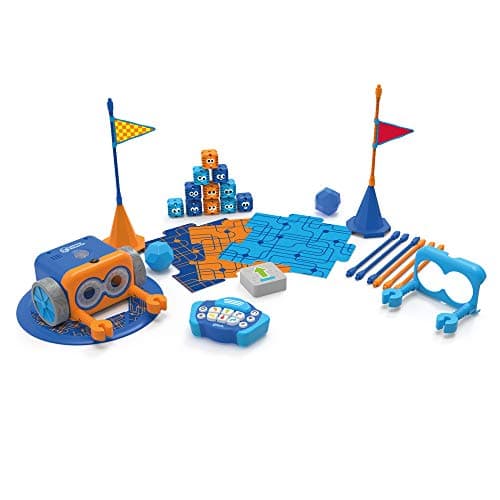 Not for twelve Botley 2.0 The Coding Robot Activity Set Our top pick for a much younger child, and hopelessly young here. | Five to eight |
5 picks, including 1 we tell you to skip. Ages shown are the manufacturer’s own rating, not ours.
The category ends here, and that is fine
This site covers STEM toys, and twelve is roughly where the word toy stops being useful. A twelve-year-old is not looking for a toy version of anything.
That does not mean the interest ends. It means the products that serve it stop being sold in the toy aisle and start being sold as equipment, software and components.
The arithmetic
What replaces the toy category
| Coding toys | A real language — Python, Arduino C |
|---|---|
| Science kits | Instruments: microscope, telescope, tumbler |
| Chemistry sets | The larger sets in the same line, still EN 71-4 |
| Construction toys | Plain systems with no published ceiling |
| Logic games | Anything published as 'to adult' |
| Electronics kits | The computer-interfaced end, then real components |
Where our recommendations stop
Being explicit about this matters more at twelve than anywhere else on the site.
A twelve-year-old serious about electronics wants breadboards, discrete components and a soldering iron. We do not recommend specific soldering equipment, because we have not tested any and this is a category where an unverified recommendation could put a child in front of a hot iron with bad advice.
Similarly, a twelve-year-old serious about programming needs a computer and free software rather than a product. The best thing to buy at that point may be nothing at all.
Electronics kits for teenagers covers the last rung available inside the kit format, and says plainly where it ends.
What still genuinely works
Instruments whose age label has stopped mattering. Celestron publishes no stated age at all for its telescopes, and AmScope publishes only “For ages 8+” for its microscope kits — a floor four years below this page. Either way the rating has stopped filtering anything by twelve, which is the point.
Real programming on real hardware. A published Python path is the specification to look for, and it is rare.
Chemistry, with the supervision intact. Thames & Kosmos publishes a progression above the C500 and names EN 71-4 throughout.
Open-ended construction. KEVA planks publish no upper age limit, and the same 200 identical planks appear in adult structural challenges.
Logic puzzles published to adult. IQ Puzzler Pro publishes 120 challenges across 2D and 3D modes for ages 6 to adult — the later ones are genuinely hard.
Worth knowing before you buy
Twelve is old enough for real reagents and old enough to be careless with them. Thames & Kosmos publishes EN 71-4 compliance and supplies safety glasses because the chemicals warrant it — the age rating is a floor, not a graduation.
Nothing on this page prepares anyone for mains electricity, and it should not be treated as though it does.
The gift problem at twelve
The honest difficulty is that the right purchases at this age look boring unwrapped. A microscope, a telescope and a chemistry refill are all better gifts than they appear on a table.
Two things help. Buy the thing with no age label on the box, because that is what signals it is not a toy. And where the real answer is software or a component order, buy the accessory that makes it usable — a decent case, a spare battery, a set of blank slides — rather than substituting a toy.
Say the unwelcome thing
Do not buy a younger sibling's toy in a bigger box
The failure mode at twelve is a set aimed at eight-year-olds with a higher piece count. The child reads the format, not the number, and concludes the whole subject is beneath them.
If the budget only reaches a junior product, buy an accessory for something they already own instead. It will be used.
Where to go next
Eleven-year-olds covers the year before and STEM kits for teens the years after. Robot kits for teens and microscope or telescope first cover the two strongest directions.
In full
Every pick, and what is wrong with it
Published specifications only, each linked back to the page it came from. Where a manufacturer publishes nothing, the row says so — we do not fill blanks in.
1. Best for 12 year olds
Makeblock mBot Neo (mBot2)
Makeblock · mBot2 · maker rates it 8+
Python and Arduino C on a published 240 MHz controller, with 8 motor and servo ports.
- Controller
- CyberPi — Xtensa 32-bit LX6 dual-core at 240 MHz, 8 MB flash, 8 MB PSRAM
- Programming
- Scratch-style blocks, Python in mBlock, and Arduino C/C++ via the Arduino IDE
- Sensors
- On-board light, microphone, gyroscope and accelerometer, plus ultrasonic, quad RGB, temperature and IR modules
- Battery
- Built-in 2500 mAh LiPo, about 1 hour to charge, about 5 hours of play
Makeblock publishes the CyberPi controller at 240 MHz with 8 MB flash and 8 MB PSRAM, three programming environments — Scratch-style blocks, Python in mBlock and Arduino C/C++ via the Arduino IDE — on-board light, microphone, gyroscope and accelerometer sensors, a built-in 2500 mAh LiPo giving about five hours from an hour of charging, and 60+ compatible modules with up to 10 connected at once across 8 motor and servo ports.
At twelve the block-coding layer is scaffolding to be discarded. What matters is that Python and Arduino C are published on the same hardware, so the child writes real code against real sensors rather than a simplified version of either.
The skill outlives the robot, which is the only claim on this page that genuinely holds for a decade.
Replay signal
- Open-ended or one-shot
- Open-ended at the top of the range — this is the one a child does not outgrow at eleven
- Does anything run out
- Nothing runs out; rechargeable
- Room to grow
- Blocks, then Python, then Arduino C on the same robot, with 60+ add-on modules
- Adult required
- Not for driving it. Probably for the first Python session
Why we say so: Makeblock publishes the processor, the three programming environments on one robot, the 2500 mAh battery figures and the 60+ compatible modules. Blocks-to-Python-to-C on one chassis is the published upgrade path, and it is why this survives the year a child gets bored of pressing buttons.
What’s wrong with it
The module ecosystem can absorb an unlimited amount of money.
| Controller | CyberPi — Xtensa 32-bit LX6 dual-core at 240 MHz, 8 MB flash, 8 MB PSRAM |
|---|---|
| Programming | Scratch-style blocks, Python in mBlock, and Arduino C/C++ via the Arduino IDE |
| Sensors | On-board light, microphone, gyroscope and accelerometer, plus ultrasonic, quad RGB, temperature and IR modules |
| Battery | Built-in 2500 mAh LiPo, about 1 hour to charge, about 5 hours of play |
| Expansion | 60+ compatible modules, up to 10 connected at once, 8 motor and servo ports |
| Stated age | Ages 8+ |
Every figure above is from Makeblock, mBot2 coding robot kit. Blanks are shown as “not published” rather than filled in.
2. Best chemistry at twelve
Thames & Kosmos CHEM C1000
Thames & Kosmos · 640118 · maker rates it 10+
The larger set in a line built to be climbed, on the same equipment quality.
- Chemicals included
- Seven, in cylindrical vials
- Manual
- Full experiment manual published free on the manufacturer's own site
- Safety standard
- “EN 71-4, in which the safety requirements for chemistry experimental kits are established”
- Covers
- Lab setup and safe handling, indicators and litmus, invisible ink, gas reactions
Thames & Kosmos publishes the C-series as a progression, with the C1000 sitting above the C500’s 28 experiments and 48-page manual, and states EN 71-4 compliance across the range.
Twelve is the age where the entry set is genuinely too small. A child who has done the C500, or who is arriving at chemistry already interested, will work through it faster than the price justifies.
The supervision requirement does not soften with age. EN 71-4 is a floor set by the reagents.
Replay signal
- Open-ended or one-shot
- Guided rather than open-ended, but the manual is a term's worth of weekends
- Does anything run out
- Yes — seven finite chemicals, with replacements sold separately
- Room to grow
- The C-series continues into C2000 and C3000, carrying the same equipment forward
- Adult required
- Real chemicals at a 10+ rating: a sit-with-them kit at the lower end of that range
Why we say so: Thames & Kosmos publishes the full manual free on its own site — you can read exactly what your child will be doing before spending anything — and states compliance with EN 71-4, the European chemistry-kit safety standard.
What’s wrong with it
More reagents to store and supervise, and everything in it is consumed.
| Chemicals included | Seven, in cylindrical vials |
|---|---|
| Manual | Full experiment manual published free on the manufacturer's own site |
| Safety standard | “EN 71-4, in which the safety requirements for chemistry experimental kits are established” |
| Covers | Lab setup and safe handling, indicators and litmus, invisible ink, gas reactions |
| Stated age | 10 and up |
| Consumables | Yes — the seven chemicals are used up |
Every figure above is from Thames & Kosmos, experiment manuals. Blanks are shown as “not published” rather than filled in.
3. Best instrument for the outdoors
Celestron StarSense Explorer DX 130AZ
Celestron · 22461 · maker rates it Not published
130 mm at f/5 with slow-motion controls and an app that does the finding.
- Aperture
- 130 mm (5.1 in)
- Focal length
- 650 mm
- Focal ratio
- f/5
- Optical design
- Newtonian reflector
Celestron publishes 130 mm aperture, 650 mm focal length, f/5, a Newtonian reflector on an altazimuth mount with slow-motion controls, and the StarSense smartphone app that identifies the sky and directs you. No stated age is published.
The absence of an age rating is the point at twelve. This is a real instrument sold to adults, and a twelve-year-old using one is doing the same thing an amateur astronomer does.
Replay signal
- Open-ended or one-shot
- Open-ended — the sky is the consumable and it restocks itself
- Does anything run out
- Nothing runs out
- Room to grow
- Standard eyepieces; 130 mm gathers enough light for planets and brighter deep-sky objects
- Adult required
- Much less than a normal telescope. The published point of StarSense is that the phone does the finding
Why we say so: Celestron publishes 130 mm of aperture at 650 mm focal length, f/5, with a smartphone app that identifies where the telescope is pointing. The app is the specification that matters for a family: not finding anything is what ends most first telescope nights, and this removes that step.
What’s wrong with it
No published age, and it needs an adult for setup and a charged phone.
| Aperture | 130 mm (5.1 in) |
|---|---|
| Focal length | 650 mm |
| Focal ratio | f/5 |
| Optical design | Newtonian reflector |
| Finding aid | StarSense smartphone app — the phone identifies the sky and directs you |
| Mount | Altazimuth with slow-motion controls |
| Stated age | Not published |
Every figure above is from Celestron, StarSense Explorer DX 130AZ. Blanks are shown as “not published” rather than filled in.
4. Best electronics with a computer link
Snap Circuits Pro
Elenco · SC-500 · maker rates it 8+
73 published computer-interfaced experiments — the bridge from circuits to software.
- Projects
- “Build over 500 exciting projects”
- Parts
- “Contains over 75 snap-together parts”
- Computer-interfaced experiments
- “Includes 73 computer interfaced experiments”
- Projects per part
- 6.7
Elenco publishes over 500 projects, over 75 snap-together parts and specifically 73 computer-interfaced experiments, rated 8+, requiring four AA batteries not included.
Those 73 experiments are the only reason to choose this at twelve. A circuit a computer can read or drive is where electronics stops being a separate hobby from programming.
If the child has no interest in the computer link, the format will read as young and the purchase will not land.
Replay signal
- Open-ended or one-shot
- Open-ended, and the computer-interfaced projects give it somewhere to go after the manual
- Does anything run out
- Nothing runs out
- Room to grow
- 73 published computer-interfaced experiments is a second product hiding inside the first
Why we say so: Elenco publishes 500+ projects from 75+ parts and specifically 73 computer-interfaced experiments. That last number is the only thing separating the Pro from the Classic, and it is the only reason to pay the difference.
What’s wrong with it
Still the snap format, which at twelve is visibly a children's design.
| Projects | “Build over 500 exciting projects” |
|---|---|
| Parts | “Contains over 75 snap-together parts” |
| Computer-interfaced experiments | “Includes 73 computer interfaced experiments” |
| Projects per part | 6.7 |
| Stated age | “Ages 8+” |
| Batteries | “Requires 4 ‘AA’ batteries (not included)” |
Every figure above is from Elenco, Snap Circuits Pro. Blanks are shown as “not published” rather than filled in.
Skip this one
Botley 2.0 The Coding Robot Activity Set
Learning Resources · LER2938 · maker rates it 5+
Our top pick for a much younger child, and hopelessly young here.
- Set size
- 78 pieces
- Contents
- Botley 2.0, remote programmer, 2 face plates, 40 coding cards, 6 double-sided boards, 27 obstacle pieces, starter guide
- Maximum program length
- “coding sequences of up to 150 steps”
- Movement
- Six directions, plus 16 coded interactions
Learning Resources publishes 78 pieces, sequences of up to 150 steps, six directions of movement, 16 coded interactions and 27 obstacle pieces, 100% screen-free, rated 5+.
This is genuinely the best screen-free coding robot on the site — at five. At twelve the interface is the problem: pressing direction buttons is not programming to somebody who could be writing Python.
Replay signal
- Open-ended or one-shot
- Open-ended once the cards are understood — the child builds the maze, not just the program
- Does anything run out
- Nothing runs out except batteries
- Room to grow
- A 150-step ceiling means the challenge scales for years past the first week
- Adult required
- Needed for the first session, then not — there is no app account and nothing to log into
Why we say so: Learning Resources publishes the 78-piece contents, the 150-step maximum sequence, the six directions and 16 interactions, and states the set is 100% screen-free with no tablet or app required.
What’s wrong with it
A 150-step ceiling that a twelve-year-old exhausts conceptually in minutes.
| Set size | 78 pieces |
|---|---|
| Contents | Botley 2.0, remote programmer, 2 face plates, 40 coding cards, 6 double-sided boards, 27 obstacle pieces, starter guide |
| Maximum program length | “coding sequences of up to 150 steps” |
| Movement | Six directions, plus 16 coded interactions |
| Screen required | None — “100% screen-free play” |
| Batteries | “Requires 5 AAA batteries (not included)” |
| Stated age | 5+ (K-2nd grade) |
Every figure above is from Learning Resources, Botley 2.0 Activity Set. Blanks are shown as “not published” rather than filled in.
We are not putting a buy button on this one. It is easy enough to find if you want it anyway — but we would rather send you to something that gets played with twice.
Questions people actually ask
Frequently asked
What STEM gifts work for a 12 year old?
Equipment rather than toys. The Makeblock mBot Neo publishes Python and Arduino C on a 240 MHz controller; Celestron's StarSense DX 130AZ publishes 130mm of aperture with no stated age at all; Thames & Kosmos publishes a chemistry progression above the C500. The filter is simple — would an adult own it?
Are 12 year olds too old for STEM toys?
For toys, largely yes. Twelve is roughly where the word stops being useful — but the interest does not end, it just moves to products sold as equipment, software and components rather than in the toy aisle. Instruments with no printed age rating are the clearest signal of that shift.
What should a 12 year old who likes electronics get?
Snap Circuits Pro publishes 73 computer-interfaced experiments, which is the bridge from circuits to software and the last useful rung inside the kit format. Beyond that a serious twelve-year-old wants breadboards, discrete components and a soldering iron — none of which we recommend specific products for, because we have not tested any. Electronics kits for teenagers.
Is a chemistry set still appropriate at 12?
Yes, and the supervision requirement does not soften. Thames & Kosmos publishes EN 71-4 compliance across the C-series and supplies safety glasses because the reagents warrant them. At twelve the entry-level C500 with its 28 experiments is likely to be finished quickly, so the larger set in the line is usually the better purchase.
Sources
Where these figures came from
Every specification on this page traces to one of these. If a manufacturer publishes nothing on a point, the page says so rather than filling the gap.
Read next
Where to go from here
Back to Shop by Age, or read how we pick.