The picks
Gifts for Kids Who Like Science
“They like science” means one of three quite different things. The right present differs for each.
By Sawyer V. · Published
The short answer
Work out which kind of science they like. A child who likes looking at things wants a microscope. A child who likes reactions wants a chemistry-led kit. A child who likes how things work wants circuits. Buying the wrong one of those three is the most common science-gift mistake there is.
Block & Beaker earns a commission when you buy through our links, at no cost to you. It never changes a ranking, and we say so plainly when the right answer is the cheaper set, or nothing at all. Full disclosure · How we pick.
At a glance
The picks, ranked
Tap any row to jump to the full reasoning. Prices come live from Amazon where we have them and read “check price” where we don’t — never a number we cannot stand behind today.
| # | Product | Best for | Price |
|---|---|---|---|
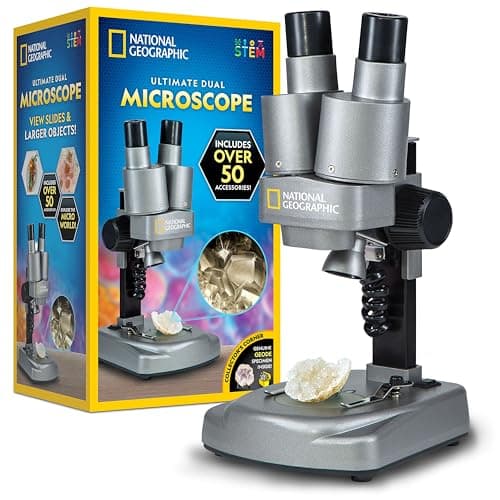
| 1 | Best if you know nothing else NATIONAL GEOGRAPHIC Dual LED Student Microscope Unlikely to be a duplicate, impossible to exhaust, and the specimens are free forever. | Eight and up, and the safest science gift there is | |
| 2 | 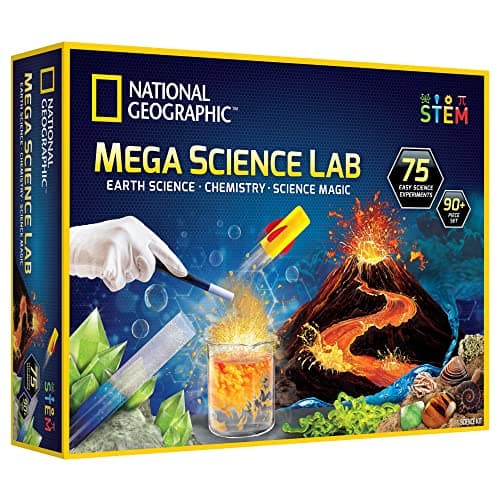 Best for reactions NATIONAL GEOGRAPHIC Mega Science Lab Forty-five kit experiments plus 85 household ones, so most of the content survives the box emptying. | Eight and up, and a child who likes things fizzing | |
| 3 | Best for a serious child My First Lab Duo-Scope Microscope Forty to 400 times, real glass optics, dual lighting and five blank slides. | Nine and up, where the interest is already established | Sold direct by My First Lab → Not stocked on Amazon. This link goes to the maker and we earn nothing on it. |
| 4 | Best gift that keeps arriving Kiwi Crate monthly subscription A hands-on project every month, which is a present that turns up eleven more times. | Six to nine, and a household with a free evening a month | |
| — | 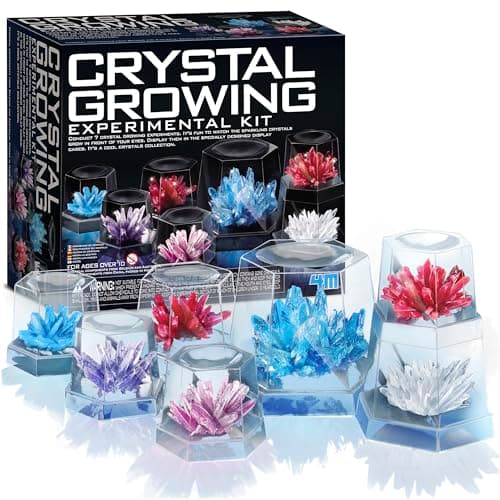 The one to skip 4M Crystal Growing Experiment Kit Seven results from three bags of compound, each arriving days after the child does anything. | A child who has specifically asked for crystals |
5 picks, including 1 we tell you to skip. Ages shown are the manufacturer’s own rating, not ours.
The three kinds of “likes science”
This is the whole page, really. “They like science” is the least specific gift brief there is, and the three interests it usually covers want completely different presents.
Looking at things. Bugs, rocks, pond water, anything found in a garden. This child wants a microscope, and it is the highest hit rate present in this whole category because the supply of things to look at is free and infinite.
Reactions. Fizzing, color changes, the moment something happens. This child wants a chemistry-led kit, and the thing to check is whether you can read the manual before buying — Thames & Kosmos publishes its full manuals free, which is unusual and useful.
How things work. Taking things apart, wanting to know what is inside. This child wants circuits or a robot they build, and is the one most often mis-served — they get bought a science kit when what they wanted was a screwdriver.
Experience or equipment
The arithmetic
How many times each one works
| Microscope — uses available | Unlimited |
|---|---|
| NatGeo Mega Science Lab — experiments | 45 in kit, 85+ household |
| Kiwi Crate — projects per year | 12 |
| 4M Crystal Growing — results | 7, days apart |
| NatGeo Break Open Geodes — results | 10, single use |
Say the unwelcome thing
Do not buy the flagship set of a popular brand at distance
The best-known set from the best-known brand is exactly what the child is most likely to already own. Duplication is the single most common failure of a gift bought without knowing what is in the house.
The defenses are to buy something obviously-not-owned — a microscope, a subscription — or an expansion of a system so common that duplication does not matter. Extra magnetic tiles are never wasted.
What to buy
- Do not know what they own: the National Geographic microscope.
- They like things fizzing: the Mega Science Lab.
- Interest already established, 9+: the Duo-Scope.
- Want it to keep arriving: Kiwi Crate, three months.
For budget-led picks see gifts under $50. For coding specifically, coding gifts. For picks by age, the age pages.
In full
Every pick, and what is wrong with it
Published specifications only, each linked back to the page it came from. Where a manufacturer publishes nothing, the row says so — we do not fill blanks in.
1. Best if you know nothing else
NATIONAL GEOGRAPHIC Dual LED Student Microscope
National Geographic · Dual LED Student Microscope · maker rates it 8+
Unlikely to be a duplicate, impossible to exhaust, and the specimens are free forever.
- Magnifications
- 20x and 50x, from two sets of optical glass lenses
- Lighting
- Upper and lower LED
- Accessories
- 50+ pieces, including 10 prepared slides, blank slides and covers, tweezers, eye-dropper and a mini geode
- Weight
- 2.6 lb
National Geographic publishes 20x and 50x from two sets of optical glass lenses, upper and lower LED lighting, and 50-plus accessories including 10 prepared slides, blank slides and covers, tweezers, an eye-dropper and a mini geode, rated 8+.
This is our standing answer for a science gift bought at distance, for two reasons that have nothing to do with optics. It is unlikely to already be owned, and it cannot be used up — the specimens are whatever is in the garden.
The top lighting is what makes that true. Light from above works on leaves, insects and rocks; light from below only works on things thin enough to see through.
Replay signal
- Open-ended or one-shot
- Open-ended, and the low magnification is the reason — 20x is where insects and leaves look extraordinary
- Does anything run out
- The 10 prepared slides run out; blank slides and the garden do not
- Room to grow
- Limited on magnification, generous on subject matter
Why we say so: National Geographic publishes 20x and 50x with upper and lower LED lighting. Low magnification plus top lighting is a deliberate design for looking at whole objects rather than slides, which for a child under about ten is a far better first microscope than a 1000x compound scope they cannot focus.
What’s wrong with it
Twenty and fifty times is a real ceiling — a genuinely keen ten-year-old will want more magnification within a year or two.
| Magnifications | 20x and 50x, from two sets of optical glass lenses |
|---|---|
| Lighting | Upper and lower LED |
| Accessories | 50+ pieces, including 10 prepared slides, blank slides and covers, tweezers, eye-dropper and a mini geode |
| Weight | 2.6 lb |
| Stated age | 8+ |
Every figure above is from National Geographic toys, Dual LED Student Microscope. Blanks are shown as “not published” rather than filled in.
2. Best for reactions
NATIONAL GEOGRAPHIC Mega Science Lab
National Geographic · Mega Science Lab · maker rates it 8+
Forty-five kit experiments plus 85 household ones, so most of the content survives the box emptying.
- Experiments in the kit
- 45, across chemistry, earth science and science magic
- Bonus guide
- 85+ further experiments using household items, for 130+ in total
- Includes
- Volcano build, glow-in-the-dark crystal growth, and the tools for both
- Stated age
- 8+
National Geographic publishes 45 experiments across chemistry, earth science and science magic, plus a bonus guide of more than 85 experiments using household items — over 130 in total — rated 8+.
For a gift, that second number is the important one. Every other kit in this band stops when the supplies run out; this one keeps going with vinegar and food coloring, which means it is still a science kit in March.
The published headline activities — building and erupting a volcano, growing a glow-in-the-dark crystal — are the ones a child asks to do again, which is a reasonable proxy for whether a gift landed.
Replay signal
- Open-ended or one-shot
- Guided, and the 45 in-kit experiments end. The 85 household ones do not
- Does anything run out
- The supplied materials run out; the household half of the book never does
- Room to grow
- The bonus guide is the genuinely durable part, and it costs the manufacturer almost nothing to include
- Adult required
- Supervision for the chemistry third; the earth science and household experiments are largely self-run
Why we say so: National Geographic publishes 45 in-kit experiments plus a bonus guide of 85+ using household items. That second number is why this kit outlasts most of its price band: roughly two-thirds of the published content needs nothing but a kitchen.
What’s wrong with it
Three subjects in one box means each is shallower than a dedicated kit at the same price.
| Experiments in the kit | 45, across chemistry, earth science and science magic |
|---|---|
| Bonus guide | 85+ further experiments using household items, for 130+ in total |
| Includes | Volcano build, glow-in-the-dark crystal growth, and the tools for both |
| Stated age | 8+ |
| Consumables | Yes — the supplied chemicals and crystal compounds are used up |
Every figure above is from National Geographic toys, Mega Science Lab. Blanks are shown as “not published” rather than filled in.
3. Best for a serious child
My First Lab Duo-Scope Microscope
My First Lab · MFL-06 · maker rates it 9+
Forty to 400 times, real glass optics, dual lighting and five blank slides.
- Magnifications
- 40x, 100x and 400x, from a 10x eyepiece with 4x, 10x and 40x objectives
- Optics
- Real optical glass lenses
- Lighting
- Dual LED, above and below the stage
- Slides included
- 5 blank, 1 concavity (well), 4 prepared
My First Lab publishes 40x, 100x and 400x from a 10x eyepiece with 4x, 10x and 40x objectives, real optical glass lenses, dual LED lighting above and below the stage, and five blank slides plus one concavity and four prepared, rated 9 and older, requiring three AA batteries.
The blank slides are what separate this from a scope that is four pictures. A child who can prepare their own slide can look at pond water, onion skin and their own hair, which is where the interest actually deepens.
The dual lighting means it still works as an object scope for leaves and insects, so it does not give up the low-power fun to get the high power.
Replay signal
- Open-ended or one-shot
- Genuinely open-ended, unusually so for a science purchase — the world is the consumable
- Does anything run out
- The four prepared slides run out; the five blanks and everything in the garden do not
- Room to grow
- Light from above as well as below means it works on rocks, leaves and insects, not only on slides
Why we say so: The manufacturer publishes the dual-LED lighting, the blank-slide count and the real-glass optics. Blank slides plus top lighting is what turns a microscope from four pictures into a thing you point at whatever you found outside.
What’s wrong with it
Rated 9 and older, and 400x needs a steady hand and good light to be worth using.
| Magnifications | 40x, 100x and 400x, from a 10x eyepiece with 4x, 10x and 40x objectives |
|---|---|
| Optics | Real optical glass lenses |
| Lighting | Dual LED, above and below the stage |
| Slides included | 5 blank, 1 concavity (well), 4 prepared |
| Stated age | Ages 9 and older |
| Batteries | 3 x AA (not included) |
| Weight | 1.95 lb |
Every figure above is from My First Lab, Duo-Scope MFL-06. Blanks are shown as “not published” rather than filled in.
Not stocked on Amazon. This link goes to the maker and we earn nothing on it.
4. Best gift that keeps arriving
Kiwi Crate monthly subscription
KiwiCo · Kiwi Crate · maker rates it 6-9
A hands-on project every month, which is a present that turns up eleven more times.
- Stated age
- Ages 6-9
- Cadence
- “a brand-new project delivered to their door each month”
- Plans
- Monthly, 3-month, 6-month or 12-month
- Subject
- “hands-on STEAM”
KiwiCo publishes Kiwi Crate as hands-on STEAM for ages 6-9, with a brand-new project each month, on monthly, three, six or twelve-month plans.
As a gift this has a specific advantage: it arrives repeatedly, and each arrival is a small event. For a grandparent buying at distance that is often worth more than the contents.
Buy the three-month plan rather than the twelve. It is a better gift precisely because it does not commit the recipient’s household to a year of something they may not do.
Replay signal
- Open-ended or one-shot
- Each crate is a one-shot build; the subscription is what creates the repeat
- Does anything run out
- Every crate runs out. That is the model, not a flaw — you are buying twelve projects, not one toy
- Room to grow
- KiwiCo publishes a ladder by age: Kiwi 6-9, Tinker 9-12, Eureka 12+
Why we say so: KiwiCo publishes the age bands and the one-project-per-month cadence. A subscription's replay value is structural — it arrives again next month — which is a different thing from a toy that keeps getting picked up, and the two should not be compared as if they were the same.
What’s wrong with it
Only works if somebody sits down in the week the box arrives. Otherwise it is a monthly charge and a stack of unopened boxes.
| Stated age | Ages 6-9 |
|---|---|
| Cadence | “a brand-new project delivered to their door each month” |
| Plans | Monthly, 3-month, 6-month or 12-month |
| Subject | “hands-on STEAM” |
| Consumables | Yes — each crate is built once |
Every figure above is from KiwiCo, monthly crates by age. Blanks are shown as “not published” rather than filled in.
Skip this one
4M Crystal Growing Experiment Kit
4M · 5557 · maker rates it 10+
Seven results from three bags of compound, each arriving days after the child does anything.
- Experiments
- 7 crystal-growing experiments
- Contents
- 3 bags of crystal compound, 3 bags of seeding mixture, stirring bowl and spoon, 7 display bases, 7 display covers, 7 ring templates
- Stated age
- 10 years and up
- Consumables
- Yes — the compound is the whole product
4M publishes seven crystal-growing experiments with three bags of crystal compound, three of seeding mixture, a stirring bowl and spoon, and seven display bases, covers and templates, rated 10 years and up.
Crystal kits are a fixture of science gift lists and they are a poor gift for a specific reason: the gap between doing the thing and seeing the result is measured in days. A child opens it, does five minutes of work, and then waits until the following weekend.
If a child has asked for crystals, buy it — it does what it says. As a general science present it delivers less on the day than almost anything else here.
Replay signal
- Open-ended or one-shot
- One-shot, seven times over
- Does anything run out
- Definitively. Three bags of compound, and when they are gone the kit is a set of display cases
Why we say so: 4M publishes three bags of crystal compound across seven experiments. That is the arithmetic that decides this purchase: it is seven results, spread over weeks because crystals take days to grow, and then it is finished. Excellent as an event; poor as the main present.
What’s wrong with it
Days between action and result, a 10+ rating that surprises people, and three bags of compound that are the whole product.
| Experiments | 7 crystal-growing experiments |
|---|---|
| Contents | 3 bags of crystal compound, 3 bags of seeding mixture, stirring bowl and spoon, 7 display bases, 7 display covers, 7 ring templates |
| Stated age | 10 years and up |
| Consumables | Yes — the compound is the whole product |
| Time per experiment | Days, not minutes — crystals grow on their own schedule |
Every figure above is from 4M, Crystal Growing Experiment Kit. Blanks are shown as “not published” rather than filled in.
We are not putting a buy button on this one. It is easy enough to find if you want it anyway — but we would rather send you to something that gets played with twice.
Questions people actually ask
Frequently asked
What is the safest science gift if I don't know what they own?
A microscope. It is unlikely to be a duplicate and it cannot be used up, because the specimens are whatever the child finds outside. National Geographic publishes a 20x and 50x student scope with top and bottom lighting, rated 8+.
Are crystal growing kits a good gift?
Only if the child asked for crystals. 4M publishes seven experiments from three bags of compound, rated 10+, and the results arrive days after the child does anything. As a general science present it delivers less on the day than almost anything else.
How do I choose a science gift when I only know they 'like science'?
Work out which of three things it is. Looking at things means a microscope; reactions means a chemistry-led kit; how things work means circuits or a buildable robot. The third is the one most often mis-served — they get a science kit when they wanted a screwdriver.
Is a subscription a good gift?
It is, with one condition: somebody has to sit down in the week each box arrives. Buy a three-month plan rather than twelve — it is a better gift precisely because it does not commit the recipient's household to a year of something they may not do.
Sources
Where these figures came from
Every specification on this page traces to one of these. If a manufacturer publishes nothing on a point, the page says so rather than filling the gap.
Read next
Where to go from here
Back to Gift Guides, or read how we pick.