The picks
STEM Gifts for Kids Who Cannot Sit Still
Not every child wants to sit at a table with a puzzle. Most of this category assumes they do.
By Sawyer V. · Published
The short answer
Most STEM toys assume a table, a chair and twenty quiet minutes. For a child who does not work that way, the answer is floor-scale or outdoor: a robot programmed by cards laid across a room, a bug habitat used in a garden, a gear machine big enough to stand over.
Block & Beaker earns a commission when you buy through our links, at no cost to you. It never changes a ranking, and we say so plainly when the right answer is the cheaper set, or nothing at all. Full disclosure · How we pick.
At a glance
The picks, ranked
Tap any row to jump to the full reasoning. Prices come live from Amazon where we have them and read “check price” where we don’t — never a number we cannot stand behind today.
| # | Product | Best for | Price |
|---|---|---|---|
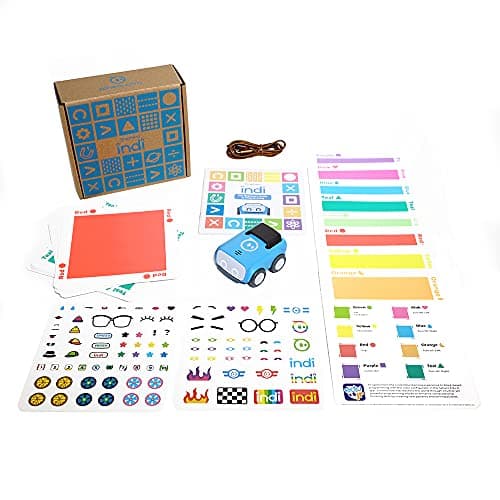
| 1 | Best overall Sphero indi At-Home Learning Kit The code is colored cards taped across a floor, so programming means walking around the room. | Four and up, and the child is inside the program | |
| 2 | 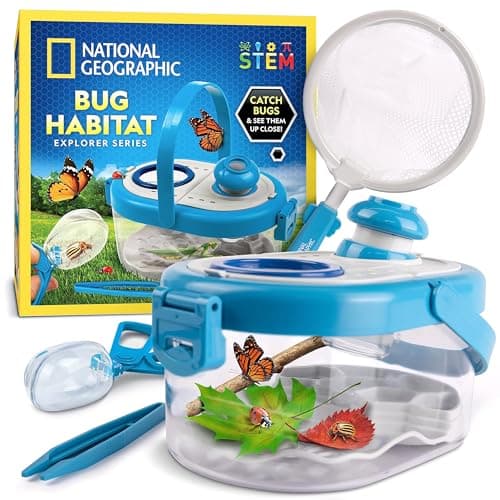 Best outdoors NATIONAL GEOGRAPHIC Bug Catcher Kit A habitat, a net and a scissor catcher — science that requires going out and finding something. | Four and up, and it only works outside | |
| 3 | 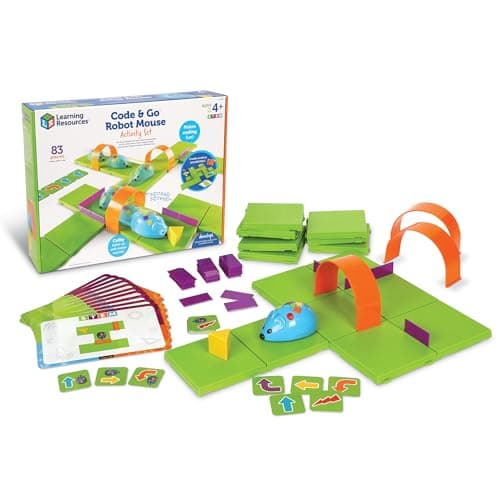 Best floor-scale build Code & Go Robot Mouse Activity Set Sixteen grids building a 20-inch board plus 22 walls — the child builds the problem on the floor. | Four and five, and a maze that covers a rug | |
| 4 | 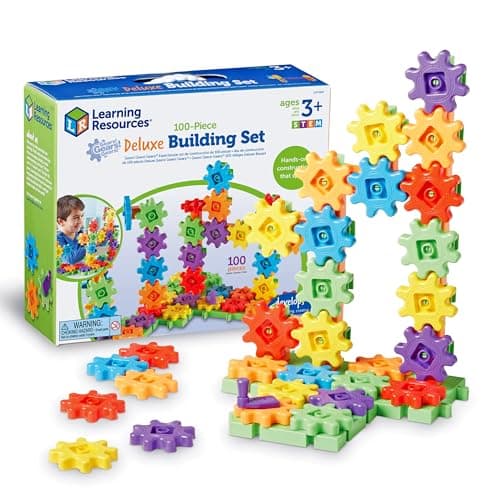 Best big build Gears! Gears! Gears! 100-Piece Deluxe Building Set A hundred pieces and six interlocking bases — this spreads out and gets built standing up. | Three and up, and a machine you stand over rather than sit at | |
| — | 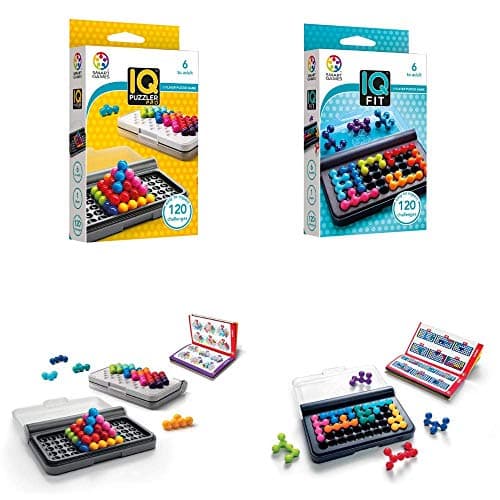 The one to skip here SmartGames IQ Puzzler Pro Superb puzzle, and the precise opposite of what this page is for. | A quiet child at a table, on a different page |
5 picks, including 1 we tell you to skip. Ages shown are the manufacturer’s own rating, not ours.
Why most of this category assumes a chair
Look at the physical footprint of a typical STEM toy and it is a tabletop: a circuit board, a puzzle grid, a chemistry tray. The implicit model is a child sitting down for twenty minutes.
For a lot of children that model is simply wrong, and the usual conclusion — that they are not interested in science — does not follow from the evidence. What has been tested is whether they will sit at a table, not whether they are curious.
The arithmetic
Physical footprint of the picks here
| Sphero indi — the program | 30 cards laid across a room |
|---|---|
| Code & Go Robot Mouse — the maze | 20 x 20 inch board, built on the floor |
| Gears — six interlocking bases | Grows sideways across a floor |
| Bug catcher kit — where it works | Outdoors only |
| IQ Puzzler Pro — footprint | A phone-sized case on a flat surface |
Three ways to make STEM physical
Scale it up. A program laid across a floor, a machine that spreads sideways, a maze bigger than a tabletop. The thinking is identical; the body is involved.
Take it outside. Nature study is the most physical science there is, and it is mostly searching. The observing is short and voluntary, which is exactly the right ratio.
Make the build the activity. With a rearrangeable maze or an interlocking machine, the construction repeats every session — so the physical part is not a one-off preamble.
What not to do about it
Do not buy the table toy and try to enforce the table. A child who is made to sit through a puzzle learns something about the category that is hard to undo, and it is not a lesson about geometry.
Equally, do not conclude the child is not interested in science. The format has been tested, not the interest — and a child who will not sit with a puzzle will frequently spend an hour turning over stones looking for woodlice.
Worth knowing before you buy
Floor-scale play has its own practical considerations. A 20-inch maze and a robot moving across it needs a clear area, and in a household with a crawling sibling that area needs a boundary.
For outdoor kits, teach catch-and-release before the first outing rather than after, and cover which creatures not to pick up. Both conversations go better in advance.
Say the unwelcome thing
Do not buy a fidget toy and call it STEM
There is a large category of small manipulables sold to parents of active children on the implication that they are educational. Most are not — they occupy hands without asking anything of the child.
The test is the same as everywhere on this site: what does the child have to figure out in order to succeed? If the answer is nothing, it is a fidget toy, and buying it as a STEM gift is buying the label.
What to buy
- Four and up, indoors: Sphero indi, programmed across a floor.
- Four and up, outdoors: the bug catcher kit.
- Four to five, floor-scale build: the Code & Go Robot Mouse.
- Three and up, big machine: Gears.
See also outdoor and nature kits, screen-free coding toys and STEM toys for 5 year olds.
In full
Every pick, and what is wrong with it
Published specifications only, each linked back to the page it came from. Where a manufacturer publishes nothing, the row says so — we do not fill blanks in.
1. Best overall
Sphero indi At-Home Learning Kit
Sphero · indi · maker rates it 4+
The code is colored cards taped across a floor, so programming means walking around the room.
- Contents
- 1 indi robot, 30 color cards, charging cable, 2 sticker sheets, activity booklet, tape to fix the cards down
- Card mix
- 5 green, 4 yellow, 3 red, 2 purple, 3 teal, 3 orange, 5 blue, 5 pink
- How it is coded
- An on-board color sensor reads the cards; no screen needed
- Play time
- “2+ hours of play on a full charge”, USB charging
Sphero publishes an on-board color sensor as the programming mechanism, with 30 color cards in a published color breakdown, a charging cable, sticker sheets, an activity booklet and tape to fix the cards down, 2+ hours of play per charge, and optional drag-and-drop block coding in the free Sphero Edu Jr app, rated 4 and up.
This is the only coding toy we cover where the program is physically larger than the child. Laying a route across a room and then walking it is a completely different activity from arranging cards on a table.
Rechargeable, which matters more for an active child — nothing kills momentum like discovering the batteries are flat.
Replay signal
- Open-ended or one-shot
- Very open-ended for the age: the child lays the track out across the whole floor
- Does anything run out
- Nothing runs out; recharges by USB
- Room to grow
- Screen-free cards first, then the same robot accepts block coding in the free app when the child is ready
- Adult required
- Not after setup — the program is the floor, and the child builds it
Why we say so: Sphero publishes the 30-card color breakdown, the on-board color sensor as the programming method, the 2+ hours per charge, and the optional step up to drag-and-drop blocks in Sphero Edu Jr.
What’s wrong with it
Thirty cards across a floor is a lot of floor, and tidying up means unsticking every one of them.
| Contents | 1 indi robot, 30 color cards, charging cable, 2 sticker sheets, activity booklet, tape to fix the cards down |
|---|---|
| Card mix | 5 green, 4 yellow, 3 red, 2 purple, 3 teal, 3 orange, 5 blue, 5 pink |
| How it is coded | An on-board color sensor reads the cards; no screen needed |
| Play time | “2+ hours of play on a full charge”, USB charging |
| Optional app | Sphero Edu Jr drag-and-drop blocks |
| Stated age | Ages 4 and up |
Every figure above is from Sphero, indi At-Home Learning Kit. Blanks are shown as “not published” rather than filled in.
2. Best outdoors
NATIONAL GEOGRAPHIC Bug Catcher Kit
National Geographic · Bug Catcher Kit · maker rates it 4+
A habitat, a net and a scissor catcher — science that requires going out and finding something.
- Habitat
- Clear bug habitat with a removable base
- Viewers
- Latching lid with two magnified viewers — one fixed, one movable
- Tools
- Scissor-style bug catcher, net, tweezers
- Includes
- Learning guide
National Geographic publishes a clear bug habitat with a removable base, a latching lid with two magnified viewers, a scissor-style bug catcher, a net, tweezers and a learning guide, rated 4+.
The whole activity is locomotion. Finding an insect involves turning over logs, looking under leaves and moving continuously, and the observing happens in short bursts between searches.
For a child who cannot be still, that structure is the feature — the still part is brief and the child chose to stop.
Replay signal
- Open-ended or one-shot
- Completely open-ended for the age — the garden restocks it
- Does anything run out
- Nothing runs out
- Room to grow
- Pairs naturally with a low-power microscope when the child wants a closer look
- Adult required
- For the catch-and-release rule; not for the looking
Why we say so: National Geographic publishes a habitat with two magnified viewers, a scissor catcher, a net and tweezers, rated 4+. The scissor catcher is the specification worth noticing: it lets a four-year-old pick up an insect without crushing it, which is the difference between a nature kit and a lesson about being gentle.
What’s wrong with it
Seasonal. From late autumn to early spring there is dramatically less to catch.
| Habitat | Clear bug habitat with a removable base |
|---|---|
| Viewers | Latching lid with two magnified viewers — one fixed, one movable |
| Tools | Scissor-style bug catcher, net, tweezers |
| Includes | Learning guide |
| Stated age | 4+ |
| Consumables | None — the specimens are outside and free |
Every figure above is from National Geographic toys, Bug Catcher Kit. Blanks are shown as “not published” rather than filled in.
3. Best floor-scale build
Code & Go Robot Mouse Activity Set
Learning Resources · LER2831 · maker rates it 4+
Sixteen grids building a 20-inch board plus 22 walls — the child builds the problem on the floor.
- Set size
- 83 pieces
- Contents
- Colby the robot mouse, 16 maze grids, 22 maze walls, 3 tunnels, 30 double-sided coding cards, 10 activity cards, cheese wedge, activity guide
- Maze size
- The 16 grids build a 20″ x 20″ board
- Screen required
- None
Learning Resources publishes 83 pieces including 16 maze grids that build a 20-inch square board, 22 maze walls, 3 tunnels, 30 double-sided coding cards using directional symbols and 10 activity cards, rated 4+.
The building is the physical half. Assembling a 20-inch maze on a floor means kneeling, crawling and reaching, and the child does that before any coding happens.
Rearrangeable grids mean the physical part repeats every session rather than being done once.
Replay signal
- Open-ended or one-shot
- The mouse is fixed, but the maze is not — 16 grids and 22 walls is a new problem every time
- Does anything run out
- Nothing runs out
- Room to grow
- The 10 activity cards are a starting ladder; after that the child sets the puzzles
- Adult required
- Reading is not required — the coding cards use directional symbols, so a four-year-old can work alone
Why we say so: Learning Resources publishes the 83-piece contents including 16 rearrangeable grids and 22 walls, and states the cards are picture-based. A rearrangeable maze is why this does not become a solved puzzle after one weekend.
What’s wrong with it
Three AAA batteries not included, and the maze needs a clear floor area that stays clear.
| Set size | 83 pieces |
|---|---|
| Contents | Colby the robot mouse, 16 maze grids, 22 maze walls, 3 tunnels, 30 double-sided coding cards, 10 activity cards, cheese wedge, activity guide |
| Maze size | The 16 grids build a 20″ x 20″ board |
| Screen required | None |
| Batteries | 3 x AAA (not included) |
| Stated age | Ages 4+ |
Every figure above is from Learning Resources, Code & Go Robot Mouse Activity Set. Blanks are shown as “not published” rather than filled in.
4. Best big build
Gears! Gears! Gears! 100-Piece Deluxe Building Set
Learning Resources · LER9162 · maker rates it 3+
A hundred pieces and six interlocking bases — this spreads out and gets built standing up.
- Pieces
- 100
- Contents
- 46 gears, 26 square pillars, 21 six-way axles, 6 interlocking bases, 1 crank handle, activity guide
- Stated age
- 3+
- Batteries
- None — hand-cranked
Learning Resources publishes 46 gears, 26 square pillars, 21 six-way axles, 6 interlocking bases, a crank handle and an activity guide, rated 3+, with no batteries.
The interlocking bases are why this suits an active child: the machine grows sideways across a floor rather than upward on a table, and building it means moving around it.
The crank also gives a physical payoff. Turning a handle and watching forty-six gears respond is a whole-arm action rather than a fingertip one.
Replay signal
- Open-ended or one-shot
- Open-ended, with immediate cause and effect: turn the handle, the whole thing moves
- Does anything run out
- Nothing runs out
- Room to grow
- Sets from the same line interlock, so a second box doubles the machine
Why we say so: Learning Resources publishes the full 100-piece contents list, the ages 3+ rating and the hand crank. No batteries appear in the published contents, which is why this one still works when everything else in the toy box is flat.
What’s wrong with it
The core insight arrives fast. After a child understands gears drive gears, it is arrangement rather than discovery.
| Pieces | 100 |
|---|---|
| Contents | 46 gears, 26 square pillars, 21 six-way axles, 6 interlocking bases, 1 crank handle, activity guide |
| Stated age | 3+ |
| Batteries | None — hand-cranked |
| Consumables | None |
Every figure above is from Learning Resources, Gears! Gears! Gears! Deluxe Building Set. Blanks are shown as “not published” rather than filled in.
Skip this one
SmartGames IQ Puzzler Pro
SmartGames · SG455 · maker rates it 6+
Superb puzzle, and the precise opposite of what this page is for.
- Challenges
- 120, across 2D and 3D modes
- Contents
- Compact board with a transparent lid, 12 puzzle pieces, challenge booklet with solutions
- Players
- 1
- Batteries
- None
SmartGames publishes 120 challenges across 2D and 3D modes from 12 puzzle pieces in a compact case, rated 6 to adult.
It is our best-value pick on the spatial reasoning page and on the small gifts page.
It is the skip here because it fails every criterion this page uses. Buying a table puzzle for a child who cannot sit at a table teaches them that this whole category is not for them, which is the outcome worth avoiding.
Replay signal
- Open-ended or one-shot
- Finite, but 120 challenges is roughly double what most single-player puzzle games ship with
- Does anything run out
- The booklet ends. The pieces do not
- Room to grow
- The same 12 pieces run 2D and 3D challenge sets, so the difficulty ceiling is well above the entry point
Why we say so: SmartGames publishes 120 challenges across two modes from a single 12-piece set. Twelve pieces generating 120 published problems is the best challenge-per-component ratio of any logic game on this site, and it is the reason this one travels well and lasts.
What’s wrong with it
Small pieces, a flat surface and sustained sitting — three requirements this page exists to avoid.
| Challenges | 120, across 2D and 3D modes |
|---|---|
| Contents | Compact board with a transparent lid, 12 puzzle pieces, challenge booklet with solutions |
| Players | 1 |
| Batteries | None |
| Stated age | Ages 6 to adult |
| Travel case | Yes — the board is the case |
Every figure above is from SmartGames, IQ Puzzler Pro. Blanks are shown as “not published” rather than filled in.
We are not putting a buy button on this one. It is easy enough to find if you want it anyway — but we would rather send you to something that gets played with twice.
Questions people actually ask
Frequently asked
What STEM toys work for a child who cannot sit still?
Floor-scale or outdoor ones. Sphero indi is programmed by laying colored cards across a room, so coding means walking around it. A bug catcher kit only works outside and is mostly searching. Gears grows sideways across a floor via six interlocking bases.
Does not sitting still mean a child is not interested in science?
No — it means the format has been tested rather than the interest. Most STEM toys have a tabletop footprint and assume twenty seated minutes. A child who will not sit with a puzzle will frequently spend an hour turning over stones looking for woodlice.
Are fidget toys STEM toys?
Mostly not. The test is what the child has to figure out in order to succeed. If the answer is nothing, it occupies hands without asking anything — which is fine as a fidget toy and is not what you are buying when you buy a STEM gift.
How do I make an existing STEM toy more physical?
Scale it up and make the build part of the activity. A maze rebuilt on the floor each session, a machine spread sideways rather than stacked, a program laid across a room. The thinking is identical; the body gets involved.
Sources
Where these figures came from
Every specification on this page traces to one of these. If a manufacturer publishes nothing on a point, the page says so rather than filling the gap.
Read next
Where to go from here
Back to Gift Guides, or read how we pick.