The picks
STEM Gifts Under $50
Under fifty dollars is where the value gaps in this category are widest — and where one afternoon costs the same as two years.
By Sawyer V. · Published
The short answer
Under fifty dollars, the difference between a good and a poor purchase is whether the thing runs out. A hundred linking cubes and a 120-challenge puzzle work for years; a ten-geode kit is one afternoon. Both are fine — just know which you are buying before you wrap it.
Block & Beaker earns a commission when you buy through our links, at no cost to you. It never changes a ranking, and we say so plainly when the right answer is the cheaper set, or nothing at all. Full disclosure · How we pick.
At a glance
The picks, ranked
Tap any row to jump to the full reasoning. Prices come live from Amazon where we have them and read “check price” where we don’t — never a number we cannot stand behind today.
| # | Product | Best for | Price |
|---|---|---|---|
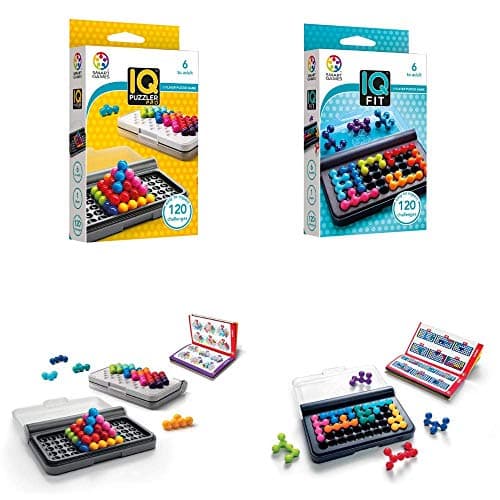
| 1 | Best value overall SmartGames IQ Puzzler Pro One hundred and twenty published challenges from twelve pieces, in a case the size of a phone. | Six and up, and any occasion needing a small good present | |
| 2 | 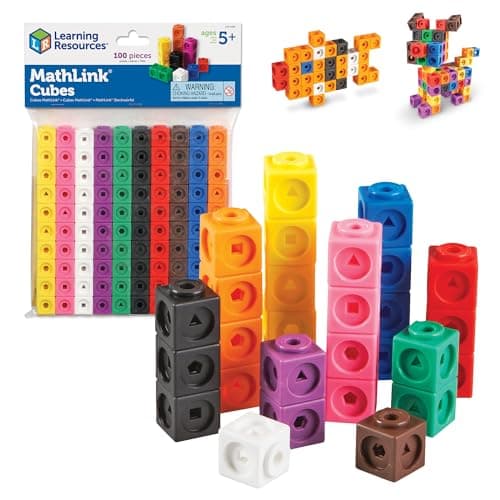 Best per pound MathLink Cubes, Set of 100 A hundred cubes linking on all six sides, spanning counting at five to volume at nine. | Five to nine, and a household that will ask one good question | |
| 3 | 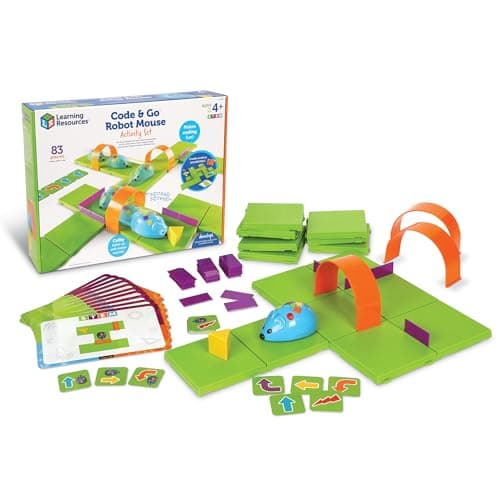 Best coding under $50 Code & Go Robot Mouse Activity Set Eighty-three pieces, a rearrangeable 20-inch maze, and no reading required. | Four and five, and the cheapest coding toy that genuinely works | |
| 4 | 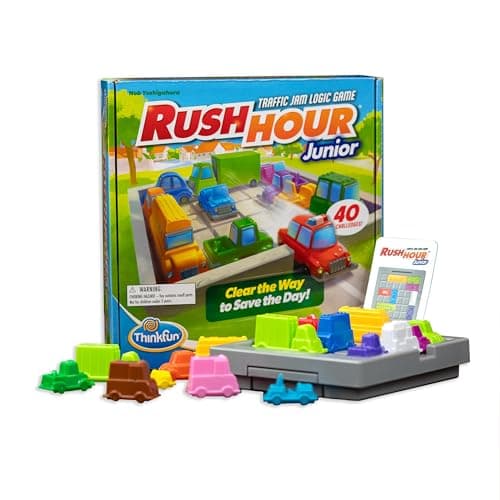 Best small present ThinkFun Rush Hour Junior Forty published challenges, rules understood in thirty seconds, and a travel bag. | Five to seven, alongside a bigger gift | |
| — | 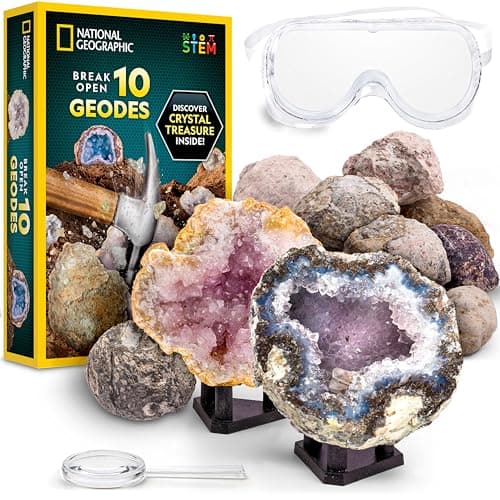 Buy it, but know what it is NATIONAL GEOGRAPHIC Break Open 10 Premium Geodes Ten real geodes and ten genuinely memorable moments, and then a bowl of pretty rocks. | Eight and up, as an event rather than a toy |
5 picks, including 1 we tell you to skip. Ages shown are the manufacturer’s own rating, not ours.
Where the value cliffs are
Value in this category is not linear. There are two points where spending slightly more changes the product qualitatively, and both sit near this page’s ceiling.
The arithmetic
The two cliffs
| Snap Circuits Beginner | 21 projects / 14 parts |
|---|---|
| Snap Circuits Classic | 305 projects / 60+ parts |
| Magnetic tiles, 60-piece set | runs out mid-build |
| Magnetic tiles, 100-piece set | builds enclosed structures |
| Tiles needed for a two-story building with a roof | about 55 |
What to avoid at this price
Anything that grows one thing. Crystal kits, single-model build kits, one-experiment sets. They are experiences, and an experience that takes days to happen is worse than one that happens immediately.
The entry rung of a system. The small circuit kit, the 60-piece tile set. They look age-appropriate and they are the wrong-shaped purchase — the child outgrows them while still being the right age for the system.
Anything needing something you are not sending. Batteries, an iPad, an adult with a free evening every month. All published, none on the front of the box.
Say the unwelcome thing
Do not buy three small things instead of one good one
Three twenty-dollar kits that each last an afternoon is sixty dollars for three afternoons. One good fifty-dollar purchase that lasts two years is a different kind of transaction.
If the budget genuinely will not stretch, the best sub-thirty purchases here are the linking cubes and the puzzle — both open-ended, neither consumable, and both cheaper than most of what they sit beside.
What to buy
- Best single pick: IQ Puzzler Pro. 120 challenges, travels, cheap.
- Cheapest thing that is genuinely good: MathLink Cubes.
- Coding under $50: Code & Go Robot Mouse.
- An event rather than a toy: the geode kit, framed honestly.
For science-led gifts see gifts for kids who like science, and for older children, STEM gifts for teens.
In full
Every pick, and what is wrong with it
Published specifications only, each linked back to the page it came from. Where a manufacturer publishes nothing, the row says so — we do not fill blanks in.
1. Best value overall
SmartGames IQ Puzzler Pro
SmartGames · SG455 · maker rates it 6+
One hundred and twenty published challenges from twelve pieces, in a case the size of a phone.
- Challenges
- 120, across 2D and 3D modes
- Contents
- Compact board with a transparent lid, 12 puzzle pieces, challenge booklet with solutions
- Players
- 1
- Batteries
- None
SmartGames publishes 120 challenges across 2D and 3D modes, with a compact board with a transparent lid, 12 puzzle pieces and a challenge booklet with solutions, rated 6 to adult.
One hundred and twenty problems from twelve components is the best content-per-piece ratio anywhere on this site, and the 3D mode means the hardest challenges hold up for adults.
The board being its own case is why it gets used rather than shelved — this is the one that goes in a bag.
Replay signal
- Open-ended or one-shot
- Finite, but 120 challenges is roughly double what most single-player puzzle games ship with
- Does anything run out
- The booklet ends. The pieces do not
- Room to grow
- The same 12 pieces run 2D and 3D challenge sets, so the difficulty ceiling is well above the entry point
Why we say so: SmartGames publishes 120 challenges across two modes from a single 12-piece set. Twelve pieces generating 120 published problems is the best challenge-per-component ratio of any logic game on this site, and it is the reason this one travels well and lasts.
What’s wrong with it
It looks like nothing when wrapped, and it will be opened last and underestimated.
| Challenges | 120, across 2D and 3D modes |
|---|---|
| Contents | Compact board with a transparent lid, 12 puzzle pieces, challenge booklet with solutions |
| Players | 1 |
| Batteries | None |
| Stated age | Ages 6 to adult |
| Travel case | Yes — the board is the case |
Every figure above is from SmartGames, IQ Puzzler Pro. Blanks are shown as “not published” rather than filled in.
2. Best per pound
MathLink Cubes, Set of 100
Learning Resources · LER4285 · maker rates it 5+
A hundred cubes linking on all six sides, spanning counting at five to volume at nine.
- Cubes
- 100, in 10 colors
- Cube size
- 3/4 inch
- Connection
- Links on all sides, with geometric shape cut-outs for patterning
- Stated age
- Ages 5 and up
Learning Resources publishes 100 cubes in 10 colors, three quarters of an inch each, linking on all sides with geometric shape cut-outs, rated 5 and up.
All-sides connection is what makes this more than counting: arrays, rectangles and volumes become possible, which is genuine mathematics rather than number practice.
It needs one question to activate — “can you make a rectangle with twelve cubes, and how many different ones are there?” — and after that it works on its own.
Replay signal
- Open-ended or one-shot
- Completely open-ended, and unusually cheap for something that is
- Does anything run out
- Nothing runs out
- Room to grow
- The same cubes cover counting at five and volume, arrays and fractions at nine
Why we say so: Learning Resources publishes that the cubes link on all sides with geometric cut-outs. All-sides connection is what turns a counting toy into a building toy — a cube that only joins end to end makes towers, and one that joins on six faces makes arrays, volumes and models.
What’s wrong with it
It is school equipment and looks like it, which some children react to and which makes it a poor sole present.
| Cubes | 100, in 10 colors |
|---|---|
| Cube size | 3/4 inch |
| Connection | Links on all sides, with geometric shape cut-outs for patterning |
| Stated age | Ages 5 and up |
| Batteries | None |
| Consumables | None |
Every figure above is from Learning Resources, MathLink Cubes, Set of 100. Blanks are shown as “not published” rather than filled in.
3. Best coding under $50
Code & Go Robot Mouse Activity Set
Learning Resources · LER2831 · maker rates it 4+
Eighty-three pieces, a rearrangeable 20-inch maze, and no reading required.
- Set size
- 83 pieces
- Contents
- Colby the robot mouse, 16 maze grids, 22 maze walls, 3 tunnels, 30 double-sided coding cards, 10 activity cards, cheese wedge, activity guide
- Maze size
- The 16 grids build a 20″ x 20″ board
- Screen required
- None
Learning Resources publishes 83 pieces: the mouse, 16 maze grids, 22 walls, 3 tunnels, 30 double-sided coding cards and 10 activity cards, rated 4+.
The picture-based cards are why this works at four, and 16 rearrangeable grids are why it does not become a solved puzzle after a weekend.
At this price it is the clearest example on the page of a cheap thing that is genuinely good rather than a cheap thing that is merely cheap.
Replay signal
- Open-ended or one-shot
- The mouse is fixed, but the maze is not — 16 grids and 22 walls is a new problem every time
- Does anything run out
- Nothing runs out
- Room to grow
- The 10 activity cards are a starting ladder; after that the child sets the puzzles
- Adult required
- Reading is not required — the coding cards use directional symbols, so a four-year-old can work alone
Why we say so: Learning Resources publishes the 83-piece contents including 16 rearrangeable grids and 22 walls, and states the cards are picture-based. A rearrangeable maze is why this does not become a solved puzzle after one weekend.
What’s wrong with it
Three AAA batteries not included, and there is no depth beyond building harder mazes.
| Set size | 83 pieces |
|---|---|
| Contents | Colby the robot mouse, 16 maze grids, 22 maze walls, 3 tunnels, 30 double-sided coding cards, 10 activity cards, cheese wedge, activity guide |
| Maze size | The 16 grids build a 20″ x 20″ board |
| Screen required | None |
| Batteries | 3 x AAA (not included) |
| Stated age | Ages 4+ |
Every figure above is from Learning Resources, Code & Go Robot Mouse Activity Set. Blanks are shown as “not published” rather than filled in.
4. Best small present
ThinkFun Rush Hour Junior
ThinkFun · 76583 · maker rates it 5+
Forty published challenges, rules understood in thirty seconds, and a travel bag.
- Challenges
- 40, easy to expert
- Contents
- Ice cream truck, 15 blocking vehicles, 40 challenge cards, travel bag
- Players
- 1
- Batteries
- None
ThinkFun publishes 40 challenges from easy to expert with an ice cream truck, 15 blocking vehicles, 40 challenge cards and a travel bag, single-player, no batteries, rated 5+.
The self-checking property is the reason this works unattended: the truck escapes or it does not, so no adult has to adjudicate.
Buy it as the second present. Forty challenges is a school holiday, not a year.
Replay signal
- Open-ended or one-shot
- Finite — 40 challenges
- Does anything run out
- The cards end; the grid does not, and children invent their own jams
- Room to grow
- Steps up to the full Rush Hour at 8+, same idea with harder cards
Why we say so: ThinkFun publishes 40 challenges across four difficulty tiers and a travel bag. Forty single-player puzzles is a school holiday, not a year — which is the honest framing for a gift-buyer.
What’s wrong with it
Forty is the shortest challenge count we recommend — a capable six-year-old finishes them inside a holiday.
| Challenges | 40, easy to expert |
|---|---|
| Contents | Ice cream truck, 15 blocking vehicles, 40 challenge cards, travel bag |
| Players | 1 |
| Batteries | None |
| Stated age | Ages 5+ |
Every figure above is from ThinkFun, Rush Hour Junior. Blanks are shown as “not published” rather than filled in.
Skip this one
NATIONAL GEOGRAPHIC Break Open 10 Premium Geodes
National Geographic · NGGEO10 · maker rates it 8+
Ten real geodes and ten genuinely memorable moments, and then a bowl of pretty rocks.
- Geodes
- 10, hand-selected, 1.25 to 2.25 inches across
- Includes
- Safety goggles, magnifying glass, display stands, full-color learning guide
- Stated age
- Manufacturer's minimum age 8 years
- Safety note
- Contains small parts; not for children under 3
National Geographic publishes ten hand-selected natural geodes, 1.25 to 2.25 inches across, with safety goggles, a magnifying glass, display stands and a full-color learning guide, rated 8+, with an explicit small-parts warning for under-threes.
We are marking this as the skip and recommending it in the same breath, because both are honest. Cracking a rock open and finding crystals is a real moment, and the specimens are genuine geological samples.
But ten is ten, and it is the single most common under-fifty-dollar disappointment in this category — bought as a science toy, discovered to be an afternoon. Price it against a trip out and it is good value on those terms.
Replay signal
- Open-ended or one-shot
- One-shot by design. Ten geodes, ten moments, then it is a bowl of pretty rocks
- Does anything run out
- Yes, definitively — the clearest example on this site of a kit that ends
Why we say so: National Geographic publishes the count as ten natural geodes. Ten single-use items is a finite number, and we would rather say so than let a gift-buyer find out on Christmas afternoon.
What’s wrong with it
Ten single-use items. An enthusiastic child can be through all of them before lunch.
| Geodes | 10, hand-selected, 1.25 to 2.25 inches across |
|---|---|
| Includes | Safety goggles, magnifying glass, display stands, full-color learning guide |
| Stated age | Manufacturer's minimum age 8 years |
| Safety note | Contains small parts; not for children under 3 |
| Consumables | Yes — ten geodes, and each one only cracks open once |
Every figure above is from National Geographic toys, Break Open Geodes. Blanks are shown as “not published” rather than filled in.
We are not putting a buy button on this one. It is easy enough to find if you want it anyway — but we would rather send you to something that gets played with twice.
Questions people actually ask
Frequently asked
What is the best STEM gift under $50?
SmartGames IQ Puzzler Pro. It publishes 120 challenges across 2D and 3D modes from just 12 pieces, in a case the size of a phone — the best content-per-piece ratio on this site, and small enough that it actually leaves the house.
Are cheap science kits worth buying?
The open-ended ones are; the consumable ones are experiences rather than toys. National Geographic publishes ten geodes in its Break Open kit — an enthusiastic child can be through all ten before lunch. Price those against an afternoon out rather than against a toy.
Should I buy several small gifts or one bigger one?
One bigger one, almost always. Three twenty-dollar kits that each last an afternoon is sixty dollars for three afternoons. The value cliffs in this category — the 100-piece tile threshold, the jump from 21 to 305 circuit projects — all reward buying once.
What is the cheapest STEM toy that genuinely lasts?
MathLink Cubes. Learning Resources publishes 100 cubes linking on all sides, rated 5+, which covers counting at five and arrays and volume at nine. Nothing else here spans that range at that price.
Sources
Where these figures came from
Every specification on this page traces to one of these. If a manufacturer publishes nothing on a point, the page says so rather than filling the gap.
Read next
Where to go from here
Back to Gift Guides, or read how we pick.