The picks
STEM Toys for 9 Year Olds
Nine is the year a child starts noticing whether something is a toy. Buy equipment.
By Sawyer V. · Published
The short answer
At nine, buy equipment rather than toys. A microscope with real glass optics, a circuit set with a component tray, a robot that runs actual code. My First Lab rates its Duo-Scope 9 and older, and nine is also the first year Python on hardware is a realistic ask.
Block & Beaker earns a commission when you buy through our links, at no cost to you. It never changes a ranking, and we say so plainly when the right answer is the cheaper set, or nothing at all. Full disclosure · How we pick.

At a glance
The picks, ranked
Tap any row to jump to the full reasoning. Prices come live from Amazon where we have them and read “check price” where we don’t — never a number we cannot stand behind today.
| # | Product | Best for | Price |
|---|---|---|---|
| 1 | Best overall My First Lab Duo-Scope Microscope Real glass optics, lights above and below, and five blank slides — this is the year the rating finally matches the child. | Nine, and the one purchase here with no end | Sold direct by My First Lab → Not stocked on Amazon. This link goes to the maker and we earn nothing on it. |
| 2 | 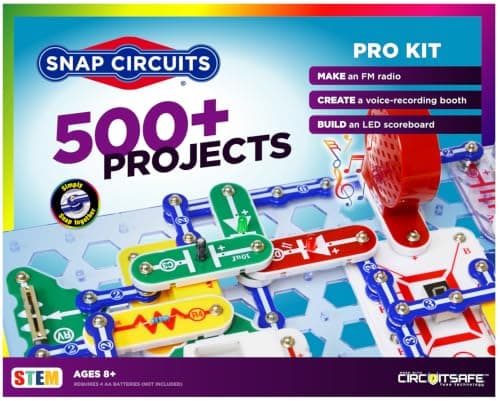 Best electronics Snap Circuits Pro Seventy-three published computer-interfaced experiments — the point where circuits start taking instructions. | A nine-year-old who has finished the Classic set | |
| 3 | 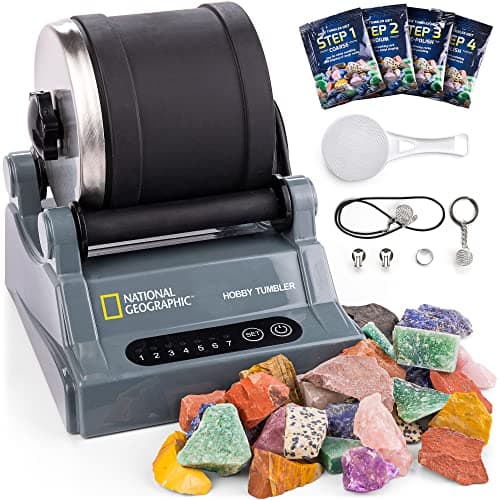 Best long project NATIONAL GEOGRAPHIC Hobby Rock Tumbler Kit A machine rather than a kit — it keeps working long after the supplied grit is gone. | A patient nine-year-old, or one who collects things | |
| 4 | 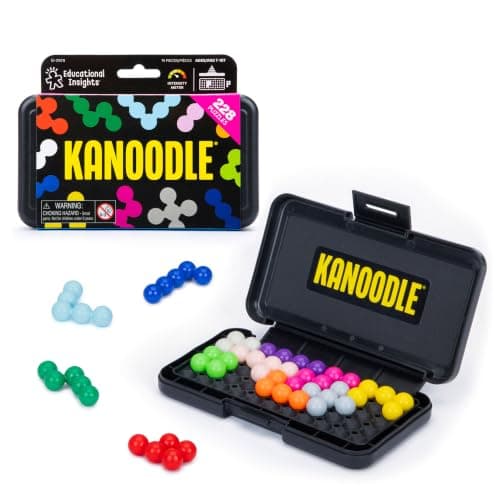 Best small present Kanoodle Two hundred-plus published puzzles across 2D and 3D, in a case the size of a phone. | Nine, and any bag that needs a quiet activity in it | |
| — | 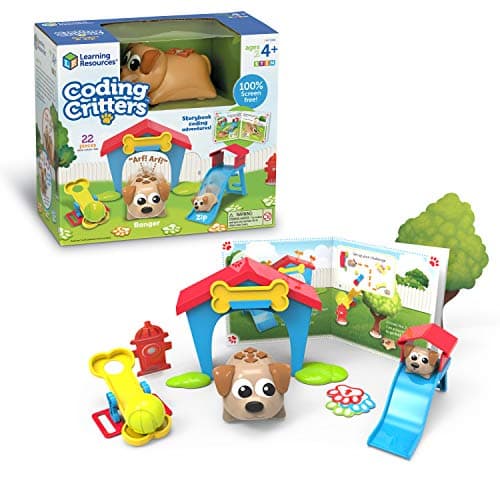 The one to skip Coding Critters Ranger & Zip A lovely preschool toy that a nine-year-old will read as being for babies before opening the box. | Four, not nine |
5 picks, including 1 we tell you to skip. Ages shown are the manufacturer’s own rating, not ours.
What changes at nine
Two things, and both change what you should buy.
Patience for delayed results. A nine-year-old will start something on Saturday and check it on Wednesday. That unlocks a whole category — rock tumbling, crystal growing, long builds, multi-week projects — that is simply wasted on a younger child who needs the result now.
Social self-awareness about objects. This is the under-discussed one. At nine a child reads the packaging and decides whether a thing is for them or for little kids, and that judgment is made before the box is open. A product rated 4-8 will be politely thanked for and shelved.
Equipment versus toys, and how to tell
The arithmetic
What reads as equipment at nine
| Duo-Scope — optics | Real optical glass, 40x-400x |
|---|---|
| Snap Circuits Pro — computer-interfaced experiments | 73 |
| Rock tumbler — controls | One-touch, automatic shutoff timer |
| mBot2 — programming environments | Blocks, Python, Arduino C |
| Coding Critters — published format | Storybook, rated 4+ |
This is not about spending more. A 200-puzzle logic case is inexpensive and reads as a serious object; an expensive robot with a face does not.
The programming question at nine
Nine is the earliest age where asking for real, typed code is reasonable rather than optimistic. Makeblock publishes Scratch-style blocks, Python in mBlock and Arduino C on the mBot2 — one chassis covering the next four years.
The honest caveat: most nine-year-olds stay in the block editor for a long time, and that is fine. Buy the hardware with the published path anyway, because the alternative is buying a second robot at eleven.
Worth knowing before you buy
Two published requirements to check before wrapping anything: Snap Circuits Pro needs four AA batteries, not included, and the Duo-Scope needs three AA, also not included.
The rock tumbler is the one with a household consideration rather than a safety one. It runs continuously for days and it is audible through a wall — worth deciding where it will live before it arrives.
What to buy
- One present, broad interest: the Duo-Scope. Nothing else here is open-ended in the same way.
- Already has a circuit set: Snap Circuits Pro, for the computer interfacing.
- Collects things: the rock tumbler.
- Second, smaller present: Kanoodle.
Next year brings real chemistry and telescopes — the ten-year-old page. For the category in full, see microscopes and Snap Circuits.
In full
Every pick, and what is wrong with it
Published specifications only, each linked back to the page it came from. Where a manufacturer publishes nothing, the row says so — we do not fill blanks in.
1. Best overall
My First Lab Duo-Scope Microscope
My First Lab · MFL-06 · maker rates it 9+
Real glass optics, lights above and below, and five blank slides — this is the year the rating finally matches the child.
- Magnifications
- 40x, 100x and 400x, from a 10x eyepiece with 4x, 10x and 40x objectives
- Optics
- Real optical glass lenses
- Lighting
- Dual LED, above and below the stage
- Slides included
- 5 blank, 1 concavity (well), 4 prepared
My First Lab publishes 40x, 100x and 400x from a 10x eyepiece with 4x, 10x and 40x objectives, real optical glass lenses, dual LED lighting above and below the stage, and five blank slides plus one concavity and four prepared, rated 9 and older, requiring three AA batteries.
Nine is the first age this specific product is inside its own rating, and it matters: focusing a compound microscope at 400x requires fine motor control and patience that arrive around now.
The blank slides are the reason to prefer it over a cheaper scope. Four prepared slides is four pictures; five blanks plus a garden is a habit.
Replay signal
- Open-ended or one-shot
- Genuinely open-ended, unusually so for a science purchase — the world is the consumable
- Does anything run out
- The four prepared slides run out; the five blanks and everything in the garden do not
- Room to grow
- Light from above as well as below means it works on rocks, leaves and insects, not only on slides
Why we say so: The manufacturer publishes the dual-LED lighting, the blank-slide count and the real-glass optics. Blank slides plus top lighting is what turns a microscope from four pictures into a thing you point at whatever you found outside.
What’s wrong with it
Four hundred times needs a steady hand and good light. The useful work happens at 40x and 100x.
| Magnifications | 40x, 100x and 400x, from a 10x eyepiece with 4x, 10x and 40x objectives |
|---|---|
| Optics | Real optical glass lenses |
| Lighting | Dual LED, above and below the stage |
| Slides included | 5 blank, 1 concavity (well), 4 prepared |
| Stated age | Ages 9 and older |
| Batteries | 3 x AA (not included) |
| Weight | 1.95 lb |
Every figure above is from My First Lab, Duo-Scope MFL-06. Blanks are shown as “not published” rather than filled in.
Not stocked on Amazon. This link goes to the maker and we earn nothing on it.
2. Best electronics
Snap Circuits Pro
Elenco · SC-500 · maker rates it 8+
Seventy-three published computer-interfaced experiments — the point where circuits start taking instructions.
- Projects
- “Build over 500 exciting projects”
- Parts
- “Contains over 75 snap-together parts”
- Computer-interfaced experiments
- “Includes 73 computer interfaced experiments”
- Projects per part
- 6.7
Elenco publishes over 500 projects from over 75 snap-together parts, including 73 computer-interfaced experiments, rated 8+, requiring four AA batteries.
If the child already has Snap Circuits Classic, this is the genuine upgrade and the computer-interfaced half is the reason. A circuit that responds to something typed is where electronics and coding meet, and nine is a good age for that to happen.
If they have nothing yet, buy the Classic instead and save the difference.
Replay signal
- Open-ended or one-shot
- Open-ended, and the computer-interfaced projects give it somewhere to go after the manual
- Does anything run out
- Nothing runs out
- Room to grow
- 73 published computer-interfaced experiments is a second product hiding inside the first
Why we say so: Elenco publishes 500+ projects from 75+ parts and specifically 73 computer-interfaced experiments. That last number is the only thing separating the Pro from the Classic, and it is the only reason to pay the difference.
What’s wrong with it
Only worth the premium over the Classic if somebody connects it to a computer. Otherwise it is fifteen extra parts.
| Projects | “Build over 500 exciting projects” |
|---|---|
| Parts | “Contains over 75 snap-together parts” |
| Computer-interfaced experiments | “Includes 73 computer interfaced experiments” |
| Projects per part | 6.7 |
| Stated age | “Ages 8+” |
| Batteries | “Requires 4 ‘AA’ batteries (not included)” |
Every figure above is from Elenco, Snap Circuits Pro. Blanks are shown as “not published” rather than filled in.
3. Best long project
NATIONAL GEOGRAPHIC Hobby Rock Tumbler Kit
National Geographic · Hobby Rock Tumbler · maker rates it 8+
A machine rather than a kit — it keeps working long after the supplied grit is gone.
- Includes
- Tumbler, four polishing grits, sifter, learning guide
- Rough gemstones
- Nine types
- Barrel
- Noise-reducing, leak-proof, stainless steel lid
- Controls
- One-touch settings with an automatic shutoff timer
National Geographic publishes a tumbler with four polishing grits, a sifter, a learning guide and nine types of rough gemstone, in a noise-reducing leak-proof barrel with one-touch settings and an automatic shutoff timer, rated 8+.
The reason this belongs at nine rather than younger is the waiting. A tumbling cycle runs for days, and the payoff arrives a week after the work. A six-year-old finds that unbearable; a nine-year-old finds it suspenseful.
The machine outliving the grit is what separates it from a geode kit: once the supplied rough is used, anything collected from a beach goes in.
Replay signal
- Open-ended or one-shot
- Semi-open: the machine is permanent, the grit is not, and rocks from a beach are free
- Does anything run out
- The grits and the supplied gemstones run out; refill grit is sold separately
- Room to grow
- Once the supplied rough is gone, the tumbler works on anything the child collects
- Adult required
- For loading and for the timer; the tumbling itself is unattended
Why we say so: National Geographic publishes four polishing grits, nine gemstone types and an automatic shutoff timer. The machine outliving the grit is what makes this different from a one-shot geology kit — but it runs for days per batch, so it is a patience purchase, not an afternoon one.
What’s wrong with it
It runs for days per batch and it is audible. This is a garage or utility-room purchase, not a bedroom one.
| Includes | Tumbler, four polishing grits, sifter, learning guide |
|---|---|
| Rough gemstones | Nine types |
| Barrel | Noise-reducing, leak-proof, stainless steel lid |
| Controls | One-touch settings with an automatic shutoff timer |
| Extras | Jewelry fastenings for the polished stones |
| Stated age | 8+ |
| Consumables | Yes — the four grits and the supplied rough are used up |
Every figure above is from National Geographic toys, Hobby Rock Tumbler Kit. Blanks are shown as “not published” rather than filled in.
4. Best small present
Kanoodle
Educational Insights · Kanoodle · maker rates it 7+
Two hundred-plus published puzzles across 2D and 3D, in a case the size of a phone.
- Puzzles
- 200+
- Formats
- Two — flat 2D puzzles and 3D pyramids
- Pieces
- Connected-bead puzzle pieces
- Players
- 1
Educational Insights publishes 200-plus puzzles across two formats — flat 2D puzzles and 3D pyramids — from connected-bead pieces in a small case, rated 7 and up.
Two hundred is roughly three times what a typical single-player logic game ships with. Held against Gravity Maze at 60 challenges or Rush Hour Junior at 40, the challenge-per-dollar here is in a different league.
The 3D pyramid mode is where a nine-year-old will actually spend their time. Flat tiling is solvable by trial; the pyramid needs a plan.
Replay signal
- Open-ended or one-shot
- Finite, but 200+ published puzzles is the largest count on this site
- Does anything run out
- Nothing runs out; the booklet is long enough to feel endless
- Room to grow
- 2D first, then the 3D pyramid set, which is a genuine step in difficulty
Why we say so: Educational Insights publishes 200-plus puzzles across 2D and 3D formats from one small case. Two hundred is roughly three times what a typical single-player logic game ships with, which is why this one survives a long car journey and a wet week.
What’s wrong with it
It is a solo activity by design. If what the household needs is something to do together, this is not it.
| Puzzles | 200+ |
|---|---|
| Formats | Two — flat 2D puzzles and 3D pyramids |
| Pieces | Connected-bead puzzle pieces |
| Players | 1 |
| Batteries | None |
| Stated age | Ages 7 and up |
Every figure above is from Educational Insights, Kanoodle. Blanks are shown as “not published” rather than filled in.
Skip this one
Coding Critters Ranger & Zip
Learning Resources · LER3081 · maker rates it 4+
A lovely preschool toy that a nine-year-old will read as being for babies before opening the box.
- Set size
- 22 pieces
- Screen required
- None — “100% screen-free coding”
- Format
- Interactive pet plus playset and a storybook of coding activities
- Stated age
- Ages 4+
Learning Resources publishes a 22-piece set built around an interactive pet, a playset and a storybook of coding activities, 100% screen-free, rated 4+.
It appears in "coding gifts for kids" lists that do not segment by age, and at nine it is a category error twice over: the coding ceiling is far too low, and the packaging tells a nine-year-old exactly who it was made for.
For a nine-year-old who wants a robot, the honest answer is the mBot2 — see robot kits.
Replay signal
- Open-ended or one-shot
- Half toy, half coding set — the pretend play carries on long after the programming stops
- Does anything run out
- Nothing runs out
- Room to grow
- Little: the coding ceiling here is low by design
- Adult required
- The storybook is read-aloud at four; the pet is not
Why we say so: Learning Resources publishes the 22-piece count, the screen-free format and the storybook-led activity structure. We call the coding ceiling low because the published format is a storybook sequence rather than a programmable step count — compare Botley's published 150-step maximum.
What’s wrong with it
Rated 4+, with a storybook-led format and no published step ceiling. At nine it is finished in an afternoon and quietly resented.
| Set size | 22 pieces |
|---|---|
| Screen required | None — “100% screen-free coding” |
| Format | Interactive pet plus playset and a storybook of coding activities |
| Stated age | Ages 4+ |
| Consumables | None |
Every figure above is from Learning Resources, Coding Critters. Blanks are shown as “not published” rather than filled in.
We are not putting a buy button on this one. It is easy enough to find if you want it anyway — but we would rather send you to something that gets played with twice.
Questions people actually ask
Frequently asked
What is the best STEM toy for a 9 year old?
A microscope, if you want the purchase with no end. My First Lab rates its Duo-Scope 9 and older, and nine is the first year that rating matches the child — focusing at 400x needs fine motor control that arrives around now.
Why do 9 year olds reject some STEM toys?
Presentation. At nine a child reads the packaging and decides whether something is for them or for little kids, and that judgment happens before the box is opened. A product published for ages 4-8 will be politely thanked for and shelved regardless of what it does.
Can a 9 year old learn real programming?
Nine is the earliest age where asking for typed code is reasonable rather than optimistic. Makeblock publishes Scratch-style blocks, Python and Arduino C on the mBot2 — one chassis covering the next four years. Most nine-year-olds stay in the block editor a while, which is fine. Robot kits that scale.
Is a rock tumbler worth it?
At nine, often yes — because this is the age a child can tolerate a result that arrives days later. National Geographic publishes four grits and nine gemstone types with an automatic shutoff timer. Note it runs for days per batch and is audible through a wall.
Sources
Where these figures came from
Every specification on this page traces to one of these. If a manufacturer publishes nothing on a point, the page says so rather than filling the gap.
Read next
Where to go from here
Back to Shop by Age, or read how we pick.