The picks
Anatomy and Biology Kits for Kids
The test for an anatomy model is simple: does it come apart into pieces a child can name, or is it a decoration?
By Sawyer V. · Published
The short answer
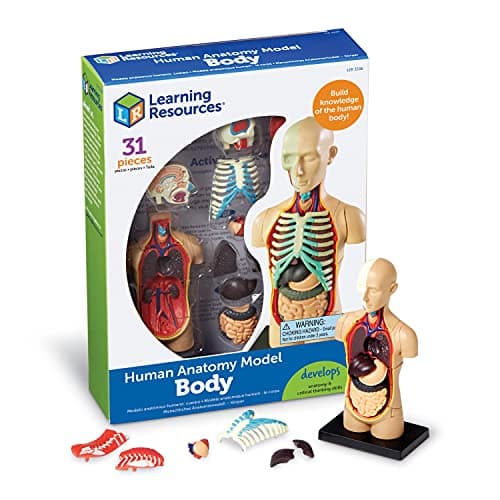
Buy a model that dismantles into named organs. Learning Resources publishes 31 pieces — brain, skull, heart, rib cage, lungs, liver, stomach, pancreas, kidneys, intestines and spine — assembling to 4½ inches, rated 8+. A sealed display model teaches nothing a picture would not.
Block & Beaker earns a commission when you buy through our links, at no cost to you. It never changes a ranking, and we say so plainly when the right answer is the cheaper set, or nothing at all. Full disclosure · How we pick.
At a glance
The picks, ranked
Tap any row to jump to the full reasoning. Prices come live from Amazon where we have them and read “check price” where we don’t — never a number we cannot stand behind today.
| # | Product | Best for | Price |
|---|---|---|---|
| 1 | Best anatomy model Learning Resources Human Body Anatomy Model Thirty-one separately named pieces with a Fact Guide, so the organs can be identified rather than admired. | Eight and up, for a child who wants to take a body apart | |
| 2 | Best biology instrument My First Lab Duo-Scope Microscope 400x with real optical glass and five blank slides — the magnification where biology begins. | Nine and up, for cells rather than organs | Sold direct by My First Lab → Not stocked on Amazon. This link goes to the maker and we earn nothing on it. |
| 3 | 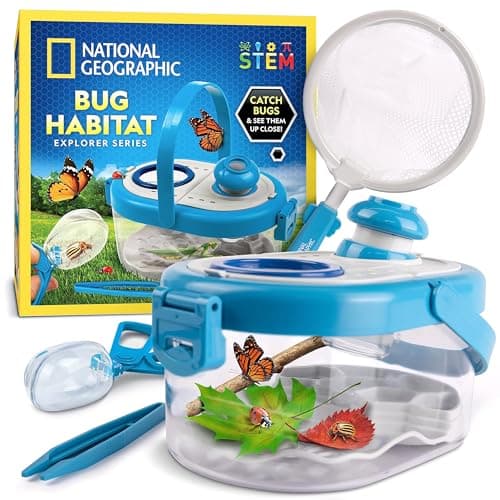 Best living biology for young children NATIONAL GEOGRAPHIC Bug Catcher Kit Two magnified viewers and a scissor catcher, with a specimen supply that is the whole garden. | Four and up, where a 31-piece model is years away | |
| 4 | 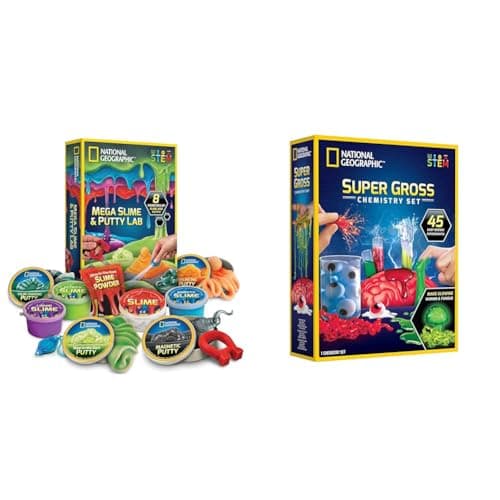 Best for the squeamish end NATIONAL GEOGRAPHIC Mega Slime Kit & Putty Lab Seven premade putties plus a DIY slime lab, including magnetic and color-changing varieties. | Eight and up, for texture-led science | |
| — |  Not biology Thames & Kosmos Chemistry C500 Frequently cross-shopped as the serious science option, and it covers a different subject entirely. | Ten and up, for chemistry |
5 picks, including 1 we tell you to skip. Ages shown are the manufacturer’s own rating, not ours.
The test for an anatomy model
Anatomy is the one science category where the product is usually a model rather than an experiment, and that changes what to look for.
The arithmetic
What separates a teaching model from an ornament
| Named separate parts | 31 on the Learning Resources model |
|---|---|
| Assembles and dismantles | The child places each organ themselves |
| A fact guide | Gives each part a function, not just a name |
| Assembled size | 4½ inches — desk scale rather than display scale |
| Age floor | 8+, grades 3+; not for under-threes |
Two different subjects wear the same label
“Biology kit” covers two quite different purchases, and buyers frequently get the wrong one.
Anatomy is structure. Where organs sit, what they are called, how they fit together. A model answers this and a microscope does not.
Biology is life at small scale. Cells, pond organisms, plant structure. A microscope answers this and a model does not.
A child who asks “what does the liver do” wants the model. A child who asks “what is inside a leaf” wants the scope. They are both good questions and there is no single product that serves both.
Why 400x is the number for biology
Cells are the point of biological magnification, and they are not visible below roughly 100x. The published 40x, 100x and 400x on the Duo-Scope comes from a single 10x eyepiece paired with 4x, 10x and 40x objectives — real arithmetic rather than a marketing maximum.
Boxes advertising 1200x on plastic optics multiply past what the glass can resolve, producing a larger, dimmer blur. For biology specifically, buy on the objective set and the lighting rather than the headline figure.
Worth knowing before you buy
The Learning Resources model publishes a not-for-under-threes warning: 31 small plastic organs is firmly small-parts territory regardless of the recipient’s age.
Anything collected for a microscope — pond water especially — means washing hands afterwards, and pond water should not be collected without an adult present.
What to buy at each age
Four to seven: a bug catcher. Living biology, no reading, no age barrier, nothing consumed.
Eight: the 31-piece anatomy model. This is the published floor and the age at which naming organs becomes genuinely interesting rather than arbitrary.
Nine and up: the Duo-Scope, for the step from structure to cells.
Alongside any of them: a slime kit, if the appeal is texture and material properties rather than living things.
Say the unwelcome thing
Do not buy a sealed display torso
Models that do not come apart show a child exactly what a diagram in a book shows them, at considerably more expense and taking up shelf space.
The published part count is the thing to check. Thirty-one separate named pieces is a puzzle; a single moulded figure is an ornament.
Where to go next
Microscopes for kids covers the cellular side in detail. Outdoor and nature kits covers living biology for younger children, and lab tools that never run out covers the permanent-instrument argument.
In full
Every pick, and what is wrong with it
Published specifications only, each linked back to the page it came from. Where a manufacturer publishes nothing, the row says so — we do not fill blanks in.
1. Best anatomy model
Learning Resources Human Body Anatomy Model
Learning Resources · LER3336 · maker rates it 8+
Thirty-one separately named pieces with a Fact Guide, so the organs can be identified rather than admired.
- Pieces
- 31
- Organs included
- Brain, skull, heart, rib cage, lungs, liver, stomach, pancreas, kidneys, intestines, spine
- Assembled height
- 4½ inches
- Includes
- Fact Guide and photo-illustrated assembly instructions
Learning Resources publishes a 31-piece torso model including a brain, skull, heart, rib cage, lungs, liver, stomach, pancreas, kidneys, intestines and spine, assembling to 4½ inches, with a Fact Guide and photo-illustrated assembly instructions, rated ages 8+ and grades 3+, not for children under 3.
Naming the organs individually is the specification that matters. A model that separates into identifiable parts turns anatomy into a puzzle with correct answers, and the child has to work out where the liver goes rather than reading that it exists.
The Fact Guide is what carries it past assembly. Without one, a child builds the torso twice and stops; with one, each organ acquires a function.
Replay signal
- Open-ended or one-shot
- A model rather than an experiment — assembled, dismantled and reassembled
- Does anything run out
- Nothing runs out
- Room to grow
- The Fact Guide carries it past assembly into naming and function
- Adult required
- Not after the first build
Why we say so: Learning Resources publishes 31 named parts and a 4½-inch assembled height. Naming the organs individually is the specification that matters — a torso that comes apart into identifiable pieces teaches anatomy, and a sealed display model does not.
What’s wrong with it
Small at 4½ inches assembled, and it is a model rather than an experiment.
| Pieces | 31 |
|---|---|
| Organs included | Brain, skull, heart, rib cage, lungs, liver, stomach, pancreas, kidneys, intestines, spine |
| Assembled height | 4½ inches |
| Includes | Fact Guide and photo-illustrated assembly instructions |
| Stated age | Ages 8+, grades 3+; not for children under 3 |
| Consumables | None |
Every figure above is from Learning Resources, Human Body Anatomy Model. Blanks are shown as “not published” rather than filled in.
2. Best biology instrument
My First Lab Duo-Scope Microscope
My First Lab · MFL-06 · maker rates it 9+
400x with real optical glass and five blank slides — the magnification where biology begins.
- Magnifications
- 40x, 100x and 400x, from a 10x eyepiece with 4x, 10x and 40x objectives
- Optics
- Real optical glass lenses
- Lighting
- Dual LED, above and below the stage
- Slides included
- 5 blank, 1 concavity (well), 4 prepared
My First Lab publishes 40x, 100x and 400x from a 10x eyepiece with 4x, 10x and 40x objectives, real optical glass, dual LED lighting above and below the stage, 5 blank slides, 1 concavity slide and 4 prepared slides, rated 9 and older.
Four hundred times is the practical threshold for biology: pond water, onion skin and cheek cells all need it. Below about 100x a child is looking at texture rather than at cells.
The five blank slides matter as much as the optics, because a child who can prepare their own specimen is doing biology rather than looking at four supplied pictures.
Replay signal
- Open-ended or one-shot
- Genuinely open-ended, unusually so for a science purchase — the world is the consumable
- Does anything run out
- The four prepared slides run out; the five blanks and everything in the garden do not
- Room to grow
- Light from above as well as below means it works on rocks, leaves and insects, not only on slides
Why we say so: The manufacturer publishes the dual-LED lighting, the blank-slide count and the real-glass optics. Blank slides plus top lighting is what turns a microscope from four pictures into a thing you point at whatever you found outside.
What’s wrong with it
Rated 9+, and three AA batteries are required and not included.
| Magnifications | 40x, 100x and 400x, from a 10x eyepiece with 4x, 10x and 40x objectives |
|---|---|
| Optics | Real optical glass lenses |
| Lighting | Dual LED, above and below the stage |
| Slides included | 5 blank, 1 concavity (well), 4 prepared |
| Stated age | Ages 9 and older |
| Batteries | 3 x AA (not included) |
| Weight | 1.95 lb |
Every figure above is from My First Lab, Duo-Scope MFL-06. Blanks are shown as “not published” rather than filled in.
Not stocked on Amazon. This link goes to the maker and we earn nothing on it.
3. Best living biology for young children
NATIONAL GEOGRAPHIC Bug Catcher Kit
National Geographic · Bug Catcher Kit · maker rates it 4+
Two magnified viewers and a scissor catcher, with a specimen supply that is the whole garden.
- Habitat
- Clear bug habitat with a removable base
- Viewers
- Latching lid with two magnified viewers — one fixed, one movable
- Tools
- Scissor-style bug catcher, net, tweezers
- Includes
- Learning guide
National Geographic publishes a clear habitat with a removable base, a latching lid with two magnified viewers, a scissor-style catcher, a net, tweezers and a learning guide, rated 4+, with no consumables.
Anatomy models start at 8+. Biology as a subject starts far earlier than that, and looking closely at a living insect is the version of it available to a four-year-old.
Replay signal
- Open-ended or one-shot
- Completely open-ended for the age — the garden restocks it
- Does anything run out
- Nothing runs out
- Room to grow
- Pairs naturally with a low-power microscope when the child wants a closer look
- Adult required
- For the catch-and-release rule; not for the looking
Why we say so: National Geographic publishes a habitat with two magnified viewers, a scissor catcher, a net and tweezers, rated 4+. The scissor catcher is the specification worth noticing: it lets a four-year-old pick up an insect without crushing it, which is the difference between a nature kit and a lesson about being gentle.
What’s wrong with it
Weather-dependent, and it needs outdoor access.
| Habitat | Clear bug habitat with a removable base |
|---|---|
| Viewers | Latching lid with two magnified viewers — one fixed, one movable |
| Tools | Scissor-style bug catcher, net, tweezers |
| Includes | Learning guide |
| Stated age | 4+ |
| Consumables | None — the specimens are outside and free |
Every figure above is from National Geographic toys, Bug Catcher Kit. Blanks are shown as “not published” rather than filled in.
4. Best for the squeamish end
NATIONAL GEOGRAPHIC Mega Slime Kit & Putty Lab
National Geographic · NGMEGASPL · maker rates it 8+
Seven premade putties plus a DIY slime lab, including magnetic and color-changing varieties.
- Varieties
- 8 in total — 7 premade plus 1 DIY slime lab
- Premade types
- Magnetic putty, fluffy slime, glow-in-the-dark putty, liquid slime, color-changing putty, snotty slime, bouncing putty
- DIY portion
- One glow-in-the-dark slime lab with a stir stick
- Storage
- 8 tins
National Geographic publishes 8 varieties in total — magnetic putty, fluffy slime, glow-in-the-dark putty, liquid slime, color-changing putty, snotty slime and bouncing putty, plus one DIY glow-in-the-dark slime lab with a stir stick — with 8 storage tins and a full-color learning guide, rated 8 and up.
It earns a place here because the magnetic and color-changing putties demonstrate real material properties rather than just feeling odd. That is the honest defense of a slime kit as science.
Replay signal
- Open-ended or one-shot
- The seven premade putties are reusable toys rather than one-shot experiments
- Does anything run out
- Only the DIY lab runs out
- Room to grow
- Magnetic and color-changing putty demonstrate real properties, not just texture
- Adult required
- Not for the premade putties; briefly for the DIY mix
Why we say so: National Geographic publishes seven premade varieties plus one DIY lab. That ratio is the review: most of this kit is a reusable sensory toy with a science label, and one eighth of it is the experiment.
What’s wrong with it
Mostly a reusable sensory toy — only one eighth of the kit is an actual experiment.
| Varieties | 8 in total — 7 premade plus 1 DIY slime lab |
|---|---|
| Premade types | Magnetic putty, fluffy slime, glow-in-the-dark putty, liquid slime, color-changing putty, snotty slime, bouncing putty |
| DIY portion | One glow-in-the-dark slime lab with a stir stick |
| Storage | 8 tins |
| Includes | Full-color learning guide |
| Stated age | 8 and up |
| Consumables | Partly — the DIY ingredients are used once; the putties are reusable |
Every figure above is from National Geographic toys, Mega Slime Kit & Putty Lab. Blanks are shown as “not published” rather than filled in.
Skip this one
Thames & Kosmos Chemistry C500
Thames & Kosmos · 665012 · maker rates it 10+
Frequently cross-shopped as the serious science option, and it covers a different subject entirely.
- Experiments
- 28
- Manual
- 48 pages
- Chemicals included
- 5
- Equipment
- Safety glasses, test tubes, dropper pipettes, double-headed measuring spoon
Thames & Kosmos publishes 28 experiments, a 48-page manual and five chemicals with safety glasses, test tubes and dropper pipettes, rated 10 years and up, stating compliance with EN 71-4.
A child asking about the human body is not asking about reagents. This is an excellent kit and it will not answer the question that led somebody to this page.
Replay signal
- Open-ended or one-shot
- Guided, not open-ended: 28 experiments, then the manual is finished
- Does anything run out
- Yes — the chemicals are consumed, and Thames & Kosmos sells replacements
- Room to grow
- Steps up to the larger C1000, C2000 and C3000 sets in the same line
- Adult required
- The maker rates it 10+ and it involves real chemicals
Why we say so: Thames & Kosmos publishes 28 experiments, a 48-page manual and five chemicals. Five finite chemicals across 28 experiments is arithmetic, not opinion — this set has an end, and it is better to know that before Boxing Day than after.
What’s wrong with it
Rated 10+ with five consumable chemicals and adult supervision assumed.
| Experiments | 28 |
|---|---|
| Manual | 48 pages |
| Chemicals included | 5 |
| Equipment | Safety glasses, test tubes, dropper pipettes, double-headed measuring spoon |
| Stated age | 10 years and up |
| Batteries | 1 x 9V (not included) |
| Consumables | Yes — the five chemicals are used up |
Every figure above is from Thames & Kosmos, Chemistry C500. Blanks are shown as “not published” rather than filled in.
We are not putting a buy button on this one. It is easy enough to find if you want it anyway — but we would rather send you to something that gets played with twice.
Questions people actually ask
Frequently asked
What should I look for in a children's anatomy model?
That it comes apart into separately named pieces. Learning Resources publishes 31 — brain, skull, heart, rib cage, lungs, liver, stomach, pancreas, kidneys, intestines and spine — assembling to 4½ inches with a Fact Guide. A sealed display torso shows the same organs while asking nothing of the child.
What age is a human body model for?
Learning Resources publishes ages 8+ and grades 3+, with a not-for-under-threes warning. Eight is roughly when naming organs becomes interesting rather than arbitrary, and 31 small plastic pieces is firmly small-parts territory for any younger sibling.
Do you need a microscope for biology at home?
For cells, yes. Cells are not visible below roughly 100x, and My First Lab publishes 40x, 100x and 400x from a 10x eyepiece with 4x, 10x and 40x objectives. An anatomy model teaches structure — where organs sit and what they are called — and cannot show you anything cellular. Microscopes for kids.
Is a slime kit actually science?
Partly, and it is worth being precise. National Geographic publishes 7 premade putties plus 1 DIY slime lab, so most of the kit is a reusable sensory toy. The magnetic and color-changing varieties do demonstrate real material properties, which is the honest defense — but one eighth of the box is the experiment.
Sources
Where these figures came from
Every specification on this page traces to one of these. If a manufacturer publishes nothing on a point, the page says so rather than filling the gap.
Read next
Where to go from here
Back to Science Kits, or read how we pick.