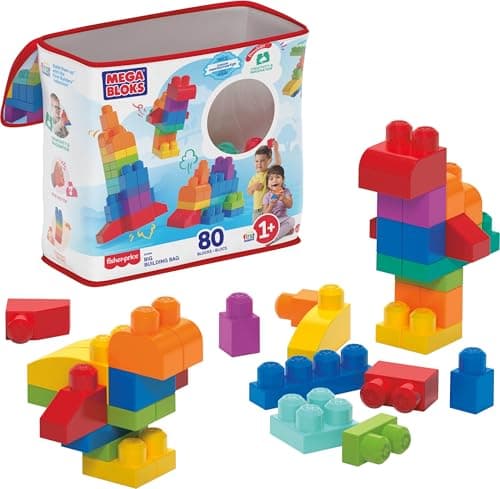
Best for 2 year olds
STEM Toys for 2 Year Olds
The short list of genuinely 2-appropriate STEM toys, plus what to buy now and open next year.
Top pick
MEGA BLOKS First Builders Big Building Bag, 80 Pieces
Category
You know how old they are. Start there — it is the one thing that reliably narrows the shelf.
The short answer
The single most useful filter for a STEM toy is the child’s age, because manufacturers publish an age rating and because what a child can do alone changes sharply year to year. A four-year-old needs a toy with no reading in it. A seven-year-old needs one with a ceiling high enough to keep climbing. Pick the age, then pick the category.
Block & Beaker earns a commission when you buy through our links, at no cost to you. It never changes a ranking, and we say so plainly when the right answer is the cheaper set, or nothing at all. Full disclosure · How we pick.

Start here
In this section
Each one carries its top pick’s live price and a buy link, so you never have to click twice to find out what something costs.
Best for 2 year olds
The short list of genuinely 2-appropriate STEM toys, plus what to buy now and open next year.
Top pick
MEGA BLOKS First Builders Big Building Bag, 80 Pieces
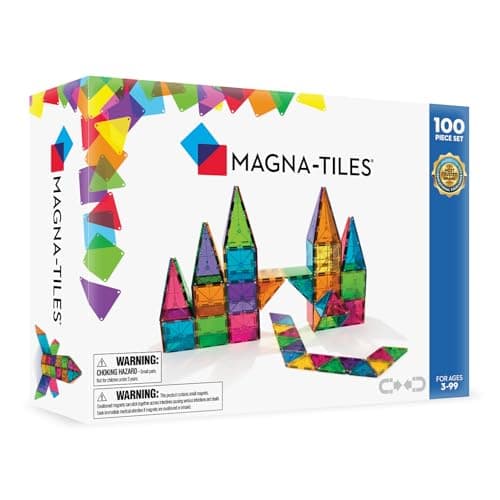
Best for 3 year olds
Five picks for the age where safety ratings stop being the constraint and open-ended toys start paying off.
Top pick
MAGNA-TILES Classic 100-Piece Set
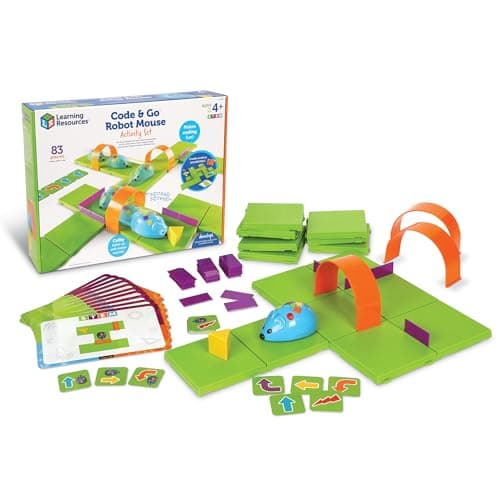
Best for 4 year olds
Five picks for four, including the first coding toys that genuinely work before a child can read.
Top pick
Code & Go Robot Mouse Activity Set
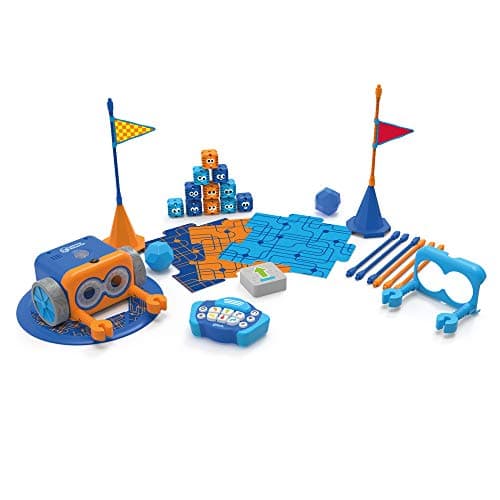
Best for 5 year olds
Five picks for the year when the shelf opens up, ranked on what is still being used in March.
Top pick
Botley 2.0 The Coding Robot Activity Set
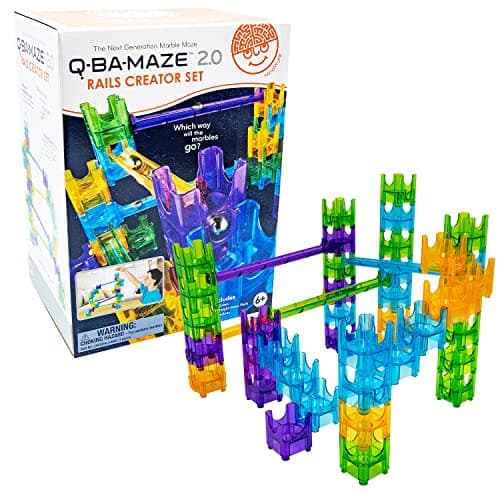
Best for 6 year olds
Five picks for the age when a numbered manual stops being decoration and starts being a ladder.
Top pick
Q-BA-MAZE 2.0 Big Box
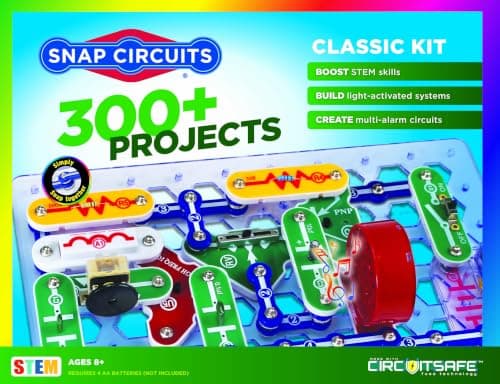
Best for 7 year olds
Five picks for seven, weighted toward sets with a published ladder deep enough to last two years.
Top pick
Snap Circuits Classic
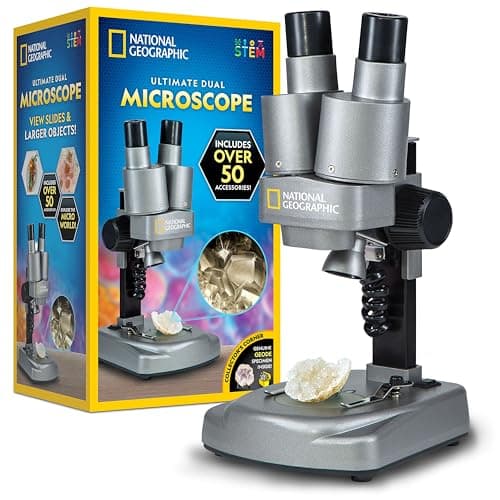
Best for 8 year olds
Five picks for the age where almost everything unlocks and the question becomes what to buy first.
Top pick
NATIONAL GEOGRAPHIC Dual LED Student Microscope
Best for 1 year olds
The very short list of genuinely 1+ rated construction toys, and what to buy now to open at three.
Top pick
MEGA BLOKS First Builders Big Building Bag, 80 Pieces

Best for 9 year olds
Five picks for nine, weighted toward things that look like instruments rather than playthings.
Top pick
My First Lab Duo-Scope Microscope
Not stocked on Amazon. This link goes to the maker and we earn nothing on it.

Best for 10 year olds
Five picks for ten, the year real chemistry, serious telescopes and typed code all become available.
Top pick
Thames & Kosmos CHEM C1000
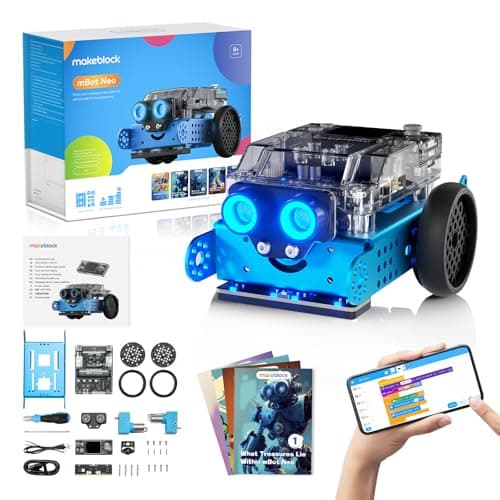
Best STEM kit for teens
Kit for 12 and up that reads as equipment rather than as a toy with a teenage age rating.
Top pick
Makeblock mBot Neo (mBot2)
Best for 11 year olds
The year to stop buying age-labeled toys and start buying instruments and real languages.
Top pick
Makeblock mBot Neo (mBot2)
Best for 12 year olds
The age where the category ends and instruments, languages and real components take over.
Top pick
Makeblock mBot Neo (mBot2)
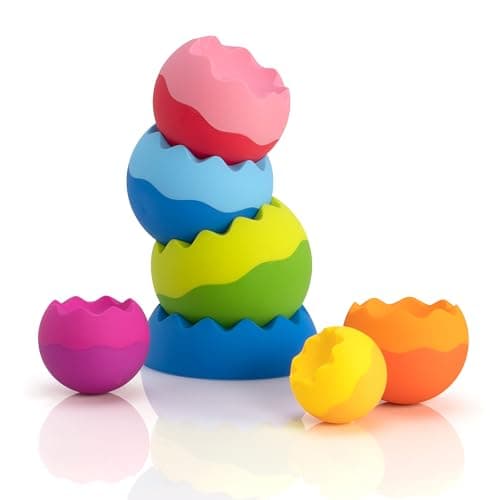
Best for babies
The short list of toys published for babies under one, and the popular gift to hold back until three.
Top pick
Fat Brain Toys Tobbles Neo
Every manufacturer on this site publishes an age rating, and those ratings are the most reliable published fact in the whole category. They are set partly by safety testing — small-parts rules under standards like ASTM F963 push ratings above three regardless of how simple a toy is — and partly by the manufacturer’s own judgment about what a child can do unaided.
That second half is where the number gets slippery. A rating of 8+ on a chemistry set means something quite different from 8+ on a marble run. The chemistry set is 8+ because of what is in the bottles. The marble run is 8+ because of how many steps ahead you have to think. One is a safety floor, the other is a difficulty estimate, and only one of them can be safely ignored by a confident parent sitting next to the child.
So the age pages below do not simply repeat the rating. Each one answers three questions: what a child can newly do at that age, which categories become worth buying because of it, and which popular purchases at that age get abandoned fastest. The rating tells you whether a toy is legal to hand over. The page tells you whether it will still be out of the cupboard in March.
At two and three, the constraint is grip and patience. Anything that needs two hands to hold still while a third does something is out. This is the age where magnetic tiles earn their reputation: a tile snaps to another tile with almost no force and almost no accuracy, so a two-year-old gets the reward of a structure without the fine motor control a brick set demands.
At four and five, symbolic thinking arrives, and with it the first genuinely useful coding toys. The important published detail at this age is whether the toy needs reading. Sets that program with picture cards and directional arrows work here; anything with words on the buttons does not, and no amount of enthusiasm from an adult fixes that.
At six and seven, a child will follow a numbered manual to the end. This is the single best window for a set with a long published project count, because for the first time the ladder gets climbed rather than glanced at. It is also the age at which the gap between a 21-project set and a 305-project set stops being theoretical.
At eight and up, real components become appropriate: actual chemicals under a published safety standard, actual circuits with actual resistors, actual programming languages. It is also the age when a child starts noticing whether a toy is a toy. Sets that look like equipment rather than playthings do noticeably better from here on.
Buying up. A gift-buyer sees a rating a year or two above the child and reasons that they will grow into it. Occasionally that works. Far more often the set is opened, found to be too hard, put back in the box, and by the time the child is old enough the moment has passed and something else has their attention.
The reverse mistake is cheaper and less painful but just as wasteful: buying the entry-level version of a system when the child is already past it. The clearest published example anywhere on this site is the Snap Circuits line, where the entry set publishes 21 projects from 14 parts and the set one step up publishes 305 from around 60. That is roughly three times the price for roughly fifteen times the content, and an eight-year-old will finish the small one in an afternoon.
Where a child sits between two of our pages, read both and buy toward the lower one if they will be playing alone, and toward the higher one if an adult is going to sit down with them. That single question — will someone be sitting next to them — predicts more about whether a STEM toy gets used than the age rating does.
The picks on each age page are drawn from the category roundups: building sets, science kits, coding and robotics, electronics and math and logic. If you already know the category and only need the right size or level of it, go there instead. If you know nothing except a birthday, start with the age.
Every pick on every age page carries a Replay Signal — a short, published-fact-based read on whether the thing keeps getting picked up — and at least one product per page that we tell you not to buy. The reasoning behind both is on how we pick.
Questions people actually ask
Both, and the two are not separated on the box. A rating of 3+ is usually a small-parts safety floor. A rating of 8+ on something with no small parts is usually a difficulty estimate, and a confident parent sitting alongside can often ignore it by a year. A rating of 8+ on a chemistry set is not a difficulty estimate and should not be treated as one.
Usually not. A set that is opened, found to be too hard and put away tends to stay away — by the time the child is ready, something else has their attention. Buying up works best when an adult intends to sit down and do the first few sessions with them.
For two to five, a magnetic tile set is the most reliable answer in the category, because it needs almost no fine motor control, has no consumables, and has no finished state to reach. Our magnetic tile picks.
Not yet. The launch set runs 2 through 8 because that is where the measured search demand and the useful product range both sit. Ages 9 and 10, plus toddler and teen pages, are the next ones we build.
Sources
Every specification on this page traces to one of these. If a manufacturer publishes nothing on a point, the page says so rather than filling the gap.
Not sure where to start? Try shopping by age instead, or read how we pick.