The picks
Dinosaur Dig Kits for Kids
Every dig kit is one brick and one afternoon. The only question worth asking is whether what comes out of it is real.
By Sawyer V. · Published
The short answer
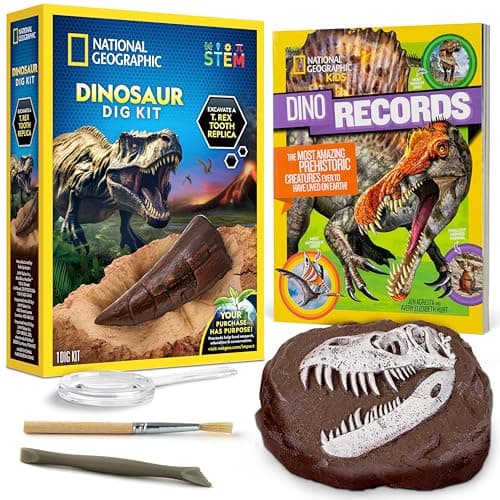
The dividing line is what is buried. National Geographic’s Dinosaur Dig Kit publishes two genuine items — a replica T-Rex tooth cast from a real fossil and actual dinosaur coprolite around 50 million years old. Kits with plastic figures inside are a craft activity, not paleontology.
Block & Beaker earns a commission when you buy through our links, at no cost to you. It never changes a ranking, and we say so plainly when the right answer is the cheaper set, or nothing at all. Full disclosure · How we pick.
At a glance
The picks, ranked
Tap any row to jump to the full reasoning. Prices come live from Amazon where we have them and read “check price” where we don’t — never a number we cannot stand behind today.
| # | Product | Best for | Price |
|---|---|---|---|
| 1 | Best dinosaur dig kit NATIONAL GEOGRAPHIC Dinosaur Dig Kit Genuine coprolite and a cast-from-fossil tooth, in a gypsum-and-clay brick designed to be excavated by a child. | Eight and up, for a child who wants the real thing | |
| 2 | 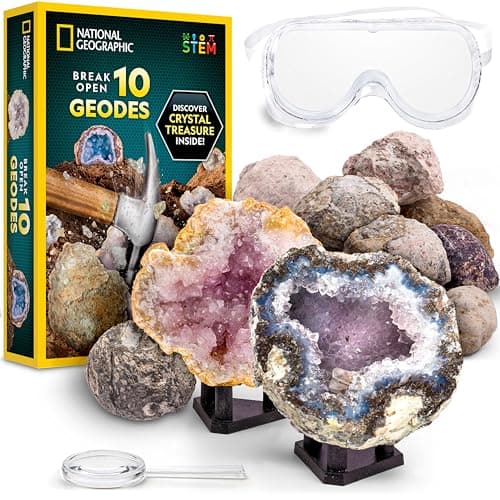 Best value in the same category NATIONAL GEOGRAPHIC Break Open 10 Premium Geodes Ten natural geodes rather than one brick, with goggles and display stands supplied. | Eight and up, for ten moments instead of one | |
| 3 | 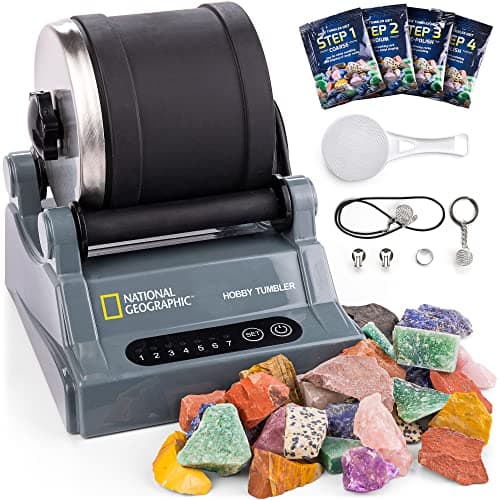 Best for a lasting fossil-hunting habit NATIONAL GEOGRAPHIC Hobby Rock Tumbler Kit A permanent machine that polishes anything the child picks up on a beach or a path. | Eight and up, once digging becomes collecting | |
| 4 | 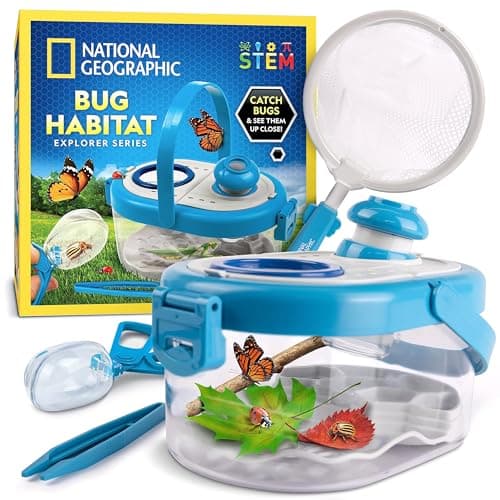 Best for a younger digger NATIONAL GEOGRAPHIC Bug Catcher Kit The same hunting instinct at half the age, with a specimen supply that is the whole garden. | Four and up, outdoors, with nothing to use up | |
| — | 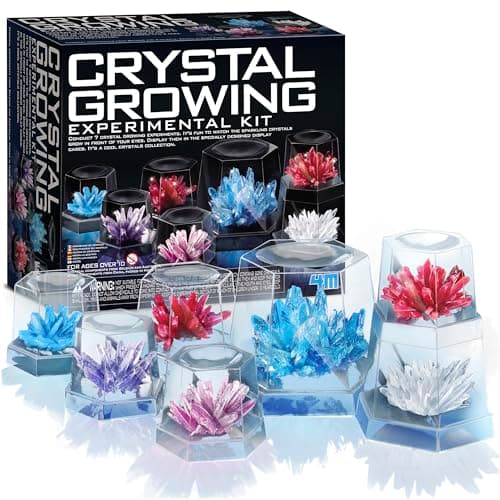 Not the same kind of patience 4M Crystal Growing Experiment Kit Shelved alongside dig kits as earth science, and it delivers nothing on the day. | Ten and up, for a child who can wait weeks |
5 picks, including 1 we tell you to skip. Ages shown are the manufacturer’s own rating, not ours.
What is actually in the brick
This is the whole buying decision and the packaging rarely makes it easy. Dig kits fall into three groups.
The arithmetic
Three kinds of dig kit
| Genuine fossil | A real specimen — coprolite, shark tooth, ammonite |
|---|---|
| Replica cast from a real fossil | Accurate shape, modern material |
| Moulded plastic figure | A toy in plaster — a craft activity |
| Nat Geo Dinosaur Dig Kit | One genuine coprolite plus one replica tooth |
| Egg-style dig kits | Typically a plastic figure per egg |
Why one brick is the format
A dig kit is a consumable by construction. The brick is destroyed to get at what is inside it and cannot be reset, so the published contents are also the published total.
That is not a criticism — it is simply the shape of the product, and it puts dig kits in the same bracket as geodes: an experience priced against an afternoon rather than a toy priced against years.
The practical consequence is that a dig kit is a second gift. As the main present it produces twenty good minutes and then a child looking for something else to do.
The mess, which nobody prints on the box
Gypsum and clay excavated with a chisel produces a lot of fine dust. National Geographic publishes the brick material precisely because it is softer and easier for a child to work, and softer material means more dust rather than less.
Plan for newspaper, a tray, or ideally a doorstep. This is the single most common reason a dig kit gets started and then abandoned halfway through — an adult stops it.
Worth knowing before you buy
Dig kits are rated 8+ and involve chipping tools and airborne dust. Eye protection is sensible even where it is not supplied, and the activity belongs on a surface that can be wiped or hosed rather than a carpet.
Genuine coprolite is fossilized — it is rock, and entirely inert — but hands should still be washed afterwards as with any dig.
Who each option suits
Eight and up, wants real fossils: the Nat Geo Dinosaur Dig Kit. Two genuine items, one afternoon.
Eight and up, wants repeat reveals: the geode kit. Ten cracks against one dig, at a comparable price.
Four to seven: the bug catcher. Same instinct, no age barrier, nothing consumed.
The interest has already stuck: the rock tumbler, which turns free beach stones into finished specimens.
Say the unwelcome thing
Do not buy a dig kit expecting a dinosaur skeleton
Kits that bury a moulded plastic skeleton are a plaster-and-chisel craft activity with a dinosaur theme. That is a perfectly good afternoon and it is not what the word fossil implies.
If the child wants real paleontology, read the contents list for the words genuine or authentic against a named specimen. National Geographic names the coprolite and its approximate age; that is the level of specificity to look for.
Where to go next
Rock and geology kits covers the wider category. The Break Open Geodes review goes deeper on the ten-geode alternative, and outdoor and nature kits covers the free-specimen end of the same instinct.
In full
Every pick, and what is wrong with it
Published specifications only, each linked back to the page it came from. Where a manufacturer publishes nothing, the row says so — we do not fill blanks in.
1. Best dinosaur dig kit
NATIONAL GEOGRAPHIC Dinosaur Dig Kit
National Geographic · JM80215 · maker rates it 8+
Genuine coprolite and a cast-from-fossil tooth, in a gypsum-and-clay brick designed to be excavated by a child.
- Fossils to excavate
- 2 — a replica T-Rex tooth cast from a real fossil, and genuine dinosaur coprolite
- Coprolite age
- Published as roughly 50 million years old
- Dig brick
- Gypsum and clay, published as easier for children to excavate
- Includes
- Digging tools and a full-color learning guide
National Geographic publishes two fossils to excavate: a replica T-Rex tooth cast from a real fossil, and genuine dinosaur coprolite published as roughly 50 million years old. The dig brick is gypsum and clay, described as easier for children to excavate, and the kit includes digging tools and a full-color learning guide, rated 8+.
The coprolite is the item that makes this worth buying. It is a real fossil — not a cast, not a replica — and a child who has chipped one out of a block owns an actual object from the deep past. That is a different experience from uncovering a moulded plastic skeleton.
Be clear about the format though. One brick means one dig. This is an afternoon with two keepable objects at the end, not a science course.
Replay signal
- Open-ended or one-shot
- One-shot: the brick is excavated once and cannot be reset
- Does anything run out
- Yes — two fossils, one dig, then it is a shelf object
- Room to grow
- The coprolite and tooth pair naturally with a magnifier or low-power microscope
- Adult required
- For the mess rather than the safety — this is a dusty activity
Why we say so: National Geographic publishes two fossils in a gypsum-and-clay brick. One brick means one dig, and the honest framing is an afternoon with two keepable objects at the end rather than a science course.
What’s wrong with it
One brick, one dig — and it makes a genuine mess that belongs outdoors or on newspaper.
| Fossils to excavate | 2 — a replica T-Rex tooth cast from a real fossil, and genuine dinosaur coprolite |
|---|---|
| Coprolite age | Published as roughly 50 million years old |
| Dig brick | Gypsum and clay, published as easier for children to excavate |
| Includes | Digging tools and a full-color learning guide |
| Stated age | 8+ |
| Consumables | Yes — the brick is destroyed to get the fossils out |
Every figure above is from National Geographic toys, Dinosaur Dig Kit. Blanks are shown as “not published” rather than filled in.
2. Best value in the same category
NATIONAL GEOGRAPHIC Break Open 10 Premium Geodes
National Geographic · NGGEO10 · maker rates it 8+
Ten natural geodes rather than one brick, with goggles and display stands supplied.
- Geodes
- 10, hand-selected, 1.25 to 2.25 inches across
- Includes
- Safety goggles, magnifying glass, display stands, full-color learning guide
- Stated age
- Manufacturer's minimum age 8 years
- Safety note
- Contains small parts; not for children under 3
National Geographic publishes ten hand-selected geodes 1.25 to 2.25 inches across, with safety goggles, a magnifying glass, display stands and a learning guide, minimum age 8.
If the appeal is the reveal — cracking something open and finding out what is inside — ten geodes deliver that ten times over, against a dig kit’s once. The trade is that geodes are geology rather than paleontology.
Replay signal
- Open-ended or one-shot
- One-shot by design. Ten geodes, ten moments, then it is a bowl of pretty rocks
- Does anything run out
- Yes, definitively — the clearest example on this site of a kit that ends
Why we say so: National Geographic publishes the count as ten natural geodes. Ten single-use items is a finite number, and we would rather say so than let a gift-buyer find out on Christmas afternoon.
What’s wrong with it
Rocks rather than fossils, and a hammer is involved.
| Geodes | 10, hand-selected, 1.25 to 2.25 inches across |
|---|---|
| Includes | Safety goggles, magnifying glass, display stands, full-color learning guide |
| Stated age | Manufacturer's minimum age 8 years |
| Safety note | Contains small parts; not for children under 3 |
| Consumables | Yes — ten geodes, and each one only cracks open once |
Every figure above is from National Geographic toys, Break Open Geodes. Blanks are shown as “not published” rather than filled in.
3. Best for a lasting fossil-hunting habit
NATIONAL GEOGRAPHIC Hobby Rock Tumbler Kit
National Geographic · Hobby Rock Tumbler · maker rates it 8+
A permanent machine that polishes anything the child picks up on a beach or a path.
- Includes
- Tumbler, four polishing grits, sifter, learning guide
- Rough gemstones
- Nine types
- Barrel
- Noise-reducing, leak-proof, stainless steel lid
- Controls
- One-touch settings with an automatic shutoff timer
National Geographic publishes four polishing grits, nine types of rough gemstone, a sifter, a noise-reducing barrel with a stainless steel lid, one-touch controls with an automatic shutoff timer and jewelry fastenings, rated 8+.
Children who love dig kits usually love collecting. This is the purchase that feeds that indefinitely, because after the supplied rough is gone the input is free.
Replay signal
- Open-ended or one-shot
- Semi-open: the machine is permanent, the grit is not, and rocks from a beach are free
- Does anything run out
- The grits and the supplied gemstones run out; refill grit is sold separately
- Room to grow
- Once the supplied rough is gone, the tumbler works on anything the child collects
- Adult required
- For loading and for the timer; the tumbling itself is unattended
Why we say so: National Geographic publishes four polishing grits, nine gemstone types and an automatic shutoff timer. The machine outliving the grit is what makes this different from a one-shot geology kit — but it runs for days per batch, so it is a patience purchase, not an afternoon one.
What’s wrong with it
Days per batch, and the four grits are consumed.
| Includes | Tumbler, four polishing grits, sifter, learning guide |
|---|---|
| Rough gemstones | Nine types |
| Barrel | Noise-reducing, leak-proof, stainless steel lid |
| Controls | One-touch settings with an automatic shutoff timer |
| Extras | Jewelry fastenings for the polished stones |
| Stated age | 8+ |
| Consumables | Yes — the four grits and the supplied rough are used up |
Every figure above is from National Geographic toys, Hobby Rock Tumbler Kit. Blanks are shown as “not published” rather than filled in.
4. Best for a younger digger
NATIONAL GEOGRAPHIC Bug Catcher Kit
National Geographic · Bug Catcher Kit · maker rates it 4+
The same hunting instinct at half the age, with a specimen supply that is the whole garden.
- Habitat
- Clear bug habitat with a removable base
- Viewers
- Latching lid with two magnified viewers — one fixed, one movable
- Tools
- Scissor-style bug catcher, net, tweezers
- Includes
- Learning guide
National Geographic publishes a clear habitat with a removable base, a latching lid with two magnified viewers, a scissor-style catcher, a net, tweezers and a learning guide, rated 4+, with no consumables.
Dig kits are rated 8+ because of the tools and the mess. For a five or six-year-old asking for one, this scratches the identical itch — go outside, find a thing, look at it closely — and it never runs out.
Replay signal
- Open-ended or one-shot
- Completely open-ended for the age — the garden restocks it
- Does anything run out
- Nothing runs out
- Room to grow
- Pairs naturally with a low-power microscope when the child wants a closer look
- Adult required
- For the catch-and-release rule; not for the looking
Why we say so: National Geographic publishes a habitat with two magnified viewers, a scissor catcher, a net and tweezers, rated 4+. The scissor catcher is the specification worth noticing: it lets a four-year-old pick up an insect without crushing it, which is the difference between a nature kit and a lesson about being gentle.
What’s wrong with it
Not fossils, and it is weather-dependent.
| Habitat | Clear bug habitat with a removable base |
|---|---|
| Viewers | Latching lid with two magnified viewers — one fixed, one movable |
| Tools | Scissor-style bug catcher, net, tweezers |
| Includes | Learning guide |
| Stated age | 4+ |
| Consumables | None — the specimens are outside and free |
Every figure above is from National Geographic toys, Bug Catcher Kit. Blanks are shown as “not published” rather than filled in.
Skip this one
4M Crystal Growing Experiment Kit
4M · 5557 · maker rates it 10+
Shelved alongside dig kits as earth science, and it delivers nothing on the day.
- Experiments
- 7 crystal-growing experiments
- Contents
- 3 bags of crystal compound, 3 bags of seeding mixture, stirring bowl and spoon, 7 display bases, 7 display covers, 7 ring templates
- Stated age
- 10 years and up
- Consumables
- Yes — the compound is the whole product
4M publishes 7 crystal-growing experiments with 3 bags of crystal compound and 3 bags of seeding mixture, plus 7 display bases, covers and ring templates, rated 10 years and up.
A dig kit is immediate: brick, tools, twenty minutes, fossil. A crystal kit is the opposite temperament entirely. A child who asked for a dig kit and received this will be disappointed on the day and again a week later.
Replay signal
- Open-ended or one-shot
- One-shot, seven times over
- Does anything run out
- Definitively. Three bags of compound, and when they are gone the kit is a set of display cases
Why we say so: 4M publishes three bags of crystal compound across seven experiments. That is the arithmetic that decides this purchase: it is seven results, spread over weeks because crystals take days to grow, and then it is finished. Excellent as an event; poor as the main present.
What’s wrong with it
Seven experiments taking days each, from three bags of compound.
| Experiments | 7 crystal-growing experiments |
|---|---|
| Contents | 3 bags of crystal compound, 3 bags of seeding mixture, stirring bowl and spoon, 7 display bases, 7 display covers, 7 ring templates |
| Stated age | 10 years and up |
| Consumables | Yes — the compound is the whole product |
| Time per experiment | Days, not minutes — crystals grow on their own schedule |
Every figure above is from 4M, Crystal Growing Experiment Kit. Blanks are shown as “not published” rather than filled in.
We are not putting a buy button on this one. It is easy enough to find if you want it anyway — but we would rather send you to something that gets played with twice.
Questions people actually ask
Frequently asked
Are the fossils in dinosaur dig kits real?
It depends entirely on the kit, and the packaging often obscures it. National Geographic's Dinosaur Dig Kit publishes two items: a replica T-Rex tooth cast from a real fossil, and genuine dinosaur coprolite published as roughly 50 million years old. Many cheaper dig kits bury a moulded plastic figure instead, which is a craft activity rather than paleontology.
What age is a dinosaur dig kit for?
National Geographic publishes 8+. The rating reflects the chipping tools and the dust rather than any hazard in the fossils. For a five or six-year-old with the same hunting instinct, a bug catcher is rated 4+ and never runs out.
How long does a dinosaur dig kit last?
One afternoon. The brick is destroyed to reach what is inside and cannot be reset, so the published contents are the total. That makes a dig kit a good second gift and a poor main present.
Are dinosaur dig kits messy?
Yes, and unavoidably so. National Geographic publishes the brick as gypsum and clay specifically because it is easier for a child to excavate, and softer material produces more fine dust. Newspaper, a tray or a doorstep is the practical answer.
Sources
Where these figures came from
Every specification on this page traces to one of these. If a manufacturer publishes nothing on a point, the page says so rather than filling the gap.
Read next
Where to go from here
Back to Science Kits, or read how we pick.