The picks
Math Games and Toys for Kids
Children detect a worksheet in a box within about a minute. These are the ones where the mathematics is the game.
By Sawyer V. · Published
The short answer
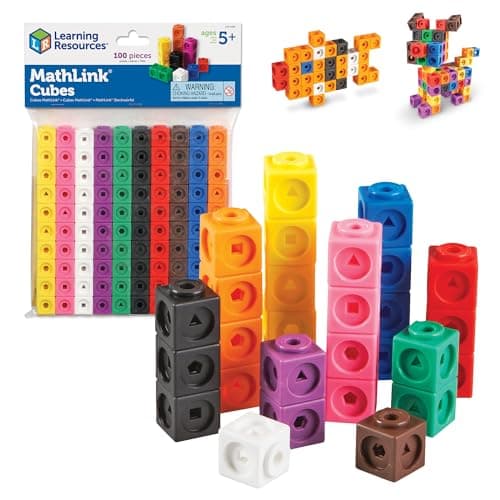
Avoid anything that asks questions. The mathematics that sticks is structural — spatial reasoning in a packing puzzle, arrays and volume in linking cubes, ratio in a gear train. MathLink Cubes publish 100 cubes that connect on all sides, which is what turns counting into building.
Block & Beaker earns a commission when you buy through our links, at no cost to you. It never changes a ranking, and we say so plainly when the right answer is the cheaper set, or nothing at all. Full disclosure · How we pick.
At a glance
The picks, ranked
Tap any row to jump to the full reasoning. Prices come live from Amazon where we have them and read “check price” where we don’t — never a number we cannot stand behind today.
| # | Product | Best for | Price |
|---|---|---|---|
| 1 | Best overall MathLink Cubes, Set of 100 A hundred cubes that link on all six sides, covering counting at five and volume and arrays at nine. | Five and up, and the single most useful math purchase there is | |
| 2 | 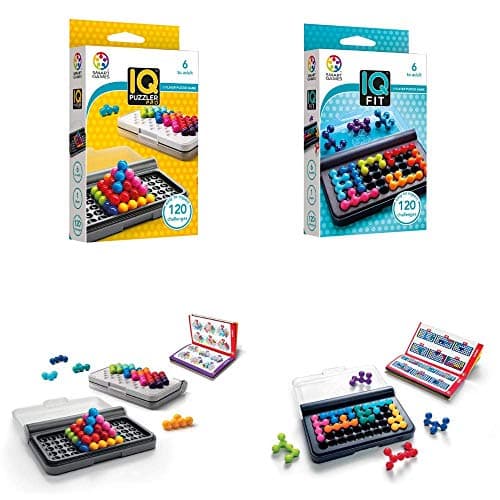 Best spatial reasoning SmartGames IQ Puzzler Pro One hundred and twenty packing puzzles in 2D and 3D, which is spatial mathematics with no numbers in it at all. | Six and up, for geometry that never mentions geometry | |
| 3 | 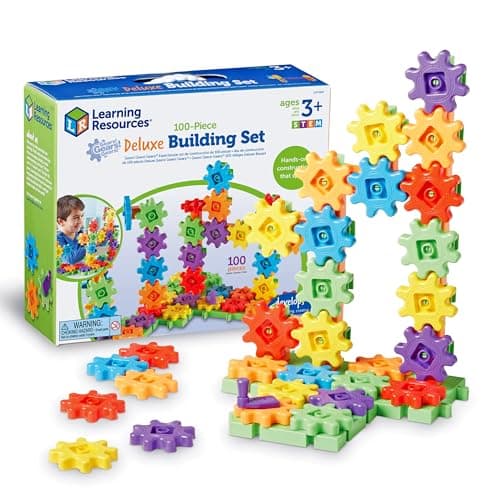 Best for ratio and multiplication Gears! Gears! Gears! 100-Piece Deluxe Building Set A gear train is a multiplication table that moves, and a three-year-old can build one. | Three and up, with the math arriving later | |
| 4 | 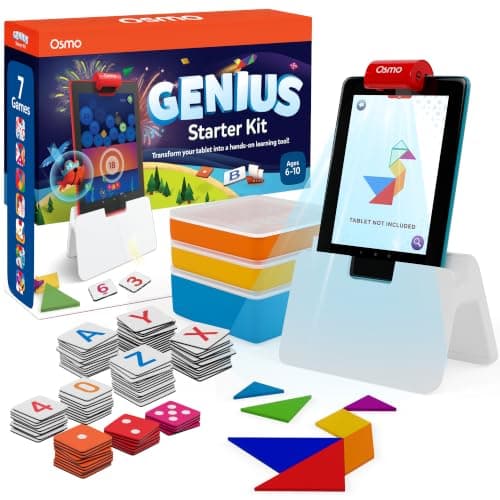 Best if a screen is happening anyway Osmo Genius Starter Kit for iPad Five games including a genuinely good number game, played with physical tiles on a real table. | Six to ten, in a household where the iPad is already in use | |
| — | 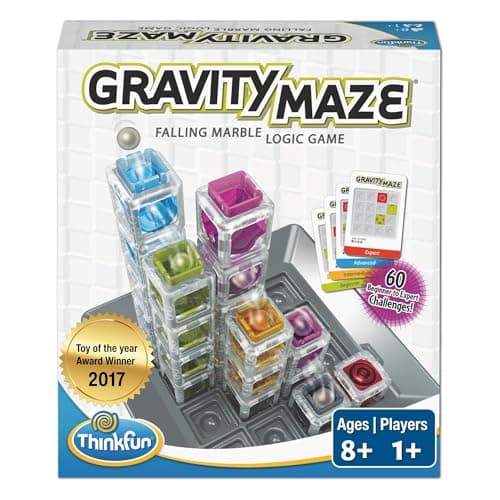 Not a math game ThinkFun Gravity Maze Excellent spatial logic, frequently sold as a math toy, and containing no mathematics. | Logic rather than mathematics |
5 picks, including 1 we tell you to skip. Ages shown are the manufacturer’s own rating, not ours.
Why most math games do not work
The dominant format is arithmetic drill with a board attached: roll, answer a sum, move. Children see through it in about a minute, and reasonably so — it is homework with a spinner, and the game part is a reward mechanism bolted onto the part nobody wanted to do.
The games that work put the mathematics in the mechanic. Nobody is asked a question. The child does something, and the thing they did was mathematical.
Fitting twelve pieces into a tray is tessellation. Building a 4 by 6 rectangle of cubes is multiplication. Counting how many turns the small gear makes per turn of the large one is ratio. In none of those is anybody quizzed.
What each pick actually teaches
The arithmetic
Mechanic to mathematics
| MathLink Cubes — 100 cubes, all-sides connection | Counting, arrays, volume |
|---|---|
| IQ Puzzler Pro — 120 packing challenges | Rotation, reflection, tessellation |
| Gears — 46 gears, hand crank | Ratio, multiplication, division |
| Osmo Numbers — 40 number tiles | Composition and decomposition of number |
| Gravity Maze — 60 route challenges | Spatial planning, not mathematics |
The one thing to actually say out loud
Manipulatives do not teach on their own. A hundred linking cubes in a tub is a hundred linking cubes in a tub until somebody asks a question about them, and the question does not need to be clever.
- “Can you make a rectangle with twelve cubes? How many different ones are there?” — that is factorization, at seven.
- “How many little cubes fit in this box?” — volume, without the word.
- “How many times does this gear go round for one turn of that one?” — ratio, at seven, from counting teeth.
One question per session is plenty. The failure mode here is an adult turning a toy into a lesson, which produces exactly the reaction the format was meant to avoid.
Say the unwelcome thing
Do not buy a math game to fix a math problem
If a child is struggling at school, a game is unlikely to be the intervention. What these do well is keep mathematical thinking present and enjoyable for a child who is broadly fine, and give a child who likes it somewhere to go.
Buying a math game as remediation puts the child in the position of being given homework disguised as a present, which they will detect. That does more harm than the game does good.
What to buy
- Five to nine, one purchase: MathLink Cubes. Cheapest here and the widest span.
- Six and up, spatial: IQ Puzzler Pro.
- Three to six: Gears, with the ratio question saved for later.
- Screen already in use: Osmo Genius, for Numbers and Tangram.
For pure reasoning rather than number, see logic puzzles. For programming logic at a table, coding board games.
In full
Every pick, and what is wrong with it
Published specifications only, each linked back to the page it came from. Where a manufacturer publishes nothing, the row says so — we do not fill blanks in.
1. Best overall
MathLink Cubes, Set of 100
Learning Resources · LER4285 · maker rates it 5+
A hundred cubes that link on all six sides, covering counting at five and volume and arrays at nine.
- Cubes
- 100, in 10 colors
- Cube size
- 3/4 inch
- Connection
- Links on all sides, with geometric shape cut-outs for patterning
- Stated age
- Ages 5 and up
Learning Resources publishes 100 cubes in 10 colors, three quarters of an inch each, that link on all sides with geometric shape cut-outs for patterning, rated 5 and up.
All-sides connection is the specification that matters and it is easy to miss. A cube that joins only end to end makes towers and number lines. A cube that joins on six faces makes arrays, rectangles, volumes and models — which is the difference between counting and mathematics.
The same hundred cubes are a counting toy at five, a multiplication array at seven, and a volume demonstration at nine. Nothing else here spans that range, and nothing else here is cheaper.
Replay signal
- Open-ended or one-shot
- Completely open-ended, and unusually cheap for something that is
- Does anything run out
- Nothing runs out
- Room to grow
- The same cubes cover counting at five and volume, arrays and fractions at nine
Why we say so: Learning Resources publishes that the cubes link on all sides with geometric cut-outs. All-sides connection is what turns a counting toy into a building toy — a cube that only joins end to end makes towers, and one that joins on six faces makes arrays, volumes and models.
What’s wrong with it
It looks like school equipment because it is school equipment, and some children react to that.
| Cubes | 100, in 10 colors |
|---|---|
| Cube size | 3/4 inch |
| Connection | Links on all sides, with geometric shape cut-outs for patterning |
| Stated age | Ages 5 and up |
| Batteries | None |
| Consumables | None |
Every figure above is from Learning Resources, MathLink Cubes, Set of 100. Blanks are shown as “not published” rather than filled in.
2. Best spatial reasoning
SmartGames IQ Puzzler Pro
SmartGames · SG455 · maker rates it 6+
One hundred and twenty packing puzzles in 2D and 3D, which is spatial mathematics with no numbers in it at all.
- Challenges
- 120, across 2D and 3D modes
- Contents
- Compact board with a transparent lid, 12 puzzle pieces, challenge booklet with solutions
- Players
- 1
- Batteries
- None
SmartGames publishes 120 challenges across 2D and 3D modes from 12 puzzle pieces, in a compact case, rated 6 to adult.
Packing puzzles are pure spatial reasoning: rotation, reflection, tessellation and the ability to hold a shape in your head and turn it. That is a genuinely mathematical skill and it correlates with later geometry in a way arithmetic drill does not.
The 3D mode is where it gets interesting, because the same pieces have to be reasoned about in three dimensions rather than two — which is a considerable step and is why the top challenges hold up for adults.
Replay signal
- Open-ended or one-shot
- Finite, but 120 challenges is roughly double what most single-player puzzle games ship with
- Does anything run out
- The booklet ends. The pieces do not
- Room to grow
- The same 12 pieces run 2D and 3D challenge sets, so the difficulty ceiling is well above the entry point
Why we say so: SmartGames publishes 120 challenges across two modes from a single 12-piece set. Twelve pieces generating 120 published problems is the best challenge-per-component ratio of any logic game on this site, and it is the reason this one travels well and lasts.
What’s wrong with it
There is no arithmetic here whatsoever. If a child specifically needs number practice, this is the wrong purchase.
| Challenges | 120, across 2D and 3D modes |
|---|---|
| Contents | Compact board with a transparent lid, 12 puzzle pieces, challenge booklet with solutions |
| Players | 1 |
| Batteries | None |
| Stated age | Ages 6 to adult |
| Travel case | Yes — the board is the case |
Every figure above is from SmartGames, IQ Puzzler Pro. Blanks are shown as “not published” rather than filled in.
3. Best for ratio and multiplication
Gears! Gears! Gears! 100-Piece Deluxe Building Set
Learning Resources · LER9162 · maker rates it 3+
A gear train is a multiplication table that moves, and a three-year-old can build one.
- Pieces
- 100
- Contents
- 46 gears, 26 square pillars, 21 six-way axles, 6 interlocking bases, 1 crank handle, activity guide
- Stated age
- 3+
- Batteries
- None — hand-cranked
Learning Resources publishes 46 gears, 26 square pillars, 21 six-way axles, 6 interlocking bases, a crank handle and an activity guide, rated 3+, with no batteries.
Gear ratios are multiplication and division made physical. A small gear driving a large one turns slowly; the relationship is exact, visible and countable, and a seven-year-old can work it out by counting teeth.
That does need pointing out at least once. Left alone, a child enjoys the movement without noticing the ratio — but one question (“how many times does the little one go round for one turn of the big one?”) converts the toy permanently.
Replay signal
- Open-ended or one-shot
- Open-ended, with immediate cause and effect: turn the handle, the whole thing moves
- Does anything run out
- Nothing runs out
- Room to grow
- Sets from the same line interlock, so a second box doubles the machine
Why we say so: Learning Resources publishes the full 100-piece contents list, the ages 3+ rating and the hand crank. No batteries appear in the published contents, which is why this one still works when everything else in the toy box is flat.
What’s wrong with it
The mathematics is entirely implicit. Without an adult occasionally pointing at it, it stays a nice moving toy.
| Pieces | 100 |
|---|---|
| Contents | 46 gears, 26 square pillars, 21 six-way axles, 6 interlocking bases, 1 crank handle, activity guide |
| Stated age | 3+ |
| Batteries | None — hand-cranked |
| Consumables | None |
Every figure above is from Learning Resources, Gears! Gears! Gears! Deluxe Building Set. Blanks are shown as “not published” rather than filled in.
4. Best if a screen is happening anyway
Osmo Genius Starter Kit for iPad
Osmo · Genius Starter Kit · maker rates it 6-10
Five games including a genuinely good number game, played with physical tiles on a real table.
- Games
- Five — Tangram, Numbers, Words, Newton and Masterpiece
- Contents
- Osmo Base and reflector, 52 Words tiles, 40 Numbers tiles, 7 Tangram pieces, stackable storage
- Screen required
- Yes — an iPad, not included
- Stated age
- Ages 6-10
Osmo publishes five games — Tangram, Numbers, Words, Newton and Masterpiece — with the Osmo Base and reflector, 52 Words tiles, 40 Numbers tiles, 7 Tangram pieces and stackable storage, rated 6-10, requiring an iPad.
Two of the five are directly mathematical. Numbers has the child physically place tiles to make a target value, which makes composition and decomposition tangible rather than typed. Tangram is classical spatial geometry.
The honest framing: if a tablet is going to be in use regardless, this is a considerably better thing to be doing on it than most alternatives, because the child’s hands are on physical objects and the screen is only the feedback.
Replay signal
- Open-ended or one-shot
- Five separate games rather than one, so it degrades gracefully — when one is exhausted, four remain
- Does anything run out
- Nothing physical runs out
- Room to grow
- Numbers and Tangram both scale well past the stated top age; Words does not
- Adult required
- Only to release the iPad, which in most households is the actual constraint
Why we say so: Osmo publishes the five named games and the exact tile counts. Five games in one box is the honest reason this is better value than a single-game Osmo kit, and the iPad requirement is a published dependency rather than an inference.
What’s wrong with it
An iPad is a published requirement, and one of the five games is spelling rather than anything mathematical.
| Games | Five — Tangram, Numbers, Words, Newton and Masterpiece |
|---|---|
| Contents | Osmo Base and reflector, 52 Words tiles, 40 Numbers tiles, 7 Tangram pieces, stackable storage |
| Screen required | Yes — an iPad, not included |
| Stated age | Ages 6-10 |
| Batteries | None in the physical pieces |
Every figure above is from Osmo, Genius Starter Kit. Blanks are shown as “not published” rather than filled in.
Skip this one
ThinkFun Gravity Maze
ThinkFun · 44001006 · maker rates it 8+
Excellent spatial logic, frequently sold as a math toy, and containing no mathematics.
- Challenges
- 60, beginner to expert
- Contents
- Game grid, 9 towers, 1 target piece, 3 marbles, 60 challenge cards
- Players
- 1
- Batteries
- None
ThinkFun publishes 60 challenges with a grid, nine towers, a target and three marbles, rated 8+.
It is here because it appears constantly in math gift lists and it is not a math game. What it trains is spatial visualization and planning, which are real cognitive skills and are not arithmetic, fractions, place value or anything a math teacher would recognize as content.
Buy it for what it is — it is on the logic puzzles page and it does well there. Just do not buy it because a child is struggling with times tables.
Replay signal
- Open-ended or one-shot
- Finite by design — 60 challenges, and a determined child will finish them
- Does anything run out
- Nothing physically runs out, but the challenge cards do end
- Room to grow
- The towers can be used freely once the cards are done, though nothing in the box prompts that
Why we say so: ThinkFun publishes 60 challenges and a fixed component list. Sixty is a real number with a real end, and single-player puzzle games are the category where that matters most — better to know before you buy it as the main present.
What’s wrong with it
Bought to support math specifically, it will not do it. Sixty challenges of route planning is reasoning, not number.
| Challenges | 60, beginner to expert |
|---|---|
| Contents | Game grid, 9 towers, 1 target piece, 3 marbles, 60 challenge cards |
| Players | 1 |
| Batteries | None |
| Stated age | Ages 8+ |
| Consumables | None |
Every figure above is from ThinkFun, Gravity Maze. Blanks are shown as “not published” rather than filled in.
We are not putting a buy button on this one. It is easy enough to find if you want it anyway — but we would rather send you to something that gets played with twice.
Questions people actually ask
Frequently asked
Do math games actually teach math?
The ones where the mathematics is in the mechanic do. Fitting pieces into a tray is tessellation; building a rectangle of cubes is multiplication; counting gear turns is ratio. Games that ask questions are arithmetic drill with a board attached, and children detect that in about a minute.
What is the best math toy for a 6-year-old?
MathLink Cubes. Learning Resources publishes 100 cubes that link on all sides with geometric cut-outs, rated 5+. All-sides connection is what lets the same set be counting at five and arrays and volume at nine.
Is Gravity Maze a math game?
No, despite appearing constantly in math gift lists. It trains spatial visualization and planning, which are real skills and are not arithmetic, fractions or place value. Buy it as a logic game and it is excellent. Where it belongs.
Should I buy a math game if my child is struggling at school?
Probably not as the intervention. A game bought as remediation reads to the child as homework disguised as a present, and they will notice. These work best at keeping mathematical thinking enjoyable for a child who is broadly fine.
Sources
Where these figures came from
Every specification on this page traces to one of these. If a manufacturer publishes nothing on a point, the page says so rather than filling the gap.
Read next
Where to go from here
Back to Math & Logic, or read how we pick.