Single review
National Geographic Volcano Science Kit Review
Reviewed from National Geographic's published specifications. We have not built it, and one word in the spec list decides whether it is worth it.
By Sawyer V. · Published
The short answer
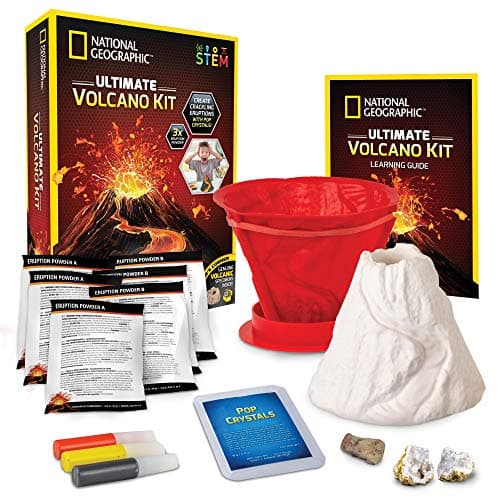
The National Geographic Volcano Science Kit is worth it because the mold is published as reusable. It includes plaster, a volcano mold, paints and a paintbrush, eruption powder, a learning guide and two rock specimens — a geode and a pumice sample — rated 8 years and up with adult supervision published.
Block & Beaker earns a commission when you buy through our links, at no cost to you. It never changes a ranking, and we say so plainly when the right answer is the cheaper set, or nothing at all. Full disclosure · How we pick.
At a glance
The picks, ranked
Tap any row to jump to the full reasoning. Prices come live from Amazon where we have them and read “check price” where we don’t — never a number we cannot stand behind today.
| # | Product | Best for | Price |
|---|---|---|---|
| 1 | The product NATIONAL GEOGRAPHIC Volcano Science Kit A reusable mold and powder for multiple eruptions, plus two real rock specimens. | Eight to eleven, with an adult and a covered table | |
| 2 | 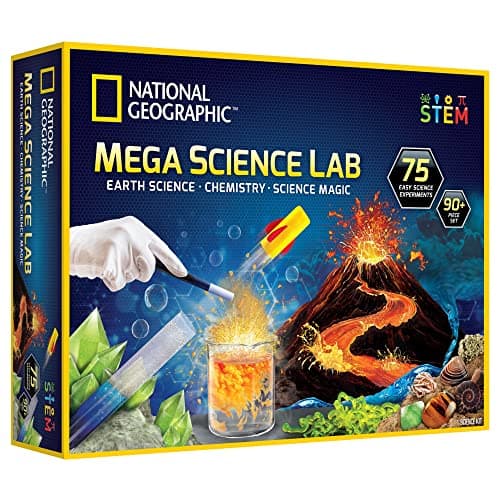 The volcano plus everything else NATIONAL GEOGRAPHIC Mega Science Lab 45 experiments in the kit including a volcano build, plus 85+ household ones. | Eight and up | |
| 3 | 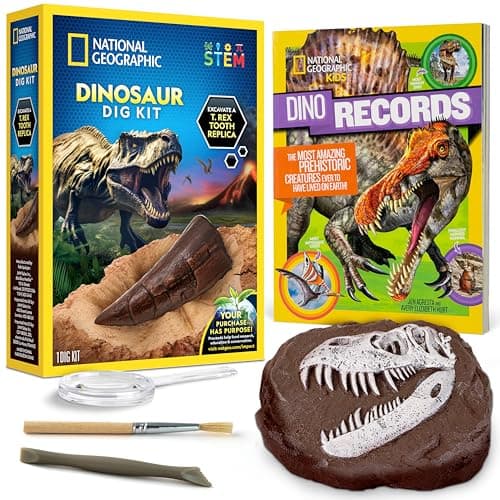 The other classic dig NATIONAL GEOGRAPHIC Dinosaur Dig Kit Two fossils to excavate, one of them genuine coprolite. | Eight and up | |
| — | 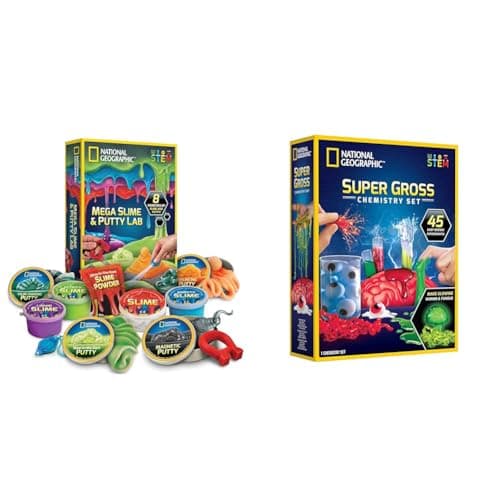 Not the same thing NATIONAL GEOGRAPHIC Mega Slime Kit & Putty Lab Eight varieties, seven of them premade. | Eight and up |
4 picks, including 1 we tell you to skip. Ages shown are the manufacturer’s own rating, not ours.
What we can tell you, and what we cannot
We have not built it. No lab, no samples, no test children, and no star rating on this page or in its structured data.
National Geographic publishes the contents, the reusable mold, the two rock specimens, the age rating and the supervision note. Exactly how many eruptions the supplied powder delivers is published only as “multiple”, and we are not going to put a number on it.
The specification that decides it
The arithmetic
Nat Geo Volcano Science Kit, published
| Includes | Plaster, volcano mold, paints and paintbrush, eruption powder, learning guide |
|---|---|
| Rock specimens | 2 — a geode and a pumice sample |
| Mold | Reusable — the volcano survives repeat eruptions |
| Eruptions | Powder for multiple eruptions; the powder is the consumable |
| Stated age | 8 years and up, adult supervision published |
| Consumables | Yes — plaster and eruption powder |
What the numbers mean in practice
Reusable is the difference between a model and a demonstration. Cast once, erupt several times, and a child can change one variable — more powder, less water, a wider crater — and compare. That is the whole scientific method in a kitchen.
The consumables set the end date. Plaster and powder run out. Bicarbonate of soda and vinegar from a supermarket continue the eruptions afterwards, which is worth knowing before the child thinks the kit is finished.
Adult supervision is published, not implied. Wet plaster, paints and a fizzing reaction on a table is a supervised activity, and the maker says so.
Two real specimens beat a bigger powder bag. A geode and a pumice sample are permanent objects that stay interesting after the model is on a shelf.
Worth knowing before you buy
Two rock specimens make it a geology kit as well. A geode and a pumice sample are published inclusions, and pumice is the one that explains why volcanic rock can float — a better lesson than the eruption itself.
Who should skip it
Anyone who already owns the Mega Science Lab. It publishes a volcano build among its 45 experiments.
Households that cannot tolerate mess. Plaster, paint and an eruption is the full trio. There is no tidy version of this kit.
Under-eights. The published floor is 8 with supervision, largely because of the plaster stage.
Say the unwelcome thing
Do not buy it for the eruption alone
A baking-soda eruption costs almost nothing to stage in a bowl. What you are paying for here is the reusable mold, the two rock specimens and the guide — if the child only wants the fizz, do that this afternoon for free and spend the money on something permanent.
What you supply after the powder
The kit ends when the eruption powder does, but the volcano does not. A reusable mold plus a cast model is a permanent piece of equipment, and the reaction that drives it is ordinary kitchen chemistry.
Baking soda and vinegar continue the eruptions indefinitely, with dish soap for foam and food coloring for lava. None of that is published in the kit, and all of it is what turns a one-box purchase into a repeatable experiment.
It is worth telling a child that in advance. A kit that is “finished” goes on a shelf; a model that can erupt again whenever an adult says yes stays in use for a year.
Where it sits
This kit appears in volcano science kits, science experiment kits and rock and geology kits.
In full
Every pick, and what is wrong with it
Published specifications only, each linked back to the page it came from. Where a manufacturer publishes nothing, the row says so — we do not fill blanks in.
1. The product
NATIONAL GEOGRAPHIC Volcano Science Kit
National Geographic · Volcano Science Kit · maker rates it 8+
A reusable mold and powder for multiple eruptions, plus two real rock specimens.
- Includes
- Plaster, volcano mold, paints and paintbrush, eruption powder, learning guide
- Rock specimens
- 2 — a geode and a pumice sample
- Mold
- Published as reusable, so the volcano survives repeat eruptions
- Eruptions
- Eruption powder for multiple eruptions; the powder is the consumable
National Geographic publishes plaster, a volcano mold, paints and a paintbrush, eruption powder and a learning guide, plus two rock specimens — a geode and a pumice sample. The mold is published as reusable, so the volcano survives repeat eruptions, and the powder covers multiple eruptions. Stated age 8 years and up, with adult supervision published.
“Reusable mold” is the specification that separates this from the single-use versions of the same idea. A one-shot plaster volcano is an afternoon; a mold means the same child can cast another one next month.
The two rock specimens are a quiet bonus that fits the subject properly: pumice is volcanic rock a child can hold while the model erupts, which is a better lesson than the eruption itself.
Replay signal
- Open-ended or one-shot
- Semi-open: the built volcano is permanent, the eruptions are not
- Does anything run out
- The eruption powder runs out; household bicarbonate and vinegar do not
- Room to grow
- Once the supplied powder is gone the same volcano erupts on kitchen ingredients
- Adult required
- Published as requiring adult supervision; the build stage involves wet plaster
Why we say so: National Geographic publishes a reusable mold and eruption powder for multiple eruptions. A reusable volcano is the difference between a single afternoon and a prop that keeps working on kitchen-cupboard chemistry.
What’s wrong with it
Plaster and eruption powder are consumables — the kit does end.
| Includes | Plaster, volcano mold, paints and paintbrush, eruption powder, learning guide |
|---|---|
| Rock specimens | 2 — a geode and a pumice sample |
| Mold | Published as reusable, so the volcano survives repeat eruptions |
| Eruptions | Eruption powder for multiple eruptions; the powder is the consumable |
| Stated age | 8 years and up, adult supervision published |
| Consumables | Yes — plaster and eruption powder |
Every figure above is from National Geographic toys, Volcano Science Kit. Blanks are shown as “not published” rather than filled in.
2. The volcano plus everything else
NATIONAL GEOGRAPHIC Mega Science Lab
National Geographic · Mega Science Lab · maker rates it 8+
45 experiments in the kit including a volcano build, plus 85+ household ones.
- Experiments in the kit
- 45, across chemistry, earth science and science magic
- Bonus guide
- 85+ further experiments using household items, for 130+ in total
- Includes
- Volcano build, glow-in-the-dark crystal growth, and the tools for both
- Stated age
- 8+
National Geographic publishes 45 experiments across chemistry, earth science and science magic, plus a bonus guide of 85+ further experiments for 130+ in total, including a volcano build and glow-in-the-dark crystal growth, rated 8+.
Worth checking before buying a standalone volcano: this kit publishes a volcano build among its 45. See the Mega Science Lab review.
Replay signal
- Open-ended or one-shot
- Guided, and the 45 in-kit experiments end. The 85 household ones do not
- Does anything run out
- The supplied materials run out; the household half of the book never does
- Room to grow
- The bonus guide is the genuinely durable part, and it costs the manufacturer almost nothing to include
- Adult required
- Supervision for the chemistry third; the earth science and household experiments are largely self-run
Why we say so: National Geographic publishes 45 in-kit experiments plus a bonus guide of 85+ using household items. That second number is why this kit outlasts most of its price band: roughly two-thirds of the published content needs nothing but a kitchen.
What’s wrong with it
More kit, and its chemicals are consumed too.
| Experiments in the kit | 45, across chemistry, earth science and science magic |
|---|---|
| Bonus guide | 85+ further experiments using household items, for 130+ in total |
| Includes | Volcano build, glow-in-the-dark crystal growth, and the tools for both |
| Stated age | 8+ |
| Consumables | Yes — the supplied chemicals and crystal compounds are used up |
Every figure above is from National Geographic toys, Mega Science Lab. Blanks are shown as “not published” rather than filled in.
3. The other classic dig
NATIONAL GEOGRAPHIC Dinosaur Dig Kit
National Geographic · JM80215 · maker rates it 8+
Two fossils to excavate, one of them genuine coprolite.
- Fossils to excavate
- 2 — a replica T-Rex tooth cast from a real fossil, and genuine dinosaur coprolite
- Coprolite age
- Published as roughly 50 million years old
- Dig brick
- Gypsum and clay, published as easier for children to excavate
- Includes
- Digging tools and a full-color learning guide
National Geographic publishes two fossils to excavate — a replica T-Rex tooth cast from a real fossil, and genuine dinosaur coprolite published as roughly 50 million years old — in a gypsum-and-clay dig brick, with digging tools and a full-color learning guide, rated 8+.
Same age, same one-afternoon shape, but what you keep at the end is a real fossil rather than a painted model. See the Dinosaur Dig review.
Replay signal
- Open-ended or one-shot
- One-shot: the brick is excavated once and cannot be reset
- Does anything run out
- Yes — two fossils, one dig, then it is a shelf object
- Room to grow
- The coprolite and tooth pair naturally with a magnifier or low-power microscope
- Adult required
- For the mess rather than the safety — this is a dusty activity
Why we say so: National Geographic publishes two fossils in a gypsum-and-clay brick. One brick means one dig, and the honest framing is an afternoon with two keepable objects at the end rather than a science course.
What’s wrong with it
The brick is destroyed to get them out — strictly one use.
| Fossils to excavate | 2 — a replica T-Rex tooth cast from a real fossil, and genuine dinosaur coprolite |
|---|---|
| Coprolite age | Published as roughly 50 million years old |
| Dig brick | Gypsum and clay, published as easier for children to excavate |
| Includes | Digging tools and a full-color learning guide |
| Stated age | 8+ |
| Consumables | Yes — the brick is destroyed to get the fossils out |
Every figure above is from National Geographic toys, Dinosaur Dig Kit. Blanks are shown as “not published” rather than filled in.
Skip this one
NATIONAL GEOGRAPHIC Mega Slime Kit & Putty Lab
National Geographic · NGMEGASPL · maker rates it 8+
Eight varieties, seven of them premade.
- Varieties
- 8 in total — 7 premade plus 1 DIY slime lab
- Premade types
- Magnetic putty, fluffy slime, glow-in-the-dark putty, liquid slime, color-changing putty, snotty slime, bouncing putty
- DIY portion
- One glow-in-the-dark slime lab with a stir stick
- Storage
- 8 tins
National Geographic publishes 8 varieties in total — 7 premade putties and slimes plus 1 DIY glow-in-the-dark slime lab — in 8 tins with a learning guide, rated 8 and up.
Cross-shopped with the volcano constantly because both are “gross science” boxes from the same brand. The volcano is a build; the slime kit is mostly a tin of putty.
Replay signal
- Open-ended or one-shot
- The seven premade putties are reusable toys rather than one-shot experiments
- Does anything run out
- Only the DIY lab runs out
- Room to grow
- Magnetic and color-changing putty demonstrate real properties, not just texture
- Adult required
- Not for the premade putties; briefly for the DIY mix
Why we say so: National Geographic publishes seven premade varieties plus one DIY lab. That ratio is the review: most of this kit is a reusable sensory toy with a science label, and one eighth of it is the experiment.
What’s wrong with it
Only one of the eight is actually made by the child.
| Varieties | 8 in total — 7 premade plus 1 DIY slime lab |
|---|---|
| Premade types | Magnetic putty, fluffy slime, glow-in-the-dark putty, liquid slime, color-changing putty, snotty slime, bouncing putty |
| DIY portion | One glow-in-the-dark slime lab with a stir stick |
| Storage | 8 tins |
| Includes | Full-color learning guide |
| Stated age | 8 and up |
| Consumables | Partly — the DIY ingredients are used once; the putties are reusable |
Every figure above is from National Geographic toys, Mega Slime Kit & Putty Lab. Blanks are shown as “not published” rather than filled in.
We are not putting a buy button on this one. It is easy enough to find if you want it anyway — but we would rather send you to something that gets played with twice.
Questions people actually ask
Frequently asked
Is the National Geographic Volcano Science Kit worth it?
Yes, mainly because the mold is published as reusable, so the volcano survives repeat eruptions. It also includes two real rock specimens - a geode and a pumice sample - alongside the plaster, paints, eruption powder and learning guide.
How many times can you erupt it?
National Geographic publishes eruption powder for multiple eruptions without giving a number, and we are not going to invent one. Household baking soda and vinegar continue the eruptions after the supplied powder is gone.
What age is the volcano kit for?
National Geographic publishes 8 years and up, with adult supervision published. The plaster-mixing stage is the reason for both. Volcano science kits.
Does the volcano kit run out?
Partly. The plaster and eruption powder are consumables; the mold is published as reusable and the geode and pumice sample are permanent.
Volcano kit or the Mega Science Lab?
Check what you already own - National Geographic publishes a volcano build among the Mega Science Lab's 45 experiments, alongside a bonus guide of 85+ household experiments. Mega Science Lab review.
Can you keep erupting it after the kit runs out?
Yes. The mold is published as reusable and the cast model is permanent, so household baking soda and vinegar continue the eruptions once the supplied powder is gone.
Sources
Where these figures came from
Every specification on this page traces to one of these. If a manufacturer publishes nothing on a point, the page says so rather than filling the gap.
Read next
Where to go from here
Back to Reviews, or read how we pick.