Guide and picks
Buying Above the Age Rating
Half the age ratings on this site are a floor you may cross. The other half are a hazard line. They look identical on the box.
By Sawyer V. · Published
The short answer
Ask what the rating is protecting against. If it is difficulty — reading, planning, working backwards — buying a year ahead usually fails and costs you the toy, because a child who stalls concludes the thing is not for them. If it is a hazard — marbles, chemicals, small parts, mains or 9V power — the rating is not a difficulty curve and should not be crossed at all.
Block & Beaker earns a commission when you buy through our links, at no cost to you. It never changes a ranking, and we say so plainly when the right answer is the cheaper set, or nothing at all. Full disclosure · How we pick.
At a glance
The picks, ranked
Tap any row to jump to the full reasoning. Prices come live from Amazon where we have them and read “check price” where we don’t — never a number we cannot stand behind today.
| # | Product | Best for | Price |
|---|---|---|---|
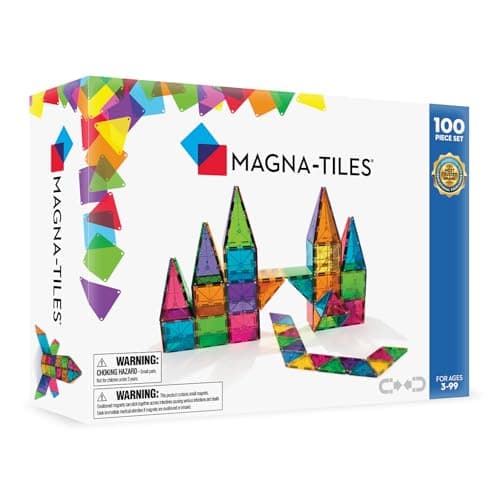
| 1 | A rating with no ceiling at all MAGNA-TILES Classic 100-Piece Set Published 3-99 years — the clearest example of a floor with nothing above it. | Three to ninety-nine, as the maker writes it | |
| 2 | 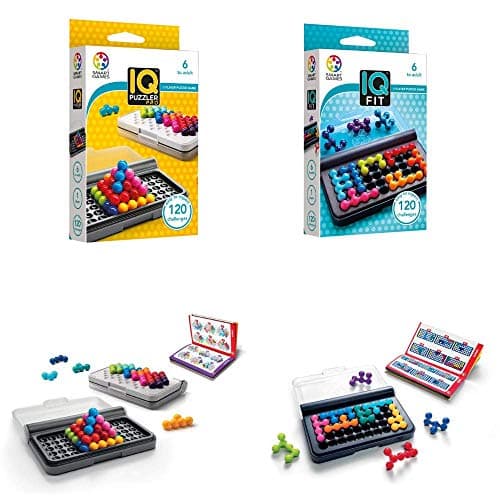 A difficulty floor, and the classic early buy SmartGames IQ Puzzler Pro 120 challenges published 6 to adult — a year early it reads as a wall. | Six to adult | |
| 3 | 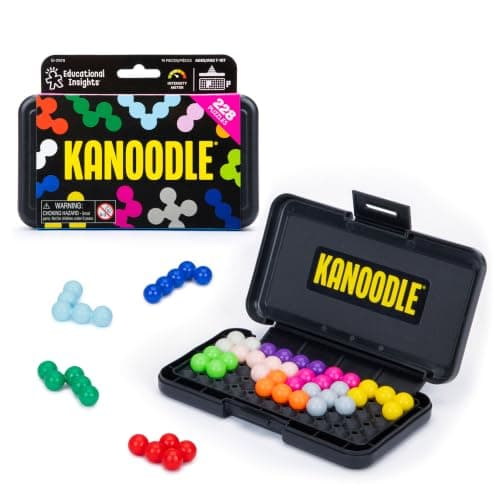 A floor worth waiting for Kanoodle 200+ puzzles at 7 and up — the largest published count here, and worth the wait. | Seven and up | |
| 4 | 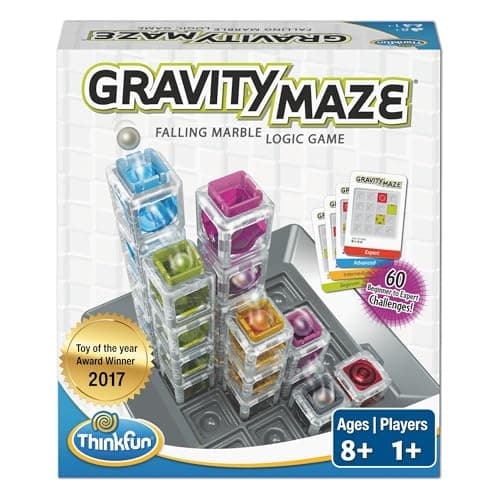 A hazard line disguised as a difficulty floor ThinkFun Gravity Maze 60 challenges at 8+ — and the 8 is partly about the three marbles. | Eight and up, on a table | |
| — | 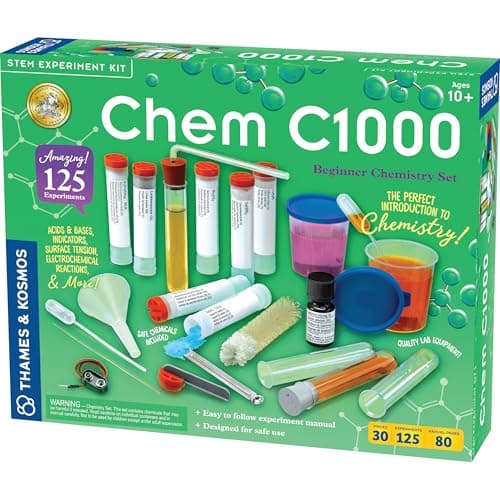 A line not to cross Thames & Kosmos CHEM C1000 Seven real chemicals with EN 71-4 named — the rating is a safety standard, not a guess. | Ten and up, with an adult at the lower end |
5 picks, including 1 we tell you to skip. Ages shown are the manufacturer’s own rating, not ours.
Two kinds of number, one label
The arithmetic
What each published rating is actually protecting against
| Magna-Tiles, “3-99 Years” | Floor — magnet containment below 3; no ceiling above |
|---|---|
| LEGO Classic 10698, 4 and up | Floor — brick size and small parts |
| IQ Puzzler Pro, “6 to adult” | Pure difficulty floor — working backwards from a gap |
| Kanoodle, 7 and up | Difficulty floor — 200+ puzzles, long ladder |
| Code Master, 8 and up | Difficulty floor — reading and sequencing, steep early curve |
| Gravity Maze, 8+ | Both — graded difficulty and 3 loose marbles |
| Q-BA-MAZE 2.0, 6 and up | Mostly hazard — 20 steel marbles |
| Break Open Geodes, 8 years | Hazard — “contains small parts; not for children under 3” |
| Volcano Science Kit, 8 and up | Hazard — plaster, eruption powder, supervision published |
| CHEM C1000, 10 and up | Hazard, standardized — EN 71-4 named by the maker |
| littleBits Invention Kit, grades 2-7 | Hazard and difficulty — 9V battery, 29 Bits |
How to tell which one you have
Look for a named standard. A maker citing EN 71-4, ASTM or CPSIA is pointing at a test rather than an opinion. Thames & Kosmos names EN 71-4 on the C1000; Magformers names CE, ASTM and EN71; VIAHART names ASTM and CPSIA. Those numbers are not negotiable.
Look for a published warning sentence. National Geographic prints “contains small parts; not for children under 3” on the geode kit and publishes adult supervision for the volcano kit. When the maker has written the reason down, the age is doing hazard work.
Look for an upper bound. “3-99 Years”, “6 to adult”, “Ages 8 to infinity” — a stated top end is a maker telling you the product has no difficulty ceiling. Those lower bounds are usually floors.
Look at the consumables. Chemicals, plaster, powders and grits almost always carry handling warnings, and the age moves up with them. A kit with nothing consumable rarely has a hazard reason for its rating beyond part size.
When buying ahead is reasonable
By a few months, on a product with a long ladder. A child three months short of seven given Kanoodle has 200 puzzles ahead of them and will grow into the hard half. The same child given a 40-challenge game has nothing left by the birthday.
When the set is open-ended. LEGO Classic publishes 4 and up and 790 pieces; nothing about it gets harder. The published floor on a bucket of bricks is about the bricks, not the building.
When an adult is going to be there anyway. Several ratings on this site are set by whether a child can work unaided. Robot Turtles publishes 4 and up and names an adult as one of the players; the chemistry sets assume supervision at the lower end of their range.
When buying ahead costs you the toy
Steep early curves. Code Master publishes 60 levels at 8 and up and the early levels are not watered down. A seven-year-old who stalls on level 8 has no robot and no story to fall back on, and the box goes on a shelf.
Reading-dependent content. A 48-page manual is the product in a chemistry set, and the experiment is the method rather than the pouring. Below fluent reading, an adult performs the kit while the child watches.
Anything where failure is the first experience. This is the real cost and it is not recoverable by waiting. A child’s conclusion that puzzles, or chemistry, or coding are not for them is far more expensive than the twenty dollars you saved by not buying the age-appropriate version.
The opposite mistake
Buying below the rating is more common than buying above it and gets discussed less. A seven-year-old handed the Junior edition, or a nine-year-old handed a 4+ coding robot, has been given a product whose published ceiling was designed for someone else.
This is where the floor-versus-hazard distinction pays off a second time. If a rating is a difficulty floor, then a product rated well below the child has a ceiling to match, and the ceiling is the thing you cannot add later. See logic games for 7 and 8 year olds and coding toys for 8 and 9 year olds.
Worth knowing before you buy
So what do you do
The rating names a standard, or the box warns about parts, chemicals or supervision: buy at the published age. Read the manual early instead — Thames & Kosmos publishes the CHEM C1000 manual free, which is a real way to satisfy an eager nine-year-old without the vials.
The rating has an upper bound and nothing is loose or chemical: it is a floor. Magna-Tiles at “3-99” and LEGO Classic at 4 and up never stop being usable.
They are a few months short and the ladder is long: buy it. Kanoodle and its 200+ puzzles absorb a child who is ahead.
They are a year or more short of a steep curve: wait. IQ Puzzler Pro at six and Code Master at eight are worth the birthday.
Say the unwelcome thing
Do not treat a published age as a statement about your child
It is not one. A rating is a claim about a product — what is in the box, what the instructions assume, which standard it was tested against. Reading it as a verdict on a child is what produces both mistakes at once: buying up to prove they are ahead, and buying down because the harder box looked intimidating. Read it as a specification and the decision gets easy.
Where to go next
How to read a toy box covers which other numbers on the packaging are checkable, toy safety standards explained covers what ASTM, EN 71 and CPSIA actually test, and when a STEM toy gets abandoned covers what happens after a mistimed purchase.
In full
Every pick, and what is wrong with it
Published specifications only, each linked back to the page it came from. Where a manufacturer publishes nothing, the row says so — we do not fill blanks in.
1. A rating with no ceiling at all
MAGNA-TILES Classic 100-Piece Set
Magna-Tiles · 4300 · maker rates it 3-99 years
Published 3-99 years — the clearest example of a floor with nothing above it.
- Pieces
- 100
- Shape mix
- 50 squares, 4 large squares, 20 equilateral triangles, 11 right triangles, 15 isosceles triangles
- Stated age
- “3-99 Years”
- Material
- “Food-grade, non-toxic MABS plastic that are free from BPAs, phthalates, and latex”
Magna-Tiles publishes a stated age of “3-99 Years”, 100 pieces with a full shape breakdown, a lattice plus “fastening rivets keep magnets safe and secure”, and that “all pieces are compatible with and complementary to all other MAGNA-TILES sets”.
A published upper bound of ninety-nine is a maker telling you plainly that there is no difficulty ceiling. Nothing about a tile gets easier or harder with age; what changes is what the child builds with it, and that is their business.
The lower bound is a different kind of number, and it is the one not to round down. See are magnetic tiles safe for toddlers.
Replay signal
- Open-ended or one-shot
- Open-ended — there is no finished state to reach
- Does anything run out
- Nothing runs out
- Room to grow
- Every set combines with every other Magna-Tiles set
Why we say so: Magna-Tiles publishes the full 100-piece shape breakdown, lists no consumable parts, and states that “all pieces are compatible with and complementary to all other MAGNA-TILES sets.”
What’s wrong with it
Three is still three. Below it the magnet is the reason, not the difficulty.
| Pieces | 100 |
|---|---|
| Shape mix | 50 squares, 4 large squares, 20 equilateral triangles, 11 right triangles, 15 isosceles triangles |
| Stated age | “3-99 Years” |
| Material | “Food-grade, non-toxic MABS plastic that are free from BPAs, phthalates, and latex” |
| Magnet retention | Signature lattice plus “fastening rivets keep magnets safe and secure” |
| Consumables | None |
Every figure above is from Magna-Tiles, Classic 100-Piece Set. Blanks are shown as “not published” rather than filled in.
2. A difficulty floor, and the classic early buy
SmartGames IQ Puzzler Pro
SmartGames · SG455 · maker rates it 6+
120 challenges published 6 to adult — a year early it reads as a wall.
- Challenges
- 120, across 2D and 3D modes
- Contents
- Compact board with a transparent lid, 12 puzzle pieces, challenge booklet with solutions
- Players
- 1
- Batteries
- None
SmartGames publishes 120 challenges across 2D and 3D modes, a compact board with a transparent lid, 12 puzzle pieces and a challenge booklet with solutions, one player, no batteries, rated ages 6 to adult.
“6 to adult” is a pure difficulty floor with nothing hazardous attached — which is exactly why buying it at four or five is still a mistake. The cost is not safety, it is the child’s conclusion: handed a 120-puzzle game whose first page is already too hard, they learn that puzzles are not for them.
This is the single most-bought-too-early product on the site. Buy it on the sixth birthday. See what is published for five.
Replay signal
- Open-ended or one-shot
- Finite, but 120 challenges is roughly double what most single-player puzzle games ship with
- Does anything run out
- The booklet ends. The pieces do not
- Room to grow
- The same 12 pieces run 2D and 3D challenge sets, so the difficulty ceiling is well above the entry point
Why we say so: SmartGames publishes 120 challenges across two modes from a single 12-piece set. Twelve pieces generating 120 published problems is the best challenge-per-component ratio of any logic game on this site, and it is the reason this one travels well and lasts.
What’s wrong with it
The first challenges assume working backwards from an empty space.
| Challenges | 120, across 2D and 3D modes |
|---|---|
| Contents | Compact board with a transparent lid, 12 puzzle pieces, challenge booklet with solutions |
| Players | 1 |
| Batteries | None |
| Stated age | Ages 6 to adult |
| Travel case | Yes — the board is the case |
Every figure above is from SmartGames, IQ Puzzler Pro. Blanks are shown as “not published” rather than filled in.
3. A floor worth waiting for
Kanoodle
Educational Insights · Kanoodle · maker rates it 7+
200+ puzzles at 7 and up — the largest published count here, and worth the wait.
- Puzzles
- 200+
- Formats
- Two — flat 2D puzzles and 3D pyramids
- Pieces
- Connected-bead puzzle pieces
- Players
- 1
Educational Insights publishes 200+ puzzles across two formats — flat 2D puzzles and 3D pyramids — with connected-bead puzzle pieces, one player and no batteries, rated ages 7 and up.
The useful thing about Kanoodle on this page is the shape of the trade. Waiting a year costs you nothing: the game does not expire, the price does not rise, and the child at seven gets 200 puzzles they can actually start.
A child who is genuinely ahead at six will finish the 2D half quickly and still have the 3D pyramids in front of them, which is the right way to use a published floor — cross it by a few months with a product that has a long ladder, not by two years with one that has a short one. See the Kanoodle review.
Replay signal
- Open-ended or one-shot
- Finite, but 200+ published puzzles is the largest count on this site
- Does anything run out
- Nothing runs out; the booklet is long enough to feel endless
- Room to grow
- 2D first, then the 3D pyramid set, which is a genuine step in difficulty
Why we say so: Educational Insights publishes 200-plus puzzles across 2D and 3D formats from one small case. Two hundred is roughly three times what a typical single-player logic game ships with, which is why this one survives a long car journey and a wet week.
What’s wrong with it
Single player. Two children cannot both use it at once.
| Puzzles | 200+ |
|---|---|
| Formats | Two — flat 2D puzzles and 3D pyramids |
| Pieces | Connected-bead puzzle pieces |
| Players | 1 |
| Batteries | None |
| Stated age | Ages 7 and up |
Every figure above is from Educational Insights, Kanoodle. Blanks are shown as “not published” rather than filled in.
4. A hazard line disguised as a difficulty floor
ThinkFun Gravity Maze
ThinkFun · 44001006 · maker rates it 8+
60 challenges at 8+ — and the 8 is partly about the three marbles.
- Challenges
- 60, beginner to expert
- Contents
- Game grid, 9 towers, 1 target piece, 3 marbles, 60 challenge cards
- Players
- 1
- Batteries
- None
ThinkFun publishes 60 challenges from beginner to expert, a game grid, 9 towers, 1 target piece, 3 marbles and 60 challenge cards, one player, no batteries, rated ages 8+.
This is the ambiguous case that makes the whole page necessary. The puzzle difficulty genuinely starts easy, so an advanced seven-year-old can solve the first cards — but the 8+ is also carrying three loose marbles, and that part of the rating does not get easier because a child is clever.
A reasonable reading: fine at seven at a table in a house with no younger children; not fine at five, and not fine on a floor where a toddler crawls. See the Gravity Maze review.
Replay signal
- Open-ended or one-shot
- Finite by design — 60 challenges, and a determined child will finish them
- Does anything run out
- Nothing physically runs out, but the challenge cards do end
- Room to grow
- The towers can be used freely once the cards are done, though nothing in the box prompts that
Why we say so: ThinkFun publishes 60 challenges and a fixed component list. Sixty is a real number with a real end, and single-player puzzle games are the category where that matters most — better to know before you buy it as the main present.
What’s wrong with it
Three marbles. In a house with a toddler the rating applies to the room.
| Challenges | 60, beginner to expert |
|---|---|
| Contents | Game grid, 9 towers, 1 target piece, 3 marbles, 60 challenge cards |
| Players | 1 |
| Batteries | None |
| Stated age | Ages 8+ |
| Consumables | None |
Every figure above is from ThinkFun, Gravity Maze. Blanks are shown as “not published” rather than filled in.
Skip this one
Thames & Kosmos CHEM C1000
Thames & Kosmos · 640118 · maker rates it 10+
Seven real chemicals with EN 71-4 named — the rating is a safety standard, not a guess.
- Chemicals included
- Seven, in cylindrical vials
- Manual
- Full experiment manual published free on the manufacturer's own site
- Safety standard
- “EN 71-4, in which the safety requirements for chemistry experimental kits are established”
- Covers
- Lab setup and safe handling, indicators and litmus, invisible ink, gas reactions
Thames & Kosmos publishes seven chemicals in cylindrical vials, the full experiment manual free on its own site, compliance with “EN 71-4, in which the safety requirements for chemistry experimental kits are established”, and coverage from lab setup and safe handling through indicators and litmus to gas reactions, rated 10 and up.
It is marked as the one to skip here in the specific sense this page means: not a bad product — an excellent one — but a published age that is a named standard rather than an editorial judgment. EN 71-4 is the European safety requirement for chemistry kits, and a maker citing it is not expressing an opinion about maturity.
There is a better move for an advanced eight- or nine-year-old than crossing it: Thames & Kosmos publishes the whole manual free, so read it together first and buy the kit at ten. See chemistry sets by age.
Replay signal
- Open-ended or one-shot
- Guided rather than open-ended, but the manual is a term's worth of weekends
- Does anything run out
- Yes — seven finite chemicals, with replacements sold separately
- Room to grow
- The C-series continues into C2000 and C3000, carrying the same equipment forward
- Adult required
- Real chemicals at a 10+ rating: a sit-with-them kit at the lower end of that range
Why we say so: Thames & Kosmos publishes the full manual free on its own site — you can read exactly what your child will be doing before spending anything — and states compliance with EN 71-4, the European chemistry-kit safety standard.
What’s wrong with it
Consumable by design, and replacements are sold separately.
| Chemicals included | Seven, in cylindrical vials |
|---|---|
| Manual | Full experiment manual published free on the manufacturer's own site |
| Safety standard | “EN 71-4, in which the safety requirements for chemistry experimental kits are established” |
| Covers | Lab setup and safe handling, indicators and litmus, invisible ink, gas reactions |
| Stated age | 10 and up |
| Consumables | Yes — the seven chemicals are used up |
Every figure above is from Thames & Kosmos, experiment manuals. Blanks are shown as “not published” rather than filled in.
We are not putting a buy button on this one. It is easy enough to find if you want it anyway — but we would rather send you to something that gets played with twice.
Questions people actually ask
Frequently asked
Can I buy a toy rated above my child's age?
It depends what the rating is protecting against. A difficulty floor - reading, planning, working backwards - can sometimes be crossed by a few months if the product has a long ladder. A hazard line, where the maker names a standard or warns about small parts, chemicals or supervision, should not be crossed.
How do I tell a difficulty rating from a safety rating?
Three checks. Is a standard named (EN 71-4, ASTM, CPSIA)? Is there a written warning sentence such as "not for children under 3"? Is anything loose, small, chemical or electrically powered? Any yes means the age is doing hazard work rather than difficulty work. Toy safety standards explained.
What does a rating like "6 to adult" or "3-99 years" mean?
That the product has no difficulty ceiling. SmartGames publishes IQ Puzzler Pro as 6 to adult, Magna-Tiles publishes 3-99 years and JoyLabz publishes Makey Makey as "Ages 8 to infinity". The stated top end is the maker saying the lower number is a floor.
Is it safe to buy a chemistry set for a 9 year old?
Not above the published rating. Thames & Kosmos publishes the C-series at 10 and up and names EN 71-4, the European safety requirement for chemistry kits - which is a test rather than an opinion. It also publishes the full manual free on its own site, so an eager nine-year-old can read the whole thing first. Chemistry sets by age.
What goes wrong if I buy a year too early?
Usually not safety - usually the toy. A child handed a puzzle whose first page is already too hard concludes that puzzles are not for them, and that conclusion outlasts the box. IQ Puzzler Pro at five and Code Master at seven are the two most common versions of this on our pages. When a STEM toy gets abandoned.
Is buying below the age rating a problem too?
More often than buying above it. A nine-year-old given a 4+ coding robot or a Junior-edition puzzle has a product whose published ceiling was designed for a much younger child, and the ceiling is the one specification you cannot add later. Logic games for 7 and 8 year olds.
What about toys for a child who is ahead of their age?
Prefer products with long published ladders over products rated higher. Kanoodle publishes 200+ puzzles at 7 and up and CHEM C1000's manual runs from lab setup to gas reactions - both absorb a child who moves quickly, without crossing a hazard line to do it.
Sources
Where these figures came from
Every specification on this page traces to one of these. If a manufacturer publishes nothing on a point, the page says so rather than filling the gap.
Read next
Where to go from here
Back to Guides, or read how we pick.