Single review
Kanoodle Review
Reviewed from the manufacturer's published specifications and the arithmetic on them. We have not used it, and we say so.
By Sawyer V. · Published
The short answer
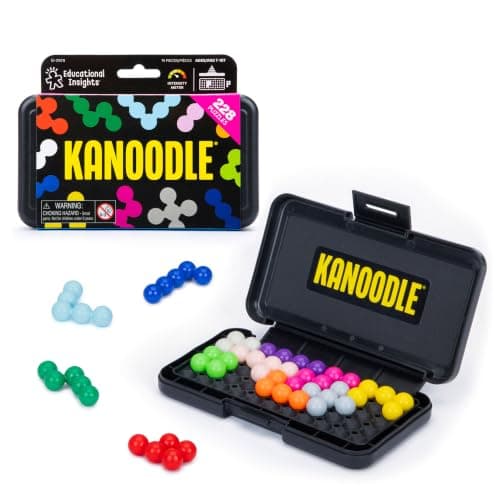
Kanoodle publishes 200+ puzzles across two formats — flat 2D puzzles and 3D pyramids — using connected-bead pieces, single player, no batteries, rated 7 and up. Two hundred is the largest published challenge count of any game on this site.
Block & Beaker earns a commission when you buy through our links, at no cost to you. It never changes a ranking, and we say so plainly when the right answer is the cheaper set, or nothing at all. Full disclosure · How we pick.
At a glance
The picks, ranked
Tap any row to jump to the full reasoning. Prices come live from Amazon where we have them and read “check price” where we don’t — never a number we cannot stand behind today.
| # | Product | Best for | Price |
|---|---|---|---|
| 1 | The product Kanoodle The longest published ladder in the category, in a case that fits a coat pocket. | Seven and up, and any journey longer than an hour | |
| 2 | 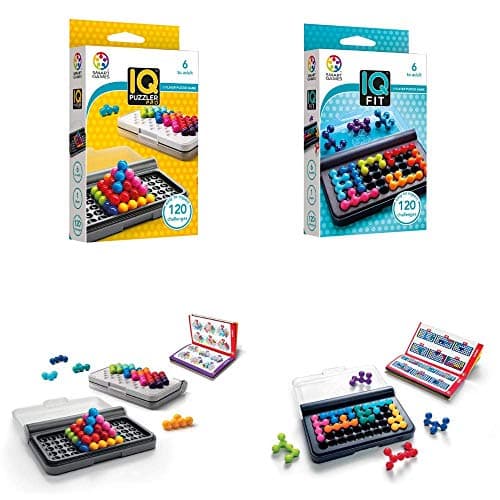 The closest rival SmartGames IQ Puzzler Pro 120 published challenges across 2D and 3D, in a board that is its own case. | Six and up, with a solutions booklet included | |
| 3 | 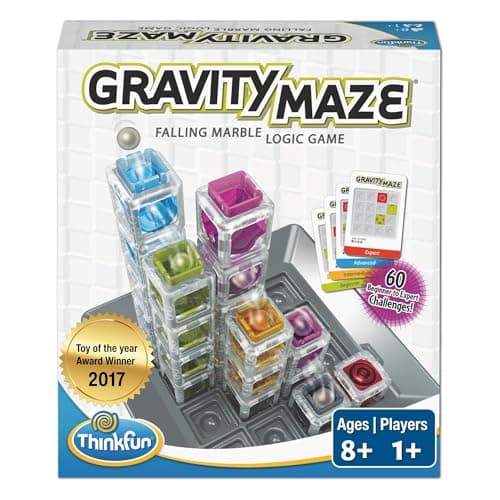 The one with theater ThinkFun Gravity Maze 60 challenges where the answer is a marble physically arriving at a target. | Eight and up, for a child who needs to see it work | |
| — |  The shortest ladder ThinkFun Rush Hour Junior Cross-shopped as a travel puzzle and it publishes 40 challenges. | Five to seven only |
4 picks, including 1 we tell you to skip. Ages shown are the manufacturer’s own rating, not ours.
What we can tell you, and what we cannot
We have not played it. No lab, no samples, no test children, no star rating on this page or in its structured data.
Published challenge counts, formats, player counts and age ratings we can compare across the whole category. Whether puzzle 143 is satisfying or infuriating we cannot.
The specification that decides it
The arithmetic
Kanoodle, published
| Puzzles | 200+ |
|---|---|
| Formats | Two — flat 2D and 3D pyramids |
| Pieces | Connected-bead puzzle pieces |
| Players | 1 |
| Batteries | None |
| Stated age | Ages 7 and up |
| Consumables | None |
What the numbers mean in practice
Two formats doubles the life of one set of pieces. When flat puzzles stop being interesting, the same beads build pyramids. That is a genuinely different spatial problem rather than more of the same.
Pocket size is the underrated feature. A puzzle that travels gets used in waiting rooms, cars and airports — times when nothing else in this category is available.
Nothing happens when you solve one. Worth saying plainly. A marble does not fall, an LED does not light. For some children the quiet click of a correct fit is enough; for others it is not, and Gravity Maze or Circuit Maze is the better purchase.
No batteries, nothing consumed. The cheapest long ladder available, with no ongoing cost at all.
Who should skip it
A child under seven. The published floor is 7 and the connected-bead pieces need real finger control. IQ Puzzler Pro is rated 6 to adult.
A child who needs a visible result. Flat puzzles are quiet. If the child wants to watch something happen, buy a marble-based logic game.
Anyone buying the main present. Every game in this category publishes an ending, and a small box is the wrong shape for the biggest parcel — even a 200-puzzle one.
Say the unwelcome thing
Do not buy two puzzle games for two children to share
Kanoodle is published as single player. Two children with one box produces a solver and a spectator, and a solved puzzle cannot be re-solved.
At this price, two boxes is the sensible answer — see STEM strategy games for the genuinely multiplayer options.
Where it sits
Kanoodle tops STEM games for one player and appears in small STEM gifts that travel and logic puzzles compared.
In full
Every pick, and what is wrong with it
Published specifications only, each linked back to the page it came from. Where a manufacturer publishes nothing, the row says so — we do not fill blanks in.
1. The product
Kanoodle
Educational Insights · Kanoodle · maker rates it 7+
The longest published ladder in the category, in a case that fits a coat pocket.
- Puzzles
- 200+
- Formats
- Two — flat 2D puzzles and 3D pyramids
- Pieces
- Connected-bead puzzle pieces
- Players
- 1
Educational Insights publishes 200+ puzzles across two formats — flat 2D puzzles and 3D pyramids — using connected-bead pieces, single player, no batteries, rated 7 and up.
Two formats is what makes the number believable. A flat puzzle and a pyramid puzzle using the same pieces are genuinely different problems, so the second hundred is not the first hundred repeated.
Single player and self-checking is the practical value. The pieces fit or they do not, so no adult is needed to mark anything — which is why this works on a wet afternoon when nobody is free.
Replay signal
- Open-ended or one-shot
- Finite, but 200+ published puzzles is the largest count on this site
- Does anything run out
- Nothing runs out; the booklet is long enough to feel endless
- Room to grow
- 2D first, then the 3D pyramid set, which is a genuine step in difficulty
Why we say so: Educational Insights publishes 200-plus puzzles across 2D and 3D formats from one small case. Two hundred is roughly three times what a typical single-player logic game ships with, which is why this one survives a long car journey and a wet week.
What’s wrong with it
Connected-bead pieces are fiddly, and nothing physically happens when you solve one.
| Puzzles | 200+ |
|---|---|
| Formats | Two — flat 2D puzzles and 3D pyramids |
| Pieces | Connected-bead puzzle pieces |
| Players | 1 |
| Batteries | None |
| Stated age | Ages 7 and up |
Every figure above is from Educational Insights, Kanoodle. Blanks are shown as “not published” rather than filled in.
2. The closest rival
SmartGames IQ Puzzler Pro
SmartGames · SG455 · maker rates it 6+
120 published challenges across 2D and 3D, in a board that is its own case.
- Challenges
- 120, across 2D and 3D modes
- Contents
- Compact board with a transparent lid, 12 puzzle pieces, challenge booklet with solutions
- Players
- 1
- Batteries
- None
SmartGames publishes 120 challenges across 2D and 3D modes, 12 puzzle pieces, a challenge booklet with solutions, a compact board with a transparent lid, single player, rated 6 to adult.
The two are close. Kanoodle publishes more puzzles; IQ Puzzler Pro publishes a wider age range and includes solutions, which matters when a child gets genuinely stuck and there is no adult who can help.
Replay signal
- Open-ended or one-shot
- Finite, but 120 challenges is roughly double what most single-player puzzle games ship with
- Does anything run out
- The booklet ends. The pieces do not
- Room to grow
- The same 12 pieces run 2D and 3D challenge sets, so the difficulty ceiling is well above the entry point
Why we say so: SmartGames publishes 120 challenges across two modes from a single 12-piece set. Twelve pieces generating 120 published problems is the best challenge-per-component ratio of any logic game on this site, and it is the reason this one travels well and lasts.
What’s wrong with it
Fewer challenges, though a wider published age range.
| Challenges | 120, across 2D and 3D modes |
|---|---|
| Contents | Compact board with a transparent lid, 12 puzzle pieces, challenge booklet with solutions |
| Players | 1 |
| Batteries | None |
| Stated age | Ages 6 to adult |
| Travel case | Yes — the board is the case |
Every figure above is from SmartGames, IQ Puzzler Pro. Blanks are shown as “not published” rather than filled in.
3. The one with theater
ThinkFun Gravity Maze
ThinkFun · 44001006 · maker rates it 8+
60 challenges where the answer is a marble physically arriving at a target.
- Challenges
- 60, beginner to expert
- Contents
- Game grid, 9 towers, 1 target piece, 3 marbles, 60 challenge cards
- Players
- 1
- Batteries
- None
ThinkFun publishes 60 challenges from beginner to expert, a grid with 9 towers, 1 target piece and 3 marbles, single player, rated 8+, no batteries.
Gravity Maze is the better gift and Kanoodle is the better value. A marble falling through a structure is more satisfying than pieces fitting flat; it is also a third of the puzzles at a larger size.
Replay signal
- Open-ended or one-shot
- Finite by design — 60 challenges, and a determined child will finish them
- Does anything run out
- Nothing physically runs out, but the challenge cards do end
- Room to grow
- The towers can be used freely once the cards are done, though nothing in the box prompts that
Why we say so: ThinkFun publishes 60 challenges and a fixed component list. Sixty is a real number with a real end, and single-player puzzle games are the category where that matters most — better to know before you buy it as the main present.
What’s wrong with it
Sixty against 200+, and it needs a table rather than a lap.
| Challenges | 60, beginner to expert |
|---|---|
| Contents | Game grid, 9 towers, 1 target piece, 3 marbles, 60 challenge cards |
| Players | 1 |
| Batteries | None |
| Stated age | Ages 8+ |
| Consumables | None |
Every figure above is from ThinkFun, Gravity Maze. Blanks are shown as “not published” rather than filled in.
Skip this one
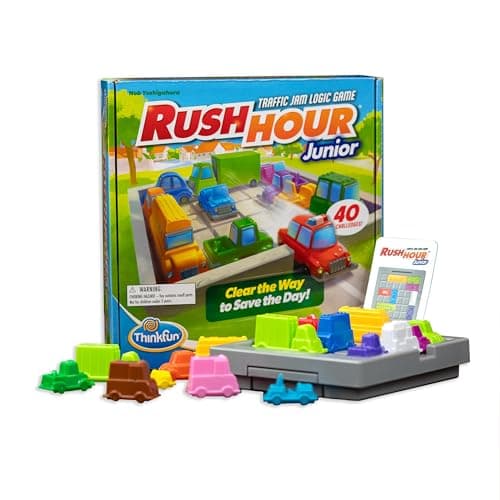
ThinkFun Rush Hour Junior
ThinkFun · 76583 · maker rates it 5+
Cross-shopped as a travel puzzle and it publishes 40 challenges.
- Challenges
- 40, easy to expert
- Contents
- Ice cream truck, 15 blocking vehicles, 40 challenge cards, travel bag
- Players
- 1
- Batteries
- None
ThinkFun publishes 40 challenges from easy to expert, an ice cream truck with 15 blocking vehicles and a travel bag, single player, rated 5+.
Forty is genuinely forty. For a seven-year-old — Kanoodle’s published floor — it is finished in a fortnight, which makes it a stocking gift rather than an alternative.
Replay signal
- Open-ended or one-shot
- Finite — 40 challenges
- Does anything run out
- The cards end; the grid does not, and children invent their own jams
- Room to grow
- Steps up to the full Rush Hour at 8+, same idea with harder cards
Why we say so: ThinkFun publishes 40 challenges across four difficulty tiers and a travel bag. Forty single-player puzzles is a school holiday, not a year — which is the honest framing for a gift-buyer.
What’s wrong with it
The lowest published challenge count of any logic game here.
| Challenges | 40, easy to expert |
|---|---|
| Contents | Ice cream truck, 15 blocking vehicles, 40 challenge cards, travel bag |
| Players | 1 |
| Batteries | None |
| Stated age | Ages 5+ |
Every figure above is from ThinkFun, Rush Hour Junior. Blanks are shown as “not published” rather than filled in.
We are not putting a buy button on this one. It is easy enough to find if you want it anyway — but we would rather send you to something that gets played with twice.
Questions people actually ask
Frequently asked
How many puzzles does Kanoodle have?
Educational Insights publishes 200+, across two formats — flat 2D puzzles and 3D pyramids. Two formats is what makes the number meaningful: the same connected-bead pieces produce genuinely different spatial problems rather than more of the same.
What age is Kanoodle for?
Educational Insights publishes 7 and up. The connected-bead pieces need real finger control, which is what the rating reflects. For a six-year-old, SmartGames publishes IQ Puzzler Pro at 6 to adult with a solutions booklet included.
Is Kanoodle good for travel?
It is one of the best travel purchases in this category — pocket-sized, no batteries, nothing to lay out and self-checking, so a child can play alone in a car or a waiting room without anyone marking the work. Small STEM gifts that travel.
Kanoodle or IQ Puzzler Pro?
Close. Kanoodle publishes more puzzles — 200+ against 120. IQ Puzzler Pro publishes a wider age range at 6 to adult and includes a solutions booklet, which matters when a child gets stuck and no adult can help.
Sources
Where these figures came from
Every specification on this page traces to one of these. If a manufacturer publishes nothing on a point, the page says so rather than filling the gap.
Read next
Where to go from here
Back to Reviews, or read how we pick.