The picks
STEM Strategy Games for Two or More
Almost every logic game in this category publishes a player count of one. These are the exceptions, and they are worth knowing about.
By Sawyer V. · Published
The short answer
Most STEM logic games publish a player count of one. The genuine multiplayer options are Robot Turtles, published for 2-5 players with an adult acting as the computer, and Mental Blox, whose 20 activity cards include group challenges. Everything else is a solo puzzle shared by taking turns.
Block & Beaker earns a commission when you buy through our links, at no cost to you. It never changes a ranking, and we say so plainly when the right answer is the cheaper set, or nothing at all. Full disclosure · How we pick.
At a glance
The picks, ranked
Tap any row to jump to the full reasoning. Prices come live from Amazon where we have them and read “check price” where we don’t — never a number we cannot stand behind today.
| # | Product | Best for | Price |
|---|---|---|---|
| 1 | Best true multiplayer ThinkFun Robot Turtles The only game here published as genuinely multiplayer, and it teaches sequencing properly. | Two to five players, one of them an adult | |
| 2 | 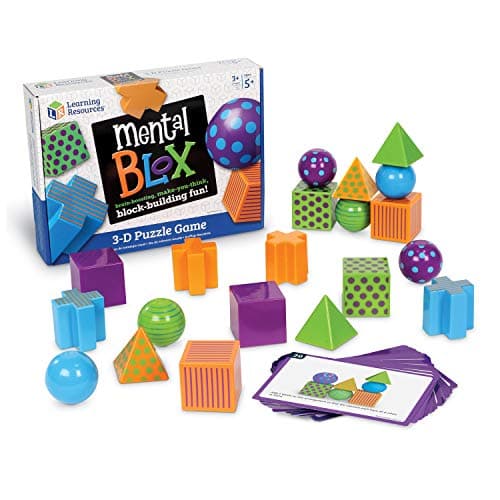 Best for mixed ages Mental Blox Critical Thinking Game Twenty blocks and 20 activity cards covering group as well as solo challenges. | Five and up, in a group of different ages | |
| 3 | 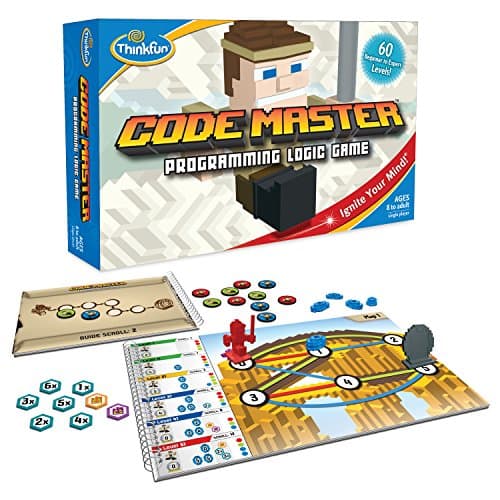 Best solo game to play together ThinkFun Code Master Sixty published levels of map-based programming logic, which two people can plan jointly. | Eight and up, with an adult alongside | |
| 4 | 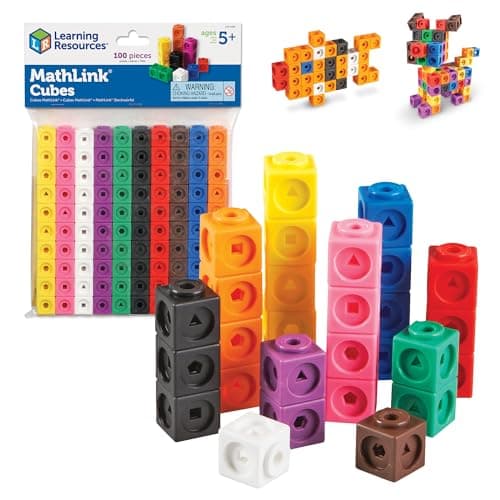 Best open-ended option MathLink Cubes, Set of 100 One hundred cubes in ten colors with no rules at all, so nobody is waiting for a turn. | Five and up, any number of children | |
| — | 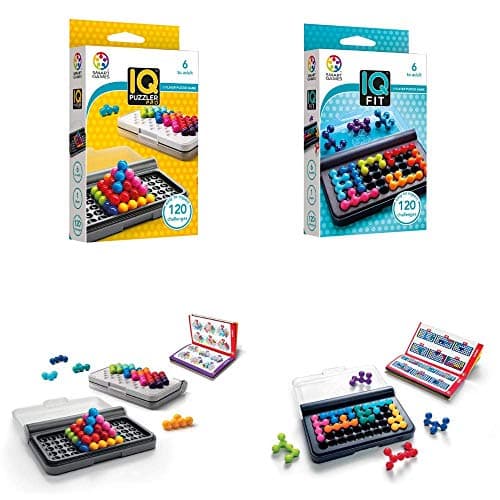 Not a group game SmartGames IQ Puzzler Pro Regularly bought for two children and published explicitly as single player. | One child |
5 picks, including 1 we tell you to skip. Ages shown are the manufacturer’s own rating, not ours.
Why this category skews single-player
A logic puzzle has one correct answer. That is what makes it self-checking, which is the property that lets a child play alone — and it is also what makes it a poor group activity, because once one player sees the answer the game is over for everyone.
Games that work with several children solve this in one of two ways: either nobody has the answer including the adult, or the challenge is about communication rather than solution.
The arithmetic
Published player counts
| Robot Turtles | 2-5 players, one an adult |
|---|---|
| Mental Blox | Group and solo challenges across 20 cards |
| MathLink Cubes | No rules, so any number |
| Code Master | 1 |
| IQ Puzzler Pro | 1 |
| Gravity Maze | 1 |
| Rush Hour Junior | 1 |
What to buy for a sibling pair
If they are close in age: Robot Turtles, and expect to play it with them. The adult role is the format.
If they are years apart: Mental Blox, because attribute challenges can be pitched at different levels within the same round.
If you want something with no rules: MathLink Cubes. A hundred cubes has no turn order and cannot be won, which removes the entire category of sibling argument.
The honest case for buying two solo games instead
Worth saying plainly: two children with a single-player game each will often have a better afternoon than two children sharing a multiplayer one. Solo puzzles are self-checking and need no adult, and Kanoodle publishes 200+ puzzles for the price of a modest board game.
Buy a multiplayer game when the point is playing together. Buy two solo games when the point is a quiet hour.
Say the unwelcome thing
Do not buy one puzzle game for two children
A single board with a single set of pieces produces one player and one spectator, and the spectator is usually the younger child.
Either buy a game published for multiple players, or buy two cheap solo games. Splitting one is the option that satisfies nobody.
Where to go next
STEM games for one player covers the single-player side properly. Coding board games goes deeper on the programming ones, and STEM gifts two children can share covers the wider sibling question.
In full
Every pick, and what is wrong with it
Published specifications only, each linked back to the page it came from. Where a manufacturer publishes nothing, the row says so — we do not fill blanks in.
1. Best true multiplayer
ThinkFun Robot Turtles
ThinkFun · 1900 · maker rates it 4+
The only game here published as genuinely multiplayer, and it teaches sequencing properly.
- Stated age
- Ages 4 and up
- Players
- 2-5, one of whom is an adult acting as “the computer”
- Batteries
- None
- Format
- Board game teaching programming fundamentals
ThinkFun publishes Robot Turtles as a board game for 2-5 players, one of whom is an adult acting as the computer, rated 4 and up, no batteries, no consumables.
The adult-as-computer mechanic is genuinely clever rather than a limitation dressed up. The grown-up executes the instructions exactly as given, which means a child discovers the gap between what they meant and what they said — the whole of debugging, in a board game.
At 4+ it is also the earliest genuinely multiplayer entry in this category.
Replay signal
- Open-ended or one-shot
- Open-ended, because the adult builds the board — difficulty scales with the child rather than with a deck
- Does anything run out
- Nothing runs out
- Room to grow
- The published rules add function cards and obstacles as the child improves
- Adult required
- Yes, always — an adult plays the computer. That is the design, and it is the whole cost
Why we say so: ThinkFun publishes the 4+ rating and the rule that an adult executes the child's program. An adult being structurally required is the single biggest predictor of whether a toy actually gets used, so it belongs in the headline rather than the small print.
What’s wrong with it
An adult has to act as the computer, so children cannot start it alone.
| Stated age | Ages 4 and up |
|---|---|
| Players | 2-5, one of whom is an adult acting as “the computer” |
| Batteries | None |
| Format | Board game teaching programming fundamentals |
| Consumables | None |
Every figure above is from ThinkFun games. Blanks are shown as “not published” rather than filled in.
2. Best for mixed ages
Mental Blox Critical Thinking Game
Learning Resources · LER9280 · maker rates it 5+
Twenty blocks and 20 activity cards covering group as well as solo challenges.
- Blocks
- 20 chunky plastic blocks
- Activity cards
- 20
- Attributes
- Four shapes across three attributes
- Includes
- Activity guide
Learning Resources publishes 20 chunky plastic blocks, 20 activity cards, four shapes across three attributes, an activity guide, no batteries, rated 5+.
Attribute-based challenges are what make this work across ages. A younger child can answer a question about color while an older one handles shape and position, and both are playing the same game rather than one waiting.
Replay signal
- Open-ended or one-shot
- The 20 cards end; the blocks then work for free pattern and copy games
- Does anything run out
- Nothing runs out
- Room to grow
- An adult can invent harder arrangements indefinitely — the cards are a starting ladder
Why we say so: Learning Resources publishes 20 blocks and 20 activity cards across four shapes and three attributes. Attributes are the point: sorting by shape, then by color, then by both at once is the first properly logical thing a five-year-old does with a toy.
What’s wrong with it
Twenty activity cards is a short published ladder compared with a solo puzzle game.
| Blocks | 20 chunky plastic blocks |
|---|---|
| Activity cards | 20 |
| Attributes | Four shapes across three attributes |
| Includes | Activity guide |
| Batteries | None |
| Stated age | Ages 5+ |
Every figure above is from Learning Resources, Mental Blox Critical Thinking Game. Blanks are shown as “not published” rather than filled in.
3. Best solo game to play together
ThinkFun Code Master
ThinkFun · 1950 · maker rates it 8+
Sixty published levels of map-based programming logic, which two people can plan jointly.
- Levels
- 60, beginner to expert
- Players
- 1
- Format
- Map-based programming logic — sequence the avatar's moves to collect power crystals
- Batteries
- None
ThinkFun publishes 60 levels, single player, map-based programming logic where the child sequences moves to collect power crystals, rated 8 and up, no batteries.
It shares well in practice because the thinking is visible. Two people can look at the same map and argue about the route, which is not what the box describes but is what tends to happen.
Replay signal
- Open-ended or one-shot
- Finite — 60 levels, and they are worked through in order
- Does anything run out
- Nothing runs out, but the level book does end
- Room to grow
- The later levels introduce conditionals and loops, so the concept ladder is real rather than cosmetic
Why we say so: ThinkFun publishes 60 levels from beginner to expert and a map-and-sequence format. The concepts the later levels introduce — branching and repetition — are the same two ideas that make a real program, which is why this works as preparation for a screen rather than as a substitute for one.
What’s wrong with it
Published as single player — sharing it is a workaround, not a design.
| Levels | 60, beginner to expert |
|---|---|
| Players | 1 |
| Format | Map-based programming logic — sequence the avatar's moves to collect power crystals |
| Batteries | None |
| Stated age | Ages 8 and up |
Every figure above is from ThinkFun, Code Master. Blanks are shown as “not published” rather than filled in.
4. Best open-ended option
MathLink Cubes, Set of 100
Learning Resources · LER4285 · maker rates it 5+
One hundred cubes in ten colors with no rules at all, so nobody is waiting for a turn.
- Cubes
- 100, in 10 colors
- Cube size
- 3/4 inch
- Connection
- Links on all sides, with geometric shape cut-outs for patterning
- Stated age
- Ages 5 and up
Learning Resources publishes 100 cubes in 10 colors, ¾ inch, linking on all sides with geometric shape cut-outs for patterning, rated 5+.
With no rules and no turn order, cubes scale to any number of children. The cost is that they arrive with no game in the box — the adult brings the activity, or nothing happens.
Replay signal
- Open-ended or one-shot
- Completely open-ended, and unusually cheap for something that is
- Does anything run out
- Nothing runs out
- Room to grow
- The same cubes cover counting at five and volume, arrays and fractions at nine
Why we say so: Learning Resources publishes that the cubes link on all sides with geometric cut-outs. All-sides connection is what turns a counting toy into a building toy — a cube that only joins end to end makes towers, and one that joins on six faces makes arrays, volumes and models.
What’s wrong with it
No published challenges, so an adult has to supply the game.
| Cubes | 100, in 10 colors |
|---|---|
| Cube size | 3/4 inch |
| Connection | Links on all sides, with geometric shape cut-outs for patterning |
| Stated age | Ages 5 and up |
| Batteries | None |
| Consumables | None |
Every figure above is from Learning Resources, MathLink Cubes, Set of 100. Blanks are shown as “not published” rather than filled in.
Skip this one
SmartGames IQ Puzzler Pro
SmartGames · SG455 · maker rates it 6+
Regularly bought for two children and published explicitly as single player.
- Challenges
- 120, across 2D and 3D modes
- Contents
- Compact board with a transparent lid, 12 puzzle pieces, challenge booklet with solutions
- Players
- 1
- Batteries
- None
SmartGames publishes 120 challenges across 2D and 3D modes with 12 pieces and a single compact board, single player, rated 6 to adult.
It is an excellent game and it does not work for two children at once. One board and one set of pieces means one child solving and one child watching, which is the failure this page exists to help you avoid.
Buy it for one child, and see games for one player.
Replay signal
- Open-ended or one-shot
- Finite, but 120 challenges is roughly double what most single-player puzzle games ship with
- Does anything run out
- The booklet ends. The pieces do not
- Room to grow
- The same 12 pieces run 2D and 3D challenge sets, so the difficulty ceiling is well above the entry point
Why we say so: SmartGames publishes 120 challenges across two modes from a single 12-piece set. Twelve pieces generating 120 published problems is the best challenge-per-component ratio of any logic game on this site, and it is the reason this one travels well and lasts.
What’s wrong with it
One board, one set of 12 pieces, one solution at a time.
| Challenges | 120, across 2D and 3D modes |
|---|---|
| Contents | Compact board with a transparent lid, 12 puzzle pieces, challenge booklet with solutions |
| Players | 1 |
| Batteries | None |
| Stated age | Ages 6 to adult |
| Travel case | Yes — the board is the case |
Every figure above is from SmartGames, IQ Puzzler Pro. Blanks are shown as “not published” rather than filled in.
We are not putting a buy button on this one. It is easy enough to find if you want it anyway — but we would rather send you to something that gets played with twice.
Questions people actually ask
Frequently asked
Which STEM logic games work for two children?
Robot Turtles is the only one we cover that is published as genuinely multiplayer — ThinkFun states 2-5 players, one of whom is an adult acting as the computer, rated 4 and up. Mental Blox publishes 20 activity cards that include group challenges, and MathLink Cubes have no rules at all so any number can join.
Can two children share a single-player puzzle game?
They can take turns, but the game is spoiled once one child sees the solution. IQ Puzzler Pro, Gravity Maze, Code Master and Rush Hour Junior are all published as single player, with one board and one set of pieces.
What is the best STEM game for a family evening?
Robot Turtles, because the adult role is built into the design rather than being supervision. The grown-up executes a child's instructions exactly as given, which is what makes the gap between intention and instruction visible.
Should I buy one game for two children or two games?
If the goal is playing together, buy a game published for multiple players. If the goal is a quiet hour, two single-player puzzles usually work better — they are self-checking, need no adult, and Kanoodle publishes 200+ puzzles for the price of a modest board game.
Sources
Where these figures came from
Every specification on this page traces to one of these. If a manufacturer publishes nothing on a point, the page says so rather than filling the gap.
Read next
Where to go from here
Back to Math & Logic, or read how we pick.