Guide and picks
Toy Safety Standards Explained
Four documents govern almost every toy on this site. Very few manufacturers name them, and naming one is a real signal.
By Sawyer V. · Published
The short answer
ASTM F963 is the general US toy safety standard, EN 71 is the European equivalent, EN 71-4 covers chemistry experiment kits specifically, and CPSIA is US legislation on lead and phthalates. A manufacturer that names the document it complies with has given you something checkable.
Block & Beaker earns a commission when you buy through our links, at no cost to you. It never changes a ranking, and we say so plainly when the right answer is the cheaper set, or nothing at all. Full disclosure · How we pick.

At a glance
The picks, ranked
Tap any row to jump to the full reasoning. Prices come live from Amazon where we have them and read “check price” where we don’t — never a number we cannot stand behind today.
| # | Product | Best for | Price |
|---|---|---|---|
| 1 | Names the most standards Magformers Basic 62-Piece Set CE, ASTM and EN71 named outright — the most explicit compliance statement of any construction toy we cover. | A buyer who wants compliance stated rather than implied | |
| 2 | 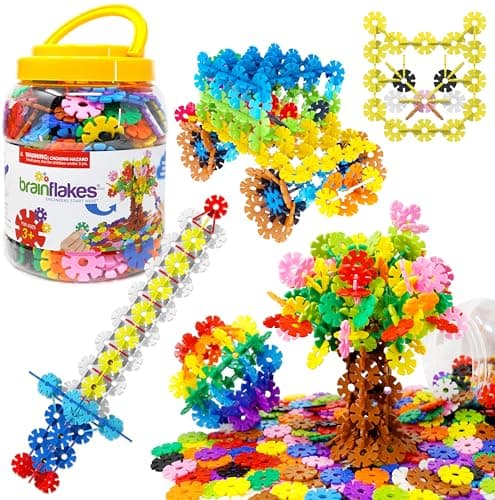 Names the US legislation Brain Flakes 500 Piece Interlocking Disc Set ASTM and CPSIA compliance named, plus explicit statements on lead, heavy metals and phthalates. | A buyer specifically concerned about materials | |
| 3 | 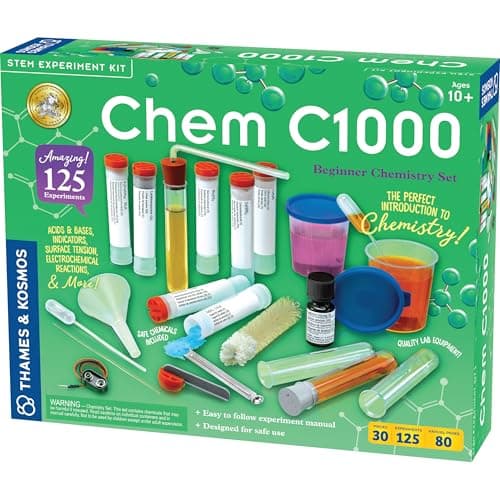 The chemistry-specific standard Thames & Kosmos CHEM C1000 EN 71-4 named — the part of the European standard written specifically for chemistry experiment kits. | Ten and up, where the standard actually governs contents | |
| 4 | 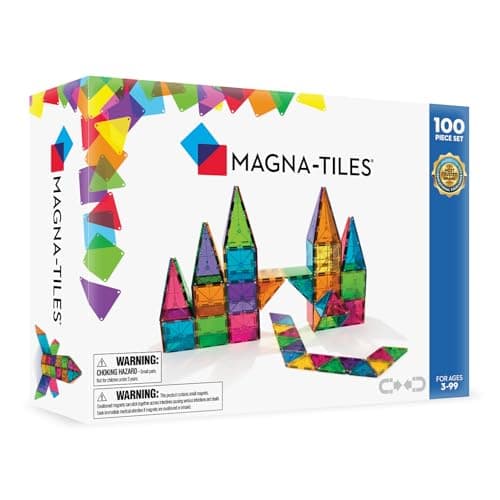 Publishes the engineering instead MAGNA-TILES Classic 100-Piece Set No standard named, but the magnet retention method is described — which is the specific risk in this category. | Understanding what a magnet retention claim means | |
| — | 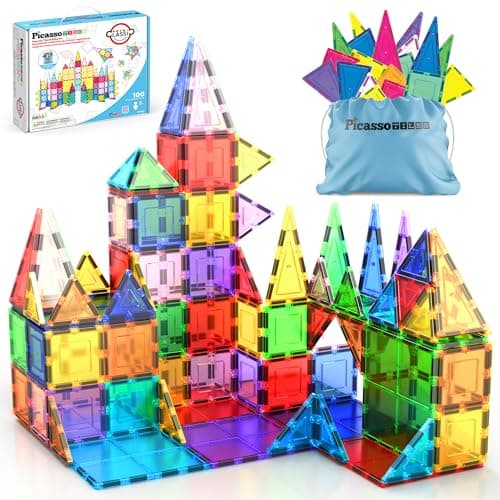 The one that names nothing PicassoTiles 100 Piece Magnetic Tile Set Non-toxic and BPA-free stated, with no standard named and no retention method described. | Illustrating the gap |
5 picks, including 1 we tell you to skip. Ages shown are the manufacturer’s own rating, not ours.
The four documents worth knowing
The arithmetic
What each one covers
| ASTM F963 | General US toy safety — mechanical, flammability, materials |
|---|---|
| EN 71 | The European equivalent, in numbered parts |
| EN 71-4 | Chemistry experiment kits specifically |
| CPSIA | US legislation: lead and phthalate limits |
| CE marking | A manufacturer's declaration of European conformity |
What the small-parts rule actually is
Almost every 3+ rating on this site exists because of one test. A small parts cylinder is a tube roughly the size of a young child's throat; if a piece fits entirely inside it, the toy cannot be rated for under-threes.
The informal household version is a toilet-roll tube, which is close enough for practical purposes. It is why magnetic tiles start at three, why brick sets start at four, and why oversized toddler blocks are the only construction toy rated from one.
This matters for reading a rating correctly. A 3+ rating on tiles is a safety floor and not a difficulty estimate — it says nothing about whether a two-year-old would enjoy them, only that the pieces are a hazard at that age.
Why magnets have their own rules
Magnet ingestion is the specific hazard in this category and it is worth understanding rather than just worrying about.
A single small magnet passes through a child much like any other small swallowed object. Two or more is different: they attract each other through the walls of the gut, and the tissue pinched between them can be damaged. It is a surgical emergency rather than a wait-and-see, and it is the reason strong magnets in children's products are regulated.
This is why the retention engineering matters more than a general compliance claim. A tile with the magnet sealed and riveted in is addressing the actual risk; Magna-Tiles publishes a lattice plus fastening rivets and Connetix publishes ultrasonic sealing plus riveting.
The practical follow-through is the damage check described on the storage page: inspect corners and seams, and retire cracked tiles rather than taping them.
How to read an age rating properly
There are three different things an age rating can mean, and the box does not distinguish them.
A small-parts safety floor. Almost every 3+ rating. This is not a judgment about difficulty and it should not be overruled.
A difficulty and reading estimate. Most 8+ ratings on products with no small parts — Snap Circuits, GraviTrax. A confident parent sitting alongside can often bridge a year in either direction.
A contents rating. A 10+ on a chemistry set is about what is in the bottles. This is a floor, like the small-parts rule, and stretching it is a different kind of decision.
The test we use: ask what would go wrong if the child were a year young for it. "They would find it hard" is a judgment you can make. Anything involving a substance, a tool or a hazard is not.
Worth knowing before you buy
Two hazards on this site are worth singling out because they are time-critical rather than gradual.
Multiple magnets swallowed — a surgical emergency. Seek medical help immediately rather than waiting to see whether they pass.
Button or coin cells swallowed — can cause severe internal burns within hours. Also an emergency. Any battery compartment holding one should be screwed shut.
Everything else in this category is a small-parts or supervision question rather than an emergency, and the standards above exist to keep it that way.
Say the unwelcome thing
Do not treat an unnamed standard as a red flag
Most toys sold in the US and Europe comply with ASTM F963 or EN 71 whether or not the manufacturer says so on the product page. Compliance is a legal requirement; publishing it is a marketing choice.
So an unnamed standard is not evidence of a problem. It is an absence of evidence, and on a first purchase into a system we prefer the brand that gives you something to check. That is a preference, stated as one, rather than a safety warning.
Where this shows up on the site
Every product page here lists named standards in the specification table where the manufacturer publishes them, and says "not published" where they do not. That is the same policy we apply to piece counts and project counts, and the reasoning is on how we pick.
Which manufacturers name a standard rather than writing “safety tested” varies a good deal, and it is one of the clearest signals of how well a company documents everything else. STEM toy brands ranked by what they publish goes through them.
In full
Every pick, and what is wrong with it
Published specifications only, each linked back to the page it came from. Where a manufacturer publishes nothing, the row says so — we do not fill blanks in.
1. Names the most standards
Magformers Basic 62-Piece Set
Magformers · 63070 · maker rates it 3+
CE, ASTM and EN71 named outright — the most explicit compliance statement of any construction toy we cover.
- Pieces
- 62
- Shape mix
- 30 squares, 20 triangles, 12 pentagons
- Stated age
- 3+
- Magnets
- Neodymium rare-earth magnets that rotate inside the frame, so pieces “always attract”
Magformers publishes 30 squares, 20 triangles and 12 pentagons, rated 3+, with neodymium magnets that rotate inside the frame, and names CE, ASTM and EN71 compliance.
Naming three standards is unusual. Most construction toys on this site say "non-toxic" and stop, which is a claim rather than a reference.
It is not a guarantee we have verified — we have not seen a certificate. But a named standard is falsifiable and a vague reassurance is not, and that difference is worth something.
Replay signal
- Open-ended or one-shot
- Open-ended, and the pentagons allow curved and domed builds that square-and-triangle sets cannot make
- Does anything run out
- Nothing runs out
- Room to grow
- Compatible with all Magformers shapes and accessories
Why we say so: Magformers publishes the 30/20/12 shape split, names CE, ASTM and EN71 compliance, and states compatibility with all Magformers shapes and accessories. The rotating magnets are a published design feature.
What’s wrong with it
Sixty-two pieces is below the hundred-piece threshold where enclosed builds become comfortable.
| Pieces | 62 |
|---|---|
| Shape mix | 30 squares, 20 triangles, 12 pentagons |
| Stated age | 3+ |
| Magnets | Neodymium rare-earth magnets that rotate inside the frame, so pieces “always attract” |
| Standards named | CE, ASTM and EN71 |
| Consumables | None |
Every figure above is from Magformers, Designer 62-piece set. Blanks are shown as “not published” rather than filled in.
2. Names the US legislation
Brain Flakes 500 Piece Interlocking Disc Set
VIAHART · Brain Flakes 500 · maker rates it 5+
ASTM and CPSIA compliance named, plus explicit statements on lead, heavy metals and phthalates.
- Pieces
- 500 interlocking discs
- Disc size
- 1.3 inches across, 1/10 inch thick
- Includes
- Storage jar and idea booklet
- Materials
- BPA-free; free from lead, heavy metals and phthalates
VIAHART publishes 500 interlocking discs, each 1.3 inches across and a tenth of an inch thick, rated 5 and up, described as BPA-free and free from lead, heavy metals and phthalates, and compliant with ASTM and US CPSIA.
CPSIA is the legislation that followed the 2007 lead-paint recalls, and it sets limits on lead and phthalates in children's products. Naming it addresses the material question specifically.
Doing this at a budget price point is genuinely unusual and it is a real reason to prefer this over unbranded equivalents.
Replay signal
- Open-ended or one-shot
- Open-ended, and the discs curve — which means spheres and domes, not just walls
- Does anything run out
- Nothing runs out
- Room to grow
- 500 identical pieces is enough for structures a child cannot exhaust
Why we say so: VIAHART publishes the 500-piece count, the disc dimensions and compliance with ASTM and CPSIA. Naming the actual standards is unusual at this price and is a genuine reason to prefer it over unbranded equivalents.
What’s wrong with it
Rated 5+, and 500 discs of 1.3 inches is a lot of small parts in a house with a younger sibling.
| Pieces | 500 interlocking discs |
|---|---|
| Disc size | 1.3 inches across, 1/10 inch thick |
| Includes | Storage jar and idea booklet |
| Materials | BPA-free; free from lead, heavy metals and phthalates |
| Standards named | ASTM and US CPSIA compliant |
| Stated age | 5 and up |
Every figure above is from VIAHART, Brain Flakes 500 Piece Interlocking Disc Set. Blanks are shown as “not published” rather than filled in.
3. The chemistry-specific standard
Thames & Kosmos CHEM C1000
Thames & Kosmos · 640118 · maker rates it 10+
EN 71-4 named — the part of the European standard written specifically for chemistry experiment kits.
- Chemicals included
- Seven, in cylindrical vials
- Manual
- Full experiment manual published free on the manufacturer's own site
- Safety standard
- “EN 71-4, in which the safety requirements for chemistry experimental kits are established”
- Covers
- Lab setup and safe handling, indicators and litmus, invisible ink, gas reactions
Thames & Kosmos publishes seven chemicals in cylindrical vials, a full experiment manual free on its own site, and compliance with "EN 71-4, in which the safety requirements for chemistry experimental kits are established", rated 10 and up.
EN 71-4 is the part of the standard that matters most on this site, because it governs which substances may be supplied to children and in what quantities.
Publishing the full manual free is the other trust signal. You can read every experiment before spending anything, which no other category here allows.
Replay signal
- Open-ended or one-shot
- Guided rather than open-ended, but the manual is a term's worth of weekends
- Does anything run out
- Yes — seven finite chemicals, with replacements sold separately
- Room to grow
- The C-series continues into C2000 and C3000, carrying the same equipment forward
- Adult required
- Real chemicals at a 10+ rating: a sit-with-them kit at the lower end of that range
Why we say so: Thames & Kosmos publishes the full manual free on its own site — you can read exactly what your child will be doing before spending anything — and states compliance with EN 71-4, the European chemistry-kit safety standard.
What’s wrong with it
Consumable, and the 10+ rating is about contents rather than difficulty. It is a floor, not a suggestion.
| Chemicals included | Seven, in cylindrical vials |
|---|---|
| Manual | Full experiment manual published free on the manufacturer's own site |
| Safety standard | “EN 71-4, in which the safety requirements for chemistry experimental kits are established” |
| Covers | Lab setup and safe handling, indicators and litmus, invisible ink, gas reactions |
| Stated age | 10 and up |
| Consumables | Yes — the seven chemicals are used up |
Every figure above is from Thames & Kosmos, experiment manuals. Blanks are shown as “not published” rather than filled in.
4. Publishes the engineering instead
MAGNA-TILES Classic 100-Piece Set
Magna-Tiles · 4300 · maker rates it 3-99 years
No standard named, but the magnet retention method is described — which is the specific risk in this category.
- Pieces
- 100
- Shape mix
- 50 squares, 4 large squares, 20 equilateral triangles, 11 right triangles, 15 isosceles triangles
- Stated age
- “3-99 Years”
- Material
- “Food-grade, non-toxic MABS plastic that are free from BPAs, phthalates, and latex”
Magna-Tiles publishes food-grade, non-toxic MABS plastic free from BPAs, phthalates and latex, with a signature lattice that "prevents cracking" and "fastening rivets keep magnets safe and secure", rated 3-99 years.
This is a different kind of disclosure and it is arguably more useful for magnetic toys than a standard name. The specific hazard is a magnet escaping the tile, and this describes the two mechanisms preventing it.
Connetix does the same differently, publishing ultrasonic sealing plus riveting. Both are answers to the same question.
Replay signal
- Open-ended or one-shot
- Open-ended — there is no finished state to reach
- Does anything run out
- Nothing runs out
- Room to grow
- Every set combines with every other Magna-Tiles set
Why we say so: Magna-Tiles publishes the full 100-piece shape breakdown, lists no consumable parts, and states that “all pieces are compatible with and complementary to all other MAGNA-TILES sets.”
What’s wrong with it
A described mechanism is not a certificate. It tells you what they did, not that a third party checked it.
| Pieces | 100 |
|---|---|
| Shape mix | 50 squares, 4 large squares, 20 equilateral triangles, 11 right triangles, 15 isosceles triangles |
| Stated age | “3-99 Years” |
| Material | “Food-grade, non-toxic MABS plastic that are free from BPAs, phthalates, and latex” |
| Magnet retention | Signature lattice plus “fastening rivets keep magnets safe and secure” |
| Consumables | None |
Every figure above is from Magna-Tiles, Classic 100-Piece Set. Blanks are shown as “not published” rather than filled in.
Skip this one
PicassoTiles 100 Piece Magnetic Tile Set
PicassoTiles · PT100 · maker rates it 3+
Non-toxic and BPA-free stated, with no standard named and no retention method described.
- Pieces
- 100
- Stated age
- 3 and up
- Material
- Non-toxic ABS plastic, BPA-free, with a smooth surface and rounded edges
- Shape breakdown
- Not published by the manufacturer
PicassoTiles publishes ages 3 and up, non-toxic ABS plastic that is BPA-free, and a smooth surface with rounded edges. No safety standard is named and no magnet retention method is described.
This does not mean the product is unsafe. It is sold in the US and must comply with ASTM F963 and CPSIA regardless of whether it says so.
It means you cannot check, and this page is about what is checkable. On a first purchase into a system a family will add to for years, we would rather send you to a brand that publishes more — which is the reasoning on the comparison page.
Replay signal
- Open-ended or one-shot
- Open-ended — the same build-anything format
- Does anything run out
- Nothing runs out
- Room to grow
- PicassoTiles publishes a large expansion-pack range in the same 3-inch format
Why we say so: PicassoTiles states the ages 3+ rating, the non-toxic BPA-free ABS with rounded edges, and sells a dedicated expansion range. It publishes no shape breakdown and makes no cross-brand compatibility claim, so we do not make one on its behalf.
What’s wrong with it
On a product that is magnets inside plastic sold for a three-year-old, those are the two things most worth being able to check.
| Pieces | 100 |
|---|---|
| Stated age | 3 and up |
| Material | Non-toxic ABS plastic, BPA-free, with a smooth surface and rounded edges |
| Shape breakdown | Not published by the manufacturer |
| Cross-brand compatibility | Not published — PicassoTiles makes no compatibility claim |
| Consumables | None |
Every figure above is from PicassoTiles, magnetic building tiles. Blanks are shown as “not published” rather than filled in.
We are not putting a buy button on this one. It is easy enough to find if you want it anyway — but we would rather send you to something that gets played with twice.
Questions people actually ask
Frequently asked
What is ASTM F963?
The general US toy safety standard, covering mechanical hazards, flammability and materials. EN 71 is the European equivalent, published in numbered parts — EN 71-4 covers chemistry experiment kits specifically. CPSIA is separate US legislation setting lead and phthalate limits.
Does a CE mark mean a toy was independently tested?
No, and this is the most commonly misread marking. CE is a manufacturer's own declaration of conformity — it means 'we say this complies' rather than 'an independent body checked'. That is not nothing, and it is less than most people assume.
Why are magnets in toys regulated so strictly?
Because two or more swallowed magnets attract each other through the walls of the gut, and the tissue pinched between them can be damaged. That is a surgical emergency rather than a wait-and-see, which is why brands publish how the magnet is retained inside the piece.
Should I avoid a toy that does not name a safety standard?
Not on that basis alone. Toys sold in the US and Europe must comply whether or not the manufacturer publishes it — compliance is legal, publishing is marketing. It is an absence of evidence rather than evidence of a problem, though we prefer brands that give you something checkable.
How should I read a toy age rating?
Ask what would go wrong if the child were a year young. A 3+ rating is usually a small-parts safety floor and should not be overruled. An 8+ on something with no small parts is usually a difficulty estimate a parent can bridge. A 10+ on a chemistry set is about the contents, and is a floor again.
Sources
Where these figures came from
Every specification on this page traces to one of these. If a manufacturer publishes nothing on a point, the page says so rather than filling the gap.
Read next
Where to go from here
Back to Guides, or read how we pick.