The picks
STEM Toy Brands, Ranked by What They Actually Publish
Every brand claims quality. Only some of them print the numbers that let you check it, and that difference is buyable.
By Sawyer V. · Published
The short answer
Judged on published documentation, Magna-Tiles, Elenco and Thames & Kosmos lead: each prints the numbers that let a buyer check the claim. Learning Resources and LEGO publish full contents and compatibility. PicassoTiles publishes neither a shape breakdown nor any compatibility claim, which is worth knowing before you compare on piece count.
Block & Beaker earns a commission when you buy through our links, at no cost to you. It never changes a ranking, and we say so plainly when the right answer is the cheaper set, or nothing at all. Full disclosure · How we pick.
At a glance
The picks, ranked
Tap any row to jump to the full reasoning. Prices come live from Amazon where we have them and read “check price” where we don’t — never a number we cannot stand behind today.
| # | Product | Best for | Price |
|---|---|---|---|
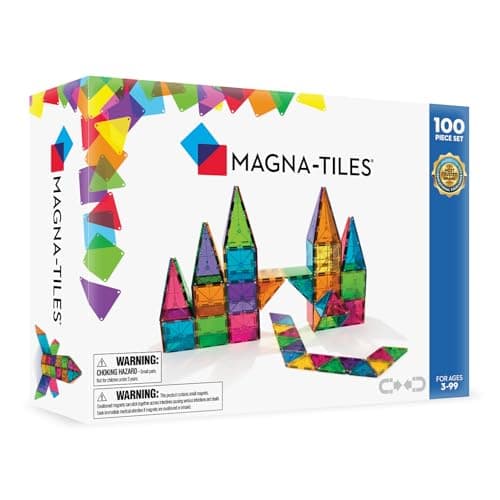
| 1 | Best-documented brand overall MAGNA-TILES Classic 100-Piece Set The only tile brand publishing a full shape breakdown, a magnet retention method and a written cross-set compatibility statement. | A buyer who wants to know exactly what is in the box before it arrives | |
| 2 | 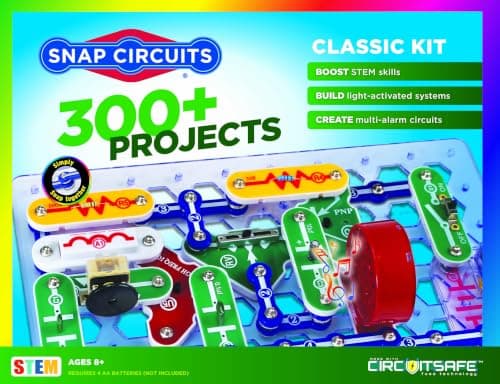 Best published numbers you can do math on Snap Circuits Classic Elenco publishes both project counts and part counts across the whole line, which makes a real comparison possible. | Anyone who wants to compare sets within a range rather than trust a headline | |
| 3 |  Best published safety detail Thames & Kosmos Chemistry C500 Thames & Kosmos names the standard its kits comply with, which turns a rating into a checkable claim. | A buyer who wants to know what an age rating actually means | |
| 4 | 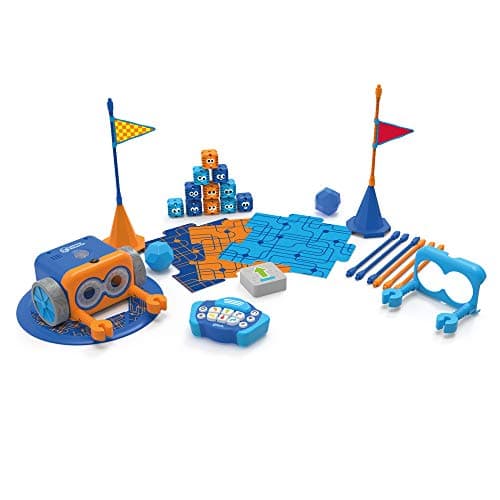 Best published contents list Botley 2.0 The Coding Robot Activity Set Learning Resources publishes piece-by-piece contents and, unusually, a maximum program length. | A buyer comparing coding robots on something other than marketing | |
| 5 | 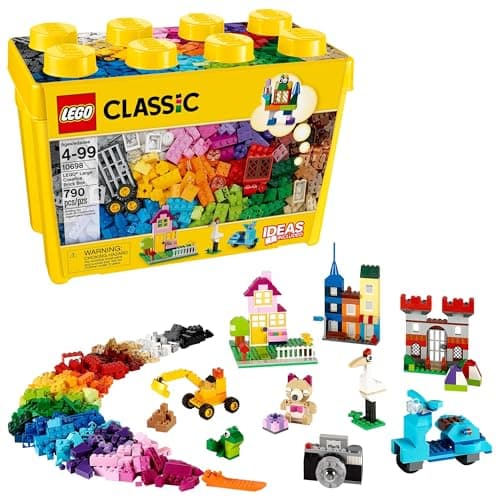 Best published compatibility guarantee LEGO Classic Large Creative Brick Box LEGO publishes a compatibility statement covering its entire range, which no other brick maker offers. | A household expecting to keep adding sets for a decade | |
| 6 | 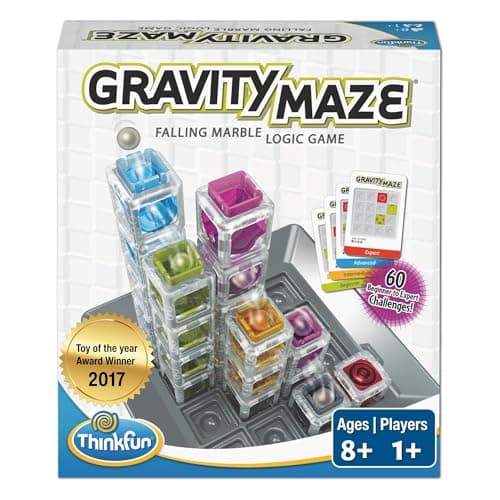 Most honest about the ending ThinkFun Gravity Maze ThinkFun publishes exact challenge counts, which is effectively publishing an expiry date. | A buyer who would rather know how much game is in the box | |
| 7 | 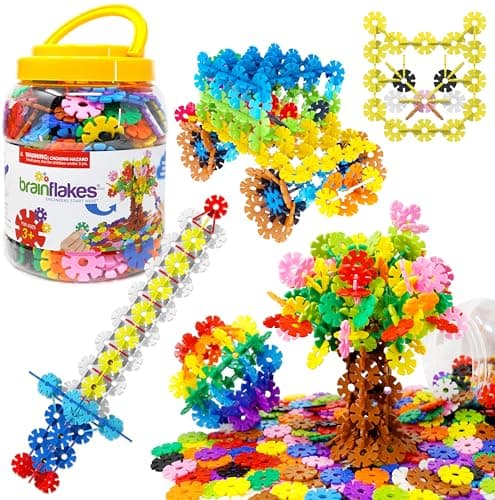 Best documentation at a low price Brain Flakes 500 Piece Interlocking Disc Set VIAHART names ASTM and US CPSIA compliance, which almost nothing in this price band does. | A buyer who wants named compliance without paying a premium brand | |
| — | 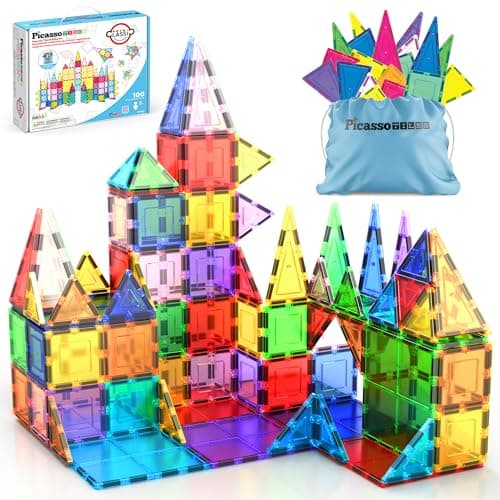 The publishing gap PicassoTiles 100 Piece Magnetic Tile Set A perfectly reasonable product that publishes materially less than its direct competitors. | Volume, bought knowingly |
8 picks, including 1 we tell you to skip. Ages shown are the manufacturer’s own rating, not ours.
The criterion, and why it is the only one we can apply
This site has not tested any of these products. There is no lab, no shelf of samples and no test children, so we cannot rank brands on build quality, durability or how they feel in the hand.
What we have done is read the manufacturer’s own published information for every product on this site. That turns out to be a genuinely useful ranking criterion, because a company that documents its product properly is handing you the tools to check its claims — and a company that does not is asking you to take its word.
It is also the only brand comparison we are entitled to make, which is the honest reason it is the one we are making.
The six things a manufacturer can publish
The arithmetic
What good documentation looks like in this category
| A component breakdown | Not just 100 pieces — which 100 |
|---|---|
| A named safety standard | ASTM F963, EN 71, EN 71-4, CPSIA — not 'safety tested' |
| The power requirement | Quantity and cell size, stated plainly |
| A ceiling or a challenge count | How much product is in the box |
| A compatibility statement | What this works with, in writing |
| Whether anything is consumed | The difference between a toy and an experience |
Why publishing behavior predicts the purchase
A component breakdown tells you what the set builds. One hundred pieces describes a box that is 90% squares and a box that is 60% triangles equally well, and a three-year-old wants the first while a seven-year-old wants the second.
A named standard turns a rating into a fact. When Thames & Kosmos names EN 71-4, the 10+ on the box stops being a difficulty guess and becomes a floor set by the reagents. When VIAHART names CPSIA, you can look up what that requires.
A published ceiling lets you compare honestly. Botley’s 150-step maximum only means something because it can be set against the eight to twenty steps typical elsewhere. Brands that publish no ceiling cannot be compared at all, which is sometimes the point.
A consumables line prevents the commonest disappointment. National Geographic publishes ten geodes for its Break Open kit — ten single-use items, stated as such. That is a company telling you their product ends, in advance, which is more than most manage.
Brands that publish well but are not represented above
Connetix publishes its construction method — tiles “ultrasonically sealed and riveted for extra safety” — which is two independent magnet-retention methods described in writing. On a product whose only real hazard is a loose magnet, that is the most relevant thing a tile brand can say. It does not publish a shape breakdown.
MindWare publishes the exit mix for Q-BA-MAZE: 18 bottom-exit, 36 single-exit and 18 double-exit cubes out of 72. That tells you the structure can branch, which a cube count alone would not.
Ravensburger publishes 18 construction element types for the GraviTrax starter set rather than just 122 pieces, which is the same instinct.
Makeblock publishes the actual processor in the mBot Neo — an Xtensa 32-bit LX6 dual-core at 240 MHz with 8 MB flash and 8 MB PSRAM — plus the three programming environments it supports. That is unusually technical for a toy and it lets a buyer verify the Python claim is real.
Sphero publishes indi’s exact color-card breakdown and 2+ hours of play per charge. MatataStudio publishes screen-free, app-free and internet-free operation, which is a stronger and more specific claim than most.
Where the gaps are
Being specific about absences is the other half of this page, and an absence is information rather than an accusation.
AmScope publishes an unusually complete spec sheet for its beginner microscope kit — six named magnifications, the 70 × 65 mm stage, the slide-holder type, the full 52-piece accessory list, a stated “For ages 8+” and even the Amazon ASIN of the listing it sells through. It publishes a shipping weight rather than a product weight, which is the one gap.
Celestron publishes no stated age for the FirstScope either, calling it “an ideal entry level astronomical telescope.” The optical specifications are complete and honest — 76 mm aperture, f/3.95, eyepieces at 15x and 75x — so this reads as a deliberate choice rather than an oversight.
PicassoTiles publishes no shape breakdown and makes no cross-brand compatibility claim, as covered above.
Optics brands generally publish magnification maxima that exceed what the glass can resolve. That is an industry-wide convention rather than one company’s failing, and it is why we tell readers to buy a microscope on lighting and a telescope on aperture instead.
Worth knowing before you buy
A brand that does not name a safety standard has not necessarily failed one. Toys sold in the US must meet ASTM F963 and CPSIA regardless of what the marketing says.
What naming the standard changes is your ability to check. Where two similar products are otherwise equal, the one that names its compliance has told you something the other has not.
How to check a brand yourself, in about a minute
Open the manufacturer’s own product page rather than the retail listing. Retailers routinely omit the four things that decide whether a toy gets used.
Look for a component list. If the page says only how many pieces, you are buying a number.
Look for the battery line. Quantity and cell size. Botley publishes five AAA, the Robot Mouse three AAA, Snap Circuits four AA and the Chem C500 a single 9V — none included.
Look for a named standard. ASTM F963, EN 71, EN 71-4 or CPSIA. “Safety tested” on its own is not one.
Look for what runs out. A consumables line, an experiment count, a challenge count. Any of the three tells you whether you are buying a toy or an experience.
Say the unwelcome thing
Do not treat a brand name as a specification
The best-documented brands here are also among the more expensive, and it is easy to read that as documentation being worth any premium. It is not.
A cheaper brand that publishes less is a perfectly rational purchase when the thing you need is volume, and the gap only costs you when you needed to know the composition. Decide which of those you are buying first, then let the documentation break the tie.
Where to go next
How to read a toy box covers decoding the numbers once you have found them. Which building sets actually work together covers the compatibility claims in detail, and how we pick sets out the method behind this whole site, including what we will not claim.
In full
Every pick, and what is wrong with it
Published specifications only, each linked back to the page it came from. Where a manufacturer publishes nothing, the row says so — we do not fill blanks in.
1. Best-documented brand overall
MAGNA-TILES Classic 100-Piece Set
Magna-Tiles · 4300 · maker rates it 3-99 years
The only tile brand publishing a full shape breakdown, a magnet retention method and a written cross-set compatibility statement.
- Pieces
- 100
- Shape mix
- 50 squares, 4 large squares, 20 equilateral triangles, 11 right triangles, 15 isosceles triangles
- Stated age
- “3-99 Years”
- Material
- “Food-grade, non-toxic MABS plastic that are free from BPAs, phthalates, and latex”
Magna-Tiles publishes the exact mix — 50 squares, 4 large squares, 20 equilateral triangles, 11 right triangles and 15 isosceles triangles — a stated 3-99 age range, a signature lattice plus fastening rivets holding the magnets, and the statement that all pieces are compatible with and complementary to all other Magna-Tiles sets.
That is four separate checkable claims on one product page, which is more than any competitor in this category offers. The shape mix in particular is the specification that tells you what the set can build, and almost nobody else prints it.
The honest counterweight is that documentation is not the same as value. You are paying a premium partly for the brand, and a cheaper 100-piece set still gives a child 100 tiles.
Replay signal
- Open-ended or one-shot
- Open-ended — there is no finished state to reach
- Does anything run out
- Nothing runs out
- Room to grow
- Every set combines with every other Magna-Tiles set
Why we say so: Magna-Tiles publishes the full 100-piece shape breakdown, lists no consumable parts, and states that “all pieces are compatible with and complementary to all other MAGNA-TILES sets.”
What’s wrong with it
The documentation is a premium product and it is priced like one — the most expensive way to buy 100 tiles.
| Pieces | 100 |
|---|---|
| Shape mix | 50 squares, 4 large squares, 20 equilateral triangles, 11 right triangles, 15 isosceles triangles |
| Stated age | “3-99 Years” |
| Material | “Food-grade, non-toxic MABS plastic that are free from BPAs, phthalates, and latex” |
| Magnet retention | Signature lattice plus “fastening rivets keep magnets safe and secure” |
| Consumables | None |
Every figure above is from Magna-Tiles, Classic 100-Piece Set. Blanks are shown as “not published” rather than filled in.
2. Best published numbers you can do math on
Snap Circuits Classic
Elenco · SC-300 · maker rates it 8+
Elenco publishes both project counts and part counts across the whole line, which makes a real comparison possible.
- Projects
- “Build over 300 exciting projects” — manual covers projects 1-305
- Parts
- “Contains over 60 Snap-Together parts”
- Projects per part
- 5.1 — the highest ratio in the line
- Stated age
- “Ages 8+” and “Not for Children under 3 yrs.”
Elenco publishes “build over 300 exciting projects” and “contains over 60 Snap-Together parts” for the Classic, over 500 projects from over 75 parts for the Pro with 73 computer-interfaced experiments, and over 750 from over 80 for Extreme.
Publishing both halves is the thing to credit. A project count alone tells you how long a manual is; a project count divided by a part count tells you how much each component is doing — 5.1 on the Classic, 6.7 on the Pro, 9.4 on Extreme. Very few manufacturers give you the denominator.
Elenco also publishes the battery line plainly: four AA cells, not included. It is left off most retail listings, which is not the manufacturer’s fault and is still the most common cause of a disappointing first morning.
Replay signal
- Open-ended or one-shot
- The sweet spot of the line — enough parts to invent with, cheap enough not to be an event
- Does anything run out
- Nothing runs out
- Room to grow
- 305 published projects is years of Sunday afternoons at one a week
Why we say so: Elenco publishes 305 numbered projects against 60+ parts. Five projects per part is the highest ratio anywhere in the Snap Circuits line, which is the arithmetic reason this is the set to buy rather than the cheap one or the big one.
What’s wrong with it
The published battery requirement is easy to miss and it is not included.
| Projects | “Build over 300 exciting projects” — manual covers projects 1-305 |
|---|---|
| Parts | “Contains over 60 Snap-Together parts” |
| Projects per part | 5.1 — the highest ratio in the line |
| Stated age | “Ages 8+” and “Not for Children under 3 yrs.” |
| Batteries | “Requires 4 ‘AA’ batteries (not included)” |
| Relationship to SC-100 | Manual includes all SC-100 projects plus 200 new ones |
Every figure above is from Elenco, Snap Circuits Classic. Blanks are shown as “not published” rather than filled in.
3. Best published safety detail
Thames & Kosmos Chemistry C500
Thames & Kosmos · 665012 · maker rates it 10+
Thames & Kosmos names the standard its kits comply with, which turns a rating into a checkable claim.
- Experiments
- 28
- Manual
- 48 pages
- Chemicals included
- 5
- Equipment
- Safety glasses, test tubes, dropper pipettes, double-headed measuring spoon
Thames & Kosmos publishes 28 experiments, a 48-page manual, five chemicals and the equipment list for the C500, rated 10 years and up, and states compliance with EN 71-4 — the European standard covering chemistry experiment kits specifically.
Naming the standard is the detail worth paying attention to. Most brands write “safety tested” and leave you to guess against what. A named standard tells you the 10+ rating is a floor set by the reagents rather than a difficulty estimate, which is a genuinely different piece of information.
The same company publishes the Kids First range with 24 tools, 10 experiment cards and explicitly no chemicals at all, rated 3 to 6+. Being clear about what is absent is its own kind of good documentation.
Replay signal
- Open-ended or one-shot
- Guided, not open-ended: 28 experiments, then the manual is finished
- Does anything run out
- Yes — the chemicals are consumed, and Thames & Kosmos sells replacements
- Room to grow
- Steps up to the larger C1000, C2000 and C3000 sets in the same line
- Adult required
- The maker rates it 10+ and it involves real chemicals
Why we say so: Thames & Kosmos publishes 28 experiments, a 48-page manual and five chemicals. Five finite chemicals across 28 experiments is arithmetic, not opinion — this set has an end, and it is better to know that before Boxing Day than after.
What’s wrong with it
The published experiment count is finite and the chemicals are consumed — good documentation of a product that ends.
| Experiments | 28 |
|---|---|
| Manual | 48 pages |
| Chemicals included | 5 |
| Equipment | Safety glasses, test tubes, dropper pipettes, double-headed measuring spoon |
| Stated age | 10 years and up |
| Batteries | 1 x 9V (not included) |
| Consumables | Yes — the five chemicals are used up |
Every figure above is from Thames & Kosmos, Chemistry C500. Blanks are shown as “not published” rather than filled in.
4. Best published contents list
Botley 2.0 The Coding Robot Activity Set
Learning Resources · LER2938 · maker rates it 5+
Learning Resources publishes piece-by-piece contents and, unusually, a maximum program length.
- Set size
- 78 pieces
- Contents
- Botley 2.0, remote programmer, 2 face plates, 40 coding cards, 6 double-sided boards, 27 obstacle pieces, starter guide
- Maximum program length
- “coding sequences of up to 150 steps”
- Movement
- Six directions, plus 16 coded interactions
Learning Resources publishes the Botley 2.0 contents in full: the robot, a remote programmer, two face plates, 40 coding cards, six double-sided boards, 27 obstacle building pieces and a starter guide — 78 pieces, rated 5+ or grades K-2 — plus sequences of up to 150 steps, six directions of movement and 16 coded interactions.
The 150-step maximum is the rare number here. Most coding toys publish no program ceiling at all, which makes them impossible to compare; publishing one invites a comparison the brand might lose, and they print it anyway.
The same company publishes an 83-piece breakdown for the Code & Go Robot Mouse and states plainly that Coding Critters is a storybook format — an accurate description of a product whose coding ceiling is low. Describing your own product modestly is worth crediting.
Replay signal
- Open-ended or one-shot
- Open-ended once the cards are understood — the child builds the maze, not just the program
- Does anything run out
- Nothing runs out except batteries
- Room to grow
- A 150-step ceiling means the challenge scales for years past the first week
- Adult required
- Needed for the first session, then not — there is no app account and nothing to log into
Why we say so: Learning Resources publishes the 78-piece contents, the 150-step maximum sequence, the six directions and 16 interactions, and states the set is 100% screen-free with no tablet or app required.
What’s wrong with it
Five AAA batteries, published as required and not included — more than most households keep spare.
| Set size | 78 pieces |
|---|---|
| Contents | Botley 2.0, remote programmer, 2 face plates, 40 coding cards, 6 double-sided boards, 27 obstacle pieces, starter guide |
| Maximum program length | “coding sequences of up to 150 steps” |
| Movement | Six directions, plus 16 coded interactions |
| Screen required | None — “100% screen-free play” |
| Batteries | “Requires 5 AAA batteries (not included)” |
| Stated age | 5+ (K-2nd grade) |
Every figure above is from Learning Resources, Botley 2.0 Activity Set. Blanks are shown as “not published” rather than filled in.
5. Best published compatibility guarantee
LEGO Classic Large Creative Brick Box
LEGO · 10698 · maker rates it 4+
LEGO publishes a compatibility statement covering its entire range, which no other brick maker offers.
- Pieces
- 790
- Colors
- 33
- Stated age
- 4 and up
- Includes
- 8 types of windows and doors, 2 green baseplates, 6 tires and wheel rims
LEGO publishes 790 pieces in 33 colors for the Classic Large Creative Brick Box, including 8 types of windows and doors, 2 green baseplates and 6 tires and wheel rims, rated 4 and up, and states compatibility with all LEGO construction sets.
That last clause is the most valuable published claim in construction toys. It means every future set joins one growing collection rather than starting a separate pile, which is a real financial argument over ten years.
LEGO Education publishes at a different level again for SPIKE Essential: 449 pieces, two small motors, a color sensor, a six-axis gyro, a 3 × 3 color light matrix and a rechargeable hub with two I/O ports. Naming the gyro axis count is unusually specific for a toy.
Replay signal
- Open-ended or one-shot
- Open-ended — this is the box with no instructions and no finished model
- Does anything run out
- Nothing runs out
- Room to grow
- Every LEGO set the child is ever given pours into the same box
Why we say so: LEGO publishes the 790-piece count, the 33 colors and the box's compatibility with all LEGO construction sets. The absence of a build-this model is the product's stated design, not an omission.
What’s wrong with it
The guarantee covers LEGO only, and clutch power on third-party bricks is almost never published by anyone.
| Pieces | 790 |
|---|---|
| Colors | 33 |
| Stated age | 4 and up |
| Includes | 8 types of windows and doors, 2 green baseplates, 6 tires and wheel rims |
| Compatibility | Compatible with all LEGO construction sets |
| Consumables | None |
Every figure above is from LEGO, Large Creative Brick Box 10698. Blanks are shown as “not published” rather than filled in.
6. Most honest about the ending
ThinkFun Gravity Maze
ThinkFun · 44001006 · maker rates it 8+
ThinkFun publishes exact challenge counts, which is effectively publishing an expiry date.
- Challenges
- 60, beginner to expert
- Contents
- Game grid, 9 towers, 1 target piece, 3 marbles, 60 challenge cards
- Players
- 1
- Batteries
- None
ThinkFun publishes 60 challenges for Gravity Maze and Circuit Maze, 60 levels for Code Master, and 40 for Rush Hour Junior, each graded beginner to expert, with full component lists and single-player designations.
A challenge count is a manufacturer telling you when their product runs out. That is commercially unhelpful and it is exactly the kind of number a buyer needs — a 40-challenge game and a 200-puzzle game are different purchases, and only one of those brands makes the comparison easy.
Educational Insights does the same for Kanoodle at 200+ puzzles and SmartGames for IQ Puzzler Pro at 120 challenges with a published range of 6 to adult. This corner of the category documents itself well.
Replay signal
- Open-ended or one-shot
- Finite by design — 60 challenges, and a determined child will finish them
- Does anything run out
- Nothing physically runs out, but the challenge cards do end
- Room to grow
- The towers can be used freely once the cards are done, though nothing in the box prompts that
Why we say so: ThinkFun publishes 60 challenges and a fixed component list. Sixty is a real number with a real end, and single-player puzzle games are the category where that matters most — better to know before you buy it as the main present.
What’s wrong with it
Sixty challenges is a real limit, and nothing in the box prompts free play afterwards.
| Challenges | 60, beginner to expert |
|---|---|
| Contents | Game grid, 9 towers, 1 target piece, 3 marbles, 60 challenge cards |
| Players | 1 |
| Batteries | None |
| Stated age | Ages 8+ |
| Consumables | None |
Every figure above is from ThinkFun, Gravity Maze. Blanks are shown as “not published” rather than filled in.
7. Best documentation at a low price
Brain Flakes 500 Piece Interlocking Disc Set
VIAHART · Brain Flakes 500 · maker rates it 5+
VIAHART names ASTM and US CPSIA compliance, which almost nothing in this price band does.
- Pieces
- 500 interlocking discs
- Disc size
- 1.3 inches across, 1/10 inch thick
- Includes
- Storage jar and idea booklet
- Materials
- BPA-free; free from lead, heavy metals and phthalates
VIAHART publishes 500 interlocking discs at 1.3 inches across and 1/10 inch thick, a storage jar and idea booklet, materials free from BPA, lead, heavy metals and phthalates, and compliance with ASTM and US CPSIA, rated 5 and up.
Naming the actual US toy safety regimes at this price point is genuinely rare. Most competitors in the same bracket say “non-toxic” and stop, which is a claim you cannot verify against anything.
Magformers does the same from a different direction, naming CE, ASTM and EN71 alongside a published 30/20/12 shape split. Two brands, both naming standards, both easy to check.
Replay signal
- Open-ended or one-shot
- Open-ended, and the discs curve — which means spheres and domes, not just walls
- Does anything run out
- Nothing runs out
- Room to grow
- 500 identical pieces is enough for structures a child cannot exhaust
Why we say so: VIAHART publishes the 500-piece count, the disc dimensions and compliance with ASTM and CPSIA. Naming the actual standards is unusual at this price and is a genuine reason to prefer it over unbranded equivalents.
What’s wrong with it
The pieces are thin and flat, so the honest risk is losing them rather than anything the documentation covers.
| Pieces | 500 interlocking discs |
|---|---|
| Disc size | 1.3 inches across, 1/10 inch thick |
| Includes | Storage jar and idea booklet |
| Materials | BPA-free; free from lead, heavy metals and phthalates |
| Standards named | ASTM and US CPSIA compliant |
| Stated age | 5 and up |
Every figure above is from VIAHART, Brain Flakes 500 Piece Interlocking Disc Set. Blanks are shown as “not published” rather than filled in.
Skip this one
PicassoTiles 100 Piece Magnetic Tile Set
PicassoTiles · PT100 · maker rates it 3+
A perfectly reasonable product that publishes materially less than its direct competitors.
- Pieces
- 100
- Stated age
- 3 and up
- Material
- Non-toxic ABS plastic, BPA-free, with a smooth surface and rounded edges
- Shape breakdown
- Not published by the manufacturer
PicassoTiles publishes 100 pieces, a 3 and up rating, and non-toxic BPA-free ABS with a smooth surface and rounded edges. It publishes no shape breakdown, and it makes no cross-brand compatibility claim.
We are not calling it a bad product — it is the cheapest published route to a serious tile count, and volume solves a real problem. We are marking it because this page is specifically about documentation, and on that criterion it sits behind Magna-Tiles and Connetix.
The practical consequence is narrow and real: you cannot tell whether you are buying a box that is mostly squares or mostly triangles, and those build differently. Buy it for count, and see the full review.
Replay signal
- Open-ended or one-shot
- Open-ended — the same build-anything format
- Does anything run out
- Nothing runs out
- Room to grow
- PicassoTiles publishes a large expansion-pack range in the same 3-inch format
Why we say so: PicassoTiles states the ages 3+ rating, the non-toxic BPA-free ABS with rounded edges, and sells a dedicated expansion range. It publishes no shape breakdown and makes no cross-brand compatibility claim, so we do not make one on its behalf.
What’s wrong with it
No shape breakdown and no compatibility claim, so a comparison on piece count is the only one available.
| Pieces | 100 |
|---|---|
| Stated age | 3 and up |
| Material | Non-toxic ABS plastic, BPA-free, with a smooth surface and rounded edges |
| Shape breakdown | Not published by the manufacturer |
| Cross-brand compatibility | Not published — PicassoTiles makes no compatibility claim |
| Consumables | None |
Every figure above is from PicassoTiles, magnetic building tiles. Blanks are shown as “not published” rather than filled in.
We are not putting a buy button on this one. It is easy enough to find if you want it anyway — but we would rather send you to something that gets played with twice.
Questions people actually ask
Frequently asked
What is the best STEM toy brand?
On published documentation, Magna-Tiles leads — it prints a full shape breakdown, a magnet retention method, a 3-99 age range and a written cross-set compatibility statement. Elenco and Thames & Kosmos are close behind for publishing numbers you can check: Elenco gives both project and part counts, and Thames & Kosmos names EN 71-4 compliance.
Which STEM toy companies name their safety standards?
Thames & Kosmos names EN 71-4 for its chemistry kits, VIAHART names ASTM and US CPSIA for Brain Flakes, and Magformers names CE, ASTM and EN71. Most brands write 'safety tested' without saying against what — which is not a failure, but it does mean you cannot check it. Toy safety standards explained.
Does an expensive STEM toy brand mean better quality?
It often means better documentation, which is not the same thing. We have not tested any of these products so we cannot rank build quality. What the premium brands reliably give you is the ability to check their claims before buying — and if what you need is simply more pieces, a cheaper brand that publishes less is a rational choice.
How do you tell a good STEM toy brand from a bad one?
Open the manufacturer's own page and look for four things: a component breakdown rather than just a piece count, the battery requirement with quantity and cell size, a named safety standard, and a line about what runs out. Retailers omit all four routinely, and they decide whether a toy actually gets used. How to read a toy box.
Which magnetic tile brand publishes the most detail?
Magna-Tiles publishes the exact shape mix — 50 squares, 4 large squares, 20 equilateral, 11 right and 15 isosceles triangles — plus a lattice-and-rivet magnet retention method. Connetix publishes ultrasonic sealing plus riveting, which is the more relevant safety detail. PicassoTiles publishes neither a shape breakdown nor any compatibility claim. Three tile brands compared.
Sources
Where these figures came from
Every specification on this page traces to one of these. If a manufacturer publishes nothing on a point, the page says so rather than filling the gap.
- Magna-Tiles, Classic 100-Piece Set
- Elenco, Snap Circuits Classic
- Thames & Kosmos, Chemistry C500
- Learning Resources, Botley 2.0 Activity Set
- LEGO, Large Creative Brick Box 10698
- ThinkFun, Gravity Maze
- VIAHART, Brain Flakes 500 Piece Interlocking Disc Set
- PicassoTiles, magnetic building tiles
- Connetix, Rainbow Creative Pack 100 pc
- Makeblock, mBot2 coding robot kit
- AmScope, M30-ABS-KT2
- Celestron, FirstScope Telescope
Read next
Where to go from here
Back to Guides, or read how we pick.