Single review
4M Weather Station Kit Review
Reviewed from 4M's published specifications. We have not built it, and this is the rare science kit whose value starts after the build.
By Sawyer V. · Published
The short answer
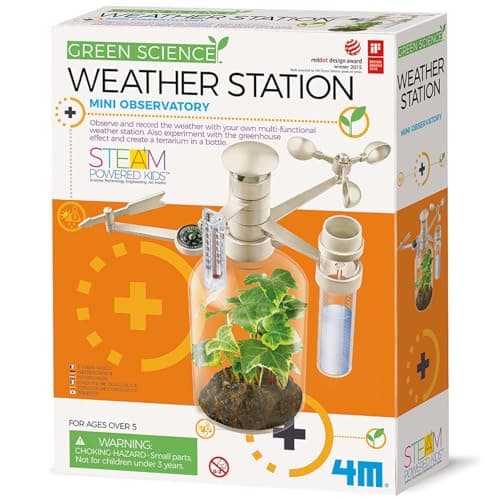
The 4M Weather Station Kit is the best-value science kit here for repeat use. 4M publishes four instruments — a wind vane, an anemometer, a thermometer and a rain gauge — assembling to about 8.5 × 4.75 inches, plus a greenhouse-effect terrarium experiment, with no consumables. Rated 8 and up.
Block & Beaker earns a commission when you buy through our links, at no cost to you. It never changes a ranking, and we say so plainly when the right answer is the cheaper set, or nothing at all. Full disclosure · How we pick.
At a glance
The picks, ranked
Tap any row to jump to the full reasoning. Prices come live from Amazon where we have them and read “check price” where we don’t — never a number we cannot stand behind today.
| # | Product | Best for | Price |
|---|---|---|---|
| 1 | The product 4M Weather Station Kit Four permanent instruments, and data that regenerates every single day. | Eight and up, for a household that will keep reading it | |
| 2 | 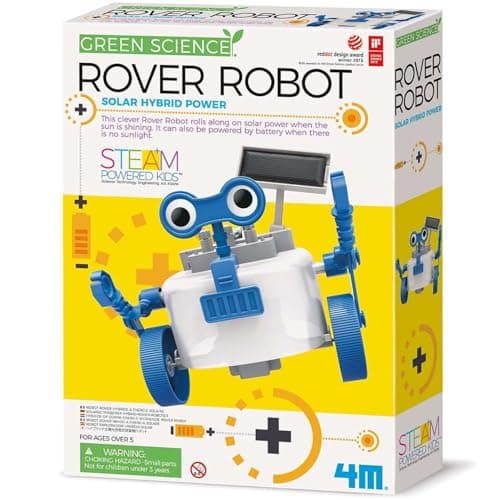 The same range, lower age 4M Green Science Solar Rover A hybrid solar and battery rover, published from 5. | Five and up | |
| 3 | 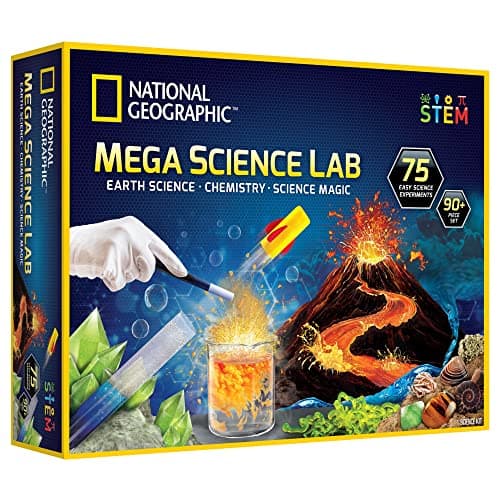 If you want volume NATIONAL GEOGRAPHIC Mega Science Lab 45 experiments in the kit plus 85+ household ones in the bonus guide. | Eight and up | |
| — | 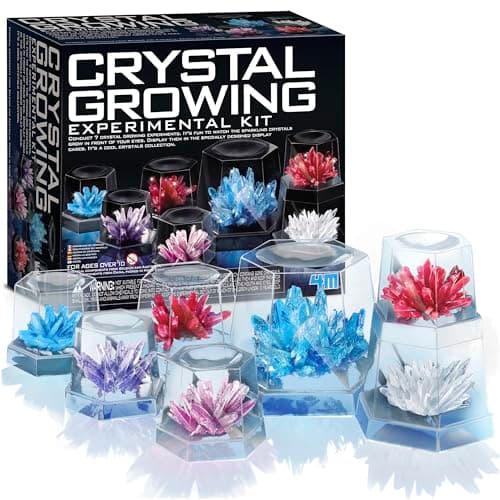 Not the same value 4M Crystal Growing Experiment Kit Seven crystal-growing experiments, and then the compound is gone. | Ten and up |
4 picks, including 1 we tell you to skip. Ages shown are the manufacturer’s own rating, not ours.
What we can tell you, and what we cannot
We have not built it. No lab, no samples, no test children, and no star rating on this page or in its structured data.
4M publishes the instrument list, the full parts list, the assembled dimensions, the age rating and the absence of consumables. How accurate the anemometer is against a real weather service, we cannot tell you — and no maker in this category publishes calibration figures.
The specification that decides it
The arithmetic
4M Weather Station Kit, published
| Instruments built | 4 — wind vane, anemometer, thermometer, rain gauge |
|---|---|
| Assembled size | About 8.5 in x 4.75 in |
| Extra experiment | Greenhouse-effect terrarium using a recycled bottle |
| Stated age | 8 and up (a Green Science version is rated 5+) |
| Consumables | None — the instruments are permanent |
| Includes | Compass, for siting the wind vane |
What the numbers mean in practice
Four instruments is four separate measurements. Temperature, rainfall, wind speed and wind direction are enough to keep a log that actually shows patterns, which is the difference between a science kit and a science project.
8.5 inches assembled is a garden object, not a lab object. Small enough to site on a balcony or a fence post, which matters — an instrument that needs a lawn excludes a lot of households.
The greenhouse terrarium is a second experiment, not filler. A recycled bottle and a thermometer demonstrate the greenhouse effect with the kit’s own instrument, which is a genuinely good use of a part that is already there.
Two published ratings exist. This kit is 8 and up, with a Green Science version rated 5+. Check which box you are buying if the age matters.
The habit is the product
This is the honest risk. Build day is exciting, and day four is a child being asked to write a number on a chart before school.
What makes it work is a place to put the readings. A printed week-long chart on the fridge, or a note on a phone, turns four instruments into a data set — and a month of readings is the point at which a child sees that weather has patterns rather than moods.
Nothing in the box supplies that, and no published spec can. It is the one science kit where the adult’s contribution is a routine rather than supervision.
Four instruments is also four things left outdoors. All of them are published as permanent with no consumables, but an anemometer left out all winter is exposed hardware — bring it in when the readings stop being taken.
Who should skip it
Households with nowhere outside to put it. A rain gauge indoors reads zero forever.
Anyone who wants a result today. Weather kits pay out over weeks. A volcano kit pays out in an afternoon.
Under-eights, unless you buy the other version. This box publishes 8 and up; the Green Science variant publishes 5+.
Where it sits
The weather station appears in weather science kits, science experiment kits and STEM toys for homeschool.
In full
Every pick, and what is wrong with it
Published specifications only, each linked back to the page it came from. Where a manufacturer publishes nothing, the row says so — we do not fill blanks in.
1. The product
4M Weather Station Kit
4M · 4573 · maker rates it 8+
Four permanent instruments, and data that regenerates every single day.
- Instruments built
- 4 — wind vane, anemometer, thermometer and rain gauge
- Contents
- Thermometer and support arm, two support-column halves, rain gauge arm, funnel, plastic tube, wind vane and arm, compass, anemometer arm, cups, hub, spindles, cap screws, instructions
- Assembled size
- About 8.5 in x 4.75 in
- Extra experiment
- A greenhouse-effect terrarium using a recycled bottle
4M publishes four instruments built from the kit — wind vane, anemometer, thermometer and rain gauge — with contents including a thermometer and support arm, two support-column halves, a rain gauge arm, funnel and plastic tube, a wind vane and arm, a compass, an anemometer arm, cups, hub, spindles and cap screws. Assembled it is about 8.5 × 4.75 inches. A greenhouse-effect terrarium using a recycled bottle is included as an extra experiment. Stated age 8 and up, with a Green Science version rated 5+. No consumables — the instruments are permanent.
“No consumables” on a science kit is rare and it is the whole argument. A volcano kit gives you three eruptions; this gives you a reading every morning for as long as anyone keeps taking it.
The compass in the parts list is the giveaway that this is meant to be sited properly. Wind direction is meaningless without knowing which way north is, and a kit that includes one is expecting real measurement rather than a toy.
Replay signal
- Open-ended or one-shot
- Genuinely open-ended: the weather supplies new data every single day
- Does anything run out
- Nothing runs out
- Room to grow
- Readings become a record; the interest scales into charting and comparison
- Adult required
- For the build, which is fiddly; not for the daily readings
Why we say so: 4M publishes four working instruments and a full parts list. Once built, nothing is consumed and the sky restocks the experiment daily — which makes this one of the few science kits with no published ending.
What’s wrong with it
The build is one afternoon; without a recording habit it becomes garden furniture.
| Instruments built | 4 — wind vane, anemometer, thermometer and rain gauge |
|---|---|
| Contents | Thermometer and support arm, two support-column halves, rain gauge arm, funnel, plastic tube, wind vane and arm, compass, anemometer arm, cups, hub, spindles, cap screws, instructions |
| Assembled size | About 8.5 in x 4.75 in |
| Extra experiment | A greenhouse-effect terrarium using a recycled bottle |
| Stated age | 8 and up (a Green Science version is rated 5+) |
| Consumables | None — the instruments are permanent |
Every figure above is from 4M, Weather Station Kit (4573). Blanks are shown as “not published” rather than filled in.
2. The same range, lower age
4M Green Science Solar Rover
4M · Green Science Solar Rover · maker rates it 5+
A hybrid solar and battery rover, published from 5.
- Power
- Solar panel in sunlight, battery in its absence — hybrid
- Batteries
- 1 x AAA (not included)
- Build
- One solar-powered rover, assembled by the child
- Stated age
- Ages 5+
4M publishes a solar panel in sunlight and a battery in its absence, one AAA not included, one rover assembled by the child, stated age 5+, with no consumables beyond the battery.
Three years earlier and far shorter-lived. Buy the rover for the younger sibling and the weather station for the older one. See the Solar Rover review.
Replay signal
- Open-ended or one-shot
- One-shot build, then a working toy — the rover survives the assembly
- Does anything run out
- Nothing runs out
- Room to grow
- Little. It builds one thing and that thing then drives around
- Adult required
- For the first assembly at five; not for running it
Why we say so: 4M publishes a hybrid solar-and-battery drive requiring one AAA. The hybrid is the useful detail: a purely solar toy is a disappointment on a cloudy afternoon, and the battery fallback means the thing still moves indoors.
What’s wrong with it
One build and one model, with nothing to record afterwards.
| Power | Solar panel in sunlight, battery in its absence — hybrid |
|---|---|
| Batteries | 1 x AAA (not included) |
| Build | One solar-powered rover, assembled by the child |
| Stated age | Ages 5+ |
| Consumables | None beyond the battery |
Every figure above is from 4M, Green Science Solar Rover. Blanks are shown as “not published” rather than filled in.
3. If you want volume
NATIONAL GEOGRAPHIC Mega Science Lab
National Geographic · Mega Science Lab · maker rates it 8+
45 experiments in the kit plus 85+ household ones in the bonus guide.
- Experiments in the kit
- 45, across chemistry, earth science and science magic
- Bonus guide
- 85+ further experiments using household items, for 130+ in total
- Includes
- Volcano build, glow-in-the-dark crystal growth, and the tools for both
- Stated age
- 8+
National Geographic publishes 45 experiments across chemistry, earth science and science magic, plus a bonus guide of 85+ further experiments using household items for 130+ in total, rated 8+, with consumables.
The opposite trade: many one-off results against four instruments that keep working. Both are defensible; they are not the same purchase.
Replay signal
- Open-ended or one-shot
- Guided, and the 45 in-kit experiments end. The 85 household ones do not
- Does anything run out
- The supplied materials run out; the household half of the book never does
- Room to grow
- The bonus guide is the genuinely durable part, and it costs the manufacturer almost nothing to include
- Adult required
- Supervision for the chemistry third; the earth science and household experiments are largely self-run
Why we say so: National Geographic publishes 45 in-kit experiments plus a bonus guide of 85+ using household items. That second number is why this kit outlasts most of its price band: roughly two-thirds of the published content needs nothing but a kitchen.
What’s wrong with it
The supplied chemicals and crystal compounds are used up.
| Experiments in the kit | 45, across chemistry, earth science and science magic |
|---|---|
| Bonus guide | 85+ further experiments using household items, for 130+ in total |
| Includes | Volcano build, glow-in-the-dark crystal growth, and the tools for both |
| Stated age | 8+ |
| Consumables | Yes — the supplied chemicals and crystal compounds are used up |
Every figure above is from National Geographic toys, Mega Science Lab. Blanks are shown as “not published” rather than filled in.
Skip this one
4M Crystal Growing Experiment Kit
4M · 5557 · maker rates it 10+
Seven crystal-growing experiments, and then the compound is gone.
- Experiments
- 7 crystal-growing experiments
- Contents
- 3 bags of crystal compound, 3 bags of seeding mixture, stirring bowl and spoon, 7 display bases, 7 display covers, 7 ring templates
- Stated age
- 10 years and up
- Consumables
- Yes — the compound is the whole product
4M publishes 7 crystal-growing experiments with 3 bags of crystal compound, 3 bags of seeding mixture, a stirring bowl and spoon, 7 display bases, 7 display covers and 7 ring templates, rated 10 years and up, where the compound is the whole product.
Same brand, opposite economics. Named here because these two kits sit side by side on shelves and one of them can be used twice a day for years.
Replay signal
- Open-ended or one-shot
- One-shot, seven times over
- Does anything run out
- Definitively. Three bags of compound, and when they are gone the kit is a set of display cases
Why we say so: 4M publishes three bags of crystal compound across seven experiments. That is the arithmetic that decides this purchase: it is seven results, spread over weeks because crystals take days to grow, and then it is finished. Excellent as an event; poor as the main present.
What’s wrong with it
Published 10 and up, and the compound is the whole product.
| Experiments | 7 crystal-growing experiments |
|---|---|
| Contents | 3 bags of crystal compound, 3 bags of seeding mixture, stirring bowl and spoon, 7 display bases, 7 display covers, 7 ring templates |
| Stated age | 10 years and up |
| Consumables | Yes — the compound is the whole product |
| Time per experiment | Days, not minutes — crystals grow on their own schedule |
Every figure above is from 4M, Crystal Growing Experiment Kit. Blanks are shown as “not published” rather than filled in.
We are not putting a buy button on this one. It is easy enough to find if you want it anyway — but we would rather send you to something that gets played with twice.
Questions people actually ask
Frequently asked
Is the 4M Weather Station Kit worth it?
For an eight-year-old in a household that will keep taking readings, it is the best replay value in the category. 4M publishes four instruments - wind vane, anemometer, thermometer and rain gauge - with no consumables, so the data regenerates daily.
What age is the 4M Weather Station for?
4M publishes 8 and up for this kit, and a Green Science version rated 5+. Check which box you are buying if the age matters.
How many instruments does it build?
Four: a wind vane, an anemometer, a thermometer and a rain gauge. A compass is included for siting the wind vane, and a greenhouse-effect terrarium is included as an extra experiment. Weather science kits.
Does anything in the kit run out?
No. 4M publishes no consumables - the instruments are permanent. That is unusual in science kits, where the supplied chemicals or compounds are normally the product.
How big is it when assembled?
4M publishes about 8.5 x 4.75 inches, which is small enough for a balcony or a fence post rather than needing a lawn.
What is the greenhouse-effect terrarium experiment?
4M publishes it as an extra experiment using a recycled bottle alongside the kit's own thermometer - a second use for a part that is already in the box rather than a separate purchase.
Where should the weather station be sited?
Somewhere open enough for wind to reach the anemometer and rain to reach the gauge. A compass is included for orienting the wind vane, which is what makes direction readings meaningful. Weather science kits.
Sources
Where these figures came from
Every specification on this page traces to one of these. If a manufacturer publishes nothing on a point, the page says so rather than filling the gap.
Read next
Where to go from here
Back to Reviews, or read how we pick.