Single review
MEL Chemistry Review
Reviewed from MEL Science's published specifications. We have not subscribed, and the arithmetic below is the maker's own numbers.
By Sawyer V. · Published
The short answer
MEL Chemistry is worth it when the schedule is the problem you are solving. MEL Science publishes 2-3 experiments per set, a new kit by the 23rd of each month, a 10+ rating, and a home lab — flask, solid fuel stove, safety glasses and beakers — in the first shipment. For volume, a boxed set beats it.
Block & Beaker earns a commission when you buy through our links, at no cost to you. It never changes a ranking, and we say so plainly when the right answer is the cheaper set, or nothing at all. Full disclosure · How we pick.

At a glance
The picks, ranked
Tap any row to jump to the full reasoning. Prices come live from Amazon where we have them and read “check price” where we don’t — never a number we cannot stand behind today.
| # | Product | Best for | Price |
|---|---|---|---|
| 1 | The product MEL Chemistry monthly subscription Two or three experiments a month, with reusable equipment arriving once and reagents arriving monthly. | Ten and up, in a household where good intentions stall | |
| 2 | 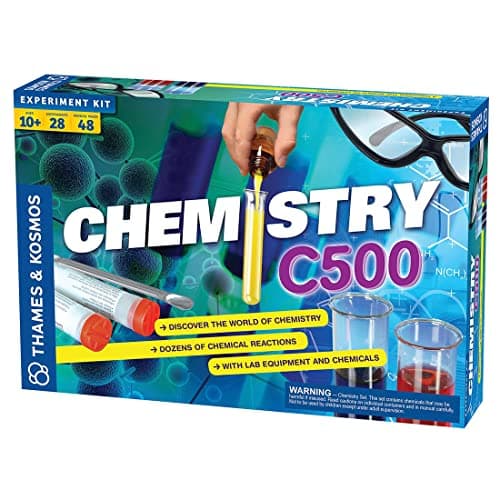 The boxed comparison Thames & Kosmos Chemistry C500 28 experiments and a 48-page manual from five chemicals, with glassware included. | Ten and up, bought once | |
| 3 | 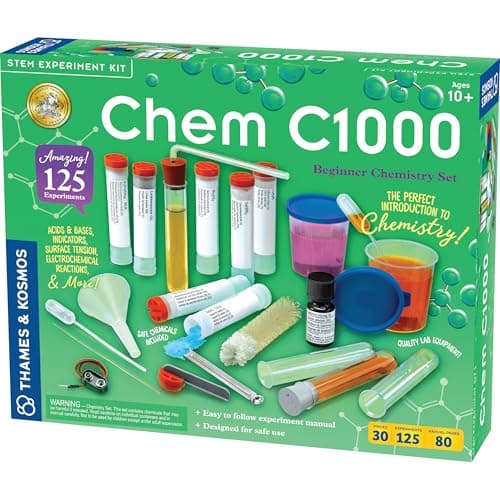 The one you can read first Thames & Kosmos CHEM C1000 Seven chemicals, stated EN 71-4 compliance, and the full manual published free on the maker's site. | Ten and up | |
| — | Not chemistry Kiwi Crate monthly subscription The subscription most often cross-shopped with this one, and it is general STEAM. | Ages 6-9 |
4 picks, including 1 we tell you to skip. Ages shown are the manufacturer’s own rating, not ours.
What we can tell you, and what we cannot
We have not subscribed. No lab, no samples, no test children, and no star rating on this page or in its structured data.
MEL Science’s published age, cadence, experiment count and first-shipment contents we can report and compare. Whether the reagents arrive well packed, and what the app experience is like month to month, we cannot.
The specification that decides it
The arithmetic
MEL Chemistry, published
| Stated age | 10+ |
|---|---|
| Experiments per set | 2-3 |
| Cadence | A new kit by the 23rd of each month |
| First shipment | A home lab — flask, solid fuel stove, safety glasses, beakers |
| Consumables | Yes — reagents are used up each month |
| Equipment | Reusable; later months arrive as refills |
What the numbers mean in practice
The cadence is the product. A box arriving on a date creates an occasion, and occasions are what turn a chemistry set from an intention into an afternoon.
The home lab is what makes it a subscription rather than a series of kits. Glassware arrives once; reagents arrive monthly. That is the right way round.
Ten is a floor, not a suggestion. Real reagents and a solid fuel stove put an adult in the room for the first sessions, whatever the child’s confidence.
It stops when you stop paying. A boxed set is yours; a subscription is access. For some households that is the advantage — no clutter, no commitment beyond the month.
Who should skip it
Anyone chasing volume. The C500 publishes 28 experiments in one box.
A child under ten. MEL publishes 10+, and so does the whole reagent category.
Households that want to read first. Thames & Kosmos publishes its full C1000 manual online; MEL publishes a description.
Say the unwelcome thing
Do not buy a chemistry subscription to create the interest
Subscriptions reward an interest that already exists. If a child has not asked for chemistry, a boxed set with a manual you can read together is the cheaper test, and the one you can stop after.
What the first box contains, and what every box after it does not
MEL Science publishes a home lab in the first shipment: a flask, a solid fuel stove, safety glasses and beakers. That is the equipment half of a chemistry set, delivered once.
Every month after that is the other half — 2-3 experiments per set, arriving by the 23rd. A subscriber in month six is receiving reagents and instructions, not more glassware, which is the right way round and also the reason the first month feels much better value than the fifth.
It is worth comparing that against the two general crates people cross-shop it with. KiwiCo publishes Tinker Crate at ages 9-12 with one project per month, and Kiwi Crate at ages 6-9 as a brand-new project each month, both on monthly, 3, 6 or 12-month plans, and both published as built once.
MEL is the only one of the three with a published chemistry syllabus and a published age floor of 10+, and it is the only one where the equipment from month one is still in use in month twelve.
Where it sits
MEL Chemistry leads chemistry subscription boxes and appears in STEM subscription boxes and chemistry sets by age.
In full
Every pick, and what is wrong with it
Published specifications only, each linked back to the page it came from. Where a manufacturer publishes nothing, the row says so — we do not fill blanks in.
1. The product
MEL Chemistry monthly subscription
MEL Science · MEL Chemistry · maker rates it 10+
Two or three experiments a month, with reusable equipment arriving once and reagents arriving monthly.
- Stated age
- 10+
- Experiments per set
- 2-3
- Cadence
- A new kit by the 23rd of each month
- First shipment
- Includes a home lab — flask, solid fuel stove, safety glasses, beakers
MEL Science publishes a stated age of 10+, 2-3 experiments per set, a new kit by the 23rd of each month, and a first shipment that includes a home lab with a flask, a solid fuel stove, safety glasses and beakers. Its site currently advertises monthly kits with a starter kit on the first order.
The equipment-once, reagents-monthly structure is the real product. It means month four is a bag of chemicals and an instruction rather than another set of the same glassware.
Two or three experiments a month is a modest number, and the honest way to read it is as a scheduled hour rather than as volume. If chemistry keeps not happening in your house, that scheduling is what you are paying for.
Replay signal
- Open-ended or one-shot
- Guided experiments, not open-ended play
- Does anything run out
- Each month's reagents run out; the equipment from the first shipment does not
- Room to grow
- The reusable home lab means later months arrive as refills rather than restarts
- Adult required
- A solid fuel stove and real reagents at a 10+ rating means an adult in the room
Why we say so: MEL Science publishes the 2-3 experiments per set, the monthly cadence, the 10+ rating and the contents of the first shipment's home lab.
What’s wrong with it
Reagents are consumed every month, and the first shipment includes a solid fuel stove.
| Stated age | 10+ |
|---|---|
| Experiments per set | 2-3 |
| Cadence | A new kit by the 23rd of each month |
| First shipment | Includes a home lab — flask, solid fuel stove, safety glasses, beakers |
| Consumables | Yes — reagents are used up each month |
Every figure above is from MEL Science, chemistry subscription. Blanks are shown as “not published” rather than filled in.
2. The boxed comparison
Thames & Kosmos Chemistry C500
Thames & Kosmos · 665012 · maker rates it 10+
28 experiments and a 48-page manual from five chemicals, with glassware included.
- Experiments
- 28
- Manual
- 48 pages
- Chemicals included
- 5
- Equipment
- Safety glasses, test tubes, dropper pipettes, double-headed measuring spoon
Thames & Kosmos publishes 28 experiments, a 48-page manual, five chemicals, safety glasses, test tubes, dropper pipettes and a double-headed measuring spoon, rated 10 years and up.
Twenty-eight in one box against two or three a month: a year of subscribing lands in roughly the same range. The difference is cadence, not quantity.
Replay signal
- Open-ended or one-shot
- Guided, not open-ended: 28 experiments, then the manual is finished
- Does anything run out
- Yes — the chemicals are consumed, and Thames & Kosmos sells replacements
- Room to grow
- Steps up to the larger C1000, C2000 and C3000 sets in the same line
- Adult required
- The maker rates it 10+ and it involves real chemicals
Why we say so: Thames & Kosmos publishes 28 experiments, a 48-page manual and five chemicals. Five finite chemicals across 28 experiments is arithmetic, not opinion — this set has an end, and it is better to know that before Boxing Day than after.
What’s wrong with it
Five finite chemicals, and no one arrives to remind you to use them.
| Experiments | 28 |
|---|---|
| Manual | 48 pages |
| Chemicals included | 5 |
| Equipment | Safety glasses, test tubes, dropper pipettes, double-headed measuring spoon |
| Stated age | 10 years and up |
| Batteries | 1 x 9V (not included) |
| Consumables | Yes — the five chemicals are used up |
Every figure above is from Thames & Kosmos, Chemistry C500. Blanks are shown as “not published” rather than filled in.
3. The one you can read first
Thames & Kosmos CHEM C1000
Thames & Kosmos · 640118 · maker rates it 10+
Seven chemicals, stated EN 71-4 compliance, and the full manual published free on the maker's site.
- Chemicals included
- Seven, in cylindrical vials
- Manual
- Full experiment manual published free on the manufacturer's own site
- Safety standard
- “EN 71-4, in which the safety requirements for chemistry experimental kits are established”
- Covers
- Lab setup and safe handling, indicators and litmus, invisible ink, gas reactions
Thames & Kosmos publishes seven chemicals in cylindrical vials, a free full manual on its own site, EN 71-4 compliance, and coverage from lab setup and safe handling through indicators and litmus to gas reactions, rated 10 and up.
No subscription lets you read the syllabus before paying. This one does, which makes it the best way to decide whether a ten-year-old is ready at all.
Replay signal
- Open-ended or one-shot
- Guided rather than open-ended, but the manual is a term's worth of weekends
- Does anything run out
- Yes — seven finite chemicals, with replacements sold separately
- Room to grow
- The C-series continues into C2000 and C3000, carrying the same equipment forward
- Adult required
- Real chemicals at a 10+ rating: a sit-with-them kit at the lower end of that range
Why we say so: Thames & Kosmos publishes the full manual free on its own site — you can read exactly what your child will be doing before spending anything — and states compliance with EN 71-4, the European chemistry-kit safety standard.
What’s wrong with it
Consumable by design; replacements sold separately.
| Chemicals included | Seven, in cylindrical vials |
|---|---|
| Manual | Full experiment manual published free on the manufacturer's own site |
| Safety standard | “EN 71-4, in which the safety requirements for chemistry experimental kits are established” |
| Covers | Lab setup and safe handling, indicators and litmus, invisible ink, gas reactions |
| Stated age | 10 and up |
| Consumables | Yes — the seven chemicals are used up |
Every figure above is from Thames & Kosmos, experiment manuals. Blanks are shown as “not published” rather than filled in.
Skip this one
Kiwi Crate monthly subscription
KiwiCo · Kiwi Crate · maker rates it 6-9
The subscription most often cross-shopped with this one, and it is general STEAM.
- Stated age
- Ages 6-9
- Cadence
- “a brand-new project delivered to their door each month”
- Plans
- Monthly, 3-month, 6-month or 12-month
- Subject
- “hands-on STEAM”
KiwiCo publishes Kiwi Crate for ages 6-9 as “a brand-new project delivered to their door each month”, described as hands-on STEAM, on monthly to 12-month plans.
A good crate for a seven-year-old and the wrong answer for a ten-year-old who asked for chemicals. See the KiwiCo review.
Replay signal
- Open-ended or one-shot
- Each crate is a one-shot build; the subscription is what creates the repeat
- Does anything run out
- Every crate runs out. That is the model, not a flaw — you are buying twelve projects, not one toy
- Room to grow
- KiwiCo publishes a ladder by age: Kiwi 6-9, Tinker 9-12, Eureka 12+
Why we say so: KiwiCo publishes the age bands and the one-project-per-month cadence. A subscription's replay value is structural — it arrives again next month — which is a different thing from a toy that keeps getting picked up, and the two should not be compared as if they were the same.
What’s wrong with it
Published for 6-9, with no chemistry-specific content.
| Stated age | Ages 6-9 |
|---|---|
| Cadence | “a brand-new project delivered to their door each month” |
| Plans | Monthly, 3-month, 6-month or 12-month |
| Subject | “hands-on STEAM” |
| Consumables | Yes — each crate is built once |
Every figure above is from KiwiCo, monthly crates by age. Blanks are shown as “not published” rather than filled in.
We are not putting a buy button on this one. It is easy enough to find if you want it anyway — but we would rather send you to something that gets played with twice.
Questions people actually ask
Frequently asked
Is MEL Chemistry worth it?
If the schedule is what you need, yes. MEL Science publishes 2-3 experiments per set, a new kit by the 23rd of each month, and a reusable home lab in the first shipment, rated 10+. For raw volume, Thames & Kosmos publishes 28 experiments in one C500 box.
What age is MEL Chemistry for?
MEL Science publishes 10+. The first shipment includes a solid fuel stove and real reagents, so treat the lower end of that range as supervised.
How many experiments come with MEL Chemistry each month?
MEL Science publishes 2-3 experiments per set, with a new kit by the 23rd of each month — roughly 24 to 36 experiments across a year.
MEL Chemistry or a chemistry set?
A set for volume and for reading the manual first; the subscription for cadence. Thames & Kosmos publishes the full CHEM C1000 manual free on its own site, which no subscription offers. Chemistry subscription boxes.
Does MEL Chemistry include the equipment?
Yes, in the first shipment. MEL Science publishes a home lab with a flask, a solid fuel stove, safety glasses and beakers; later kits supply the reagents for 2-3 experiments per set.
MEL Chemistry or a KiwiCo crate?
Different products. MEL Science publishes a chemistry subscription at 10+ with 2-3 experiments per set. KiwiCo publishes Tinker Crate at ages 9-12 and Kiwi Crate at 6-9, both general hands-on STEM or STEAM with one project a month, and both built once. STEM subscription boxes.
Does MEL Chemistry need adult supervision?
Treat it as supervised, particularly early on. MEL Science publishes a 10+ rating and a first shipment containing a solid fuel stove alongside the flask, beakers and safety glasses, and the monthly kits supply real reagents.
Sources
Where these figures came from
Every specification on this page traces to one of these. If a manufacturer publishes nothing on a point, the page says so rather than filling the gap.
Read next
Where to go from here
Back to Reviews, or read how we pick.