Single review
Thames & Kosmos Kids First Science Laboratory Review
Reviewed from Thames & Kosmos' published specifications. We have not used it, and the absence of chemicals is the point rather than a gap.
By Sawyer V. · Published
The short answer
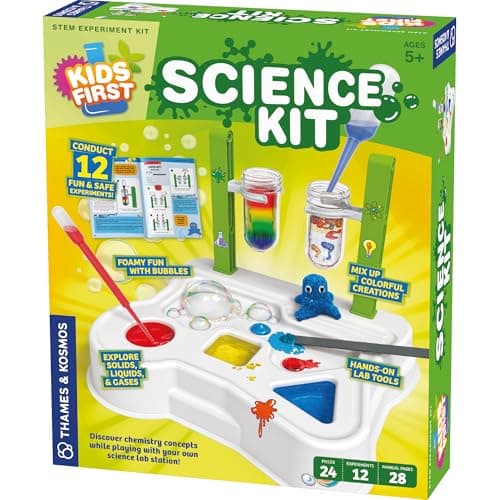
The Kids First Science Laboratory is the right first science kit for a three- to six-year-old. Thames & Kosmos publishes 24 large plastic scientific tools described as durable, reusable and easy to handle, 10 double-sided experiment cards, and no chemicals — the experiments use household materials.
Block & Beaker earns a commission when you buy through our links, at no cost to you. It never changes a ranking, and we say so plainly when the right answer is the cheaper set, or nothing at all. Full disclosure · How we pick.
At a glance
The picks, ranked
Tap any row to jump to the full reasoning. Prices come live from Amazon where we have them and read “check price” where we don’t — never a number we cannot stand behind today.
| # | Product | Best for | Price |
|---|---|---|---|
| 1 | The product Kids First Science Laboratory Equipment rather than experiments: 24 reusable tools and 10 double-sided cards. | Three to six, with an adult at the table | |
| 2 | 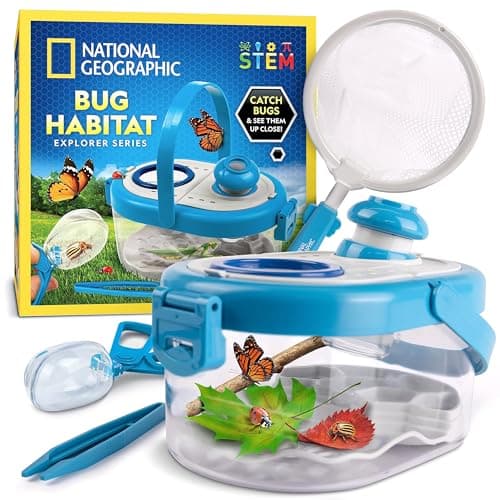 The outdoor alternative NATIONAL GEOGRAPHIC Bug Catcher Kit A habitat, two magnified viewers and three tools, with the specimens free outside. | Four and up | |
| 3 | 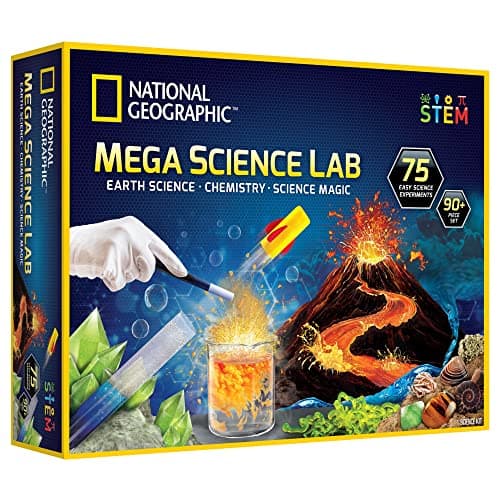 Where it leads NATIONAL GEOGRAPHIC Mega Science Lab 45 experiments in the kit plus a bonus guide of 85+ household ones. | Eight and up | |
| — | 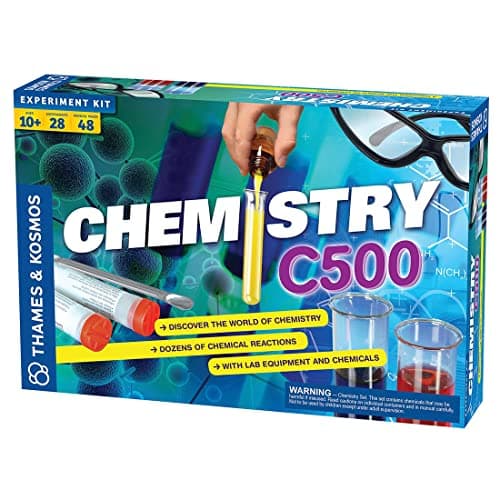 Not at this age Thames & Kosmos Chemistry C500 The same maker's real chemistry set, published seven years later. | Ten and up |
4 picks, including 1 we tell you to skip. Ages shown are the manufacturer’s own rating, not ours.
What we can tell you, and what we cannot
We have not used it. No lab, no samples, no test children, and no star rating on this page or in its structured data.
Thames & Kosmos’ published tool count, card count, age range and the stated absence of chemicals we can report and compare. Whether the beakers survive a dishwasher, we cannot.
The specification that decides it
The arithmetic
Kids First Science Laboratory, published
| Tools | 24 large plastic scientific tools — durable, reusable, easy to handle |
|---|---|
| Experiment cards | 10, double-sided |
| Chemicals included | None — experiments use household materials |
| Stated age | 3 to 6+ |
| Consumables | None in the box |
| Batteries | None |
What the numbers mean in practice
Twenty-four tools is the whole value. Most kits at this price point are a bag of powders and a pamphlet; this is the opposite trade. The powders are gone by February and the funnels are not.
Ten double-sided cards is twenty prompts, and then you are on your own. That is genuinely short. The honest framing is that the cards teach the adult how to run a session, after which the internet and the kitchen supply the rest.
Three is a real floor, and an adult is part of it. Nothing here is self-directed at three. Pouring, measuring and predicting are the skills, and all three need somebody asking “what do you think will happen?”
“3 to 6+” is a wide published band for this category. Three years of use from one box is unusual in science kits, where the typical published range is a single year either side of the rating.
What you will be supplying yourself
Since no chemicals are included, plan the shopping list before the first session: food coloring, baking soda, vinegar, cooking oil, salt, sugar and a roll of kitchen towel cover most of what household-materials experiments ask for.
That is the hidden cost of a consumable-free kit, and it is a good trade — a bottle of vinegar costs a fraction of a refill pack, and the child learns that science is done with ordinary things rather than sachets.
It also means the kit never has a dead moment. There is no waiting for a replacement pack to arrive, which is the failure mode that kills most first science kits.
Worth knowing before you buy
Who should skip it
Children already seven or eight. The published band ends at 6+, and National Geographic’s Mega Science Lab publishes 45 experiments plus 85+ more from 8.
Anyone who wants the kit to run itself. There is no self-checking result here and no app. An adult is the missing component.
A child who has asked for chemicals. This kit publishes none. Say so before the wrapping comes off, or buy a set that has them and matches the age.
Say the unwelcome thing
Do not buy the 10+ chemistry set to grow into
The gap between this kit and the C500 is seven published years. A chemistry set bought at four sits on a high shelf until the child is ten, by which point the seals have been opened by curiosity at least once. Buy for the age you have.
Where it sits
This kit leads first science kits, ages 3 to 6 and appears in lab tools that never run out and STEM toys for 4 year olds.
In full
Every pick, and what is wrong with it
Published specifications only, each linked back to the page it came from. Where a manufacturer publishes nothing, the row says so — we do not fill blanks in.
1. The product
Kids First Science Laboratory
Thames & Kosmos · Kids First Science Laboratory · maker rates it 3-6+
Equipment rather than experiments: 24 reusable tools and 10 double-sided cards.
- Contents
- 24 large plastic scientific tools, described as durable, reusable and easy to handle
- Experiment cards
- 10, double-sided
- Stated age
- 3 to 6+
- Chemicals included
- None — experiments use household materials
Thames & Kosmos publishes 24 large plastic scientific tools, described as durable, reusable and easy to handle, with 10 double-sided experiment cards, a stated age of 3 to 6+, no chemicals included, and no consumables in the box.
“No chemicals included” is the specification that decides this purchase, and it reads like a weakness until you look at what it buys. The experiments use household materials, which means the kit cannot run out, cannot expire, and cannot be finished in one wet afternoon.
What you are actually buying is a set of hands. Beakers, funnels and droppers sized for a three-year-old’s grip are the difference between a child doing the experiment and a child watching an adult do it with kitchenware.
Replay signal
- Open-ended or one-shot
- The 20 card sides are a starting ladder; the tools then work on anything in the kitchen
- Does anything run out
- Nothing in the box runs out, because nothing in the box is consumed
- Room to grow
- The same tools carry into any household-materials experiment for years
- Adult required
- Yes at three, less so at five. The cards are picture-led but the setup is not
Why we say so: Thames & Kosmos publishes 24 reusable tools and no chemicals. A preschool science kit with no consumables in it is unusual, and it is the reason this one survives past its first fortnight when kit-of-the-week alternatives do not.
What’s wrong with it
Ten cards is a short printed ladder, and you supply the materials yourself.
| Contents | 24 large plastic scientific tools, described as durable, reusable and easy to handle |
|---|---|
| Experiment cards | 10, double-sided |
| Stated age | 3 to 6+ |
| Chemicals included | None — experiments use household materials |
| Consumables | None in the box |
Every figure above is from Thames & Kosmos, Kids First range. Blanks are shown as “not published” rather than filled in.
2. The outdoor alternative
NATIONAL GEOGRAPHIC Bug Catcher Kit
National Geographic · Bug Catcher Kit · maker rates it 4+
A habitat, two magnified viewers and three tools, with the specimens free outside.
- Habitat
- Clear bug habitat with a removable base
- Viewers
- Latching lid with two magnified viewers — one fixed, one movable
- Tools
- Scissor-style bug catcher, net, tweezers
- Includes
- Learning guide
National Geographic publishes a clear bug habitat with a removable base, a latching lid with two magnified viewers — one fixed, one movable — a scissor-style bug catcher, a net, tweezers and a learning guide, rated 4+.
Same philosophy, different room: no consumables, because the specimens are outside and free. For a child who would rather be in the garden than at a table, this is the better first kit.
Replay signal
- Open-ended or one-shot
- Completely open-ended for the age — the garden restocks it
- Does anything run out
- Nothing runs out
- Room to grow
- Pairs naturally with a low-power microscope when the child wants a closer look
- Adult required
- For the catch-and-release rule; not for the looking
Why we say so: National Geographic publishes a habitat with two magnified viewers, a scissor catcher, a net and tweezers, rated 4+. The scissor catcher is the specification worth noticing: it lets a four-year-old pick up an insect without crushing it, which is the difference between a nature kit and a lesson about being gentle.
What’s wrong with it
Published from 4, and it only works when the weather does.
| Habitat | Clear bug habitat with a removable base |
|---|---|
| Viewers | Latching lid with two magnified viewers — one fixed, one movable |
| Tools | Scissor-style bug catcher, net, tweezers |
| Includes | Learning guide |
| Stated age | 4+ |
| Consumables | None — the specimens are outside and free |
Every figure above is from National Geographic toys, Bug Catcher Kit. Blanks are shown as “not published” rather than filled in.
3. Where it leads
NATIONAL GEOGRAPHIC Mega Science Lab
National Geographic · Mega Science Lab · maker rates it 8+
45 experiments in the kit plus a bonus guide of 85+ household ones.
- Experiments in the kit
- 45, across chemistry, earth science and science magic
- Bonus guide
- 85+ further experiments using household items, for 130+ in total
- Includes
- Volcano build, glow-in-the-dark crystal growth, and the tools for both
- Stated age
- 8+
National Geographic publishes 45 experiments across chemistry, earth science and science magic, plus a bonus guide of 85+ further experiments using household items for 130+ in total, including a volcano build and glow-in-the-dark crystal growth, rated 8+.
This is the kit the Kids First lab hands over to four or five years later, and the tools from the first box still work alongside it. See the Mega Science Lab review.
Replay signal
- Open-ended or one-shot
- Guided, and the 45 in-kit experiments end. The 85 household ones do not
- Does anything run out
- The supplied materials run out; the household half of the book never does
- Room to grow
- The bonus guide is the genuinely durable part, and it costs the manufacturer almost nothing to include
- Adult required
- Supervision for the chemistry third; the earth science and household experiments are largely self-run
Why we say so: National Geographic publishes 45 in-kit experiments plus a bonus guide of 85+ using household items. That second number is why this kit outlasts most of its price band: roughly two-thirds of the published content needs nothing but a kitchen.
What’s wrong with it
Published from 8, and the supplied chemicals are used up.
| Experiments in the kit | 45, across chemistry, earth science and science magic |
|---|---|
| Bonus guide | 85+ further experiments using household items, for 130+ in total |
| Includes | Volcano build, glow-in-the-dark crystal growth, and the tools for both |
| Stated age | 8+ |
| Consumables | Yes — the supplied chemicals and crystal compounds are used up |
Every figure above is from National Geographic toys, Mega Science Lab. Blanks are shown as “not published” rather than filled in.
Skip this one
Thames & Kosmos Chemistry C500
Thames & Kosmos · 665012 · maker rates it 10+
The same maker's real chemistry set, published seven years later.
- Experiments
- 28
- Manual
- 48 pages
- Chemicals included
- 5
- Equipment
- Safety glasses, test tubes, dropper pipettes, double-headed measuring spoon
Thames & Kosmos publishes the C500 as 28 experiments and a 48-page manual from five chemicals, with safety glasses, test tubes, dropper pipettes and a double-headed measuring spoon, rated 10 years and up, with a 9V battery required and not included.
Bought for a four-year-old because it is from the same brand and looks like the grown-up version. It is, and that is the problem — the age gap between these two kits is seven years.
Replay signal
- Open-ended or one-shot
- Guided, not open-ended: 28 experiments, then the manual is finished
- Does anything run out
- Yes — the chemicals are consumed, and Thames & Kosmos sells replacements
- Room to grow
- Steps up to the larger C1000, C2000 and C3000 sets in the same line
- Adult required
- The maker rates it 10+ and it involves real chemicals
Why we say so: Thames & Kosmos publishes 28 experiments, a 48-page manual and five chemicals. Five finite chemicals across 28 experiments is arithmetic, not opinion — this set has an end, and it is better to know that before Boxing Day than after.
What’s wrong with it
Rated 10 and up, with five actual chemicals in it.
| Experiments | 28 |
|---|---|
| Manual | 48 pages |
| Chemicals included | 5 |
| Equipment | Safety glasses, test tubes, dropper pipettes, double-headed measuring spoon |
| Stated age | 10 years and up |
| Batteries | 1 x 9V (not included) |
| Consumables | Yes — the five chemicals are used up |
Every figure above is from Thames & Kosmos, Chemistry C500. Blanks are shown as “not published” rather than filled in.
We are not putting a buy button on this one. It is easy enough to find if you want it anyway — but we would rather send you to something that gets played with twice.
Questions people actually ask
Frequently asked
Is the Kids First Science Laboratory worth it?
For a three- to six-year-old, yes. Thames & Kosmos publishes 24 large plastic tools described as durable and reusable, 10 double-sided experiment cards, no chemicals and no consumables. You supply household materials, so nothing in the box runs out.
What age is the Kids First Science Laboratory for?
Thames & Kosmos publishes 3 to 6+. That is a wider band than most science kits publish, and an adult is part of the activity at the lower end.
Does it include chemicals?
No. Thames & Kosmos publishes the experiments as using household materials, with no chemicals in the box. Expect to supply things like baking soda, vinegar and food coloring yourself. What else a science kit needs.
How many experiments does it come with?
Ten double-sided experiment cards, so twenty printed prompts. The 24 tools are what carry it beyond those cards.
Kids First Science Laboratory or a bug catcher kit?
Both avoid consumables. The lab is a table activity from 3; National Geographic publishes its Bug Catcher Kit from 4 with a habitat, two magnified viewers, a net and tweezers, and the specimens are free outside. Outdoor and nature kits.
Sources
Where these figures came from
Every specification on this page traces to one of these. If a manufacturer publishes nothing on a point, the page says so rather than filling the gap.
Read next
Where to go from here
Back to Reviews, or read how we pick.