Guide and picks
STEM Toys for Boys
There is no such product category, and this site draws more searches for it than almost anything else. Both of those things are worth saying out loud.
By Sawyer V. · Published
The short answer
There is no boys’ STEM category. No maker on this site publishes a different specification by gender — the piece counts, project counts and age ratings are the same product either way. The useful question underneath the search is which toy at which age: Code & Go Robot Mouse at four, Gears! Gears! Gears! at three to five, Brain Flakes at five to nine, Snap Circuits Classic at eight, and mBot Neo from ten.
Block & Beaker earns a commission when you buy through our links, at no cost to you. It never changes a ranking, and we say so plainly when the right answer is the cheaper set, or nothing at all. Full disclosure · How we pick.
At a glance
The picks, ranked
Tap any row to jump to the full reasoning. Prices come live from Amazon where we have them and read “check price” where we don’t — never a number we cannot stand behind today.
| # | Product | Best for | Price |
|---|---|---|---|
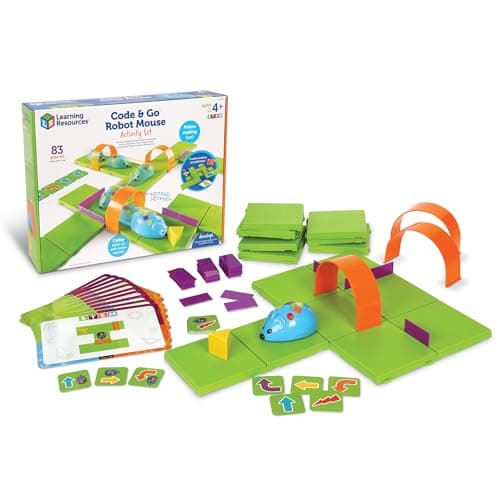
| 1 | Ages 4 to 6 Code & Go Robot Mouse Activity Set An 83-piece coding set with a 20-inch maze board and 30 double-sided coding cards. | Four to six, screen-free, on a floor or a table | |
| 2 | 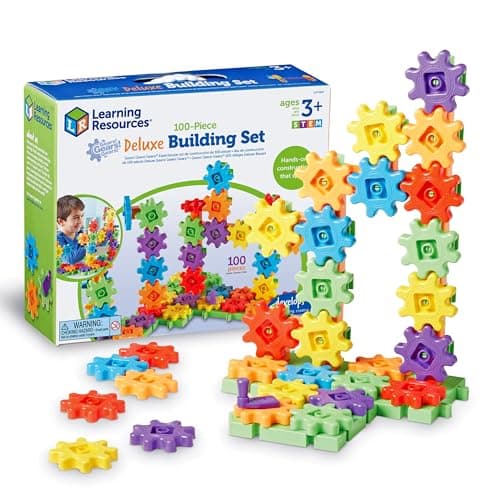 Ages 3 to 5 Gears! Gears! Gears! 100-Piece Deluxe Building Set 100 pieces including 46 gears, hand-cranked, with no batteries at all. | Three to five, for a child who likes things that move | |
| 3 | 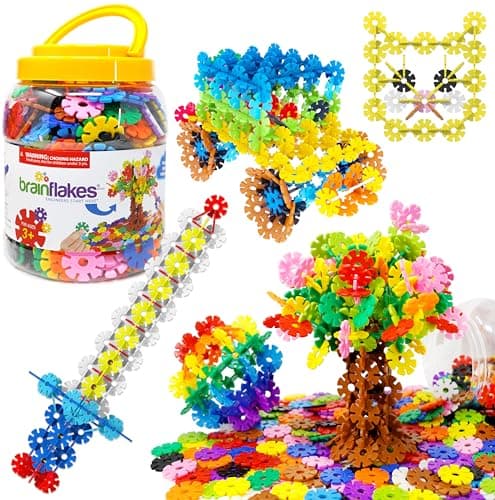 Ages 5 to 9 Brain Flakes 500 Piece Interlocking Disc Set 500 interlocking discs in a storage jar, ASTM and CPSIA compliant. | Five to nine, for a child who runs out of pieces | |
| 4 | 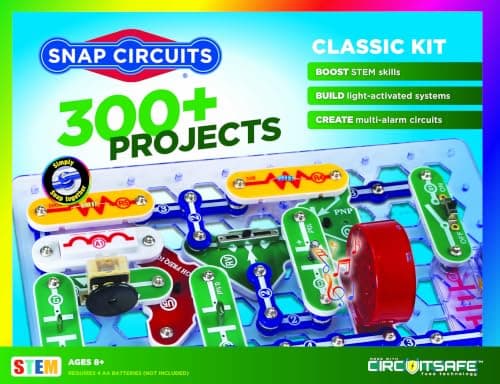 Ages 8 to 10 Snap Circuits Classic Over 300 projects from over 60 snap-together parts, with no tools needed. | Eight to ten, for the longest-running present on this page | |
| 5 | 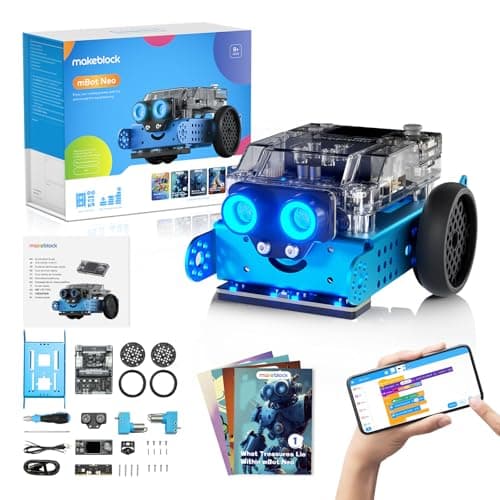 Ages 10 and up Makeblock mBot Neo (mBot2) About 100 parts, a published 240 MHz controller, and blocks to Python to Arduino C. | Ten and up, with a computer available | |
| — | 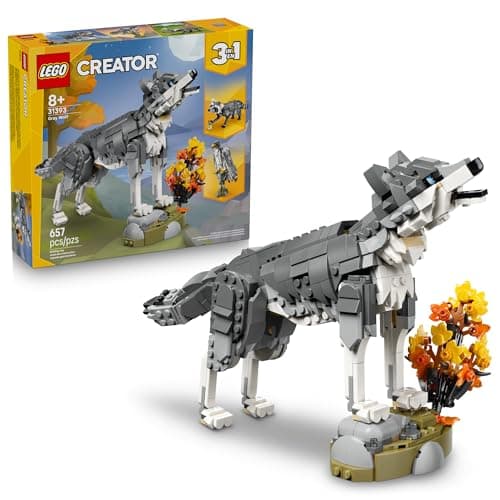 The substitution to watch for LEGO Creator 3in1 Forest Animals: Gray Wolf 657 pieces and three published builds — a display model, not an open set. | Eight and up, as a model rather than a system |
6 picks, including 1 we tell you to skip. Ages shown are the manufacturer’s own rating, not ours.
The honest answer to the question
No manufacturer on this site publishes a different specification for boys. There is no boys’ piece count, no boys’ project count and no boys’ age rating. Where a set exists in two colorways, it is usually the identical product — and occasionally the themed version has fewer pieces at the same price, which is worth checking rather than assuming.
We have the mirror page for the mirror search and it reaches the same conclusion from the other side. See STEM toys for girls, which is about what the pink version of a set usually is.
That is the whole answer to the literal question. The rest of this page is about the question underneath it, because this site draws more Search Console impressions for “for boys” phrasing than for almost any other non-product term — which means a lot of people are asking something real and using the words the shops taught them.
What people are usually actually asking
“He only plays with vehicles — what else will he accept?” This is the most common version and it has a good answer: something that moves and that he made move. Gears publishes 46 gears and a crank handle; the motion is the reward and the build is the cause.
“He will not sit still for a puzzle.” Then buy the thing that does not require sitting. Snap Circuits publishes 300+ projects that are each a few minutes long, and a robot mouse publishes a 20-inch board on the floor. See STEM gifts for kids who cannot sit still.
“Everything marketed to him is a licensed character.” The published distinction to look for is a finished state. A themed set publishes three builds; an open set publishes 500 discs and no correct answer.
“What is actually educational rather than just loud?” Read the battery line. Gears and Brain Flakes publish no batteries at all, which means the child supplies every bit of the motion and the result.
The published figures, by age
The arithmetic
One pick per age, as the makers publish them
| Ages 3-5 · Gears! Gears! Gears! Deluxe | 3+ — 100 pieces, 46 gears, hand-cranked, no batteries |
|---|---|
| Ages 4-6 · Code & Go Robot Mouse | 4+ — 83 pieces, 30 coding cards, 20″ board, 3 AAA |
| Ages 5-9 · Brain Flakes 500 | 5 and up — 500 discs, ASTM and CPSIA named |
| Ages 8-10 · Snap Circuits Classic | 8+ — 300+ projects, 60+ parts, 4 AA |
| Ages 10+ · mBot Neo | 8+ — ~100 parts, 240 MHz, blocks/Python/Arduino C |
| Watch for · LEGO Creator 3in1 | 8 and up — 657 pieces, 3 published builds |
The substitution worth checking
Where a set is sold in a themed or licensed version alongside a plain one, compare the piece counts before paying the same money. The plain version is frequently the larger set, and the themed one frequently publishes a small number of finished builds in place of an open piece count.
That is a checkable fact rather than an opinion: both numbers are printed on both boxes. See how to read a toy box for which of the other numbers mean something.
What we would actually buy
Ignore the aisle and buy on four published figures: the piece or project count, whether anything runs out, whether there is a correct finished object, and whether an adult has to be present. Those four are the site’s whole method and they do not have a gendered version. See toys that actually teach.
If a child has a genuine interest — animals, cars, space, music — buy into the interest and check the specification separately. A themed set that gets built once and loved is a better present than an open set that gets ignored; it is simply not the thing to buy for the STEM reason.
Worth knowing before you buy
So which one
Three to five, and he likes things that move: Gears! Gears! Gears! Deluxe.
Four to six, no screen: Code & Go Robot Mouse.
Five to nine, and he runs out of pieces: Brain Flakes 500.
Eight to ten, one present, make it last: Snap Circuits Classic.
Ten and up, with a computer: mBot Neo.
Say the unwelcome thing
Do not buy the themed version on the assumption it is the same set
It sometimes is and it sometimes is not. The two numbers to compare are on both boxes: the piece count and the number of published builds. A licensed set with 657 pieces and three builds is a model kit; a plain set with 500 pieces and no finished state is a system. Both are fine purchases — they are just not the same purchase, and the aisle they sit in tells you nothing about which is which.
Where to go next
STEM toys for girls answers the mirror question, toys that actually teach sets out the four-part test, and the age pages cover each year in detail — start at STEM toys for 7 year olds, the most-read page on this site.
In full
Every pick, and what is wrong with it
Published specifications only, each linked back to the page it came from. Where a manufacturer publishes nothing, the row says so — we do not fill blanks in.
1. Ages 4 to 6
Code & Go Robot Mouse Activity Set
Learning Resources · LER2831 · maker rates it 4+
An 83-piece coding set with a 20-inch maze board and 30 double-sided coding cards.
- Set size
- 83 pieces
- Contents
- Colby the robot mouse, 16 maze grids, 22 maze walls, 3 tunnels, 30 double-sided coding cards, 10 activity cards, cheese wedge, activity guide
- Maze size
- The 16 grids build a 20″ x 20″ board
- Screen required
- None
Learning Resources publishes an 83-piece set — Colby the robot mouse, 16 maze grids, 22 maze walls, 3 tunnels, 30 double-sided coding cards, 10 activity cards, a cheese wedge and an activity guide — with the 16 grids building a 20″ x 20″ board, no screen required, 3 AAA batteries not included, rated ages 4+.
Thirty coding cards is the published figure that matters. The child lays out a route in cards before the mouse moves, which means the program exists on the table and can be pointed at — the clearest introduction to sequencing available at four.
It is on this page rather than a vehicle set for a reason worth naming: the thing a four-year-old is learning here transfers to every coding toy above, and a toy car does not. See the Robot Mouse review.
Replay signal
- Open-ended or one-shot
- The mouse is fixed, but the maze is not — 16 grids and 22 walls is a new problem every time
- Does anything run out
- Nothing runs out
- Room to grow
- The 10 activity cards are a starting ladder; after that the child sets the puzzles
- Adult required
- Reading is not required — the coding cards use directional symbols, so a four-year-old can work alone
Why we say so: Learning Resources publishes the 83-piece contents including 16 rearrangeable grids and 22 walls, and states the cards are picture-based. A rearrangeable maze is why this does not become a solved puzzle after one weekend.
What’s wrong with it
Three AAA batteries, not included, and the maze needs a clear flat surface.
| Set size | 83 pieces |
|---|---|
| Contents | Colby the robot mouse, 16 maze grids, 22 maze walls, 3 tunnels, 30 double-sided coding cards, 10 activity cards, cheese wedge, activity guide |
| Maze size | The 16 grids build a 20″ x 20″ board |
| Screen required | None |
| Batteries | 3 x AAA (not included) |
| Stated age | Ages 4+ |
Every figure above is from Learning Resources, Code & Go Robot Mouse Activity Set. Blanks are shown as “not published” rather than filled in.
2. Ages 3 to 5
Gears! Gears! Gears! 100-Piece Deluxe Building Set
Learning Resources · LER9162 · maker rates it 3+
100 pieces including 46 gears, hand-cranked, with no batteries at all.
- Pieces
- 100
- Contents
- 46 gears, 26 square pillars, 21 six-way axles, 6 interlocking bases, 1 crank handle, activity guide
- Stated age
- 3+
- Batteries
- None — hand-cranked
Learning Resources publishes 100 pieces — 46 gears, 26 square pillars, 21 six-way axles, 6 interlocking bases, 1 crank handle and an activity guide — hand-cranked with no batteries and no consumables, rated 3+.
This is the honest answer to the request behind most “for boys” searches: a child who has been given nothing but vehicles and wants something that moves. A gear chain moves, and unlike a toy car the speed at the far end depends on what the child built.
Hand-cranked is the published detail. Everything that happens is caused by the child’s own hand, which is the difference between a mechanism and a motor. See the Gears review.
Replay signal
- Open-ended or one-shot
- Open-ended, with immediate cause and effect: turn the handle, the whole thing moves
- Does anything run out
- Nothing runs out
- Room to grow
- Sets from the same line interlock, so a second box doubles the machine
Why we say so: Learning Resources publishes the full 100-piece contents list, the ages 3+ rating and the hand crank. No batteries appear in the published contents, which is why this one still works when everything else in the toy box is flat.
What’s wrong with it
Not sold as STEM, so the learning has to be noticed rather than announced.
| Pieces | 100 |
|---|---|
| Contents | 46 gears, 26 square pillars, 21 six-way axles, 6 interlocking bases, 1 crank handle, activity guide |
| Stated age | 3+ |
| Batteries | None — hand-cranked |
| Consumables | None |
Every figure above is from Learning Resources, Gears! Gears! Gears! Deluxe Building Set. Blanks are shown as “not published” rather than filled in.
3. Ages 5 to 9
Brain Flakes 500 Piece Interlocking Disc Set
VIAHART · Brain Flakes 500 · maker rates it 5+
500 interlocking discs in a storage jar, ASTM and CPSIA compliant.
- Pieces
- 500 interlocking discs
- Disc size
- 1.3 inches across, 1/10 inch thick
- Includes
- Storage jar and idea booklet
- Materials
- BPA-free; free from lead, heavy metals and phthalates
VIAHART publishes 500 interlocking discs 1.3 inches across and 1/10 inch thick, BPA-free and free from lead, heavy metals and phthalates, compliant with ASTM and US CPSIA, with a storage jar and idea booklet, rated 5 and up.
Five hundred pieces is the cheapest published answer to the complaint that actually ends construction play, which is running out of material halfway through an idea.
The single shape is the quiet advantage here. Discs join at many angles, so spheres and curves are possible — which is a genuinely different building vocabulary from bricks and from vehicles. See the Brain Flakes review.
Replay signal
- Open-ended or one-shot
- Open-ended, and the discs curve — which means spheres and domes, not just walls
- Does anything run out
- Nothing runs out
- Room to grow
- 500 identical pieces is enough for structures a child cannot exhaust
Why we say so: VIAHART publishes the 500-piece count, the disc dimensions and compliance with ASTM and CPSIA. Naming the actual standards is unusual at this price and is a genuine reason to prefer it over unbranded equivalents.
What’s wrong with it
One shape only. All the variety is in what gets built.
| Pieces | 500 interlocking discs |
|---|---|
| Disc size | 1.3 inches across, 1/10 inch thick |
| Includes | Storage jar and idea booklet |
| Materials | BPA-free; free from lead, heavy metals and phthalates |
| Standards named | ASTM and US CPSIA compliant |
| Stated age | 5 and up |
Every figure above is from VIAHART, Brain Flakes 500 Piece Interlocking Disc Set. Blanks are shown as “not published” rather than filled in.
4. Ages 8 to 10
Snap Circuits Classic
Elenco · SC-300 · maker rates it 8+
Over 300 projects from over 60 snap-together parts, with no tools needed.
- Projects
- “Build over 300 exciting projects” — manual covers projects 1-305
- Parts
- “Contains over 60 Snap-Together parts”
- Projects per part
- 5.1 — the highest ratio in the line
- Stated age
- “Ages 8+” and “Not for Children under 3 yrs.”
Elenco publishes “Build over 300 exciting projects” with a manual covering projects 1-305, “Contains over 60 Snap-Together parts”, “Ages 8+” and “Not for Children under 3 yrs.”, and 4 AA batteries required and not included.
Three hundred numbered projects is the highest published count of anything on this page, and nothing is consumed. That combination is what a parent is actually asking for when they search for a toy that will hold a particular child’s attention.
See the review and the whole line compared.
Replay signal
- Open-ended or one-shot
- The sweet spot of the line — enough parts to invent with, cheap enough not to be an event
- Does anything run out
- Nothing runs out
- Room to grow
- 305 published projects is years of Sunday afternoons at one a week
Why we say so: Elenco publishes 305 numbered projects against 60+ parts. Five projects per part is the highest ratio anywhere in the Snap Circuits line, which is the arithmetic reason this is the set to buy rather than the cheap one or the big one.
What’s wrong with it
Four AA batteries, not included. The manual is the product.
| Projects | “Build over 300 exciting projects” — manual covers projects 1-305 |
|---|---|
| Parts | “Contains over 60 Snap-Together parts” |
| Projects per part | 5.1 — the highest ratio in the line |
| Stated age | “Ages 8+” and “Not for Children under 3 yrs.” |
| Batteries | “Requires 4 ‘AA’ batteries (not included)” |
| Relationship to SC-100 | Manual includes all SC-100 projects plus 200 new ones |
Every figure above is from Elenco, Snap Circuits Classic. Blanks are shown as “not published” rather than filled in.
5. Ages 10 and up
Makeblock mBot Neo (mBot2)
Makeblock · mBot2 · maker rates it 8+
About 100 parts, a published 240 MHz controller, and blocks to Python to Arduino C.
- Controller
- CyberPi — Xtensa 32-bit LX6 dual-core at 240 MHz, 8 MB flash, 8 MB PSRAM
- Programming
- Scratch-style blocks, Python in mBlock, and Arduino C/C++ via the Arduino IDE
- Sensors
- On-board light, microphone, gyroscope and accelerometer, plus ultrasonic, quad RGB, temperature and IR modules
- Battery
- Built-in 2500 mAh LiPo, about 1 hour to charge, about 5 hours of play
Makeblock publishes the CyberPi controller as an Xtensa 32-bit LX6 dual-core at 240 MHz with 8 MB flash and 8 MB PSRAM, three environments — Scratch-style blocks, Python in mBlock and Arduino C/C++ via the Arduino IDE — four on-board sensors, a 2500 mAh LiPo giving about five hours of play, and 60+ compatible modules, rated ages 8+.
By ten the published age has stopped filtering and the specification sheet takes over. Three languages on one chassis is the longest published runway of anything on this site.
Replay signal
- Open-ended or one-shot
- Open-ended at the top of the range — this is the one a child does not outgrow at eleven
- Does anything run out
- Nothing runs out; rechargeable
- Room to grow
- Blocks, then Python, then Arduino C on the same robot, with 60+ add-on modules
- Adult required
- Not for driving it. Probably for the first Python session
Why we say so: Makeblock publishes the processor, the three programming environments on one robot, the 2500 mAh battery figures and the 60+ compatible modules. Blocks-to-Python-to-C on one chassis is the published upgrade path, and it is why this survives the year a child gets bored of pressing buttons.
What’s wrong with it
A real assembly job, and the module catalog will absorb any budget.
| Controller | CyberPi — Xtensa 32-bit LX6 dual-core at 240 MHz, 8 MB flash, 8 MB PSRAM |
|---|---|
| Programming | Scratch-style blocks, Python in mBlock, and Arduino C/C++ via the Arduino IDE |
| Sensors | On-board light, microphone, gyroscope and accelerometer, plus ultrasonic, quad RGB, temperature and IR modules |
| Battery | Built-in 2500 mAh LiPo, about 1 hour to charge, about 5 hours of play |
| Expansion | 60+ compatible modules, up to 10 connected at once, 8 motor and servo ports |
| Stated age | Ages 8+ |
Every figure above is from Makeblock, mBot2 coding robot kit. Blanks are shown as “not published” rather than filled in.
Skip this one
LEGO Creator 3in1 Forest Animals: Gray Wolf
LEGO · 31393 · maker rates it 8+
657 pieces and three published builds — a display model, not an open set.
- Pieces
- 657
- Three builds
- A wolf on a small hill, a falcon on a pedestal, or a raccoon with a pear
- Movable parts
- Published as movable necks, jaws, tails and hips
- Stated age
- 8 and up
LEGO publishes 657 pieces, three builds — a wolf on a small hill, a falcon on a pedestal or a raccoon with a pear — movable necks, jaws, tails and hips, rated 8 and up.
A good set, listed here as the pattern to recognize rather than a bad product. The licensed and themed sets that dominate the “for boys” aisle publish a piece count and a small number of finished builds; the open sets above publish a piece count and no finished state at all. That difference, not the theme, decides whether a set is still in use in March.
Buy it because the child wants a wolf, not because it is the STEM purchase. See the review and which LEGO line to buy.
Replay signal
- Open-ended or one-shot
- Guided three times over, then the bricks join the general collection
- Does anything run out
- Nothing runs out
- Room to grow
- Three published models from one box, and every brick is standard LEGO
Why we say so: LEGO publishes 657 pieces that rebuild into three separate models, rated 8 and up. Three models from one set is the Creator line's reason to exist: the instructions are used three times rather than once before the box becomes loose bricks.
What’s wrong with it
Three builds and then it is done, unless it joins a bigger brick collection.
| Pieces | 657 |
|---|---|
| Three builds | A wolf on a small hill, a falcon on a pedestal, or a raccoon with a pear |
| Movable parts | Published as movable necks, jaws, tails and hips |
| Stated age | 8 and up |
| Consumables | None |
Every figure above is from LEGO, Creator 3in1 Forest Animals: Gray Wolf 31393. Blanks are shown as “not published” rather than filled in.
We are not putting a buy button on this one. It is easy enough to find if you want it anyway — but we would rather send you to something that gets played with twice.
Questions people actually ask
Frequently asked
What are the best STEM toys for boys?
The same ones as for any child - no maker on this site publishes a different specification by gender. By age: Gears! Gears! Gears! (3+, 46 gears, hand-cranked), Code & Go Robot Mouse (4+, 30 coding cards), Brain Flakes (5 and up, 500 discs), Snap Circuits Classic (8+, 300+ projects) and mBot Neo (8+, blocks to Python to Arduino C).
Is there a difference between STEM toys for boys and for girls?
Not in anything the makers publish. Piece counts, project counts, battery requirements and age ratings are identical. Where a set exists in two colorways it is usually the same product, and occasionally the themed version has fewer pieces for the same money - which is worth checking on the box. STEM toys for girls.
What STEM toy suits a boy who only plays with cars?
Something that moves because he built it. Learning Resources publishes 46 gears and a crank handle in the Gears! Gears! Gears! Deluxe set at 3+, with no batteries - the speed at the end of the chain depends on what the child assembled. Gears! Gears! Gears! review.
What is the best STEM toy for a 10 year old boy?
mBot Neo, if a computer is available. Makeblock publishes about 100 parts, a 240 MHz CyberPi controller and three environments - Scratch-style blocks, Python in mBlock and Arduino C/C++ - which is the longest published runway on this site. Coding toys for tweens.
Are licensed and themed sets worth buying?
As a model, yes; as the STEM purchase, usually not. A themed set publishes a piece count and a small number of finished builds - LEGO publishes 657 pieces and three builds for Creator 3in1 - where an open set publishes a piece count and no finished state at all. How to read a toy box.
What should I actually compare?
Four published figures: the piece or project count, whether anything runs out, whether there is a correct finished object, and whether an adult has to be present for it to work. None of those four has a gendered version. Toys that actually teach.
Sources
Where these figures came from
Every specification on this page traces to one of these. If a manufacturer publishes nothing on a point, the page says so rather than filling the gap.
Read next
Where to go from here
Back to Guides, or read how we pick.