Single review
Makeblock mBot Neo Review
Reviewed from the manufacturer's published specifications and the arithmetic on them. We have not used it, and we say so.
By Sawyer V. · Published
The short answer
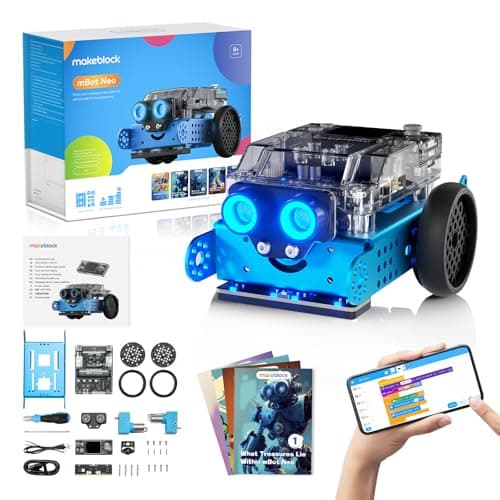
The Makeblock mBot Neo publishes a CyberPi controller — Xtensa 32-bit LX6 dual-core at 240 MHz with 8 MB flash and 8 MB PSRAM — programmable in Scratch-style blocks, Python in mBlock and Arduino C/C++, with a 2500 mAh battery giving about 5 hours of play, and 60+ compatible modules. Rated 8+.
Block & Beaker earns a commission when you buy through our links, at no cost to you. It never changes a ranking, and we say so plainly when the right answer is the cheaper set, or nothing at all. Full disclosure · How we pick.
At a glance
The picks, ranked
Tap any row to jump to the full reasoning. Prices come live from Amazon where we have them and read “check price” where we don’t — never a number we cannot stand behind today.
| # | Product | Best for | Price |
|---|---|---|---|
| 1 | The product Makeblock mBot Neo (mBot2) Three programming environments on one chassis, which is the published upgrade path nothing else here offers. | Eight and up, and still interesting at fifteen | |
| 2 | 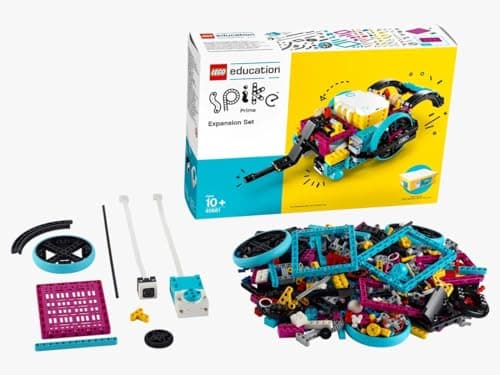 The building-led alternative LEGO Education SPIKE Essential Set 449 pieces with two motors, a color sensor and a rechargeable hub, with icon and word coding. | Six and up, where the build matters as much as the code | |
| 3 | 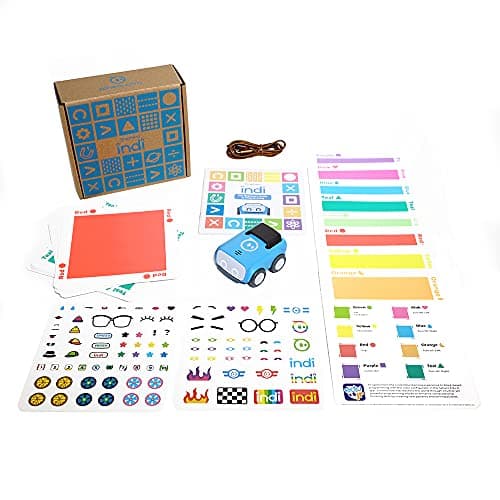 The step before Sphero indi At-Home Learning Kit Color-card programming with a published path onto drag-and-drop blocks. | Four to seven, as the on-ramp | |
| — |  Not remotely the same Coding Critters Ranger & Zip Sold in the same aisle under the same word, and it is a storybook toy. | Four, as a pretend-play toy |
4 picks, including 1 we tell you to skip. Ages shown are the manufacturer’s own rating, not ours.
What we can tell you, and what we cannot
We have not programmed this robot. No lab, no samples, no test children, and no star rating on this page or in its structured data.
Published hardware, languages, battery figures and module counts we can report. How good the mBlock software actually is to use, and how steep the Python step feels to an eleven-year-old, we cannot.
The specification that decides it
The arithmetic
Makeblock mBot Neo, published
| Controller | CyberPi — Xtensa 32-bit LX6 dual-core, 240 MHz |
|---|---|
| Memory | 8 MB flash, 8 MB PSRAM |
| Programming | Scratch-style blocks, Python in mBlock, Arduino C/C++ |
| On-board sensors | Light, microphone, gyroscope, accelerometer |
| Add-on modules | Ultrasonic, quad RGB, temperature, IR |
| Battery | 2500 mAh LiPo — about 1 hour charge, about 5 hours play |
| Expansion | 60+ modules, up to 10 at once, 8 motor and servo ports |
| Stated age | Ages 8+ |
What the numbers mean in practice
Python is a real language, not a toy one. This is the distinction that matters most on this page. Block coding teaches sequencing; Python is what the child would use in a job. A robot that publishes both is a bridge rather than a dead end.
Five hours per charge is generous. Most rechargeable robots here publish two-plus. Five means a whole weekend without a cable.
60+ modules is a cost as well as a feature. Expandability is genuinely valuable and it also means the platform can absorb an unlimited amount of money. Buy the base robot and let interest decide the rest.
8+ is optimistic for the Python half. An eight-year-old will drive it and code it in blocks happily. The published Python and Arduino paths realistically arrive at eleven or twelve, which is fine — that is the point of buying hardware with headroom.
Worth knowing before you buy
A built-in 2500 mAh LiPo is a sealed rechargeable cell. Charge it with the supplied cable, do not leave it charging unattended overnight, and do not attempt to open or replace the pack.
Who should skip it
A child under eight. The published rating is 8+, and everything that makes this good is wasted on a five-year-old. Buy indi or the Robot Mouse.
A household where nobody can help with the first Python session. Blocks are self-serve; the step to text usually is not.
A child who wants to build rather than code. SPIKE Essential or a K’NEX set is the better answer — see robot kits.
Where it sits
The mBot Neo is the endpoint of from coding toy to real code and leads robot kits for teens.
In full
Every pick, and what is wrong with it
Published specifications only, each linked back to the page it came from. Where a manufacturer publishes nothing, the row says so — we do not fill blanks in.
1. The product
Makeblock mBot Neo (mBot2)
Makeblock · mBot2 · maker rates it 8+
Three programming environments on one chassis, which is the published upgrade path nothing else here offers.
- Controller
- CyberPi — Xtensa 32-bit LX6 dual-core at 240 MHz, 8 MB flash, 8 MB PSRAM
- Programming
- Scratch-style blocks, Python in mBlock, and Arduino C/C++ via the Arduino IDE
- Sensors
- On-board light, microphone, gyroscope and accelerometer, plus ultrasonic, quad RGB, temperature and IR modules
- Battery
- Built-in 2500 mAh LiPo, about 1 hour to charge, about 5 hours of play
Makeblock publishes the CyberPi controller — an Xtensa 32-bit LX6 dual-core at 240 MHz with 8 MB flash and 8 MB PSRAM — programmable with Scratch-style blocks, Python in mBlock and Arduino C/C++ via the Arduino IDE. On-board sensors include light, microphone, gyroscope and accelerometer, with ultrasonic, quad RGB, temperature and IR modules available. The battery is a built-in 2500 mAh LiPo, about an hour to charge for about five hours of play, and there are 60+ compatible modules with up to 10 connected at once across 8 motor and servo ports.
Three languages on one chassis is the specification that justifies this over every other robot on the site. A child starts at eight in blocks, moves to Python at eleven, and the robot has not changed. That is the difference between a toy and a platform.
Publishing the actual processor is also worth crediting. Most robot toys describe capabilities; publishing clock speed and memory lets a buyer see that this is a real embedded computer rather than a sealed gadget.
Replay signal
- Open-ended or one-shot
- Open-ended at the top of the range — this is the one a child does not outgrow at eleven
- Does anything run out
- Nothing runs out; rechargeable
- Room to grow
- Blocks, then Python, then Arduino C on the same robot, with 60+ add-on modules
- Adult required
- Not for driving it. Probably for the first Python session
Why we say so: Makeblock publishes the processor, the three programming environments on one robot, the 2500 mAh battery figures and the 60+ compatible modules. Blocks-to-Python-to-C on one chassis is the published upgrade path, and it is why this survives the year a child gets bored of pressing buttons.
What’s wrong with it
The first Python session almost certainly needs an adult, and the module ecosystem adds cost.
| Controller | CyberPi — Xtensa 32-bit LX6 dual-core at 240 MHz, 8 MB flash, 8 MB PSRAM |
|---|---|
| Programming | Scratch-style blocks, Python in mBlock, and Arduino C/C++ via the Arduino IDE |
| Sensors | On-board light, microphone, gyroscope and accelerometer, plus ultrasonic, quad RGB, temperature and IR modules |
| Battery | Built-in 2500 mAh LiPo, about 1 hour to charge, about 5 hours of play |
| Expansion | 60+ compatible modules, up to 10 connected at once, 8 motor and servo ports |
| Stated age | Ages 8+ |
Every figure above is from Makeblock, mBot2 coding robot kit. Blanks are shown as “not published” rather than filled in.
2. The building-led alternative
LEGO Education SPIKE Essential Set
LEGO Education · 45345 · maker rates it 6+ (grades 1-5)
449 pieces with two motors, a color sensor and a rechargeable hub, with icon and word coding.
- Pieces
- 449
- Motors
- 2 small motors
- Sensors
- Color sensor; 6-axis gyro in the hub
- Display
- 3x3 color light matrix
LEGO Education publishes 449 pieces, 2 small motors, a color sensor, a 6-axis gyro in the hub, a 3x3 color light matrix, a small hub with 2 input/output ports, Bluetooth and a rechargeable Li-ion over micro USB, with the SPIKE App offering icon-based and word-based coding, rated 6+ for grades 1-5.
SPIKE wins on building — the machine is LEGO, so its shape is never fixed. mBot wins on code, because the published path continues into Python and Arduino C.
Replay signal
- Open-ended or one-shot
- Open-ended — it is a LEGO system with motors, so the build is never fixed
- Does anything run out
- Nothing runs out; the hub is rechargeable rather than battery-fed
- Room to grow
- Icon coding first, then word-based Scratch blocks in the same app, on the same hardware
- Adult required
- For the first build and the app setup; not after that
Why we say so: LEGO Education publishes 449 pieces, two motors, a color sensor and a rechargeable hub, with an app offering both icon-based and word-based coding. Two coding modes on one set is the published progression — a six-year-old starts on icons and moves to Scratch-style words without new hardware.
What’s wrong with it
Priced and specified for classrooms, and it stops at Scratch-style words.
| Pieces | 449 |
|---|---|
| Motors | 2 small motors |
| Sensors | Color sensor; 6-axis gyro in the hub |
| Display | 3x3 color light matrix |
| Hub | Small hub, 2 input/output ports, Bluetooth, rechargeable Li-ion with micro USB |
| Software | SPIKE App — icon-based and word-based coding built on Scratch |
| Stated age | 6+, grades 1-5 |
Every figure above is from LEGO Education, SPIKE Essential Set 45345. Blanks are shown as “not published” rather than filled in.
3. The step before
Sphero indi At-Home Learning Kit
Sphero · indi · maker rates it 4+
Color-card programming with a published path onto drag-and-drop blocks.
- Contents
- 1 indi robot, 30 color cards, charging cable, 2 sticker sheets, activity booklet, tape to fix the cards down
- Card mix
- 5 green, 4 yellow, 3 red, 2 purple, 3 teal, 3 orange, 5 blue, 5 pink
- How it is coded
- An on-board color sensor reads the cards; no screen needed
- Play time
- “2+ hours of play on a full charge”, USB charging
Sphero publishes an on-board color sensor for screen-free programming, 30 color cards with an exact color breakdown, 2+ hours per charge over USB, and optional drag-and-drop block coding in the free Sphero Edu Jr app, rated 4 and up.
indi is the four-to-seven robot, mBot is the eight-and-up one. A household buying once for a young child should buy indi; one buying for an older child should skip straight here.
Replay signal
- Open-ended or one-shot
- Very open-ended for the age: the child lays the track out across the whole floor
- Does anything run out
- Nothing runs out; recharges by USB
- Room to grow
- Screen-free cards first, then the same robot accepts block coding in the free app when the child is ready
- Adult required
- Not after setup — the program is the floor, and the child builds it
Why we say so: Sphero publishes the 30-card color breakdown, the on-board color sensor as the programming method, the 2+ hours per charge, and the optional step up to drag-and-drop blocks in Sphero Edu Jr.
What’s wrong with it
Blocks are the ceiling — there is no text-language step.
| Contents | 1 indi robot, 30 color cards, charging cable, 2 sticker sheets, activity booklet, tape to fix the cards down |
|---|---|
| Card mix | 5 green, 4 yellow, 3 red, 2 purple, 3 teal, 3 orange, 5 blue, 5 pink |
| How it is coded | An on-board color sensor reads the cards; no screen needed |
| Play time | “2+ hours of play on a full charge”, USB charging |
| Optional app | Sphero Edu Jr drag-and-drop blocks |
| Stated age | Ages 4 and up |
Every figure above is from Sphero, indi At-Home Learning Kit. Blanks are shown as “not published” rather than filled in.
Skip this one
Coding Critters Ranger & Zip
Learning Resources · LER3081 · maker rates it 4+
Sold in the same aisle under the same word, and it is a storybook toy.
- Set size
- 22 pieces
- Screen required
- None — “100% screen-free coding”
- Format
- Interactive pet plus playset and a storybook of coding activities
- Stated age
- Ages 4+
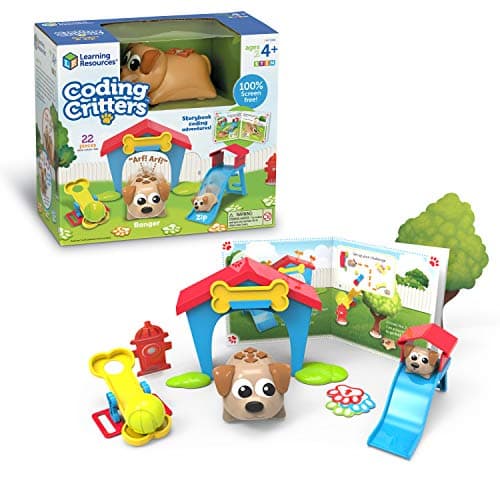
Learning Resources publishes a 22-piece set — an interactive pet, a playset and a storybook of coding activities — 100% screen-free, rated 4+.
We include it as a warning about the word “coding” on packaging. This is a lovely toy for a four-year-old and it shares no meaningful specification with a robot that publishes a 240 MHz processor and three programming languages.
Replay signal
- Open-ended or one-shot
- Half toy, half coding set — the pretend play carries on long after the programming stops
- Does anything run out
- Nothing runs out
- Room to grow
- Little: the coding ceiling here is low by design
- Adult required
- The storybook is read-aloud at four; the pet is not
Why we say so: Learning Resources publishes the 22-piece count, the screen-free format and the storybook-led activity structure. We call the coding ceiling low because the published format is a storybook sequence rather than a programmable step count — compare Botley's published 150-step maximum.
What’s wrong with it
No published step count or programming ceiling at all.
| Set size | 22 pieces |
|---|---|
| Screen required | None — “100% screen-free coding” |
| Format | Interactive pet plus playset and a storybook of coding activities |
| Stated age | Ages 4+ |
| Consumables | None |
Every figure above is from Learning Resources, Coding Critters. Blanks are shown as “not published” rather than filled in.
We are not putting a buy button on this one. It is easy enough to find if you want it anyway — but we would rather send you to something that gets played with twice.
Questions people actually ask
Frequently asked
Can you program the mBot Neo in Python?
Yes. Makeblock publishes three environments on the same robot: Scratch-style blocks, Python in mBlock, and Arduino C/C++ via the Arduino IDE. That published progression is the main reason to choose it — the hardware does not change as the child moves from blocks to text.
What age is the mBot Neo for?
Makeblock publishes 8+. An eight-year-old will drive it and code it in blocks straight away; the Python and Arduino paths realistically arrive around eleven or twelve, which is the point of buying hardware with headroom rather than a second robot later.
How long does the mBot Neo battery last?
Makeblock publishes a built-in 2500 mAh LiPo giving about five hours of play from roughly an hour of charging. That is generous for this category — most rechargeable coding robots publish around two hours.
mBot Neo or LEGO SPIKE Essential?
SPIKE wins on building: 449 LEGO pieces with two motors means the machine's shape is never fixed, and it is rated 6+. mBot wins on code, because the published path continues into Python and Arduino C rather than stopping at Scratch-style words. LEGO robotics compared.
Sources
Where these figures came from
Every specification on this page traces to one of these. If a manufacturer publishes nothing on a point, the page says so rather than filling the gap.
Read next
Where to go from here
Back to Reviews, or read how we pick.