Head to head
STEM Toys vs Regular Toys
The category is a marketing boundary, not a real one. Some of the best purchases on this site are not sold as STEM toys.
By Sawyer V. · Published
The short answer
There is no real boundary. A toy qualifies if the activity requires ordering, predicting or fault-finding — which describes plain wooden blocks as well as anything sold as a coding robot, and excludes several products that carry the label.
Block & Beaker earns a commission when you buy through our links, at no cost to you. It never changes a ranking, and we say so plainly when the right answer is the cheaper set, or nothing at all. Full disclosure · How we pick.
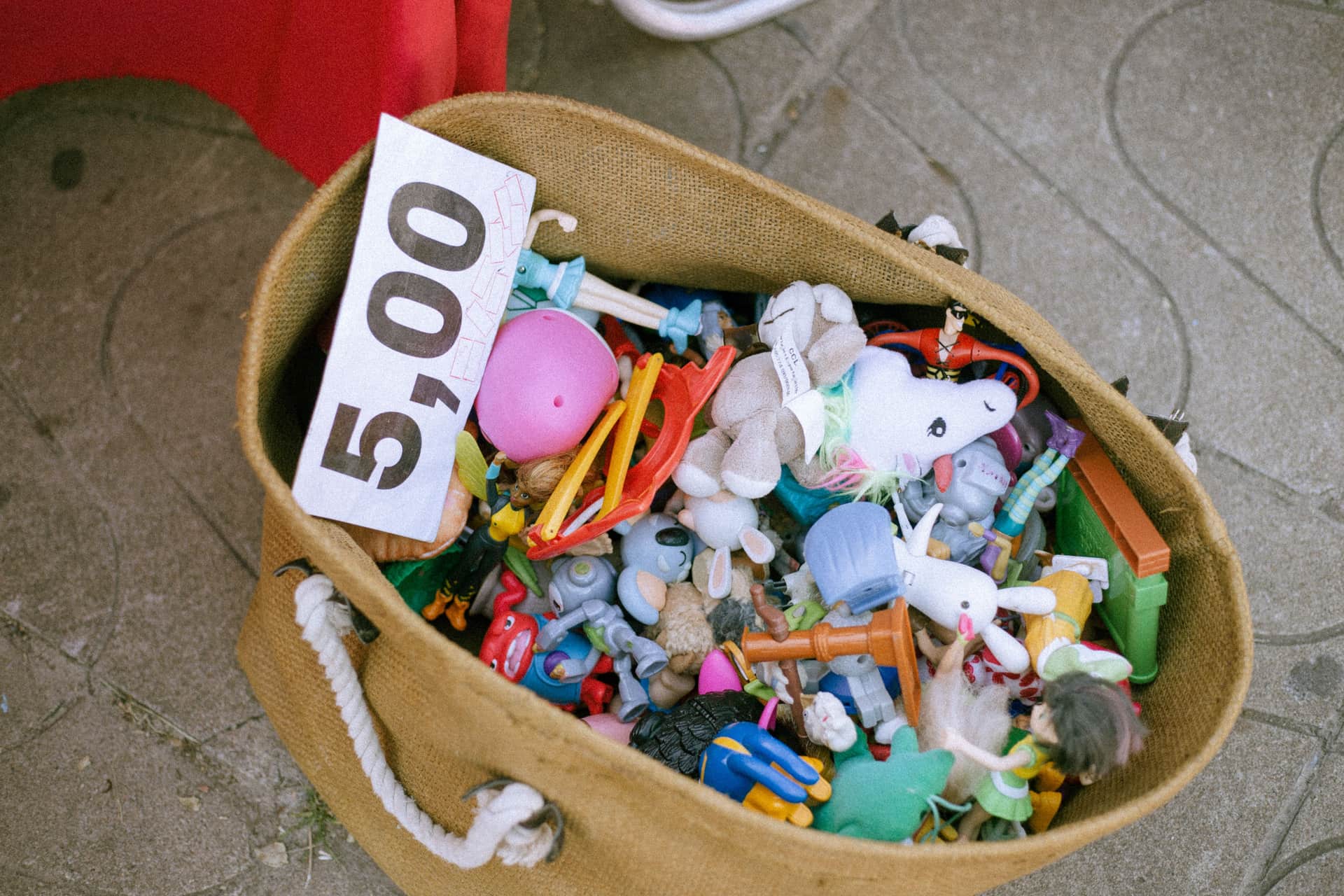
The label is a shelf, not a property
“STEM toy” describes where a product is merchandised. It does not describe anything the product does, which is why it is applied to a robot publishing a 150-step program ceiling and to a plush pet with a storybook.
A more useful test is what the activity mechanically requires. On that test the boundary falls in a completely different place.
The arithmetic
Sold as STEM, and whether the activity requires thinking
| Snap Circuits Classic | Yes — 305 projects, fault-finding throughout |
|---|---|
| Botley 2.0 | Yes — 150-step published ceiling |
| Gravity Maze | Yes — 60 challenges, prediction then verification |
| Coding Critters | Partly — storybook sequence, no step count |
| KEVA planks | Yes, and rarely marketed as STEM |
| LEGO Classic | Yes, and marketed as a toy |
| Plain wooden blocks | Yes — balance, structure, prediction |
What actually distinguishes a good one
The activity has a right answer the world supplies. A marble arrives or it does not. An LED lights or it does not. A tower stands or falls. The child does not need an adult to adjudicate.
Getting it wrong is informative rather than final. KEVA planks publish 200 identical precision-cut planks with no connectors — a tower falling is the lesson, and it can be immediately retried.
The difficulty is set by the child. Open-ended sets have no finished state, so a five-year-old and a ten-year-old both work at their own ceiling from the same box.
Toys that qualify without the label
Plain wooden blocks. Balance, structure, spatial planning, immediate feedback. No branding required.
LEGO Classic. LEGO publishes 790 pieces in 33 colors with no instructions at all, rated 4+ — sold as a toy, and it does everything the four-part test asks.
A bug catcher. National Geographic publishes a habitat, two magnified viewers and catching tools at 4+, with no consumables. Observation is science; the label is incidental.
Board games with real strategy. Prediction, planning and adapting to a changing state.
Products with the label that do less than they suggest
Being specific rather than coy: some products carry “coding” or “STEM” while publishing no step count, no challenge ladder and no programming path.
Coding Critters publishes a 22-piece set with an interactive pet, a playset and a storybook of coding activities, rated 4+. Learning Resources describes it accurately — the confusion comes from shelf placement, not the manufacturer.
It is a lovely toy for a four-year-old. It is not comparable to a robot publishing a 150-step maximum, and the label puts them side by side.
Where the label genuinely helps
It signals no batteries and no licensed character. Broadly true, and broadly useful.
It signals open-ended over single-outcome. Also broadly true — a STEM shelf has more construction and fewer one-function toys.
It gives grandparents a starting point. Not a small thing when somebody is buying for a child they see twice a year.
Worth knowing before you buy
The label carries no safety meaning. A STEM toy is subject to the same published age ratings and small-parts rules as any other, and a 4+ rating is a safety floor from testing regardless of what the shelf says.
The four-part test, applied without the label
Strip the word away and ask the same four questions we ask of everything on this site. They work just as well on a toy that has never been near a STEM shelf.
The arithmetic
Four questions that ignore the category
| Is it open-ended? | Is there a finished state, or does the child decide? |
|---|---|
| Does anything run out? | Consumables set a hard limit on use |
| Is there room to grow? | A ceiling reached in weeks ends the toy |
| Is an adult needed? | If yes, it is used when an adult is free |
Why the category exists at all
Not cynically — there is a real reason, and it is about buyers rather than children.
A parent or grandparent who wants to buy something worthwhile has a genuine navigation problem in a large toy shop. The label solves it, imperfectly, by gathering open-ended construction and thinking toys into one place.
The cost is that it also gathers products whose only qualification is the word on the box, and it charges for the sorting. Knowing that is enough — use the shelf to find candidates and the published specifications to choose between them.
Say the unwelcome thing
Do not pay a premium for the word
Two similar construction sets, one labeled STEM and one not, are the same purchase. Compare published piece counts, age ranges and whether anything runs out.
If the labeled one costs more for the same published specification, the extra is buying the word.
Where to go next
What are STEM toys covers the definition. Do STEM toys actually work covers the claims, and how to read a toy box covers decoding the packaging.
Questions people actually ask
Frequently asked
Is there a real difference between STEM toys and regular toys?
Not a reliable one. The label describes where a product is merchandised, not what it does — it covers a robot publishing a 150-step program ceiling and a plush pet with a storybook. A better test is whether the activity requires ordering, predicting or fault-finding.
Are wooden blocks a STEM toy?
By any useful test, yes. Balance, structure, spatial planning and immediate physical feedback are exactly what the label is meant to indicate. KEVA publishes 200 identical precision-cut planks with no connectors and is rarely marketed as STEM at all.
Is LEGO a STEM toy?
The Classic box certainly qualifies on the activity: LEGO publishes 790 pieces in 33 colors with no instructions and no finished model, so the child sets the problem. It is sold as a toy rather than as STEM, which says more about marketing than about the product.
Should I pay more for a toy labeled STEM?
Not for the word. Compare published specifications — piece counts, challenge counts, age ranges, whether anything runs out. If a labeled product costs more than an unlabeled one with the same published spec, the difference is buying the label. How to read a toy box.
Sources
Where these figures came from
Every specification on this page traces to one of these. If a manufacturer publishes nothing on a point, the page says so rather than filling the gap.
Read next
Where to go from here
Back to Guides, or read how we pick.