The picks
Pattern and Sequencing Toys
Pattern comes before number. A child who can continue a sequence is doing algebra before they can count reliably.
By Sawyer V. · Published
The short answer
Continuing a pattern is the first genuinely algebraic thing a child does: spotting a rule and applying it to a case they have not seen. It arrives well before reliable counting, and the toys that train it are sorting sets, linking cubes and picture-card sequencing.
Block & Beaker earns a commission when you buy through our links, at no cost to you. It never changes a ranking, and we say so plainly when the right answer is the cheaper set, or nothing at all. Full disclosure · How we pick.
At a glance
The picks, ranked
Tap any row to jump to the full reasoning. Prices come live from Amazon where we have them and read “check price” where we don’t — never a number we cannot stand behind today.
| # | Product | Best for | Price |
|---|---|---|---|
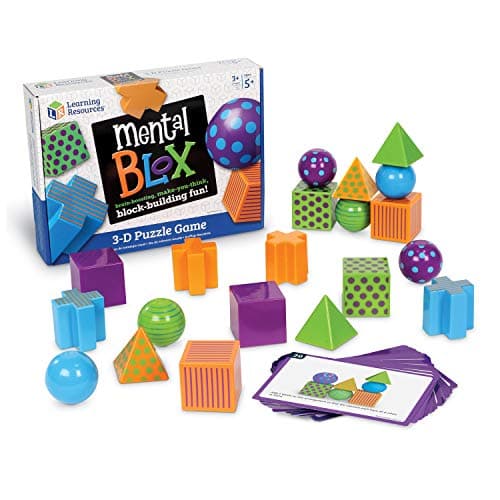
| 1 | Best overall Mental Blox Critical Thinking Game Four shapes across three attributes — sorting by two properties at once, which is where logic starts. | Five and up, and the clearest attribute work in the category | |
| 2 | 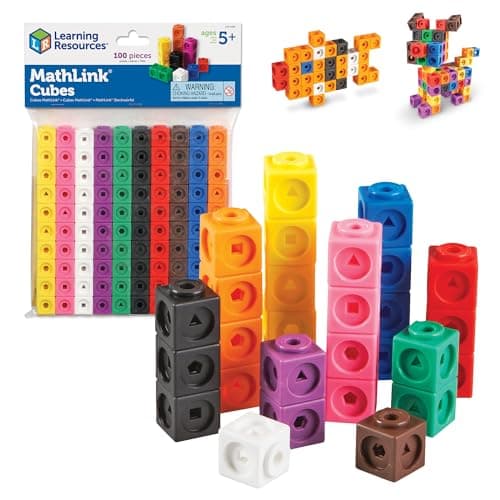 Best value MathLink Cubes, Set of 100 A hundred cubes linking on all six sides — patterns at five, arrays and volume at nine. | Five to nine, and the widest span of any pick here | |
| 3 | 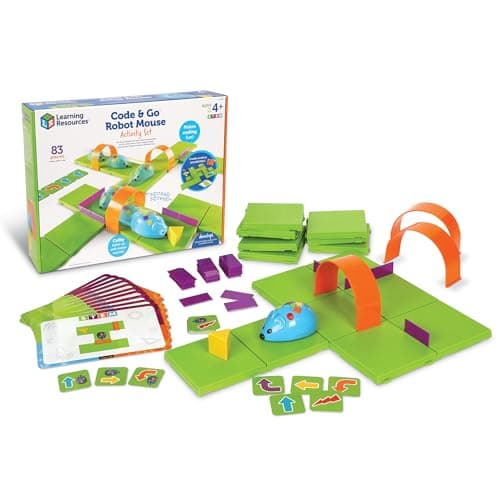 Best sequencing toy Code & Go Robot Mouse Activity Set Thirty picture cards laid in order, and a mouse that executes them exactly — sequencing made visible. | Four and five, before a child can read | |
| 4 | 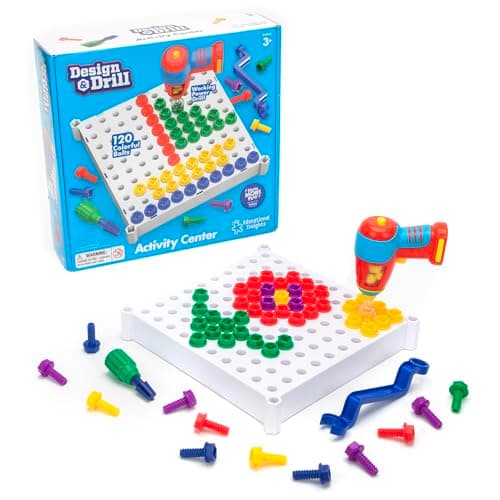 Best pattern-matching for threes Design & Drill Activity Center Pattern cards matched with colored bolts, driven in with a drill that actually works. | Three and up, where most of this page is still a year away | |
| — | 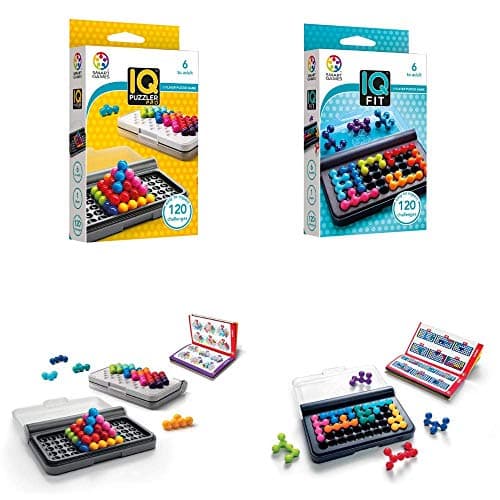 The one to wait on SmartGames IQ Puzzler Pro Excellent, and pitched above the age band this page is written for. | Six and up, a year or two after this page |
5 picks, including 1 we tell you to skip. Ages shown are the manufacturer’s own rating, not ours.
Why pattern comes before number
A three-year-old can usually continue a red-blue-red-blue chain long before they can reliably count to twenty. That order surprises people, and it matters for what you buy.
Continuing a pattern requires spotting a rule and applying it to a case not yet seen. That is the same operation as algebra, running years before anybody uses the word — and it is trained by physical objects rather than by worksheets.
The arithmetic
The preschool progression
| 1. Matching | This one is the same as that one |
|---|---|
| 2. Sorting by one attribute | All the red ones together |
| 3. Sorting by two attributes | Red AND square |
| 4. Continuing a pattern | Red, blue, red, blue, then what? |
| 5. Creating a pattern | Making a rule for somebody else to follow |
| 6. Sequencing actions | First this, then that, then the other |
Sequencing is the same skill applied to time
Patterning arranges things in space. Sequencing arranges actions in time, and it is the direct precursor to programming.
A four-year-old laying out picture cards for a robot mouse is doing the temporal version of continuing a pattern: deciding what comes next, and discovering that a different order produces a different result.
The debugging is the valuable half. When the mouse turns wrong at the third step, the third card is wrong — and that is a repeatable procedure rather than a feeling, which is what transfers.
The one question that activates any of these
None of these toys teaches on its own. A tub of linking cubes stays a tub of linking cubes until somebody asks something about it, and the question does not need to be clever:
- "Can you make one that goes red, red, blue, red, red, blue?"
- "I made a pattern — can you work out my rule and carry it on?"
- "Make me a pattern and I will try to continue it."
The third is the most valuable and the least used. Creating a rule for somebody else is harder than following one, and children take it seriously when an adult genuinely has to work it out.
Say the unwelcome thing
Do not buy worksheets in a box
A great deal of preschool math product is a pad of pattern exercises with plastic counters. Children detect the worksheet underneath it almost immediately, and it converts a game into homework.
The sets that work put the pattern in physical objects with more than one property, so the child is arranging rather than answering. If the box has a page to fill in, it is the wrong purchase at this age.
What to buy
- Three to four: Design & Drill, for pattern cards with a real tool.
- Four to five, sequencing: the Code & Go Robot Mouse.
- Five and up, attributes: Mental Blox.
- Five to nine, one purchase: MathLink Cubes.
Next comes spatial reasoning at six and number games shortly after. For the coding side of sequencing, screen-free coding toys.
In full
Every pick, and what is wrong with it
Published specifications only, each linked back to the page it came from. Where a manufacturer publishes nothing, the row says so — we do not fill blanks in.
1. Best overall
Mental Blox Critical Thinking Game
Learning Resources · LER9280 · maker rates it 5+
Four shapes across three attributes — sorting by two properties at once, which is where logic starts.
- Blocks
- 20 chunky plastic blocks
- Activity cards
- 20
- Attributes
- Four shapes across three attributes
- Includes
- Activity guide
Learning Resources publishes 20 chunky plastic blocks and 20 activity cards across four shapes with three attributes, plus an activity guide, rated 5+, with no batteries.
Attributes are what make this more than a shape sorter. Sorting by color is trivial; sorting by color and shape simultaneously requires holding two rules at once, and that is the step from recognising to reasoning.
The blocks are chunky enough for a five-year-old's hands, which the smaller puzzle sets on the spatial reasoning page are not.
Replay signal
- Open-ended or one-shot
- The 20 cards end; the blocks then work for free pattern and copy games
- Does anything run out
- Nothing runs out
- Room to grow
- An adult can invent harder arrangements indefinitely — the cards are a starting ladder
Why we say so: Learning Resources publishes 20 blocks and 20 activity cards across four shapes and three attributes. Attributes are the point: sorting by shape, then by color, then by both at once is the first properly logical thing a five-year-old does with a toy.
What’s wrong with it
Twenty cards is a short ladder, and after those the value depends on an adult inventing arrangements.
| Blocks | 20 chunky plastic blocks |
|---|---|
| Activity cards | 20 |
| Attributes | Four shapes across three attributes |
| Includes | Activity guide |
| Batteries | None |
| Stated age | Ages 5+ |
Every figure above is from Learning Resources, Mental Blox Critical Thinking Game. Blanks are shown as “not published” rather than filled in.
2. Best value
MathLink Cubes, Set of 100
Learning Resources · LER4285 · maker rates it 5+
A hundred cubes linking on all six sides — patterns at five, arrays and volume at nine.
- Cubes
- 100, in 10 colors
- Cube size
- 3/4 inch
- Connection
- Links on all sides, with geometric shape cut-outs for patterning
- Stated age
- Ages 5 and up
Learning Resources publishes 100 cubes in 10 colors, three quarters of an inch each, linking on all sides with geometric shape cut-outs for patterning, rated 5 and up.
For patterning specifically, ten colors is the useful specification. A repeating red-blue-red-blue chain is the simplest possible pattern, and ten colors means the rules can get arbitrarily complex without running out of tokens.
All-sides connection is what stops it being only a patterning toy. The same hundred cubes become arrays and volume models later, which nothing else at this price does.
Replay signal
- Open-ended or one-shot
- Completely open-ended, and unusually cheap for something that is
- Does anything run out
- Nothing runs out
- Room to grow
- The same cubes cover counting at five and volume, arrays and fractions at nine
Why we say so: Learning Resources publishes that the cubes link on all sides with geometric cut-outs. All-sides connection is what turns a counting toy into a building toy — a cube that only joins end to end makes towers, and one that joins on six faces makes arrays, volumes and models.
What’s wrong with it
It is school equipment and looks like it, which some children react to immediately.
| Cubes | 100, in 10 colors |
|---|---|
| Cube size | 3/4 inch |
| Connection | Links on all sides, with geometric shape cut-outs for patterning |
| Stated age | Ages 5 and up |
| Batteries | None |
| Consumables | None |
Every figure above is from Learning Resources, MathLink Cubes, Set of 100. Blanks are shown as “not published” rather than filled in.
3. Best sequencing toy
Code & Go Robot Mouse Activity Set
Learning Resources · LER2831 · maker rates it 4+
Thirty picture cards laid in order, and a mouse that executes them exactly — sequencing made visible.
- Set size
- 83 pieces
- Contents
- Colby the robot mouse, 16 maze grids, 22 maze walls, 3 tunnels, 30 double-sided coding cards, 10 activity cards, cheese wedge, activity guide
- Maze size
- The 16 grids build a 20″ x 20″ board
- Screen required
- None
Learning Resources publishes 83 pieces including 16 maze grids forming a 20-inch board, 22 walls, 3 tunnels, 30 double-sided coding cards using directional symbols and 10 activity cards, rated 4+.
This is sequencing in its purest form. The child puts cards in an order, presses go, and watches the order execute — and when the mouse goes the wrong way, the fault is locatable in a specific card.
The picture-based cards are what make it work at four. Nothing has to be read, so the child owns the whole activity.
Replay signal
- Open-ended or one-shot
- The mouse is fixed, but the maze is not — 16 grids and 22 walls is a new problem every time
- Does anything run out
- Nothing runs out
- Room to grow
- The 10 activity cards are a starting ladder; after that the child sets the puzzles
- Adult required
- Reading is not required — the coding cards use directional symbols, so a four-year-old can work alone
Why we say so: Learning Resources publishes the 83-piece contents including 16 rearrangeable grids and 22 walls, and states the cards are picture-based. A rearrangeable maze is why this does not become a solved puzzle after one weekend.
What’s wrong with it
Three AAA batteries not included, and the mouse itself never gets harder. The maze supplies the difficulty.
| Set size | 83 pieces |
|---|---|
| Contents | Colby the robot mouse, 16 maze grids, 22 maze walls, 3 tunnels, 30 double-sided coding cards, 10 activity cards, cheese wedge, activity guide |
| Maze size | The 16 grids build a 20″ x 20″ board |
| Screen required | None |
| Batteries | 3 x AAA (not included) |
| Stated age | Ages 4+ |
Every figure above is from Learning Resources, Code & Go Robot Mouse Activity Set. Blanks are shown as “not published” rather than filled in.
4. Best pattern-matching for threes
Design & Drill Activity Center
Educational Insights · EI-4112 · maker rates it 3+
Pattern cards matched with colored bolts, driven in with a drill that actually works.
- Pieces
- 146
- Contents
- Kid-friendly power drill, activity board, colored bolts, design and activity cards
- Stated age
- Ages 3+
- Batteries
- Required for the drill (not included)
Educational Insights publishes 146 pieces including a kid-friendly power drill, an activity board, colored bolts and design and activity cards, rated 3+.
The pattern cards are doing real work here even though the drill gets the attention. Matching a card's arrangement of colors to positions on a board is one-to-one correspondence plus color matching, which is the groundwork for everything above.
At three this is the only pick on the page that is age-rated. The others start at four and five.
Replay signal
- Open-ended or one-shot
- Both: the activity cards give a ladder, and the board can be filled freely once they are done
- Does anything run out
- Nothing runs out
- Room to grow
- Little beyond about five — this is squarely a preschool toy
- Adult required
- For the first go, then not. The drill is designed for a three-year-old to hold
Why we say so: Educational Insights publishes the 146-piece contents including the child-sized drill and pattern cards. A real trigger-operated tool at a 3+ rating is unusual, and it is the whole appeal: the child is using a tool rather than a representation of one.
What’s wrong with it
A short runway — most children are done around five — and the drill needs batteries not included.
| Pieces | 146 |
|---|---|
| Contents | Kid-friendly power drill, activity board, colored bolts, design and activity cards |
| Stated age | Ages 3+ |
| Batteries | Required for the drill (not included) |
| Consumables | None |
Every figure above is from Educational Insights, Design & Drill Activity Center. Blanks are shown as “not published” rather than filled in.
Skip this one
SmartGames IQ Puzzler Pro
SmartGames · SG455 · maker rates it 6+
Excellent, and pitched above the age band this page is written for.
- Challenges
- 120, across 2D and 3D modes
- Contents
- Compact board with a transparent lid, 12 puzzle pieces, challenge booklet with solutions
- Players
- 1
- Batteries
- None
SmartGames publishes 120 challenges across 2D and 3D modes from 12 puzzle pieces in a compact case, rated 6 to adult.
It is our best-value pick on the spatial reasoning page and it is genuinely excellent.
It is the skip here because the pieces are small and the puzzles assume planning ahead. Handed to a four-year-old it produces frustration, which is the fastest way to teach a child that puzzles are not for them.
Replay signal
- Open-ended or one-shot
- Finite, but 120 challenges is roughly double what most single-player puzzle games ship with
- Does anything run out
- The booklet ends. The pieces do not
- Room to grow
- The same 12 pieces run 2D and 3D challenge sets, so the difficulty ceiling is well above the entry point
Why we say so: SmartGames publishes 120 challenges across two modes from a single 12-piece set. Twelve pieces generating 120 published problems is the best challenge-per-component ratio of any logic game on this site, and it is the reason this one travels well and lasts.
What’s wrong with it
Rated 6 to adult, with small pieces and 120 challenges that assume a child can already hold a plan.
| Challenges | 120, across 2D and 3D modes |
|---|---|
| Contents | Compact board with a transparent lid, 12 puzzle pieces, challenge booklet with solutions |
| Players | 1 |
| Batteries | None |
| Stated age | Ages 6 to adult |
| Travel case | Yes — the board is the case |
Every figure above is from SmartGames, IQ Puzzler Pro. Blanks are shown as “not published” rather than filled in.
We are not putting a buy button on this one. It is easy enough to find if you want it anyway — but we would rather send you to something that gets played with twice.
Questions people actually ask
Frequently asked
Why do pattern toys matter before counting?
Because continuing a pattern requires spotting a rule and applying it to a case not yet seen — the same operation as algebra, running years before anyone uses the word. Most three-year-olds can continue a red-blue-red-blue chain before they can reliably count to twenty.
What is the best pattern toy for a 5 year old?
Mental Blox. Learning Resources publishes 20 chunky blocks across four shapes with three attributes, rated 5+. Sorting by color is trivial; sorting by color and shape at once requires holding two rules simultaneously, and that is the step from recognising to reasoning.
What is the difference between patterning and sequencing?
Patterning arranges things in space; sequencing arranges actions in time. Sequencing is the direct precursor to programming — a four-year-old laying picture cards for a robot is deciding what comes next and discovering that a different order gives a different result.
Do I need to do anything for these toys to work?
One question, and it need not be clever. 'Make me a pattern and I will try to continue it' is the most valuable and least used — creating a rule for somebody else is harder than following one, and children take it seriously when an adult genuinely has to work it out.
Sources
Where these figures came from
Every specification on this page traces to one of these. If a manufacturer publishes nothing on a point, the page says so rather than filling the gap.
Read next
Where to go from here
Back to Math & Logic, or read how we pick.