The picks
Logic Games for 9 and 10 Year Olds
By nine the published ratings have run out — everything in the category says eight and up. So the age on the box stops helping and the challenge count takes over.
By Sawyer V. · Published
The short answer
At nine and ten, buy on published challenge count and on what the game makes visible. Kanoodle publishes 200+ puzzles across two formats — the highest count here. Circuit Maze publishes 60 challenges that light a real bulb, which is the only self-proving game in the category. Code Master publishes 60 levels of loops and conditionals, and Q-BA-MAZE 2.0 publishes 72 cubes and no finished state at all.
Block & Beaker earns a commission when you buy through our links, at no cost to you. It never changes a ranking, and we say so plainly when the right answer is the cheaper set, or nothing at all. Full disclosure · How we pick.
At a glance
The picks, ranked
Tap any row to jump to the full reasoning. Prices come live from Amazon where we have them and read “check price” where we don’t — never a number we cannot stand behind today.
| # | Product | Best for | Price |
|---|---|---|---|
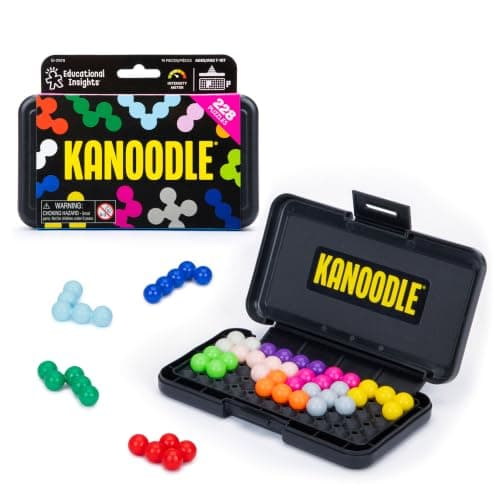
| 1 | Highest published challenge count Kanoodle 200+ puzzles across flat 2D layouts and 3D pyramids, in one small case. | Nine and ten, playing alone, including away from a table | |
| 2 | 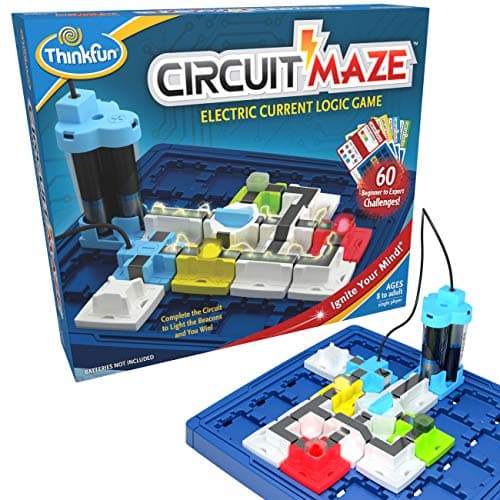 The only one that proves itself with a real circuit ThinkFun Circuit Maze 60 beginner-to-expert challenges that either light the bulb or do not. | Nine and ten, for a child who wants a result rather than a tick | |
| 3 | 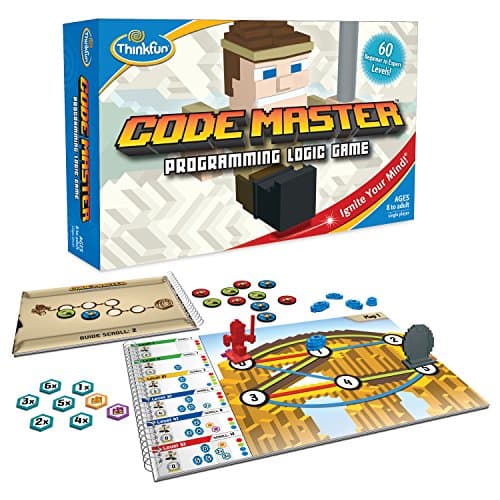 Best crossover into coding ThinkFun Code Master 60 graded levels that teach sequencing, loops and conditionals on cardboard. | Nine and ten, with no device involved | |
| 4 | 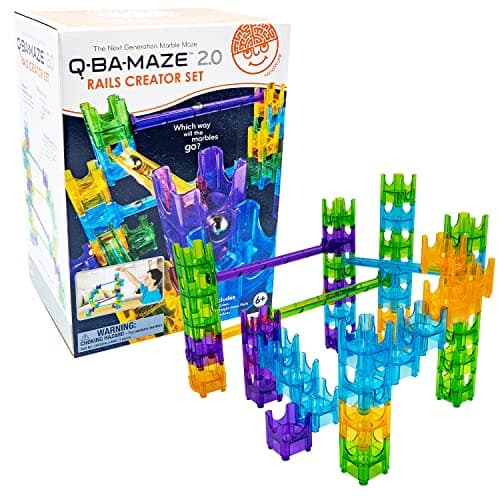 Best open-ended option Q-BA-MAZE 2.0 Big Box 72 cubes in three exit types with 20 steel marbles — build the problem yourself. | Nine and ten, for a child who has finished every puzzle book | |
| — | 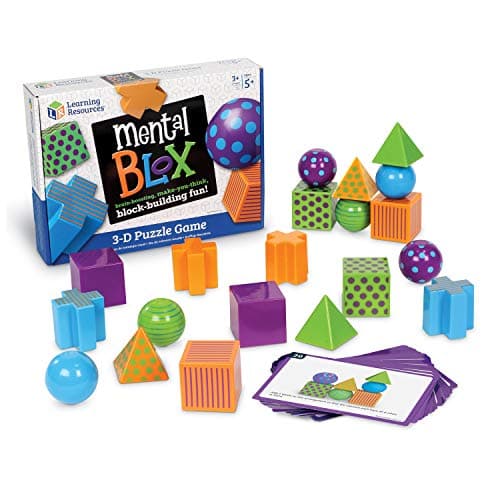 Four published years behind Mental Blox Critical Thinking Game 20 chunky blocks and 20 cards built on four shapes and three attributes. | Five to eight, with a sibling or an adult |
5 picks, including 1 we tell you to skip. Ages shown are the manufacturer’s own rating, not ours.
Why the age on the box stops helping at nine
The arithmetic
Logic games: published age and published content
| Mental Blox | Ages 5+ — 20 blocks, 20 cards, works as a group activity |
|---|---|
| Rush Hour Junior | Ages 5+ — 40 challenges, self-checking, 1 player |
| IQ Puzzler Pro | Ages 6 to adult — 120 challenges, 2D and 3D |
| Q-BA-MAZE 2.0 Big Box | Ages 6 and up — 72 cubes in 3 exit types, no challenge count |
| Kanoodle | Ages 7 and up — 200+ puzzles across two formats |
| Gravity Maze | Ages 8+ — 60 challenges, 9 towers, 3 marbles |
| Code Master | Ages 8 and up — 60 levels, loops and conditionals |
| Circuit Maze | Ages 8+ — 60 challenges, real circuits |
What to buy on instead
Published challenge count. It is the one figure every maker states and it maps straight onto lifespan: 20, 40, 60, 120, 200+. At nine you are choosing between a weekend and a year.
Whether the game proves itself. Circuit Maze lights a bulb; Q-BA-MAZE either carries the marble or does not. A game that answers without an adult gets played on a Tuesday evening, and a game that needs the solution booklet checked often does not.
Whether it has a finished state at all. Q-BA-MAZE publishes 72 cubes and no challenge count, which makes it the only thing here that cannot be completed. That is the right property for the child who finishes everything.
Not the piece count. Twenty chunky blocks and 72 cubes are not comparable quantities of anything. In this category the content is the challenge deck or the geometry, not the plastic.
What nine and ten can do that seven could not
Hold two rules at once. Code Master’s later levels need a loop and a conditional in mind together. That is the step that separates its published floor of eight from the age it really lands.
Plan several moves before touching anything. Circuit Maze and Gravity Maze both reward placing a piece now for a reason that pays off two pieces later, and punish trial and error with a reset.
Design a problem, not only solve one. This is the real reason to buy the open-ended set at nine. A child who builds a maze for a sibling has to understand the rule that makes it solvable, which is harder and better than solving a card.
Tolerate a long stall. A nine-year-old will leave a puzzle out overnight. That is what makes a 200-challenge game viable rather than 200 defeats.
And where this ladder ends
This is the last rung worth building on this shelf. Nothing in the category publishes an age above eight, so there is no eleven-or-twelve page to write: the same games keep working, and the next purchase is a different kind of thing entirely — a real instrument, a programmable robot, a chemistry set with reagents.
See STEM toys for 11 year olds and for 12 year olds, which is where this site stops recommending toys at all.
Worth knowing before you buy
So which one
One game, make it last: Kanoodle and its 200+ puzzles.
They need an unambiguous answer: Circuit Maze, which lights or does not.
They are heading towards coding: Code Master, with no device required.
They finish everything: Q-BA-MAZE 2.0 Big Box, which has no end.
They prefer three dimensions: Gravity Maze publishes 60 challenges and 9 towers.
Say the unwelcome thing
Do not buy the Junior edition at nine
It sits on the same shelf, costs slightly less and publishes a fraction of the content. Rush Hour Junior publishes 40 challenges at 5+ and Mental Blox publishes 20 cards at 5+, against Kanoodle’s 200-plus. Both are good games for a five-year-old, which is exactly why they are still stocked — and at nine the published floor is four years behind, so the only number worth paying for is the ceiling.
Where to go next
Logic games for 7 and 8 year olds is the rung below, STEM games for one player covers the single-player end, and STEM strategy games for two or more covers the exceptions for a table.
In full
Every pick, and what is wrong with it
Published specifications only, each linked back to the page it came from. Where a manufacturer publishes nothing, the row says so — we do not fill blanks in.
1. Highest published challenge count
Kanoodle
Educational Insights · Kanoodle · maker rates it 7+
200+ puzzles across flat 2D layouts and 3D pyramids, in one small case.
- Puzzles
- 200+
- Formats
- Two — flat 2D puzzles and 3D pyramids
- Pieces
- Connected-bead puzzle pieces
- Players
- 1
Educational Insights publishes 200+ puzzles across two formats — flat 2D puzzles and 3D pyramids — with connected-bead puzzle pieces, one player and no batteries, rated ages 7 and up.
Two hundred is the largest published count on this site and it is the reason this is still the right buy at nine rather than a game bought two years ago. A child who finished the 2D half at seven has the pyramids ahead of them, and the pyramids are a genuine step rather than more of the same.
The published 7+ is a floor here, not a fit — see buying above the age rating. And the Kanoodle review for the detail.
Replay signal
- Open-ended or one-shot
- Finite, but 200+ published puzzles is the largest count on this site
- Does anything run out
- Nothing runs out; the booklet is long enough to feel endless
- Room to grow
- 2D first, then the 3D pyramid set, which is a genuine step in difficulty
Why we say so: Educational Insights publishes 200-plus puzzles across 2D and 3D formats from one small case. Two hundred is roughly three times what a typical single-player logic game ships with, which is why this one survives a long car journey and a wet week.
What’s wrong with it
Single player. Two children cannot both use it at once.
| Puzzles | 200+ |
|---|---|
| Formats | Two — flat 2D puzzles and 3D pyramids |
| Pieces | Connected-bead puzzle pieces |
| Players | 1 |
| Batteries | None |
| Stated age | Ages 7 and up |
Every figure above is from Educational Insights, Kanoodle. Blanks are shown as “not published” rather than filled in.
2. The only one that proves itself with a real circuit
ThinkFun Circuit Maze
ThinkFun · 1008 · maker rates it 8+
60 beginner-to-expert challenges that either light the bulb or do not.
- Stated age
- “age 8 and up”
- Players
- 1
- Format
- Beam-and-token circuit puzzles with real working LEDs
- Batteries
- Required (not included)
ThinkFun publishes 60 challenges from beginner to expert, a single player, real circuit components, and no batteries beyond those the circuits use, rated ages 8+.
Self-proving is why this leads at nine. There is no answer key to consult and no adult to ask: the bulb lights or it does not, so the child gets an unambiguous verdict every attempt and can iterate without anyone free to check.
It is also the only game in this hub where the logic is electrical rather than spatial, which makes it the best bridge to the electronics shelf. See the Circuit Maze review and Circuit Maze against Snap Circuits.
Replay signal
- Open-ended or one-shot
- Finite challenge deck, but the pieces make a real circuit — free building afterward is possible
- Does anything run out
- Nothing runs out
- Room to grow
- Pairs naturally with a Snap Circuits set as the step from puzzle to real components
Why we say so: ThinkFun publishes the 8+ rating, the 60 challenges and the single-player circuit-puzzle format with working LEDs. The pairing with Snap Circuits is our routing advice and is stated as advice, not as a manufacturer claim.
What’s wrong with it
Published 8+ and the parts are small — not a floor game near a toddler.
| Stated age | “age 8 and up” |
|---|---|
| Players | 1 |
| Format | Beam-and-token circuit puzzles with real working LEDs |
| Batteries | Required (not included) |
| Challenges | 60, beginner to expert |
Every figure above is from ThinkFun, Circuit Maze. Blanks are shown as “not published” rather than filled in.
3. Best crossover into coding
ThinkFun Code Master
ThinkFun · 1950 · maker rates it 8+
60 graded levels that teach sequencing, loops and conditionals on cardboard.
- Levels
- 60, beginner to expert
- Players
- 1
- Format
- Map-based programming logic — sequence the avatar's moves to collect power crystals
- Batteries
- None
ThinkFun publishes 60 levels from beginner to expert, a single player, map-based programming logic in which the player sequences an avatar’s moves to collect power crystals, and no batteries, rated ages 8 and up.
Nine and ten is the sweet spot for this one rather than its published floor of eight. The later levels require holding a loop and a conditional in mind at the same time, which is reliably available at nine and intermittent at eight.
It is the cheapest honest coding purchase on this site and it needs no charger, tablet or adult. See the Code Master review and coding board games.
Replay signal
- Open-ended or one-shot
- Finite — 60 levels, and they are worked through in order
- Does anything run out
- Nothing runs out, but the level book does end
- Room to grow
- The later levels introduce conditionals and loops, so the concept ladder is real rather than cosmetic
Why we say so: ThinkFun publishes 60 levels from beginner to expert and a map-and-sequence format. The concepts the later levels introduce — branching and repetition — are the same two ideas that make a real program, which is why this works as preparation for a screen rather than as a substitute for one.
What’s wrong with it
Sixty levels and then it is over — there is no expansion.
| Levels | 60, beginner to expert |
|---|---|
| Players | 1 |
| Format | Map-based programming logic — sequence the avatar's moves to collect power crystals |
| Batteries | None |
| Stated age | Ages 8 and up |
Every figure above is from ThinkFun, Code Master. Blanks are shown as “not published” rather than filled in.
4. Best open-ended option
Q-BA-MAZE 2.0 Big Box
MindWare · 48168W · maker rates it 6+
72 cubes in three exit types with 20 steel marbles — build the problem yourself.
- Cubes
- 72, in five colors
- Cube mix
- 18 bottom-exit, 36 single-exit, 18 double-exit
- Marbles
- 20 steel
- Stated age
- 6 and up
MindWare publishes 72 cubes in five colors — 18 bottom-exit, 36 single-exit and 18 double-exit — with 20 steel marbles, in phthalate-free and BPA-free ABS plastic, rated 6 and up.
The published cube mix is what makes this logic rather than stacking. Three exit types means the child has to decide where the marble leaves before deciding where the cube goes, and the maze either carries the marble or it does not.
It belongs on a nine-and-ten page specifically because it has no challenge count to exhaust. Everything else here is finite; this is the one that answers “what now that the book is finished”. See the Q-BA-MAZE review.
Replay signal
- Open-ended or one-shot
- Genuinely open-ended — the cubes interlock in any direction, so there is no single correct structure
- Does anything run out
- Nothing runs out
- Room to grow
- MindWare sells stunt and expansion sets that clip into the same cubes
Why we say so: MindWare publishes the 72-cube count, the exact exit-type mix, the 20 marbles and the ages 6+ rating. Three different exit types is what makes a structure branch rather than follow one fixed path.
What’s wrong with it
20 steel marbles. Table height only in a house with a toddler.
| Cubes | 72, in five colors |
|---|---|
| Cube mix | 18 bottom-exit, 36 single-exit, 18 double-exit |
| Marbles | 20 steel |
| Stated age | 6 and up |
| Material | Phthalate-free and BPA-free ABS plastic |
| Consumables | None, though marbles are the part that disappears under the sofa |
Every figure above is from MindWare, Q-BA-MAZE 2.0. Blanks are shown as “not published” rather than filled in.
Skip this one
Mental Blox Critical Thinking Game
Learning Resources · LER9280 · maker rates it 5+
20 chunky blocks and 20 cards built on four shapes and three attributes.
- Blocks
- 20 chunky plastic blocks
- Activity cards
- 20
- Attributes
- Four shapes across three attributes
- Includes
- Activity guide
Learning Resources publishes 20 chunky plastic blocks, 20 activity cards, four shapes across three attributes, an activity guide and no batteries, rated ages 5+.
An excellent game at five and the specific mis-buy at nine. Twenty cards against Kanoodle’s 200-plus is the whole problem: the published content is a tenth of the size, and matching on shape and color is a skill a nine-year-old solved years ago.
It is also the group-capable exception in a category of solo puzzles, which is why it keeps getting recommended to the wrong age. See logic games for 5 year olds, where it is a top pick.
Replay signal
- Open-ended or one-shot
- The 20 cards end; the blocks then work for free pattern and copy games
- Does anything run out
- Nothing runs out
- Room to grow
- An adult can invent harder arrangements indefinitely — the cards are a starting ladder
Why we say so: Learning Resources publishes 20 blocks and 20 activity cards across four shapes and three attributes. Attributes are the point: sorting by shape, then by color, then by both at once is the first properly logical thing a five-year-old does with a toy.
What’s wrong with it
Published 5+ with 20 cards. At nine it is finished in an afternoon.
| Blocks | 20 chunky plastic blocks |
|---|---|
| Activity cards | 20 |
| Attributes | Four shapes across three attributes |
| Includes | Activity guide |
| Batteries | None |
| Stated age | Ages 5+ |
Every figure above is from Learning Resources, Mental Blox Critical Thinking Game. Blanks are shown as “not published” rather than filled in.
We are not putting a buy button on this one. It is easy enough to find if you want it anyway — but we would rather send you to something that gets played with twice.
Questions people actually ask
Frequently asked
What is the best logic game for a 10 year old?
Kanoodle on published content - Educational Insights publishes 200+ puzzles across flat 2D layouts and 3D pyramids, the highest count on this site. For a child who wants an unambiguous result rather than a solution booklet, ThinkFun publishes 60 challenges on Circuit Maze that either light a real bulb or do not.
What logic games are published for 9 year olds?
None specifically - and that is the useful fact. Every game in this category publishes 8 or below: Kanoodle 7 and up, Gravity Maze 8+, Code Master 8 and up, Circuit Maze 8+, Q-BA-MAZE 6 and up. At nine the rating has stopped discriminating, so buy on challenge count instead. Buying above the age rating.
Which logic game needs no adult?
Circuit Maze and Q-BA-MAZE, because both prove themselves. The bulb lights or it does not; the maze carries the marble or it does not. Games with a printed solution booklet work unaided too, but the answer is also available to look up.
What do I buy for a child who finishes every puzzle book?
Something with no finished state. MindWare publishes 72 cubes in three exit types for Q-BA-MAZE 2.0 and no challenge count at all, so it cannot be completed - the child designs the problem rather than solving a card. Q-BA-MAZE review.
Is Code Master too easy for a 10 year old?
No. ThinkFun publishes 60 levels from beginner to expert, and the later ones require holding a loop and a conditional in mind at once - which is reliable at nine and ten and intermittent at the published floor of eight. Code Master review.
Is there a logic games page for 11 and 12 year olds?
No, deliberately. Nothing in this category publishes an age above eight, so the same games keep working - and the genuinely new purchase at eleven or twelve is a different kind of thing: a real instrument, a programmable robot or a chemistry set with reagents. STEM toys for 12 year olds.
Should I buy the Junior edition to save money?
Not at nine. Rush Hour Junior publishes 40 challenges and Mental Blox publishes 20 cards, both at ages 5+, against Kanoodle's 200+. The Junior editions are the right games four years earlier. Logic games for 5 year olds.
Sources
Where these figures came from
Every specification on this page traces to one of these. If a manufacturer publishes nothing on a point, the page says so rather than filling the gap.
Read next
Where to go from here
Back to Math & Logic, or read how we pick.